

Wake Up Refreshed: The 90-Minute Sleep Cycle Hack Every Woman Needs

Have you ever slept for a solid 8 or 9 hours, only to wake up feeling groggy, disoriented, and more tired than when you went to bed? It’s frustrating, especially when we have homes to manage, work to do, and families to care for.
The problem isn’t necessarily the amount of sleep you are getting, but when you are waking up.
In 2025, we are moving away from the generic “sleep 8 hours” advice. Instead, we are focusing on Smart Sleep Cycles. By understanding the science of the 90-minute sleep cycle, you can synchronize your alarm with your body’s natural rhythm.
This guide explores how to hack your sleep schedule to wake up feeling energized, productive, and ready to embrace the barakah (blessings) of the morning.
The Science: Why You Feel Groggy
Our sleep is not a straight line; it is a series of waves. Scientifically, our brains cycle through different stages of sleep approximately every 90 minutes.
- Light Sleep: The transition phase.
- Deep Sleep: The restorative phase where the body repairs itself.
- REM (Rapid Eye Movement): The dream state where the brain processes information.
Here is the catch: If your alarm goes off while you are in the middle of Deep Sleep, your brain is forced to jump from a low-activity state to high alert instantly. This causes “Sleep Inertia”—that heavy, confused feeling that coffee can’t fix.
The goal is to wake up at the end of a cycle, right when your brain is already in a lighter state and ready to face the day.

How the 90-Minute Rule Works
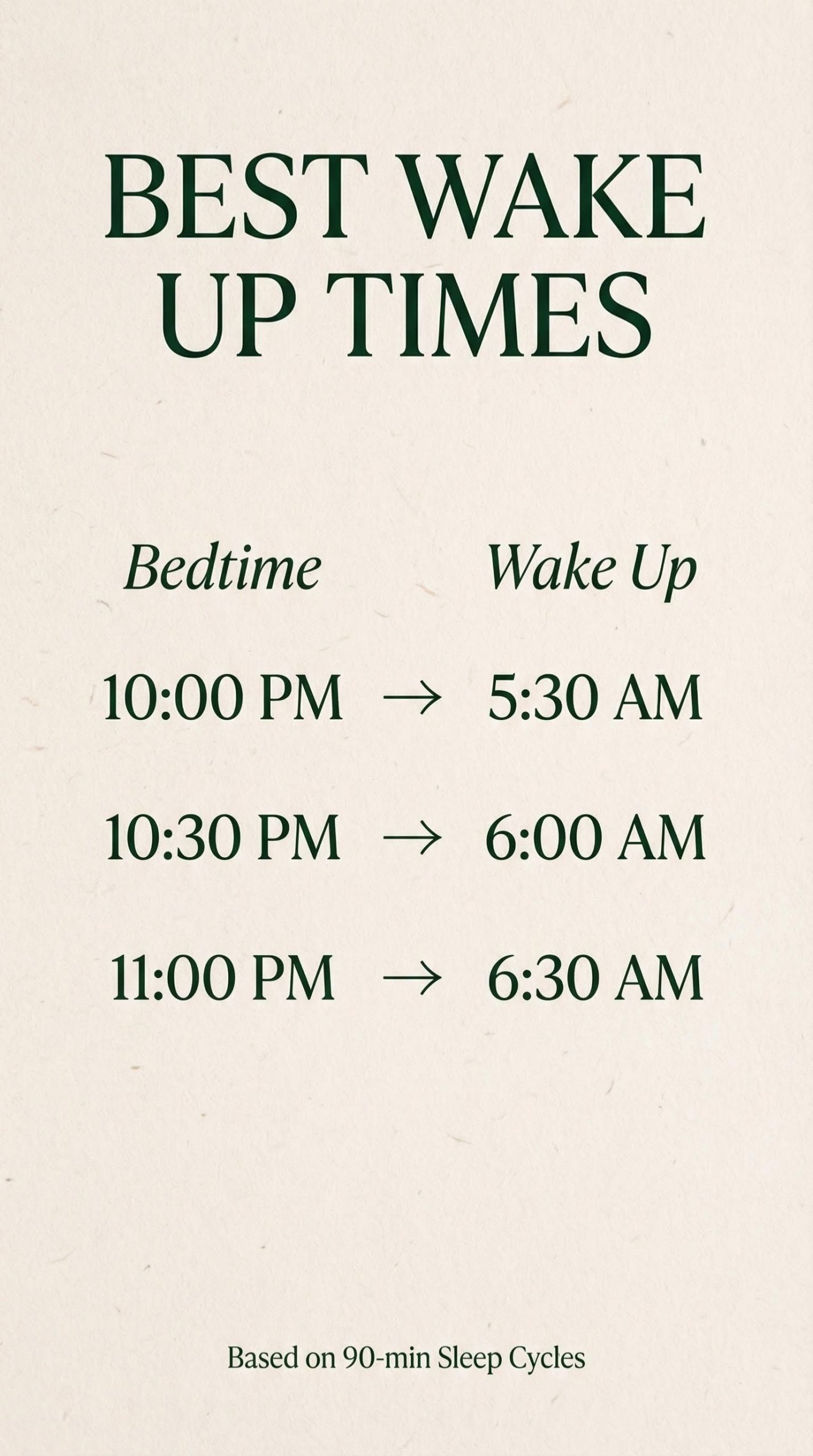
As shown in our featured infographic, the math is simple but powerful. Instead of counting hours, we count cycles.
- 1 Cycle: 1.5 Hours
- 4 Cycles: 6 Hours (Acceptable for short periods)
- 5 Cycles: 7.5 Hours (The Sweet Spot for most adults)
- 6 Cycles: 9 Hours (Great for weekends or recovery)
Real-Life Examples from the Chart
Let’s look at the scenarios visualized in our guide to help you plan your night:
Scenario A: You go to bed at 10:30 PM To maximize your rest, you shouldn’t set your alarm for a random time like 6:45 AM. Instead, aim for:
- 6:00 AM: This gives you exactly 7.5 hours (5 full cycles).
- 7:30 AM: This gives you exactly 9 hours (6 full cycles).
Scenario B: You go to bed at 11:00 PM If you sleep a bit later, shift your wake-up time accordingly:
- 6:30 AM: Perfect for a 7.5-hour rest.
- 8:00 AM: Perfect for a 9-hour rest.
💡 The “15-Minute Buffer” Rule
Please remember that the calculation starts from the moment you fall asleep, not the moment your head hits the pillow. The average person takes about 14-15 minutes to fall asleep.
Pro Tip: If you want to wake up at 6:00 AM, and your target is 7.5 hours of sleep, be in bed by 10:15 PM to allow yourself that grace period to drift off comfortably.
Optimizing Your Sleep Environment (The Halal Way)
Beyond the math, the quality of your sleep matters. As Muslim women, we have a beautiful tradition (Sunnah) that aligns perfectly with modern health tips.
1. Sleep on Your Right Side Modern science suggests that sleeping on the left side can put pressure on the heart and stomach. The Sunnah of sleeping on the right side is not only spiritually rewarding but physically beneficial for your heart rate and digestion.
2. Digital Detox Before Bed The blue light from phones tricks your brain into thinking it is still daytime, delaying the release of melatonin. Try to put your phone away at least 30 minutes before your planned bedtime. Use this time for light reading or Dhikr (remembrance) to calm the mind.
3. The Power of Wudu (Ablution) Going to bed in a state of Wudu is physically refreshing and spiritually protecting. It helps wash away the dust of the day and cools down the body temperature, signaling that it is time to rest.
Frequently Asked Questions (FAQ)
Q: What if I wake up in the middle of the night? A: Don’t panic. If you wake up for water or to attend to a child, try to keep the lights off or very dim. Bright light will reset your internal clock. Just relax and try to complete the remaining cycles.
Q: Is 6 hours of sleep enough? A: 6 hours (4 cycles) is better than 7 hours because you are completing the cycles. However, for long-term health and cognitive function, 7.5 hours (5 cycles) is recommended for most women.
Q: Can I use this for naps? A: Absolutely! The perfect nap is either 20 minutes (before deep sleep hits) or 90 minutes (one full cycle). Avoid napping for 60 minutes, as you will likely wake up feeling groggy from deep sleep interruption.
Q: How do I adjust this for Fajr prayer? A: This system is perfect for waking up for Fajr. Simply calculate backwards from the Fajr time. If Fajr is at 5:30 AM, aim for a 5:15 AM wakeup. Count back 7.5 hours (plus 15 mins to fall asleep), and you will know exactly when to go to bed to wake up easily for prayer.
Ready to fix your sleep schedule? Pin the infographic above to your “Health & Wellness” board on Pinterest so you never forget your optimal wake-up times!