
AHA vs. BHA Exfoliants: Which Acids Clear Acne Faster?
In the pursuit of clear, glass-like skin, “Acid” is not a scary word—it is a necessity. However, walking into a skincare store and seeing shelves lined with Glycolic, Lactic, Salicylic, and Mandelic acids can be incredibly confusing. They all promise to exfoliate, but they work in fundamentally different ways.
Choosing the wrong acid can lead to a compromised skin barrier, increased sensitivity, and even worse breakouts. Choosing the right one, however, is the fastest route to clearing acne and fading dark spots.
This comprehensive guide delves deep into the molecular differences between AHA (Alpha Hydroxy Acids) and BHA (Beta Hydroxy Acids) to help you decide which exfoliant belongs in your routine.
The Science of Exfoliation: How Do They Work?
Our skin naturally sheds dead cells, but this process slows down with age and oil production. Exfoliating acids work by ungluing the bonds that hold dead skin cells together, allowing them to shed more effectively.
Unlike physical scrubs (which use grains to scratch the surface), chemical exfoliants dissolve the “glue” between cells gently and evenly.
Deep Dive: What are AHAs?
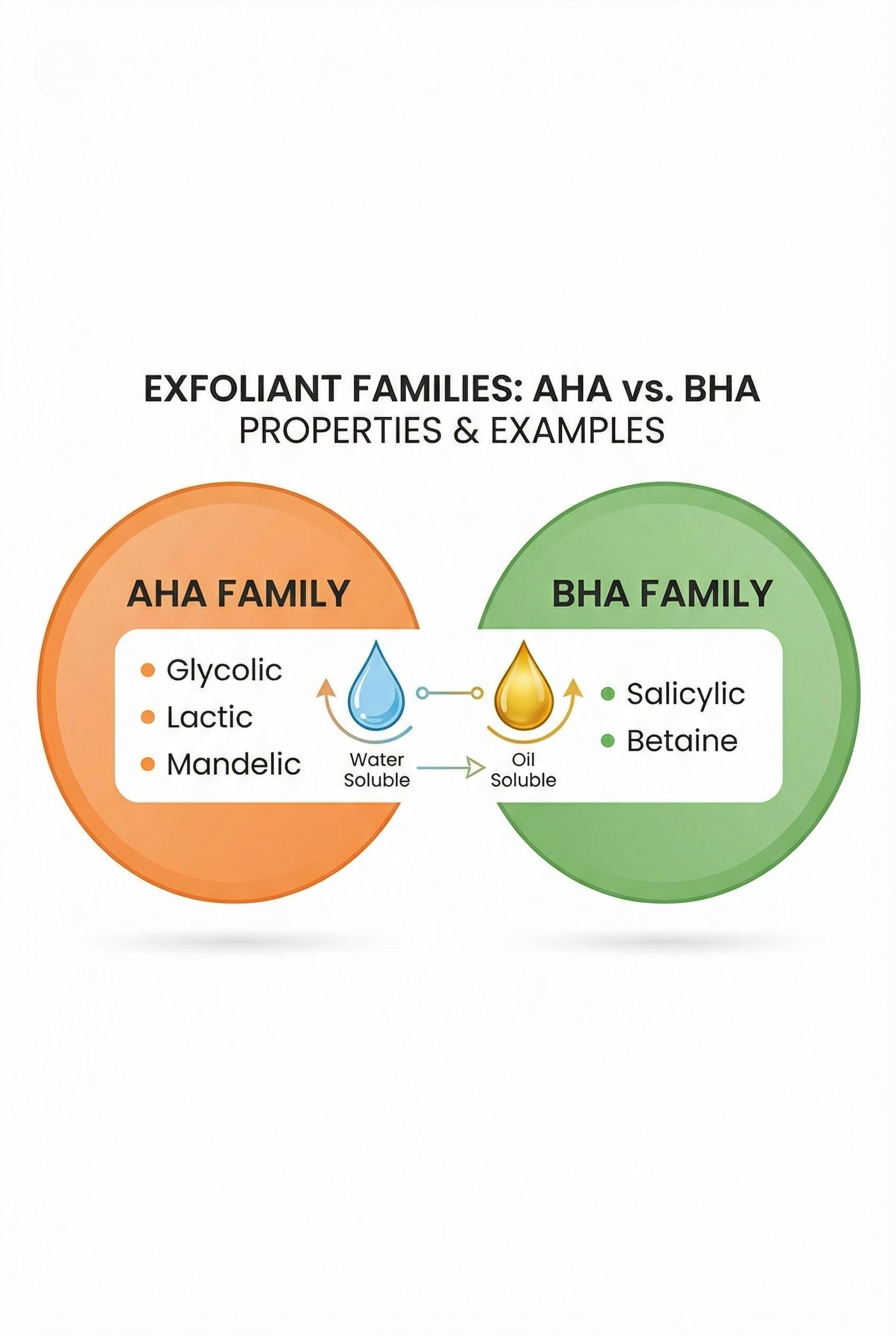
AHA stands for Alpha Hydroxy Acid. These are water-soluble acids derived primarily from sugary fruits, milk, or sugar cane.
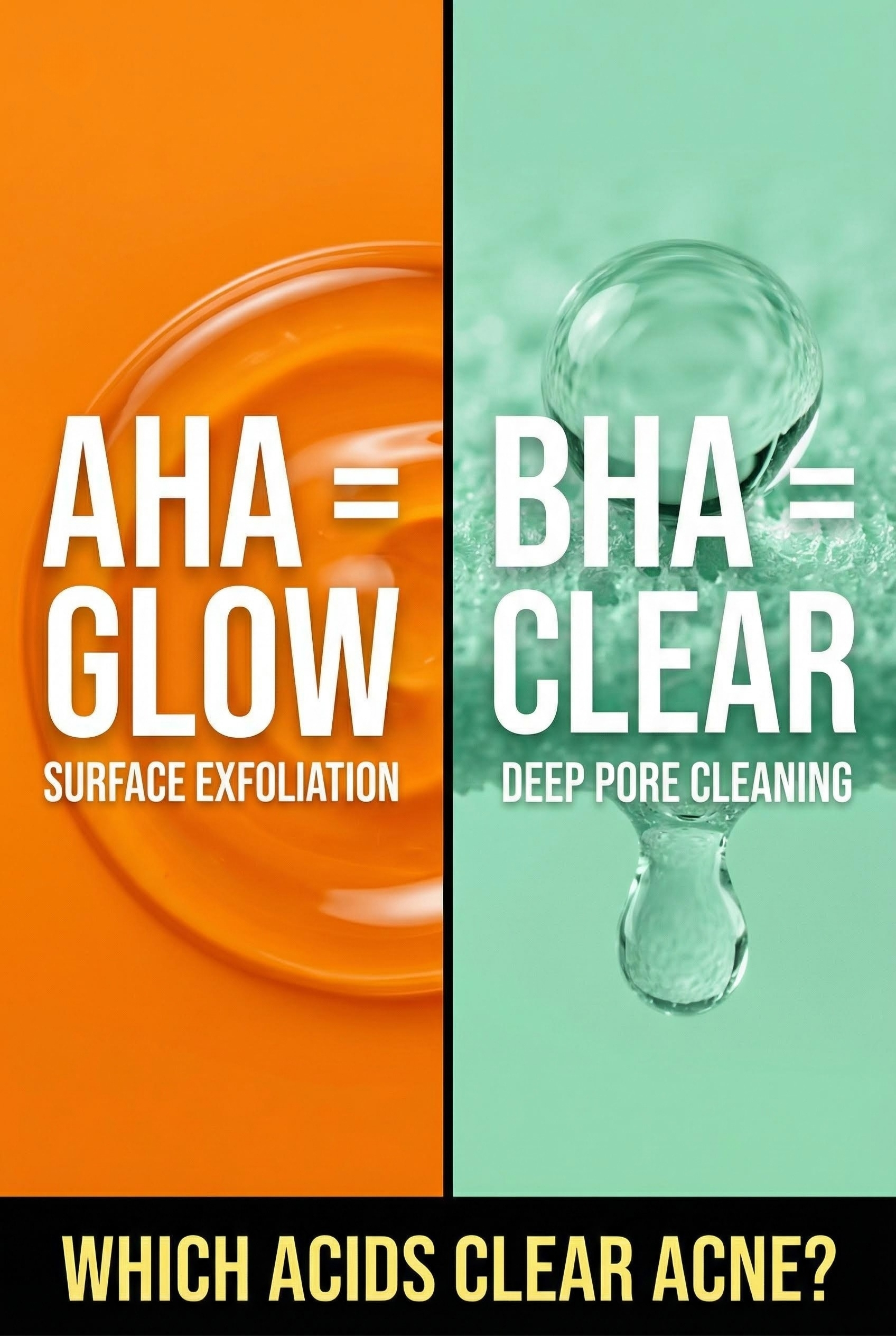
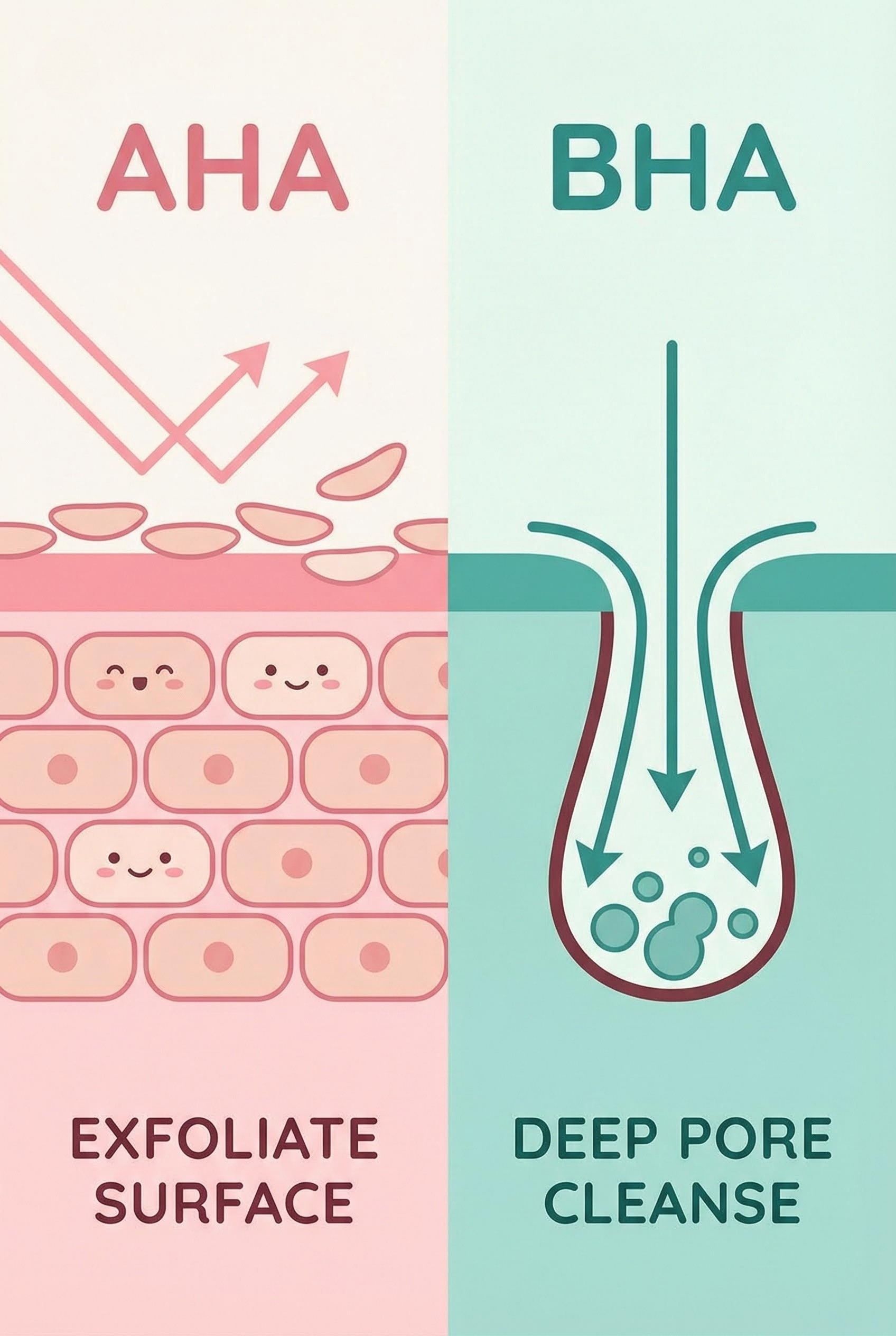
Because they are water-soluble, they cannot penetrate through the skin’s natural oil. Instead, they work strictly on the surface of the skin. They peel away the top layer of dead skin cells to reveal fresh, new skin underneath.
Common Types of AHAs:
- Glycolic Acid: The smallest molecule, meaning it penetrates the fastest. Best for anti-aging and intense brightening.
- Lactic Acid: Derived from milk. It is hydrating and gentler than glycolic acid.
- Mandelic Acid: Derived from bitter almonds. Has larger molecules, making it perfect for sensitive skin.
Who Should Use AHA?
AHA is the gold standard for Dry, Sun-Damaged, or Mature Skin.
- Goal: Surface polish, hydration, fading hyperpigmentation, and reducing fine lines.
- The Finish: It gives an instant “Glow”.
Deep Dive: What are BHAs?
BHA stands for Beta Hydroxy Acid. In skincare, this almost exclusively refers to Salicylic Acid.
The superpower of BHA is that it is oil-soluble. This means it doesn’t just work on the surface; it can dive deep into the pore lining, cutting through the sebum (oil) and clearing out the clutter that causes acne.
How BHA Fights Acne:
- Penetration: It bypasses the oil barrier to reach deep into the follicle.
- Anti-Inflammatory: It has natural soothing properties, which helps calm the redness of angry pimples.
- Bacteria Control: It provides an environment where acne-causing bacteria struggle to survive.
Who Should Use BHA?
BHA is the hero for Oily, Combination, and Acne-Prone Skin.
- Goal: Unclogging pores, treating blackheads/whiteheads, reducing oiliness, and shrinking the appearance of pores.
- The Finish: Matte and clear.
The Comparison: Which One Clears Acne Faster?
This is the million-dollar question. The answer depends on what kind of acne you have.
💡 Acne Type Guide
For Blackheads & Whiteheads (Clogged Pores): BHA is the clear winner. It dissolves the gunk inside the pore.
For Surface Texture & Acne Scars: AHA is superior. It resurfaces the top layer to fade the red/brown marks left behind after a pimple heals.
| Feature | AHA (Alpha Hydroxy Acid) | BHA (Beta Hydroxy Acid) |
|---|---|---|
| Solubility | Water Soluble | Oil Soluble |
| Action Zone | Skin Surface | Inside the Pore |
| Best For | Dryness, Sun Damage, Glow | Acne, Blackheads, Oil |
| Irritation Risk | Moderate (Sun Sensitivity) | Low to Moderate (Drying) |
| Key Ingredient | Glycolic Acid | Salicylic Acid |
Can You Use Both? (The Layering Rules)
Yes, you can use both, but proceed with caution. Using them together provides a powerhouse routine that treats both the surface and the pores. However, layering them directly on top of each other can lead to over-exfoliation and a damaged barrier.
The Safe Methods:
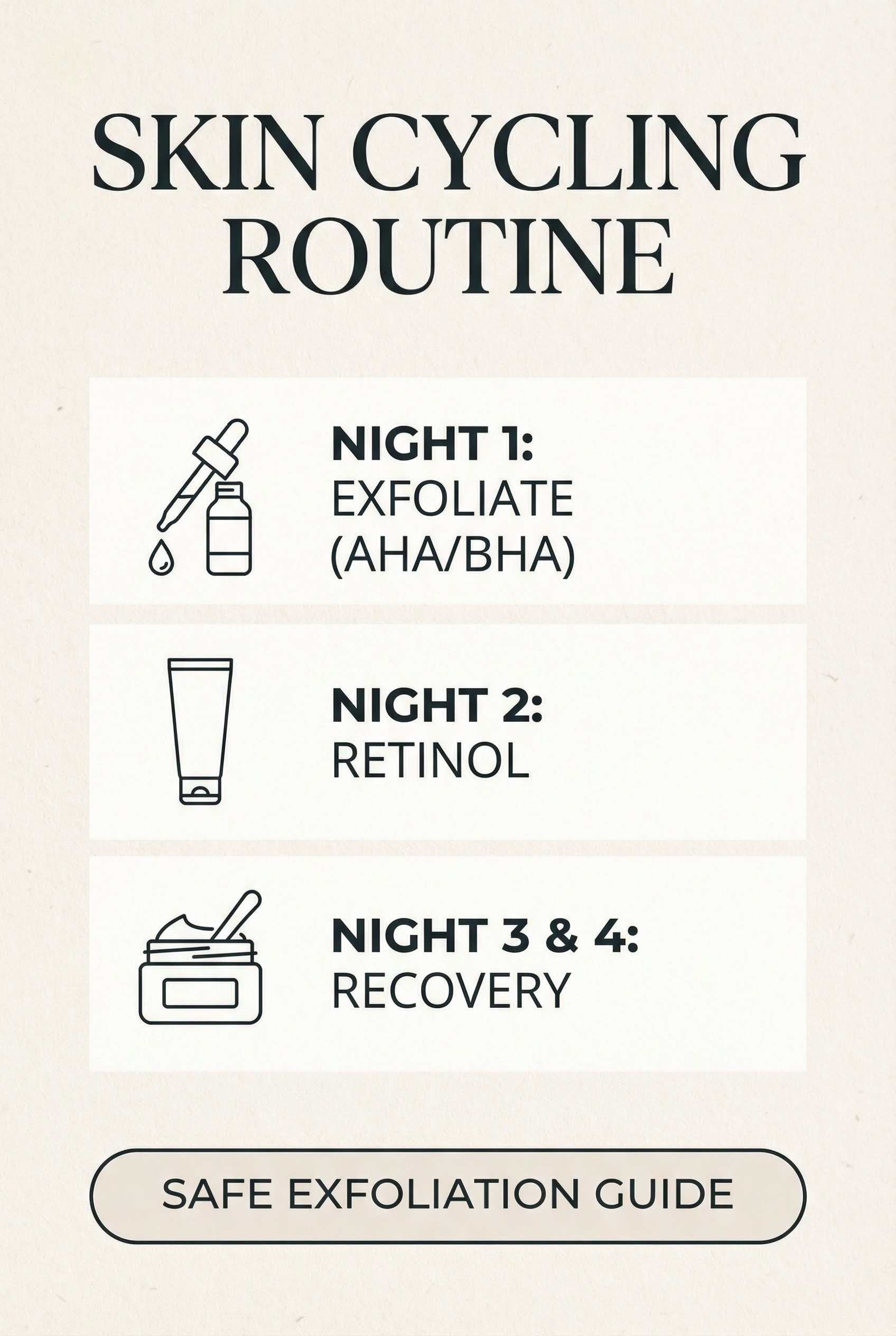
- Skin Cycling: Use AHA one night, BHA the next night, and take two nights off (hydration only). This is the safest method.
- AM/PM Split: Use a mild BHA toner in the morning to control oil, and an AHA serum at night to resurface.
- Combined Products: Many brands offer serums that contain a pre-formulated percentage of both (e.g., 10% AHA + 2% BHA). These are chemically balanced to be safe.
Mistakes to Avoid
- Skipping Sunscreen: AHAs make your skin photosensitive. If you exfoliate, SPF 50 is non-negotiable.
- Over-Exfoliating: More is not better. If your skin looks shiny (plastic-like) or feels tight, stop immediately.
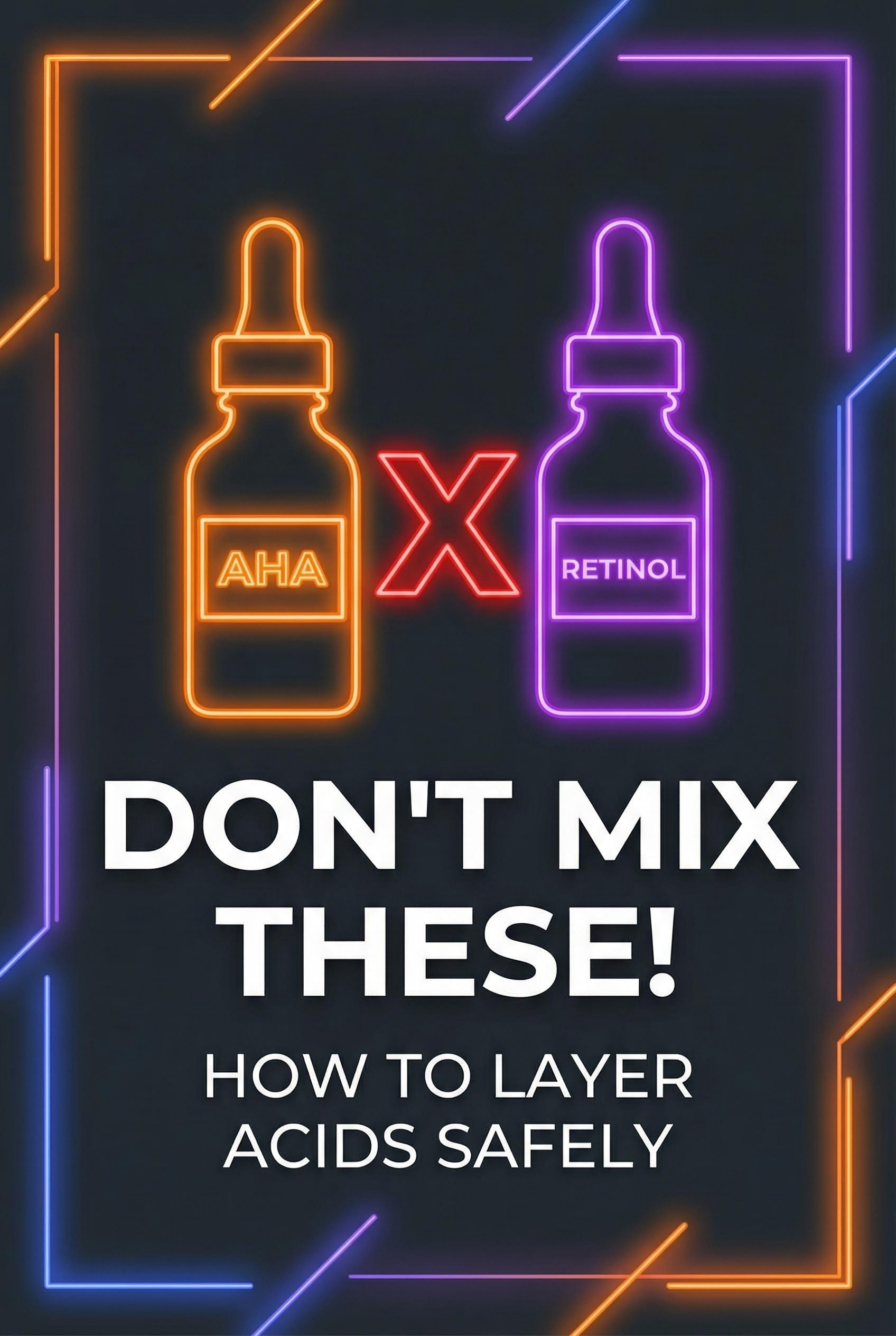
- Mixing with Retinol: Do not use AHAs/BHAs at the exact same time as Retinol. It is too harsh for most skin types.
Final Verdict
If your primary concern is active acne, blackheads, and oily skin, reach for BHA (Salicylic Acid). It treats the root cause.
If your primary concern is fading acne scars, dry patches, and dullness, reach for AHA (Glycolic/Lactic Acid). It reveals the radiance.
For the ultimate clear skin routine, consider incorporating both into your weekly rotation—slowly and carefully.
📌 Save This for Later!
Don’t let this info get lost in your feed. Save this guide to your Pinterest Boards to keep these tips handy for next time.