

The Amber Glow: Tortoiseshell Nail Inspirations for a Vintage Vibe

Some patterns never fade; they simply evolve. The tortoiseshell print, with its rich blend of amber, caramel, and deep brown, has been a staple of luxury accessories for decades—think classic wayfarer sunglasses or vintage hair combs. Now, this timeless design has found its way to fingertips, becoming a hallmark of the “retro-chic” aesthetic.
Often affectionately called “Tortie Nails,” this style is the perfect antidote to boring monochromes. It balances warmth with depth, offering a look that is bold yet surprisingly neutral. It is sophisticated enough for a business meeting yet artistic enough for a gallery opening.
1. The Classic Tortoiseshell Look
The essence of this manicure lies in its translucency. Unlike a solid brown polish, a true tortoiseshell design relies on layers. It starts with a syrupy, sheer amber or mustard base. Darker spots of burnt orange and chocolate brown are then floated into the wet base to blur the edges.
This technique results in a gemstone-like effect. When the light hits the nails, they appear to glow from within, much like polished resin or real amber. It is a warm, inviting look that suits autumn perfectly but adds a touch of retro flair year-round.

2. The Minimalist Tortie Tip
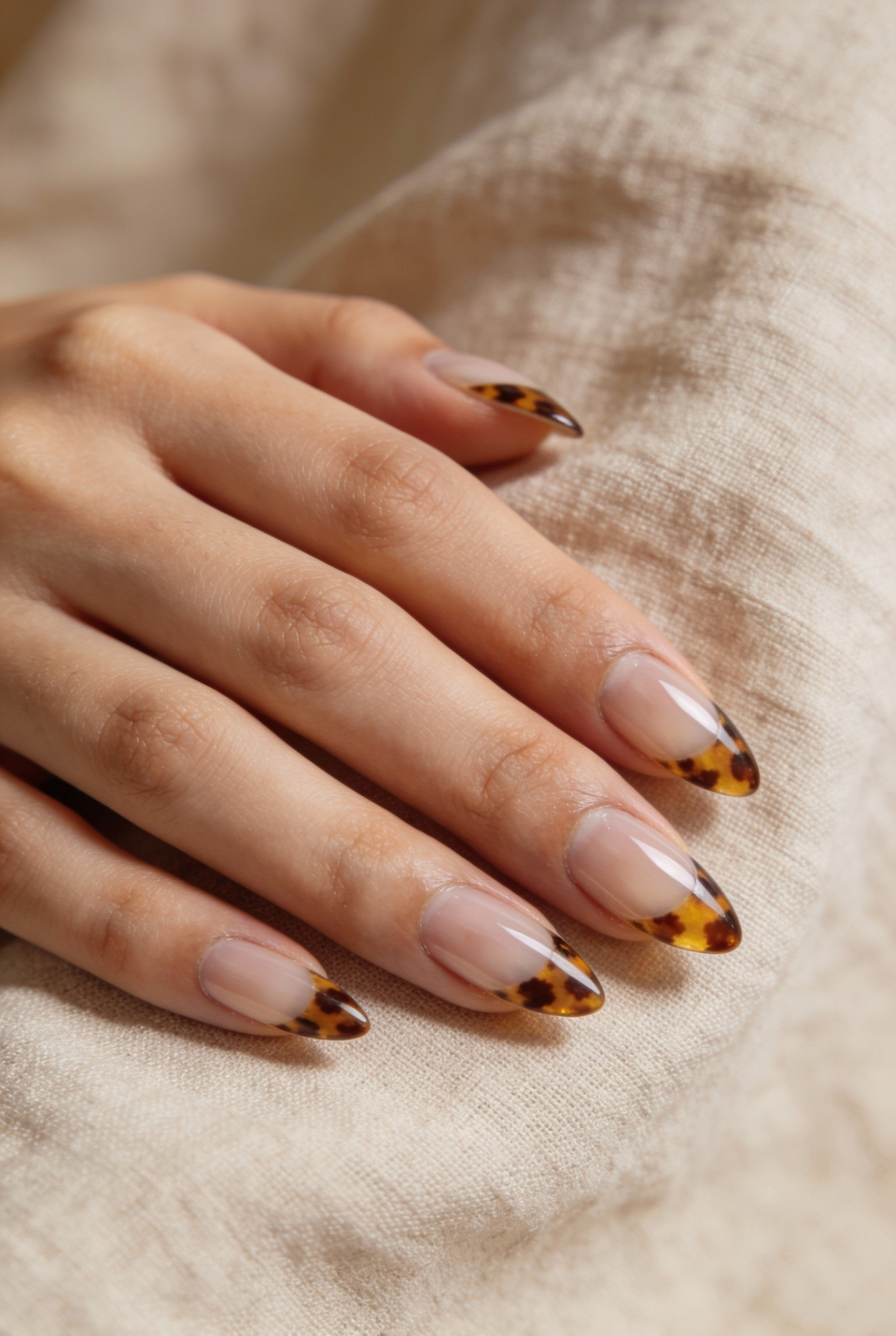
For those who find a full set of patterns too intense, the Tortoiseshell French Manicure is the ultimate compromise. By restricting the busy pattern to the free edge of the nail, you retain the clean, negative space of a classic manicure while adding a modern twist.
This style works exceptionally well on almond or oval shapes. The curve of the nail emphasizes the fluid nature of the pattern. It provides a subtle nod to the trend without dominating the entire hand. It is understated, elegant, and highly photogenic.
3. Mixing with Solids
Tortoiseshell is a “neutral pattern,” meaning it pairs beautifully with solid colors. A popular styling choice is the “accent nail” approach. Imagine painting the thumb, index, and pinky fingers in a solid deep color—like black, forest green, or burgundy—and leaving the middle and ring fingers for the tortoiseshell design.
This combination establishes a balanced visual weight. The solid dark colors anchor the look, while the patterned nails act as jewelry-like highlights. It breaks the monotony and shows a thoughtful approach to styling.

4. Gilded Edges: Adding Gold
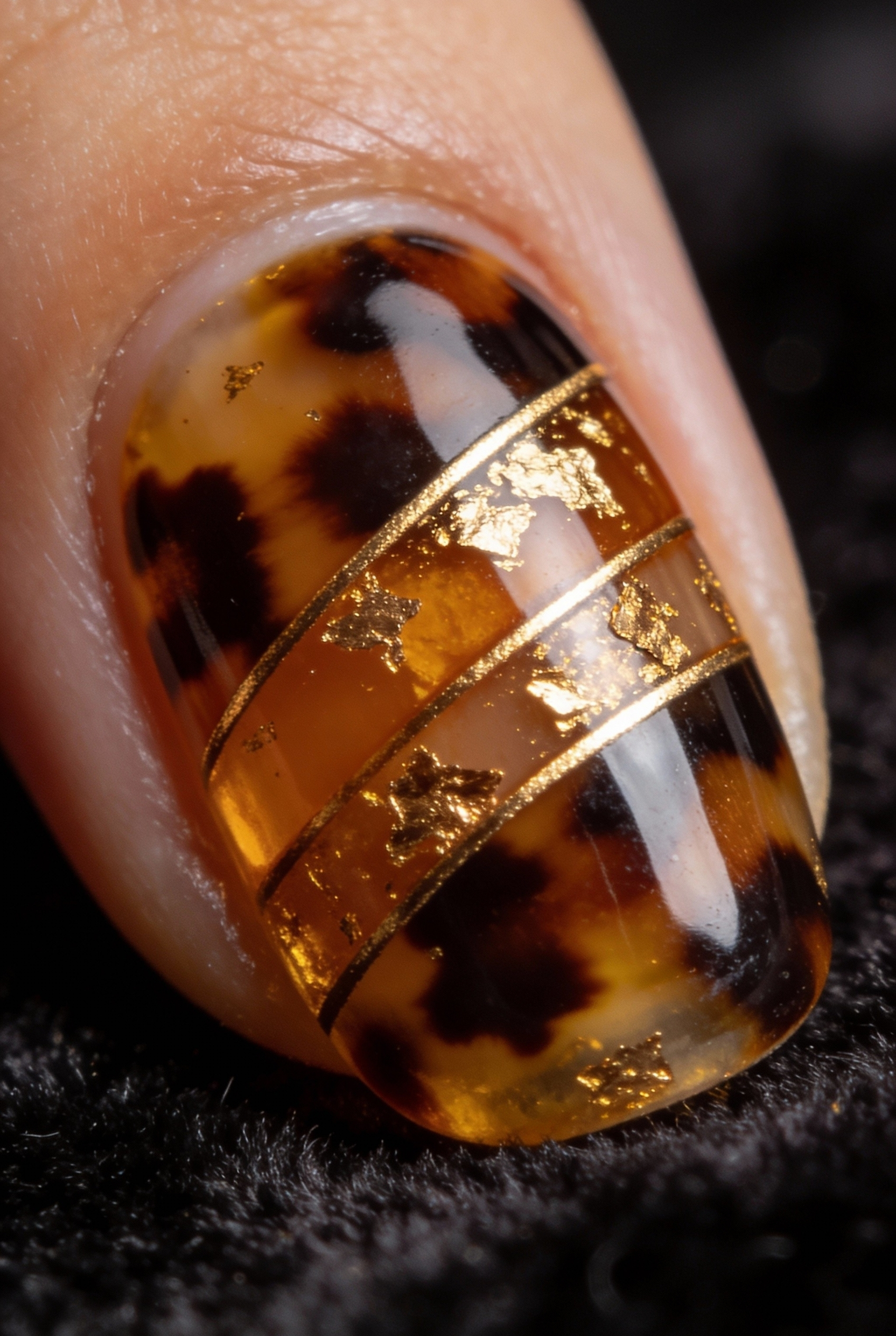
Since the base tones of tortoiseshell are warm (yellows, oranges, browns), gold is the natural metallic partner. Adding a very thin gold line separating the nude base from a tortie tip, or placing small gold foil flakes within the pattern itself, elevates the luxury factor.
The gold catches the light and complements the honey-colored undertones of the amber polish. This addition imparts a regal, expensive feel to the manicure, making it suitable for evening wear or special occasions.
5. Styling with Accessories
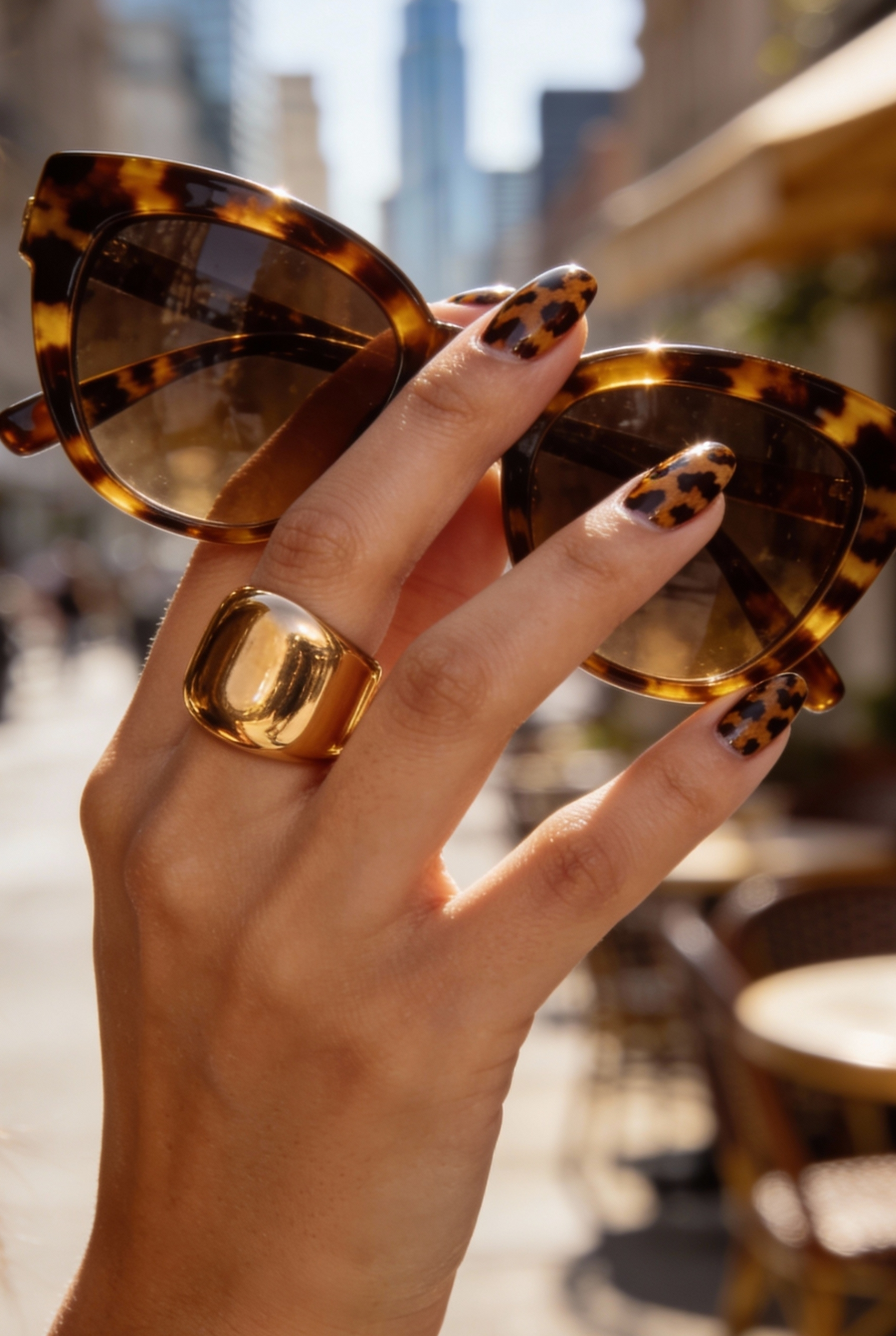
The tortoiseshell manicure is best styled with items that share its vintage heritage. It looks stunning when paired with chunky gold rings, oversized beige blazers, or, naturally, acetate sunglasses.
Because the pattern is complex, it serves as an accessory in itself. It removes the need for overly complicated jewelry. A simple gold band or a classic watch is all that is needed to complete the look. The vibe is “Old Money” meets “Art School”—intellectual, curated, and timeless.
The “Jelly Polish” Technique
The secret to realistic tortoiseshell nails is using “Jelly” polishes—sheer, translucent tints.
- Step 1: Apply a yellow/amber jelly base. Cure or let dry.
- Step 2: Dot on irregular spots of brown jelly polish. Do not be too neat; organic shapes are better.
- Step 3: While the brown is wet, add tiny dots of black inside the brown spots to add depth.
- Step 4: Apply another coat of the amber jelly over everything. This “sandwich” method buries the dark spots and produces that deep, glassy 3D look.