

The Essential Kitchen Conversion Chart: Mastering Cups to Grams
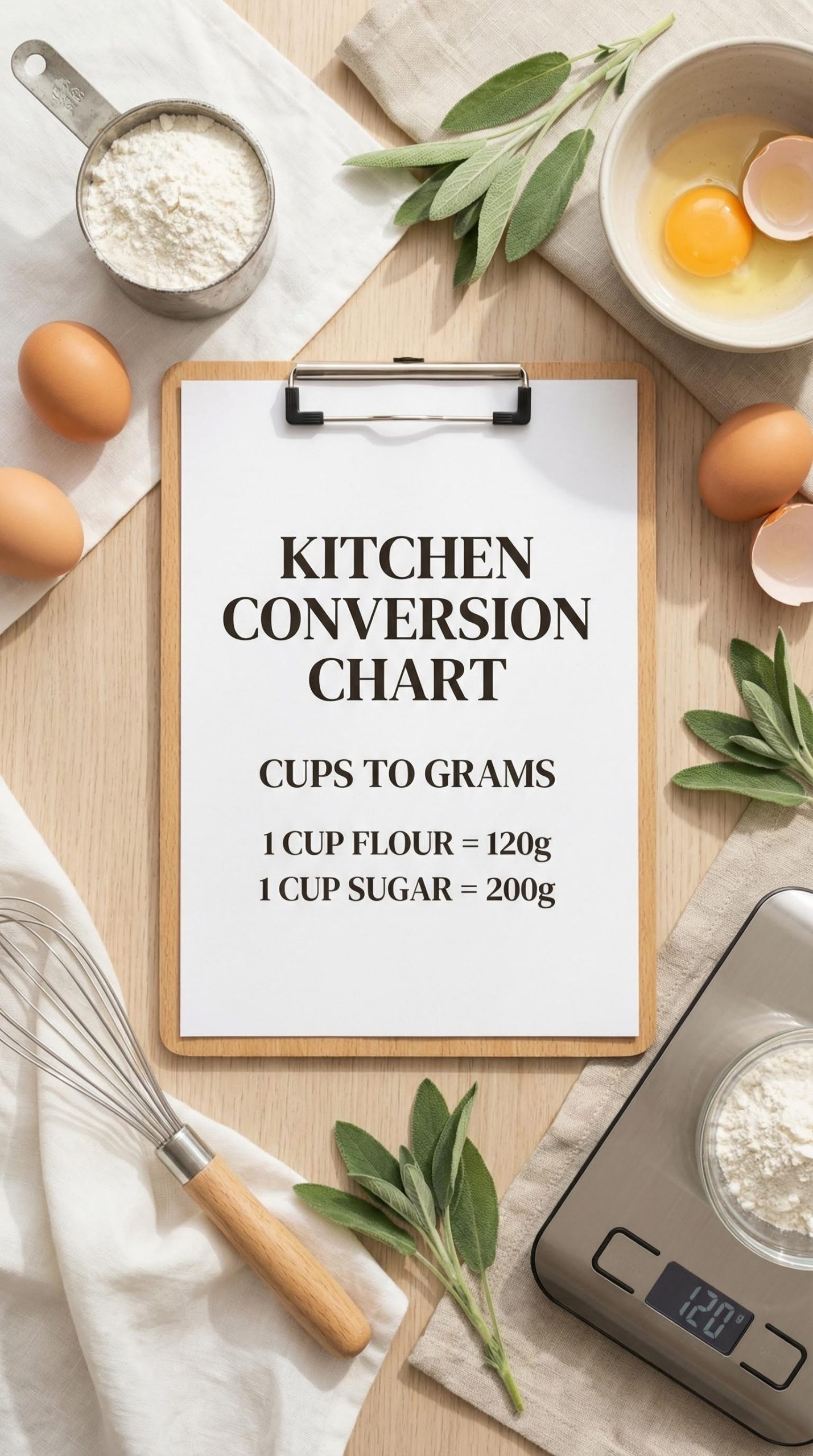
Baking is often described not merely as cooking, but as chemistry. While a pinch of extra salt in a stew might go unnoticed, a slight miscalculation in flour or sugar during baking can completely alter the texture and taste of the final product. The difference between a dense cake and a light, airy sponge often lies in the precision of measurement. Many recipes found online or in old cookbooks utilize the “cup” system, which measures volume. However, volume can be inconsistent. Professional bakers and culinary experts universally agree that weighing ingredients using a kitchen scale offers superior accuracy.
Transitioning from volume measurements (cups) to weight measurements (grams) ensures consistency. A cup of flour scooped on a humid day might weigh significantly more than one scooped on a dry day due to settling and moisture. This guide serves as a comprehensive resource for converting common kitchen ingredients from cups to grams, ensuring that every recipe turns out exactly as intended. It eliminates the guesswork and provides the confidence needed to produce bakery-quality goods at home.
Why Weight is Superior to Volume in Baking
Before diving into the numbers, it is essential to understand why this conversion is necessary. The “cup” is a measure of space an ingredient occupies, whereas “grams” measure the actual mass of the ingredient.
Dry ingredients, particularly flour, are compressible. If a measuring cup is dipped directly into a bag of flour, it packs the flour down, potentially resulting in up to 140 grams of flour per cup. However, if the “spoon and level” method is used, that same cup might only hold 120 grams. This 20-gram difference, when multiplied across several cups, leads to dry, hard cookies or heavy cakes. A digital scale removes this variable entirely. 120 grams of flour is always 120 grams, regardless of how much air is mixed into it.
Flour Conversions: The Foundation of Baking
Flour is the most common ingredient requiring conversion and also the most problematic when measured by volume. Different types of flour have different densities. For instance, cake flour is lighter and airier than whole wheat flour. Therefore, one cup of cake flour weighs less than one cup of all-purpose flour.
Using the correct weight for the specific type of flour is crucial for the structural integrity of baked goods. Below is the standard conversion for various flour types commonly used in recipes.
Common Flour Weights (Per 1 Cup)
- All-Purpose Flour: 120 grams (4.25 oz)
- Bread Flour: 120 grams (4.25 oz)
- Cake Flour: 110 grams (3.9 oz)
- Whole Wheat Flour: 113 grams (4 oz)
- Self-Rising Flour: 120 grams (4.25 oz)
- Almond Flour: 96 grams (3.4 oz)
- Cocoa Powder: 85 grams (3 oz)
It is important to note that brands can vary slightly, but adhering to these standards will yield consistent results. When a recipe calls for “sifted flour,” the weight remains the same, but the volume increases. Always weigh the flour before sifting unless the recipe specifies otherwise.

Sugar and Sweeteners: Sweet Precision
Sugar does more than just sweeten; it provides moisture, tenderness, and caramelization. Like flour, different sugars have different densities. Granulated white sugar is heavy and flows freely, while brown sugar contains molasses and is moist, often requiring it to be “packed” into a cup. Confectioners’ (powdered) sugar is very light and airy.
Getting the sugar ratio right is vital for the texture. Too much sugar can cause a cake to collapse; too little can make it tough and pale.
Sugar Conversion Chart (Per 1 Cup)
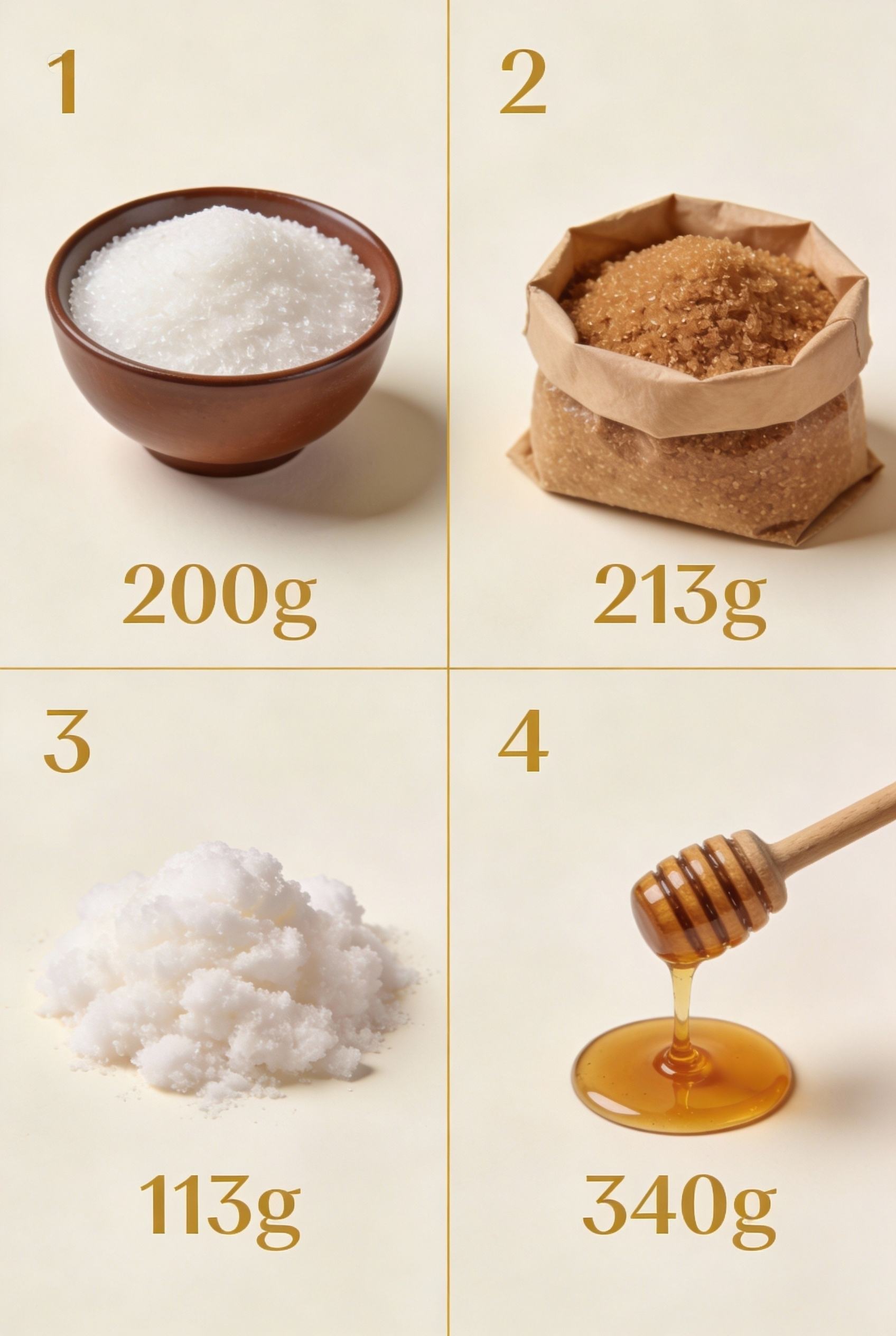
- Granulated White Sugar: 200 grams (7.1 oz)
- Light or Dark Brown Sugar (Packed): 213 grams (7.5 oz)
- Powdered (Confectioners’) Sugar: 113 grams (4 oz)
- Honey / Molasses / Syrup: 340 grams (12 oz)
Notice the significant difference between a cup of granular sugar (200g) and a cup of powdered sugar (113g). Substituting them by volume without adjustment would lead to a disaster, but weighing them ensures the correct sweetness balance. Liquid sweeteners like honey are significantly denser than water or dry sugar, weighing much more per cup.
Butter and Fats: Sticks, Cups, and Grams
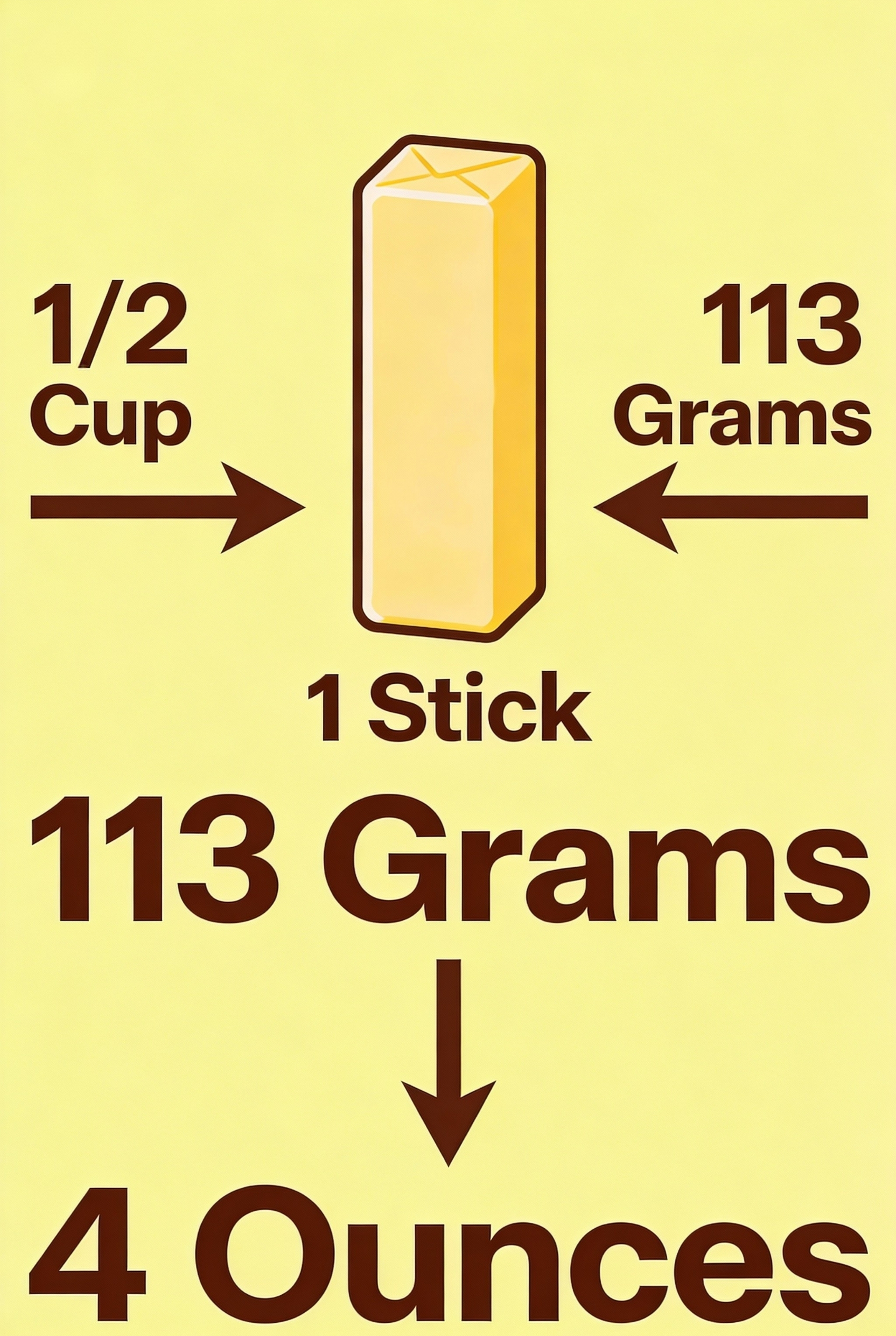
Butter measurements can be confusing depending on the region. In the United States, butter is sold in sticks, where one stick equals 1/2 cup. In Europe and other parts of the world, butter is sold in blocks by weight (usually 250g). Recipes might call for “1 stick of butter,” “1/2 cup of butter,” or “113 grams of butter.” These are all the same amount.
Fat is responsible for the richness and flakey texture of pastries. Whether using butter, shortening, or coconut oil, accuracy is key.
Fat Conversion Breakdown
- 1 Stick of Butter: 1/2 Cup = 113 grams = 4 ounces
- 2 Sticks of Butter: 1 Cup = 227 grams = 8 ounces
- Coconut Oil (Solid): 1 Cup = 218 grams
- Vegetable Shortening: 1 Cup = 190 grams
- Vegetable Oil: 1 Cup = 218 grams
When measuring solid fats by volume (in a cup), it is difficult to remove air pockets, often leading to under-measuring. Weighing the fat or using the wrapper markings (if accurate) is the preferred method.
Liquid Measurements: Fluid Ounces vs. Milliliters
While grams are used for mass, liquids are often measured in milliliters (ml) or fluid ounces (fl oz). It is important not to confuse “ounces” (weight) with “fluid ounces” (volume). For water, 1 fluid ounce weighs roughly 1 ounce, but this is not true for heavier liquids like honey or lighter ones like oil.
For most baking purposes, water, milk, and buttermilk have similar enough densities that they can be treated roughly the same in volume-to-weight conversions, though milk is slightly heavier.
Common Liquid Conversions
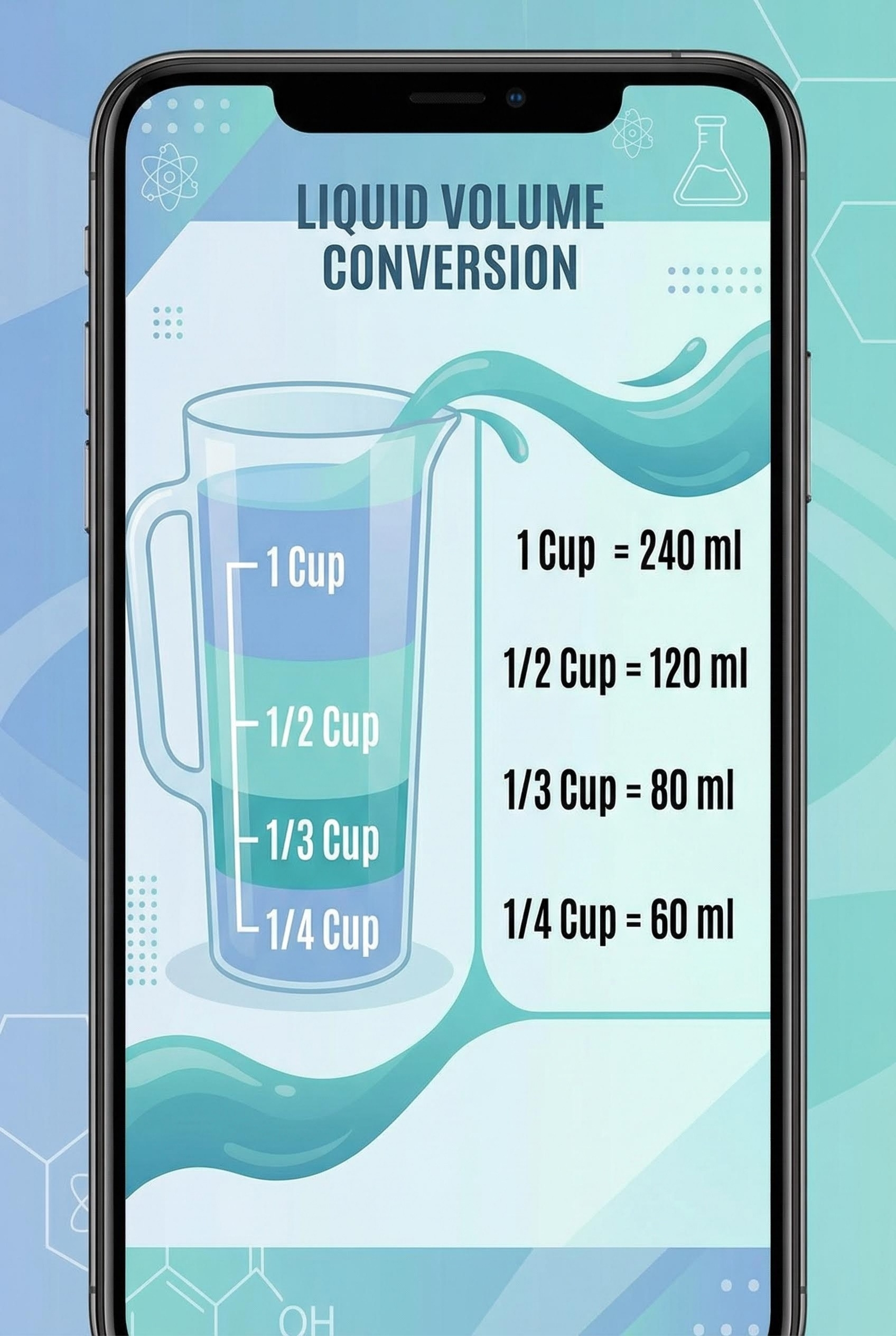
- 1 Cup (Water/Milk): 240 ml (approx. 240 grams)
- 1/2 Cup: 120 ml
- 1/3 Cup: 80 ml
- 1/4 Cup: 60 ml
- 1 Tablespoon: 15 ml
- 1 Teaspoon: 5 ml
Using a liquid measuring cup (the glass jugs with a spout) is better for volume than using dry measuring cups (the ones you scoop with), as you can fill it to the line without spilling. However, a scale remains the most precise tool. Placing a bowl on the scale, hitting “tare” (zero), and pouring the milk until it hits 240g is faster and cleaner.
Leavening Agents and Small Quantities
Usually, baking powder, baking soda, salt, and yeast are used in such small quantities (teaspoons and tablespoons) that most home scales might struggle to register the weight accurately unless they are high-precision micro-scales. For these ingredients, standard measuring spoons are generally acceptable and widely used.
However, for large-batch baking, knowing the weight is still useful.
- 1 Teaspoon Baking Powder: 4 grams
- 1 Teaspoon Baking Soda: 6 grams
- 1 Teaspoon Table Salt: 6 grams
- 1 Teaspoon Instant Yeast: 3 grams
Note that different types of salt (Table salt vs. Kosher salt vs. Sea salt) have vastly different grain sizes. 1 teaspoon of table salt is much saltier than 1 teaspoon of flaky sea salt. In professional recipes specifying grams for salt, this issue is resolved.
Oven Temperature Conversions
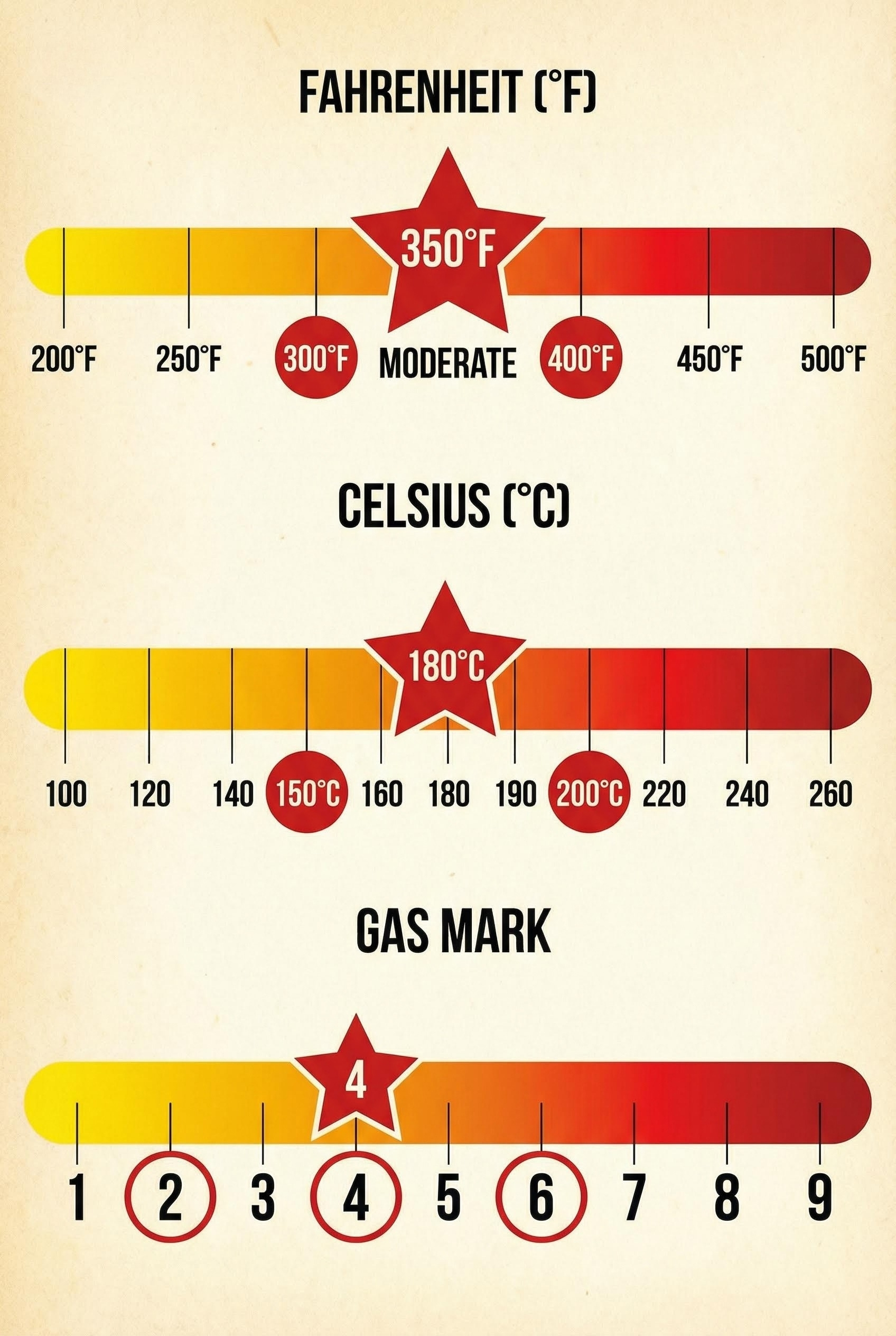
A recipe might be perfect in terms of ingredients, but if the oven temperature is misunderstood, the effort is wasted. Recipes may use Fahrenheit (°F), Celsius (°C), or Gas Marks.
Temperature Quick Reference
- Very Slow: 250°F = 120°C
- Slow: 300°F = 150°C
- Moderate: 350°F = 180°C (The most common baking temperature)
- Moderately Hot: 375°F = 190°C
- Hot: 400°F = 200°C
- Very Hot: 425°F = 220°C
Baking at the correct temperature ensures the leavening agents react properly and the crust forms at the right rate. Investing in an oven thermometer is also recommended, as oven dials are often inaccurate.
Frequently Asked Questions (FAQ)
Q: Is 1 cup of flour always 120 grams? A: Generally, standard All-Purpose flour is considered 120 grams per cup in modern recipes. However, some older cookbooks may base their calculations on a “dip and sweep” method which can weigh up to 140 grams. It is safest to stick to 120 grams for a light and tender crumb.
Q: Can I use a liquid measuring cup for flour? A: It is not recommended. Liquid measuring cups are designed to be filled to a line below the rim to prevent spilling. Dry measuring cups are designed to be filled to the brim and leveled off. Using the wrong cup can result in inaccurate measurements.
Q: What is the difference between ounces (oz) and fluid ounces (fl oz)? A: Ounces measure weight (mass), while fluid ounces measure volume. A cup of popcorn and a cup of water both are 8 fluid ounces in volume, but the water weighs significantly more in regular ounces.
Q: How do I measure sticky ingredients like honey or peanut butter without a scale? A: If a scale is unavailable, lightly coat the measuring cup with a neutral oil or cooking spray before adding the sticky ingredient. This helps it slide out easily, ensuring the full amount ends up in the mixing bowl.
Q: Why do professional bakers use grams? A: Grams provide a universal language of precision. It allows for consistent replication of a recipe regardless of the measuring tools used, humidity levels, or how tightly an ingredient is packed. It is the most reliable method for baking.