

The Ultimate Guide to Nail Shapes: Choosing the Perfect Style for Your Hands
Selecting a nail shape is often an afterthought compared to choosing a color. However, the shape of the nail is actually the foundation of a sophisticated manicure. A color might look stunning in the bottle, but if the nail shape clashes with the natural anatomy of the hand or the width of the nail bed, the final result may feel disproportionate.
Ideally, a manicure should elongate the fingers, balance the nail bed, and enhance the hand’s natural elegance. This is not merely about following current trends; it is about understanding geometry and proportion. Whether the goal is to slenderize short fingers or add width to long, narrow nail beds, there is a specific shape designed to achieve that visual balance. This comprehensive guide analyzes the seven most essential nail shapes, their maintenance requirements, and which hand types they flatter most.
Understanding Hand Anatomy
Before filing begins, an assessment of the natural hand structure is required. Two main factors dictate the ideal nail shape:
- The Cuticle Shape: Mirroring the shape of the cuticle (whether it is round, oval, or flat) often produces the most natural look.
- The Finger Length and Width: Short fingers generally benefit from elongating shapes, while long fingers can handle blunt, horizontal shapes.
The Low-Maintenance Classics: Short to Medium Length
For those who prioritize functionality and durability without sacrificing aesthetics, shorter shapes are the standard. These shapes are less prone to breakage and fit seamlessly into an active lifestyle.
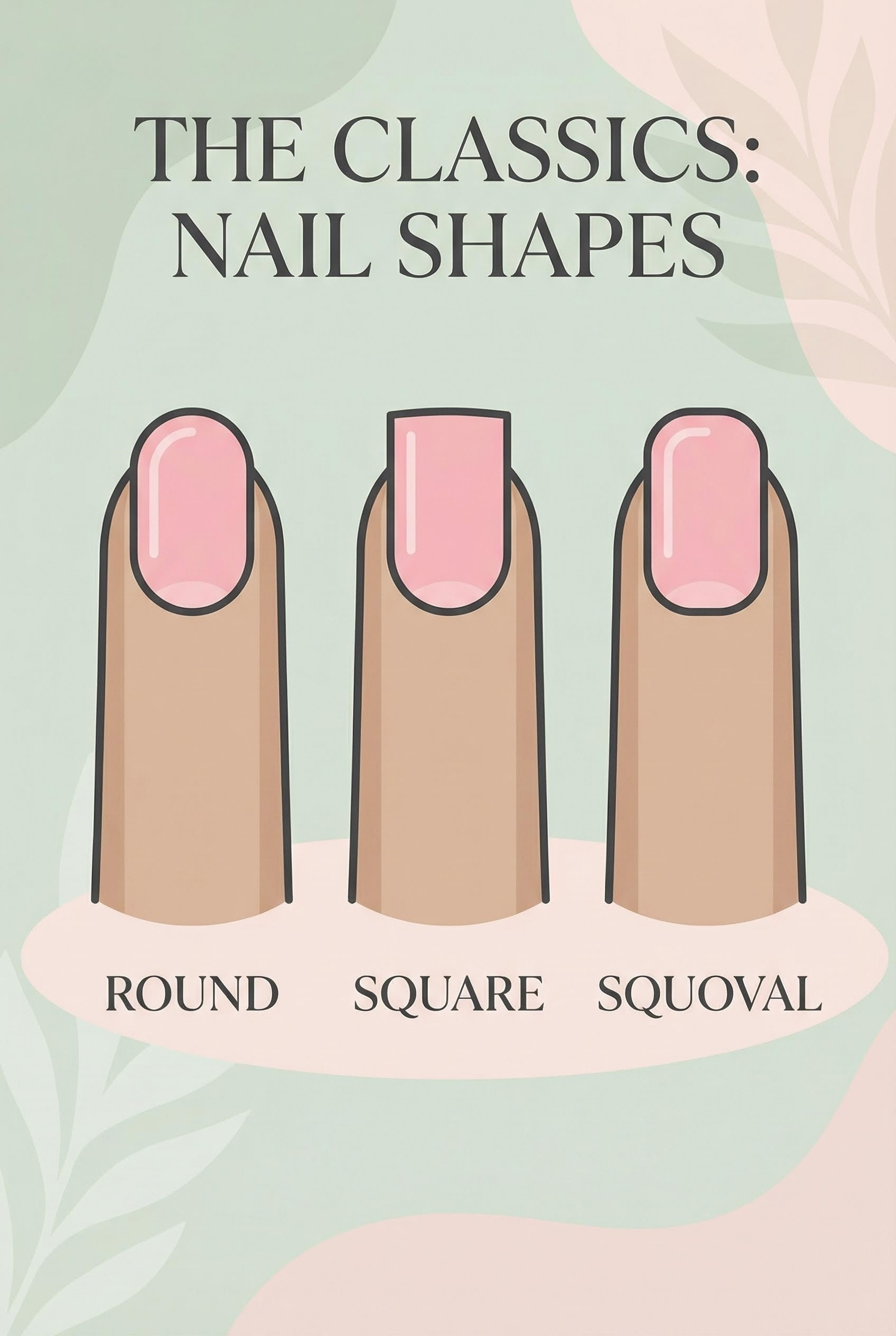
1. The Round Shape
The round shape is the most durable and natural-looking style. It follows the natural curve of the fingertip with straight sides and a curved edge.
- Best For: Short fingers and narrow nail beds.
- Why It Works: It elongates short fingers slightly without requiring significant length. It is practically chip-proof.
- Maintenance Level: Low.
2. The Square Shape
Characterized by straight sidewalls and a sharp, straight edge at the top. This shape makes a bold statement and provides a clean, modern look.
- Best For: Long fingers and wide nail beds.
- Why It Works: The horizontal line at the top breaks up the length of a very long finger, adding balance. It adds structure to soft hands.
- Maintenance Level: Medium. The sharp corners can snag on fabrics or chip if not reinforced.
3. The Squoval Shape
As the name suggests, this is a hybrid of the Square and Oval. It maintains the straight sidewalls of the square but softens the sharp corners into a gentle curve. It is universally recognized as the most flattering shape for almost everyone.
- Best For: All hand types, especially wide nail beds.
- Why It Works: It offers the modern width of a square without the sharp, snagging corners.
- Maintenance Level: Low to Medium.
The Elongating Shapes: Feminine and Slenderizing
When the objective is to make the hands appear more slender and the fingers longer, tapering shapes are the solution. These shapes file inward toward the tip, drawing the eye up and out.
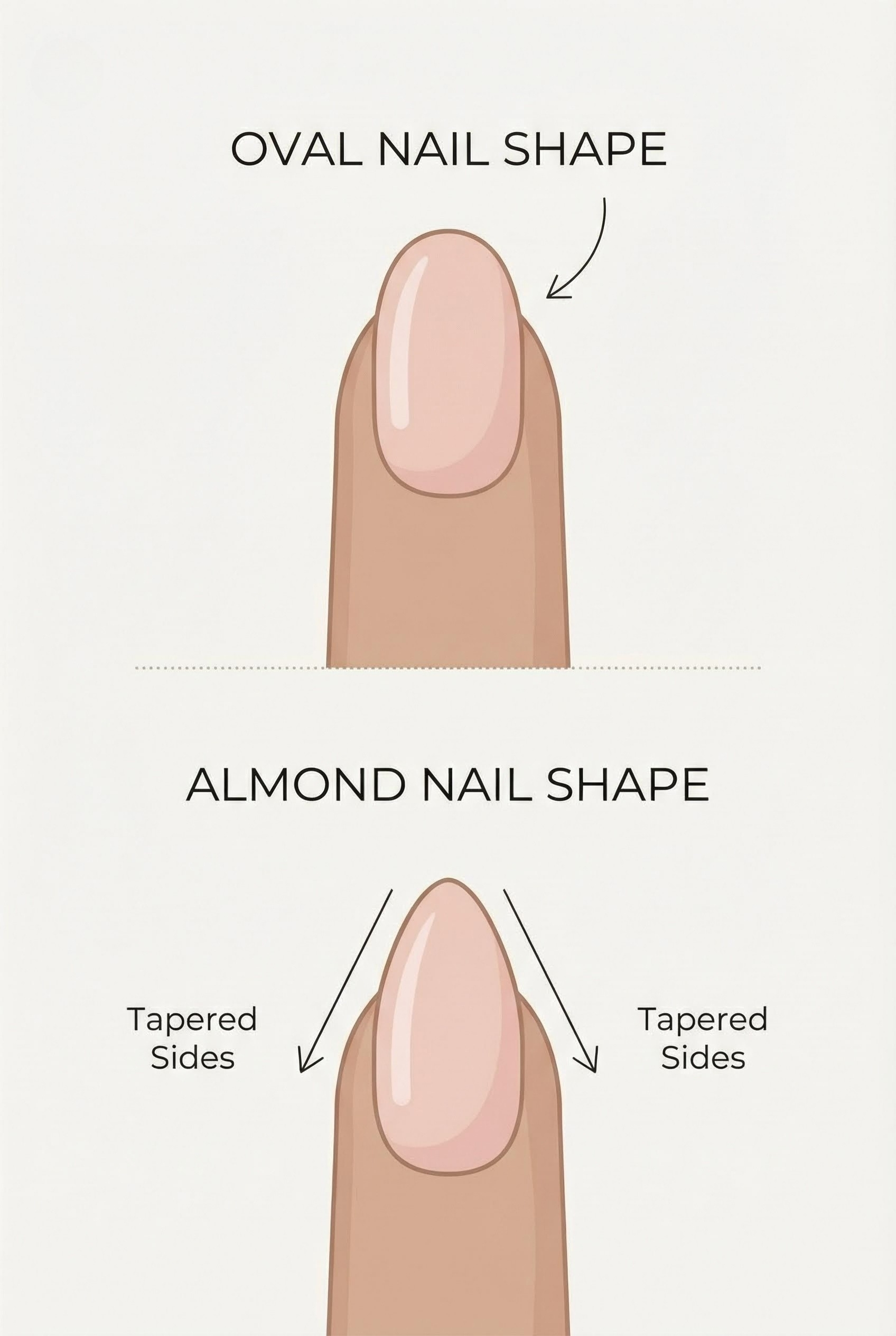
4. The Oval Shape
The oval is similar to the round shape but is filed in on the sides to distinctively elongate the nail. It mirrors the shape of an egg.
- Best For: Short hands and short fingers.
- Why It Works: It provides the illusion of length. It is very elegant and traditional.
- Maintenance Level: Medium. The sides are filed down, which can slightly weaken the structure compared to a square nail.
5. The Almond Shape
This is a glamorous progression from the oval. It is filed along the sides like the oval but comes to a softer, tapered point, resembling an actual almond nut. It requires slightly longer nails to execute properly.
- Best For: Short or thick fingers that need slenderizing.
- Why It Works: It is widely considered the most “feminine” shape. It thins the appearance of the hand instantly.
- Maintenance Level: Medium to High. Because the sides are filed away significantly, natural nails may require a strengthening base coat or a gel overlay to prevent breaking.
The Statement Shapes: High Drama and Length
These shapes usually require artificial reinforcement (acrylics, dip powder, or builder gel) because natural nails rarely possess the strength to maintain these structures at the required length.
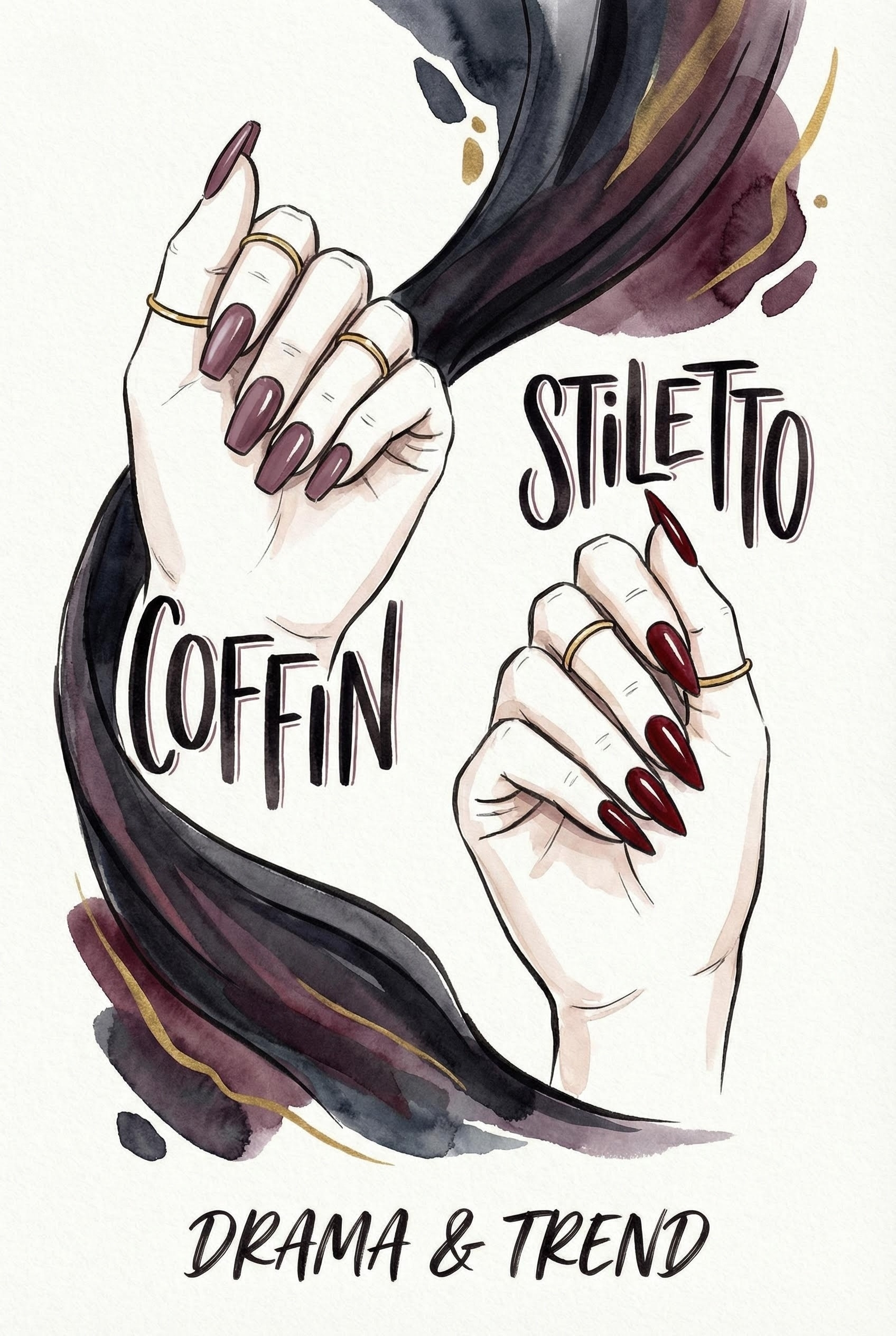
6. The Coffin (Ballerina) Shape
This shape is essentially a long stiletto with the tip filed flat. It resembles a traditional coffin or a ballerina’s slipper. It is currently one of the most popular shapes in social media trends.
- Best For: Long, sturdy nails and those who enjoy nail art.
- Why It Works: It provides a large canvas for art and designs. It elongates the finger massively while keeping a modern edge.
- Maintenance Level: High. Requires length and reinforcement.
7. The Stiletto Shape
The stiletto is filed to a sharp, dramatic point. It is fierce, bold, and distinct.
- Best For: Making a statement.
- Why It Works: It offers the maximum elongation possible.
- Maintenance Level: Very High. The tip is fragile and can easily break or scratch. Daily tasks like typing or handling contact lenses become difficult.
Choosing the Right Shape for Your Hand Type
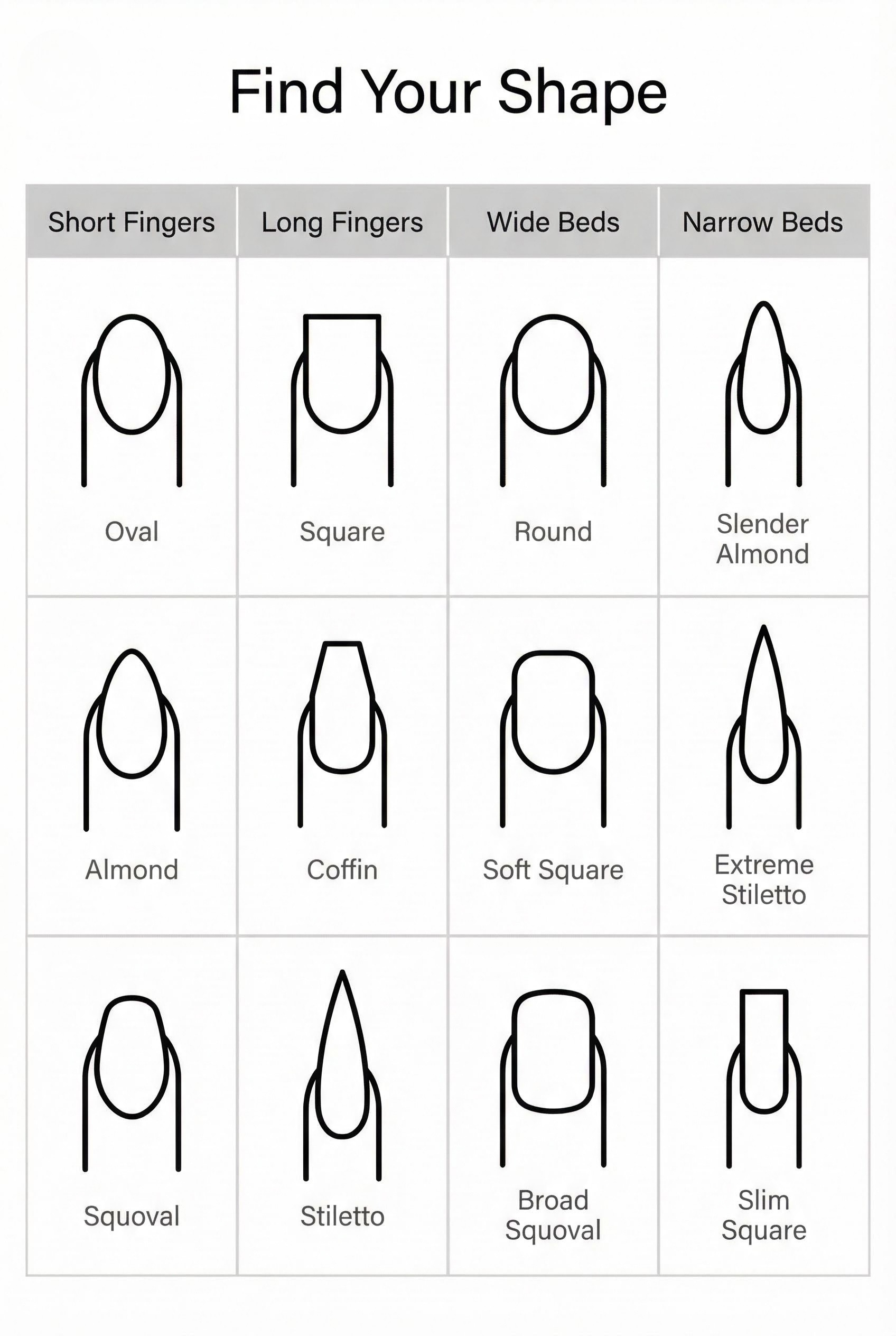
To simplify the decision-making process, the following categorization matches hand attributes with their ideal counterparts.
Short Fingers
Goal: Elongation. Recommended: Oval, Almond, Stiletto. Avoid: Blunt Square (it can make fingers look stubby).
Long Fingers
Goal: Balance. Recommended: Square, Coffin, Squoval. Avoid: Excessively long Ovals (can make fingers look spidery).
Wide Nail Beds
Goal: Narrowing. Recommended: Almond, Oval. Avoid: Square (it emphasizes the width).
Narrow Nail Beds
Goal: Widening/Structuring. Recommended: Square, Squoval. Avoid: Stiletto (can look too sharp and thin).
Frequently Asked Questions (FAQ)
Q: Which nail shape is the strongest? A: The Round and Squoval shapes are structurally the strongest. Because they follow the natural width of the nail bed and lack sharp corners that can catch on things, they are least likely to break.
Q: Can I have Almond nails if my natural nails are short? A: It is difficult. The Almond shape requires a certain amount of length (usually extending 3-4mm past the fingertip) to form the tapered sides. On very short nails, attempting an almond shape often results in a round shape simply because there is not enough length to taper.
Q: Does filing back and forth damage the nail? A: Yes. “Sawing” back and forth causes micro-tears in the keratin layers, leading to peeling and splitting. It is always recommended to file in one direction only (from the side toward the center).
Q: What is the most professional nail shape for office environments? A: Squoval and Oval are widely regarded as the most professional. They are neat, tidy, and conservative enough for corporate settings while still appearing well-groomed and stylish.
Q: How do I change my nail shape from Square to Almond? A: This transition requires patience. Start by rounding the corners of the square. As the nail grows, gradually file the sides more aggressively toward the center. Do not rush the process, as filing too much of the sidewall too quickly can weaken the nail stress point.