
The 10-3-2-1-0 Sleep Rule Formula: The Ultimate Guide to Waking Up Refreshed
Do you ever feel like you’re constantly fighting a losing battle with your alarm clock? You are not alone. We often blame the morning for our grogginess, but the truth is, a productive morning starts the night before.
Sleep isn’t just about closing your eyes; it is a complex biological process that restores our body and mind. If you are looking for a practical, science-backed method to fix your sleep schedule without complicated gadgets or supplements, let me introduce you to the 10-3-2-1-0 Sleep Rule Formula.
This method is gaining massive popularity for a reason: it brings structure to the chaos of modern life. In this detailed guide, we will break down exactly how to apply this formula to your life, optimize your 90-minute sleep cycles, and finally say goodbye to morning fatigue.
What is the 10-3-2-1-0 Sleep Rule?
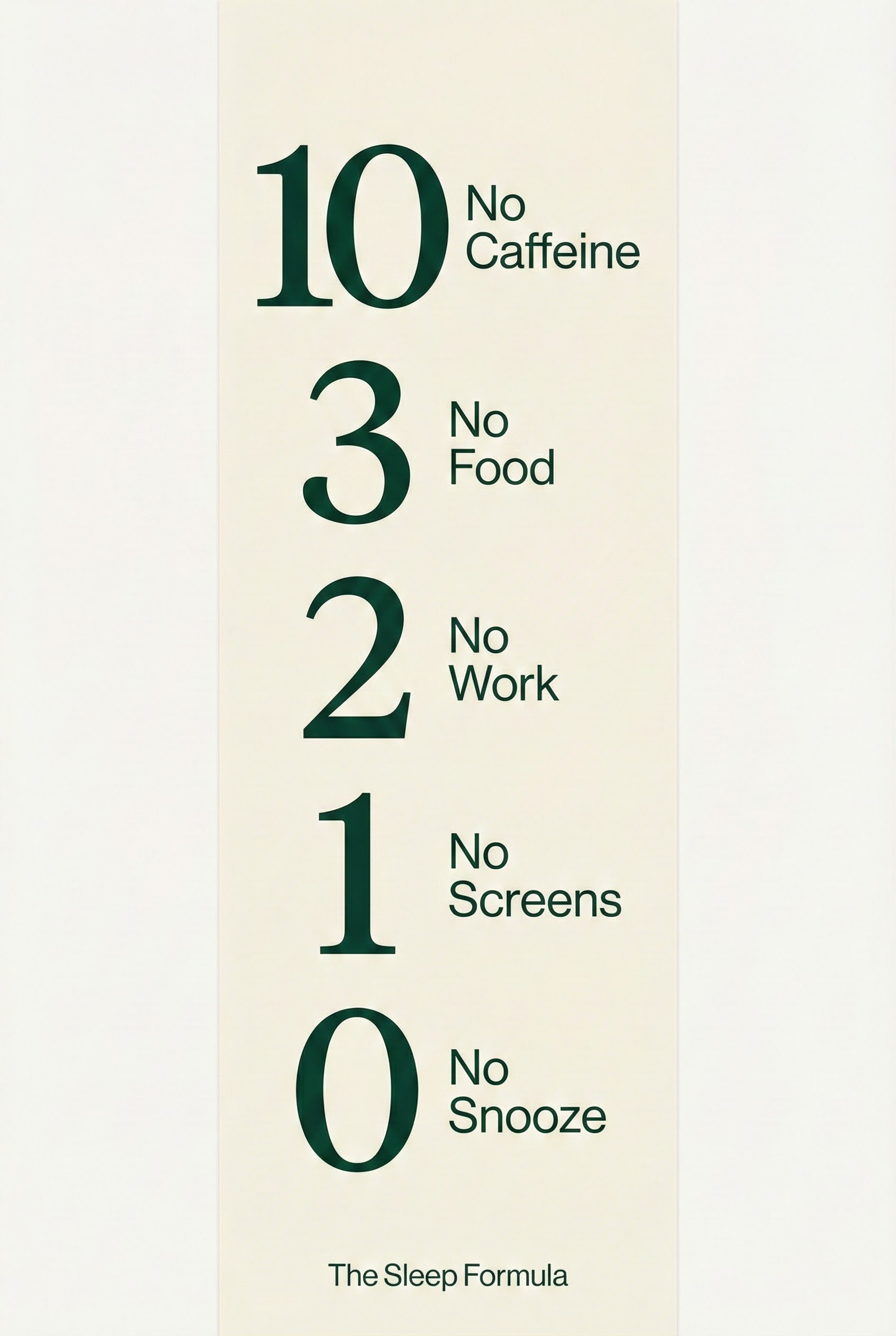
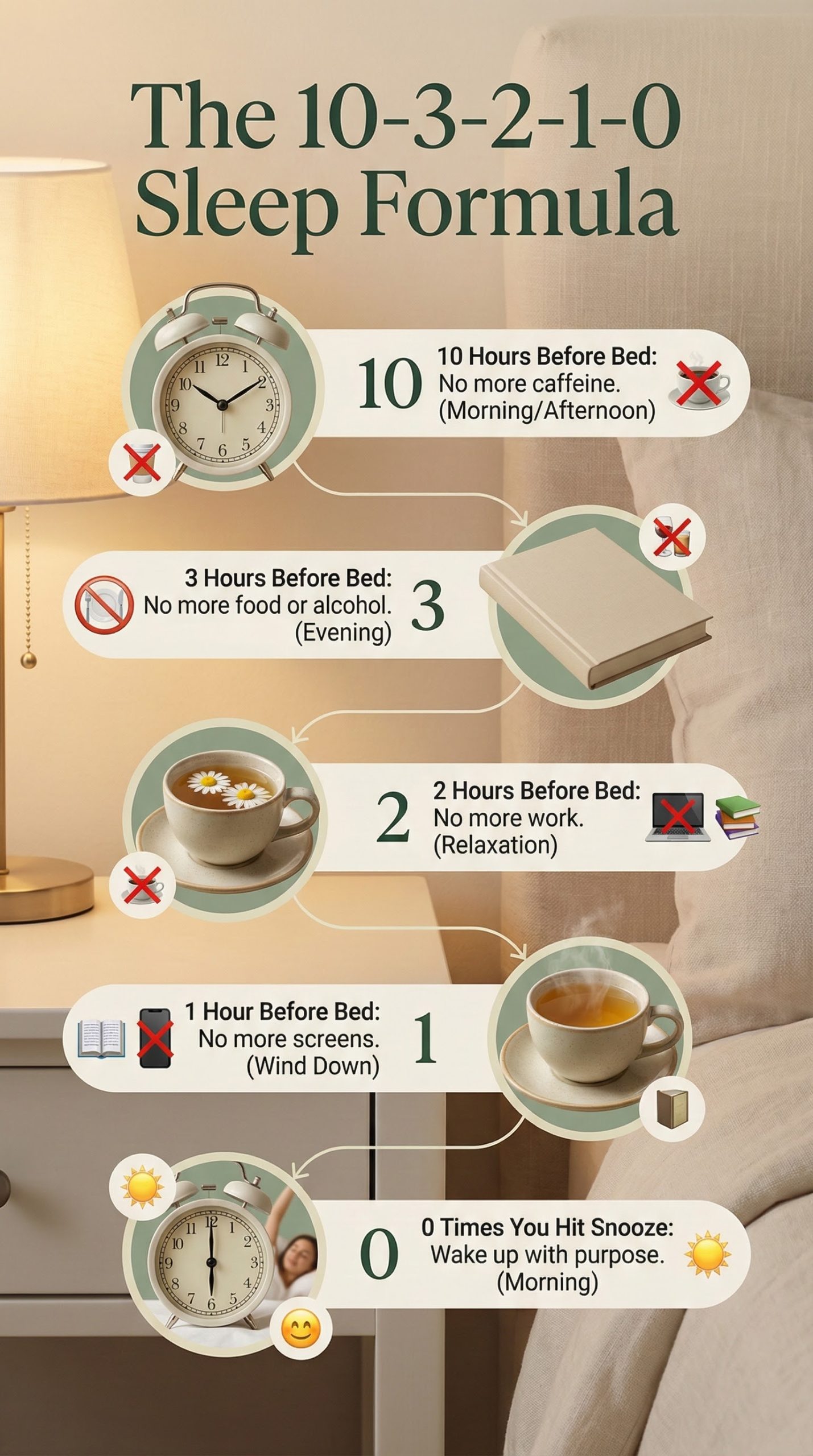
The 10-3-2-1-0 rule is a countdown method designed to prepare your body and mind for deep, restorative sleep. It addresses the most common sleep disruptors: caffeine, digestion, stress, blue light, and inertia.
By following this timeline, you signal to your internal clock (circadian rhythm) that it is time to wind down, ensuring you fall asleep faster and wake up with energy.
Let’s break down the numbers.
10 Hours Before Bed: No More Caffeine
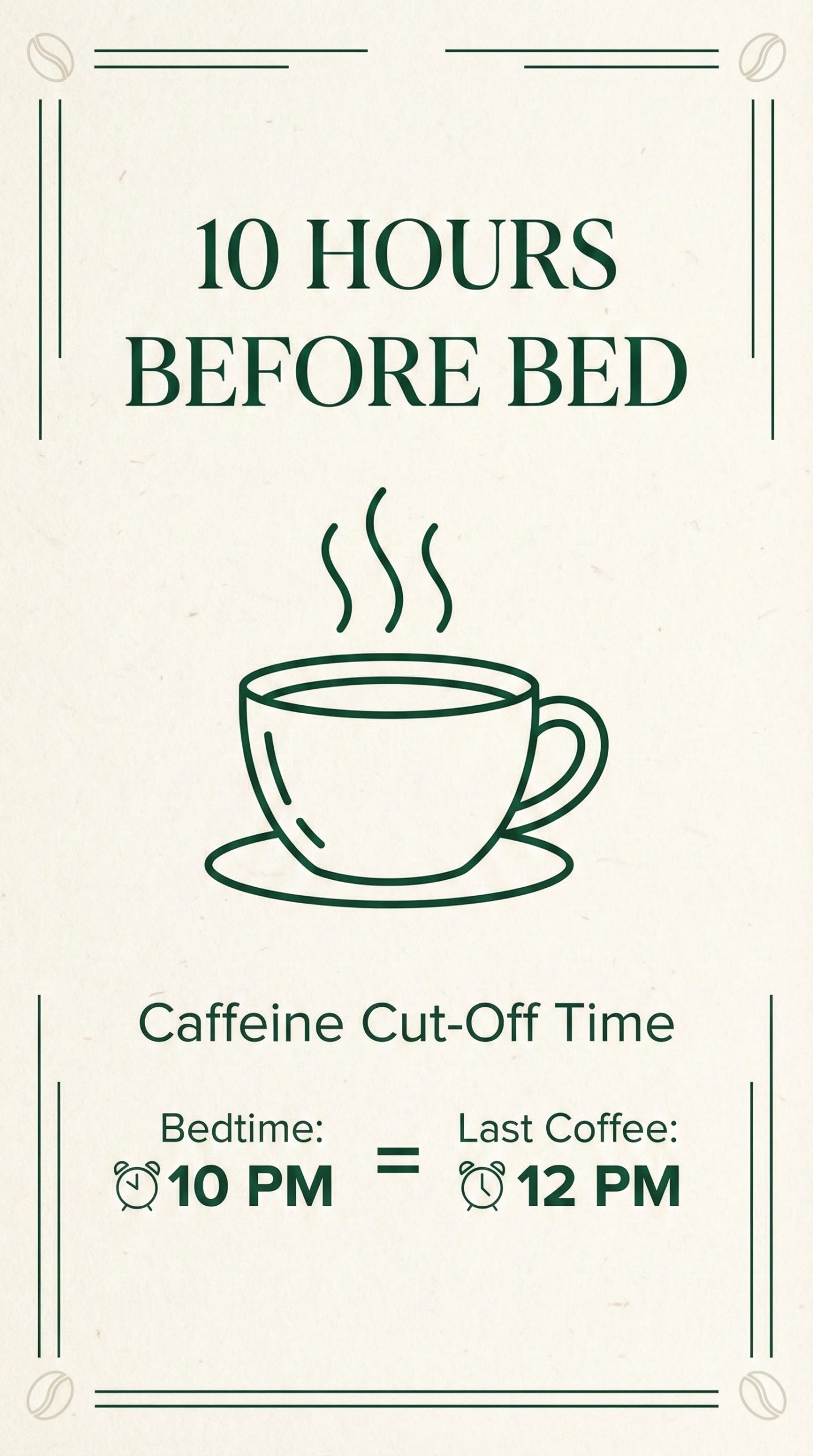
The countdown begins 10 hours before your intended bedtime. This is your cut-off for caffeine.
Many of us underestimate how long caffeine stays in our system. The “half-life” of caffeine is roughly 5 to 6 hours. This means if you have a cup of coffee at 4:00 PM, half of that caffeine is still in your bloodstream at 9:00 PM, blocking adenosine receptors—the chemicals that tell your brain it’s tired.
The Strategy:
- If you plan to sleep at 10:00 PM, your last coffee or tea should be finished by 12:00 PM (Noon).
- Switch to herbal alternatives like chamomile, peppermint, or rooibos tea in the afternoon.
3 Hours Before Bed: No Food or Heavy Drinks
Digestion is an energy-intensive process. If you eat a heavy meal right before bed, your body focuses on digesting food rather than repairing cells and resting.
Furthermore, lying down on a full stomach can cause acid reflux and indigestion, which disrupts deep sleep phases. This rule also applies to sugary drinks, which can spike your insulin levels and cause you to wake up in the middle of the night.
The Strategy:
- Finish dinner 3 hours before sleep.
- If you are truly hungry, a very small, light snack (like a handful of almonds) is better than a full meal.
- Hydration Tip: Try to get most of your water intake earlier in the day to avoid waking up for bathroom trips at night.
2 Hours Before Bed: No Work
This step is crucial for mental peace. In our hyper-connected world, we often check emails or think about to-do lists right until we close our eyes. This keeps the brain in “beta wave” state (alert and active), making it impossible to drift into “alpha” and “theta” states (relaxed and drowsy).
The Strategy:
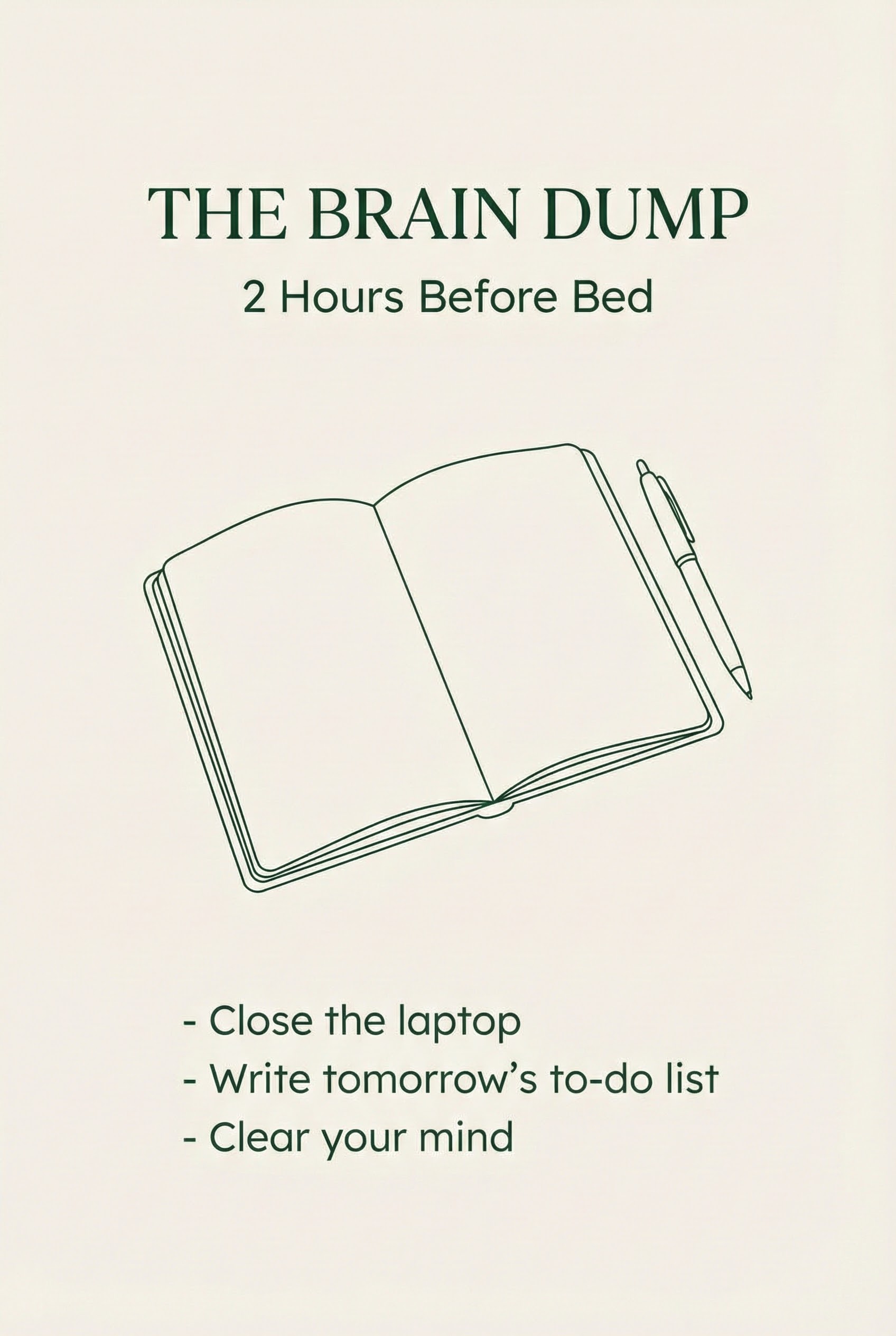
- Close your laptop and put away your planner 2 hours before bed.
- Write down your to-do list for tomorrow before this cut-off. Once it is on paper, your brain knows it doesn’t need to “hold” the information, allowing you to relax.
1 Hour Before Bed: No Screens
This is often the hardest rule to follow, but it is the most impactful. The blue light emitted by phones, tablets, and TVs suppresses the production of melatonin, the hormone that controls your sleep-wake cycle.
Scrolling through social media also stimulates the brain with dopamine hits, keeping you awake and anxious.
The Strategy:
- Establish a “phone-free zone” in the bedroom.
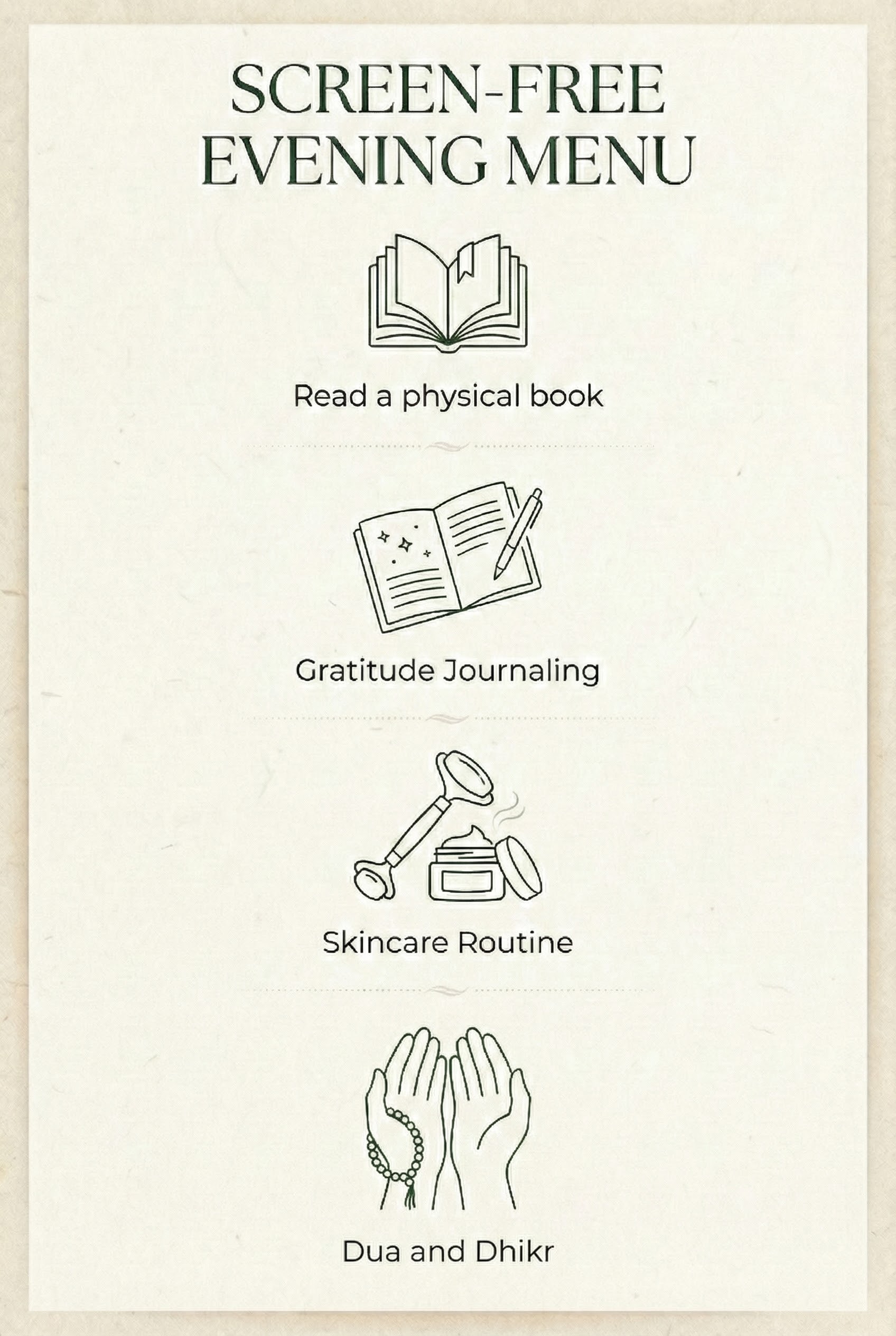
- Replace scrolling with reading a physical book, gentle stretching, journaling, or spending quality time with family.
- Sunnah Tip: This is an excellent time for reflection (muhasabah) or calming recitation to settle the heart before sleep.
0: The Number of Times You Hit Snooze
The final number of the formula happens in the morning. Zero. That is how many times you should hit the snooze button.
When you hit snooze, you drift back into a sleep cycle that you won’t be able to finish. This leads to “sleep inertia”—that heavy, groggy feeling that can last for hours.
Understanding the 90-Minute Sleep Cycle
To maximize the 10-3-2-1-0 rule, you should combine it with 90-minute sleep cycles.
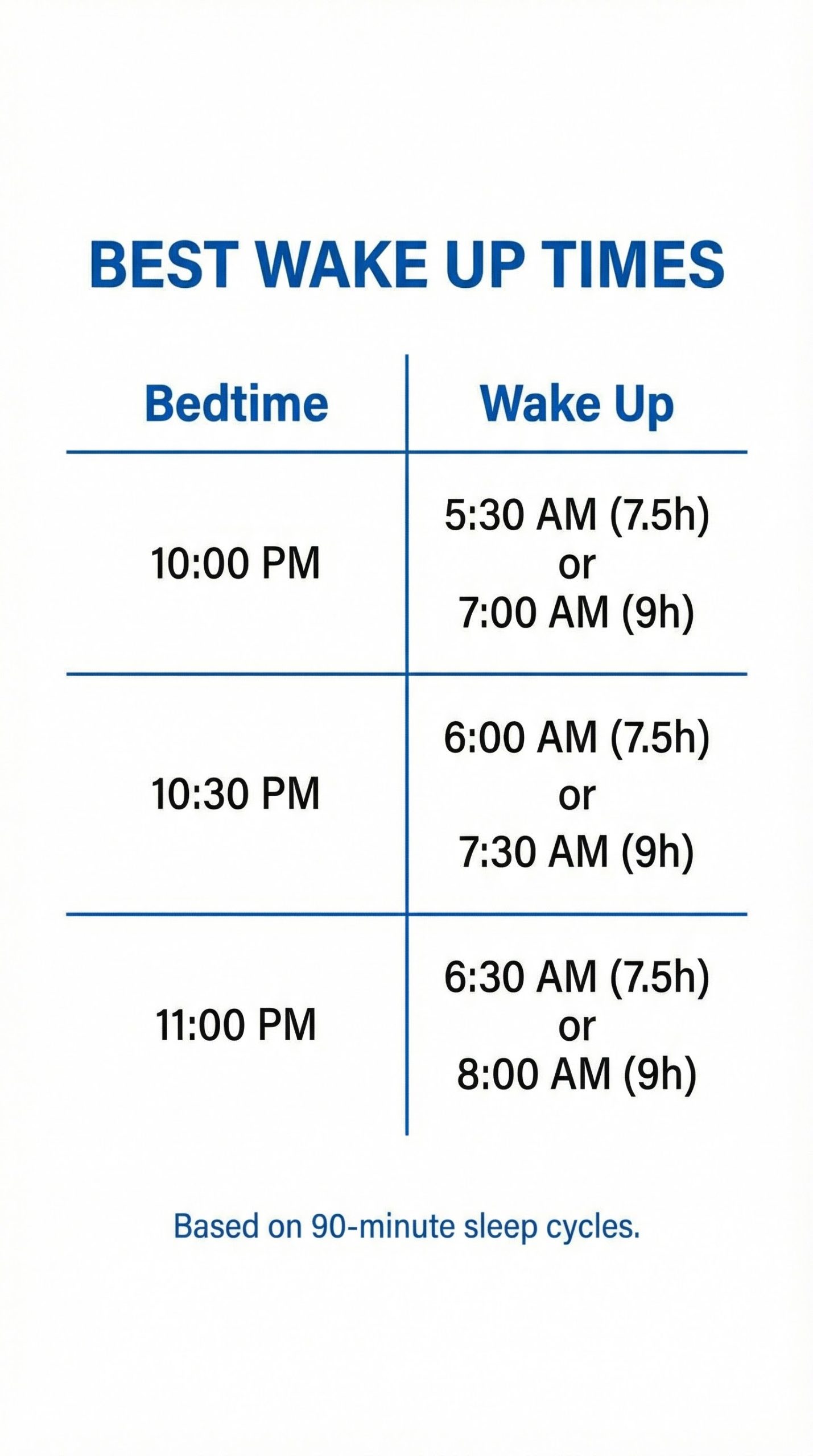
Sleep isn’t a solid block of time; it happens in waves. A full sleep cycle (Light Sleep -> Deep Sleep -> REM) takes approximately 90 minutes. Waking up in the middle of deep sleep leaves you exhausted. Waking up at the end of a cycle makes you feel refreshed.
Here is a breakdown of optimal wake-up times based on when you go to sleep:
Why Routine Matters More Than Intensity
The beauty of the 10-3-2-1-0 formula is that it builds consistency. Our bodies love rhythm. By regulating your light exposure, food intake, and mental stimulation, you naturally align your hormones.
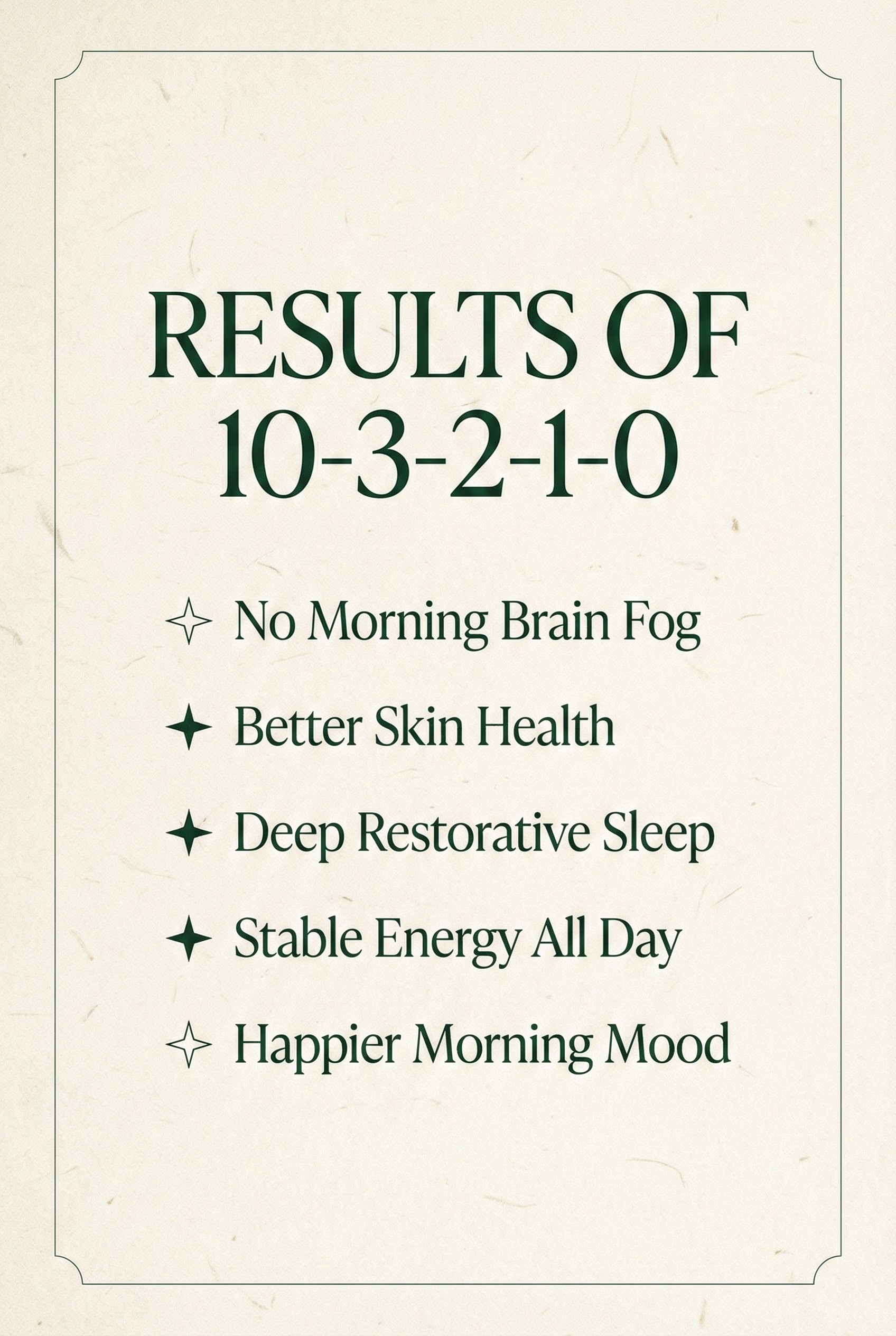
You don’t need to be perfect every single day. However, aiming for this structure 80% of the time will drastically improve your mood, skin health, and productivity.
Building a Calm Evening Space
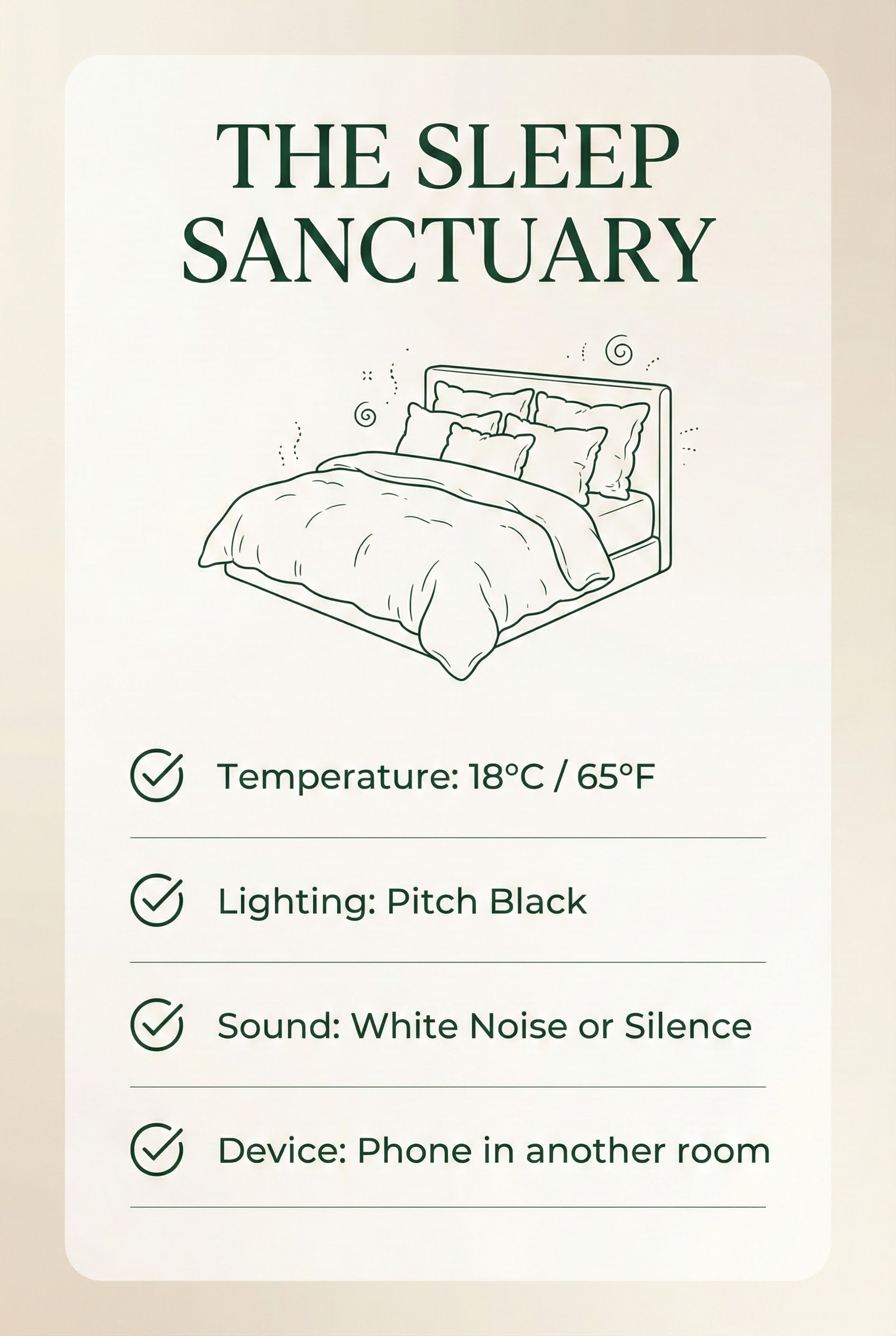
To make this rule easier to follow, turn your bedroom into a sanctuary for rest:
- Temperature: Keep the room cool (around 18-20°C or 65-68°F).
- Darkness: Use blackout curtains.
- Quiet: If you live in a noisy area, consider a white noise machine.
Frequently Asked Questions (FAQ)
Q: Can I drink water during the “3 hours before bed” window? A: Yes, you can drink water, but try to sip rather than gulp large amounts. The goal is to stay hydrated without disrupting your sleep with bathroom breaks.
Q: I work night shifts. Can I use this rule? A: Absolutely. The 10-3-2-1-0 rule is based on your sleep time, not the clock time. If you sleep at 8:00 AM, stop caffeine at 10:00 PM the night before, stop food at 5:00 AM, and so on.
Q: What if I can’t fall asleep instantly? A: That is normal. Most healthy adults take 15-20 minutes to fall asleep. If you are following the “1 hour no screens” rule, your brain will be much more ready to sleep than usual.
Q: Is hitting snooze really that bad? A: Yes. Fragmented sleep is less restorative than continuous sleep. It is better to set your alarm for the latest possible time you need to get up and get up immediately, rather than setting it early and snoozing.
📌 Save This for Later!
Don’t let this info get lost in your feed. Save this guide to your Pinterest Boards to keep these tips handy for next time.