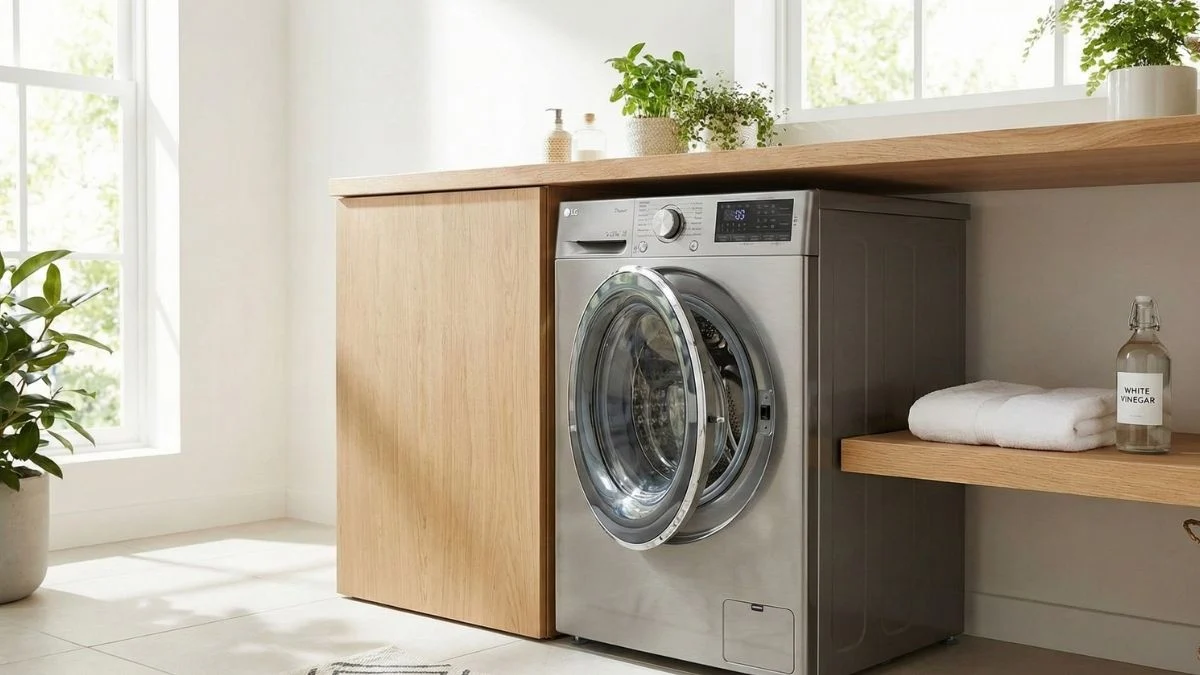
You know that heart-sinking moment: you open your expensive, high-efficiency front-loader expecting the scent of “Spring Rain,” but instead, you’re hit with a waft of what can only be described as “Wet Basement” or, worse, “Forgotten Gym Socks.” If you feel like your washing machine is betraying you, you aren’t alone. According to the savvy home-cleaning communities on Reddit, that musty smell isn’t a sign you’re doing laundry wrong—it’s actually a design quirk of modern, airtight machines that requires a bit of a “community-approved” strategy to fix.
The “Always Open” Doctrine: Your Best Defense
The biggest secret to a fresh-smelling laundry room is surprisingly simple: never, ever fully close your washer door when it’s not in use. Unlike the old-school top-loaders our moms had, modern front-loaders are built with watertight seals. When you click that door shut after a cycle, you’re essentially hosting a humid, dark incubator for bacteria.
The consensus among users is the “Always Open” doctrine. Whether you swing it wide or just leave it cracked, the goal is to ensure the rubber gasket is not touching the machine frame. This allows the drum to dry out completely between loads.
Propping it Right: Gadgets and Frugal Hacks
If your washer door has a habit of swinging shut (or if you’re worried about it being a tripping hazard), the community has invented some pretty clever workarounds:
- The Magnetic Prop: You can find a flexible magnetic thing on Amazon that holds the door at a safe, fixed angle. It’s a small investment to keep the airflow moving without cluttering the room.
- The Pool Noodle Hack: If you’re feeling crafty, cut a small “C” shape out of a foam pool noodle and clip it onto the edge of the door. It prevents the latch from engaging, ensuring a constant gap for air.
- The Sacrificial Towel: Simply draping a dry towel over the top of the door is enough to keep it from sealing shut.
Don’t Forget the “Kidney” of Your Machine
Did you know your washing machine has a “kidney”? That’s what many users call the drain pump filter. Usually hidden behind a tiny door at the bottom front of your machine, this filter catches hair, coins, and—believe it or not—stray baby socks.
If your laundry room smells like “sewage” or “rotten eggs,” it’s time to clean your washing machine filter. When organic debris sits in the stagnant water of the trap, it decomposes and brews a major stink. Aim to drain and scrub this out once a month to keep things fresh.
The “Wipe Down” Ritual
If ventilation is your preventative strategy, managing the rubber gasket (the “boot”) is your active warfare. This seal has deep folds that love to trap lint, water, and leftover detergent.
Moms in the cleaning community recommend a “Wipe Down” ritual after every single load. Use a dry cloth or a “sacrificial sock” from the load you just finished to dig fingers in to the innermost crevices. Removing that “sludge” before it has a chance to turn into biofilm is the “Gold Standard” for a mold-free machine.
Rethink Your Chemicals: Softener vs. Vinegar
Here’s a plot twist: your favorite fabric softener might be the villain. Experienced users frequently describe liquid softener as liquified animal fat or waxy buildup that coats the outer tub of your machine. This sticky layer becomes a permanent buffet for mildew.
The Pro-Tip Solution:
- Switch to Vinegar: Many users have swapped softener for white vinegar. It cuts through soap scum, deodorizes, and softens clothes without leaving a gunk-trap behind.
- Try Powder: Transitioning to a powdered HE detergent can also help, as it is often more abrasive and helps “scour” the drum walls during the wash.
The Laundry Drawer “Tunnel”
Finally, don’t ignore the detergent drawer. It’s constantly wet and coated in soap, making it a prime spot for black mold to grow on the “ceiling” of the cavity. Between washes, pull the drawer out (leave it ajar) to let the internal tunnel dry out.
Managing a modern washer might feel like a part-time job, but with a little ventilation and these community hacks, you can finally say goodbye to the musty smell for good!