

The “Eat Me First” Box: A Simple Fridge Hack to Save Money and Stop Food Waste
We’ve all been there. You open the crisper drawer with the best intentions, only to find a bag of spinach that has transformed into sad, green sludge. It’s a moment of silent guilt, frustration, and—let’s be honest—wasted cash.
But here is the thing: this isn’t just a “you” problem; it is a collective struggle. Research indicates that while we often blame supermarkets, a staggering 61% of food waste actually happens in our own kitchens.
Think of it as an “invisible tax” on your household. In widely shared parenting and budgeting discussions, experts note that for a family of four, this waste adds up to thousands lost annually. The solution? It’s not about cooking better; it’s about designing your kitchen to work for you.
Enter the “Use-By Soon” shelf—a science-backed strategy to save your groceries and your wallet.
The Science of “Nudge Theory” in Your Kitchen
You might think you just need more willpower to cook that broccoli, but what you actually need is better “choice architecture.” The research highlights that fighting food waste is a behavioral design problem.
This concept relies on reducing “decision fatigue”—that tired feeling you get at 6 PM when you can’t decide what to cook. By designating a specific “Eat Me First” zone, you send a signal to your brain: “Don’t think, just eat what is here.”
It turns a complex analysis into an automatic habit. Organizations like Love Food Hate Waste NZ have long advocated for using visual cues like stickers or specific zones to make these decisions effortless.
How to Set Up Your Command Center
Setting up this zone is easier than you think, but placement is everything. According to fridge thermodynamics and behavioral insights, you shouldn’t just shove this box anywhere.
1. The Equipment
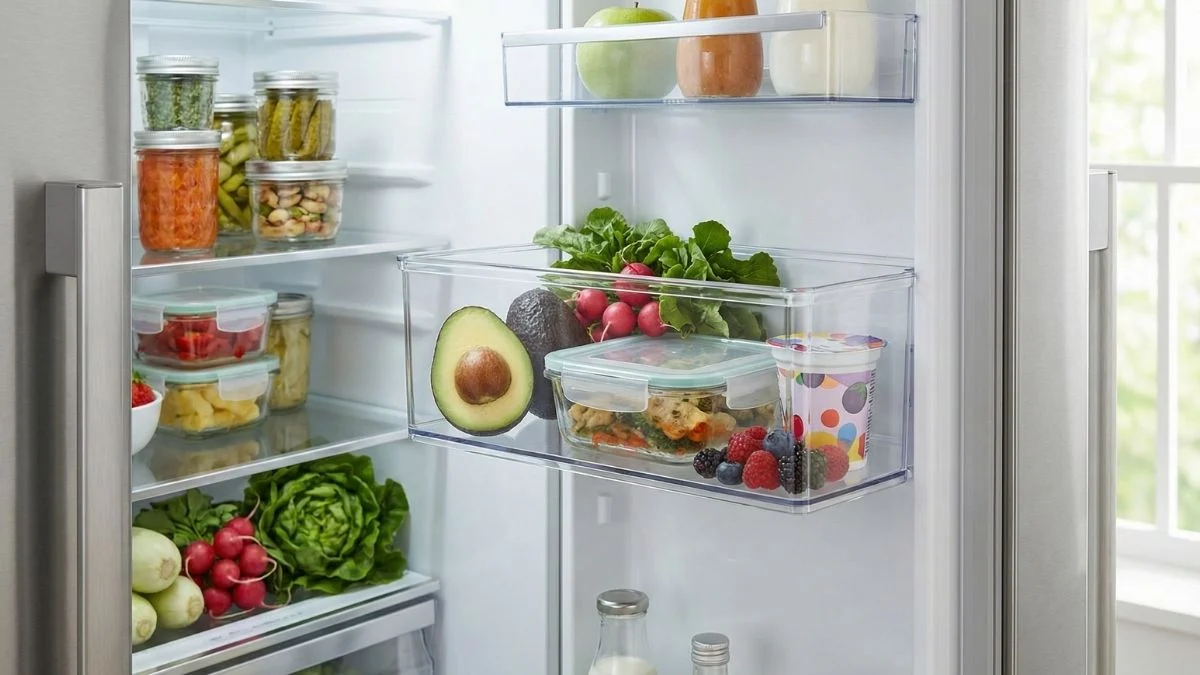
You need a clear, BPA-free plastic container or a glass bin. Visibility is key. If you can’t see it, you won’t eat it. Opaque containers are often where good food goes to die.
2. The Strategic Location
Based on the thermal mapping of standard refrigerators, the top shelf (middle or right side) is the prime real estate.
- Thermodynamics: Heat rises, making the top shelf slightly warmer—ideal for leftovers and ready-to-eat foods (but bad for raw meat).
- Psychology: This is eye-level. It leverages the “default bias,” meaning you engage with what you see first when you open the door.
3. What Goes Inside?
This box is for the “urgent” list:
- Leftovers: That pasta from last night.
- Half-used ingredients: Half an onion, an open avocado, or an opened carton of cream.
- Ripening produce: Tomatoes getting soft or bananas starting to spot.
- Short-dated dairy: Yogurt expiring within 48 hours.
The “Kitchen Closing” Routine
Maintenance is where the magic happens. The report suggests a method called Habit Stacking—attaching a new habit (checking the box) to an old one (cleaning up after dinner).
Try the 2-Minute Kitchen Closing Routine:
- Before turning off the lights at night, package any counter leftovers.
- Place them in your “Eat Me First” box.
- Glance at the box to decide tomorrow’s breakfast or lunch.
This tiny habit solves the “what’s for breakfast?” problem before you even wake up.
Rescue Mission: Reviving Sad Vegetables
Sometimes, vegetables in your bin look wilted, but they aren’t rotting—they are just dehydrated. Community insights highlight a simple molecular trick called Hydro-Shock.
- The Method: Trim the dry stems of wilted broccoli, carrots, or greens. Submerge them in a bowl of ice water for 15 to 60 minutes.
- The Result: The water pressure restores the plant cells, making them crunchy again.
For a detailed guide on which veggies respond best to this “spa treatment,” resources like Food52 offer excellent tutorials on reviving wilted produce.
Turn “Scraps” into Meals
Finally, when the box gets full, embrace “Blank Canvas Cooking.” You don’t need a strict recipe; you need a formula.
- The “Everything” Soup: Sauté onions, add chopped veggies from your bin, cover with broth, and simmer until soft.
- The Fridge Omelet (Frittata): Eggs are the ultimate binder. Sauté your leftover veggies and cheese, pour beaten eggs over them, and bake until set.
By installing a simple plastic bin and shifting your mindset, you aren’t just organizing your fridge—you are reclaiming your budget and respecting the resources that go into your food.