

Granny Square, All Grown Up: Modular Crochet Designs Worth Showing Your Artisan
The granny square is one of textile craft’s most recognised forms — a small, modular unit assembled from concentric rounds of yarn. For decades it carried the comfortable image of mismatched scraps and well-loved blankets. Designers working in contemporary textile art have quietly rewritten that association. Today the same geometry drives structured bags, floor-length cardigans, and exhibition-grade wall panels. What shifted was not the square itself, but the scale, the palette, and the intention behind each arrangement.
This collection gathers design directions worth bookmarking — not as patterns to follow, but as visual references worth bringing to a skilled artisan.
Color-Blocked Throws: Color as Architecture
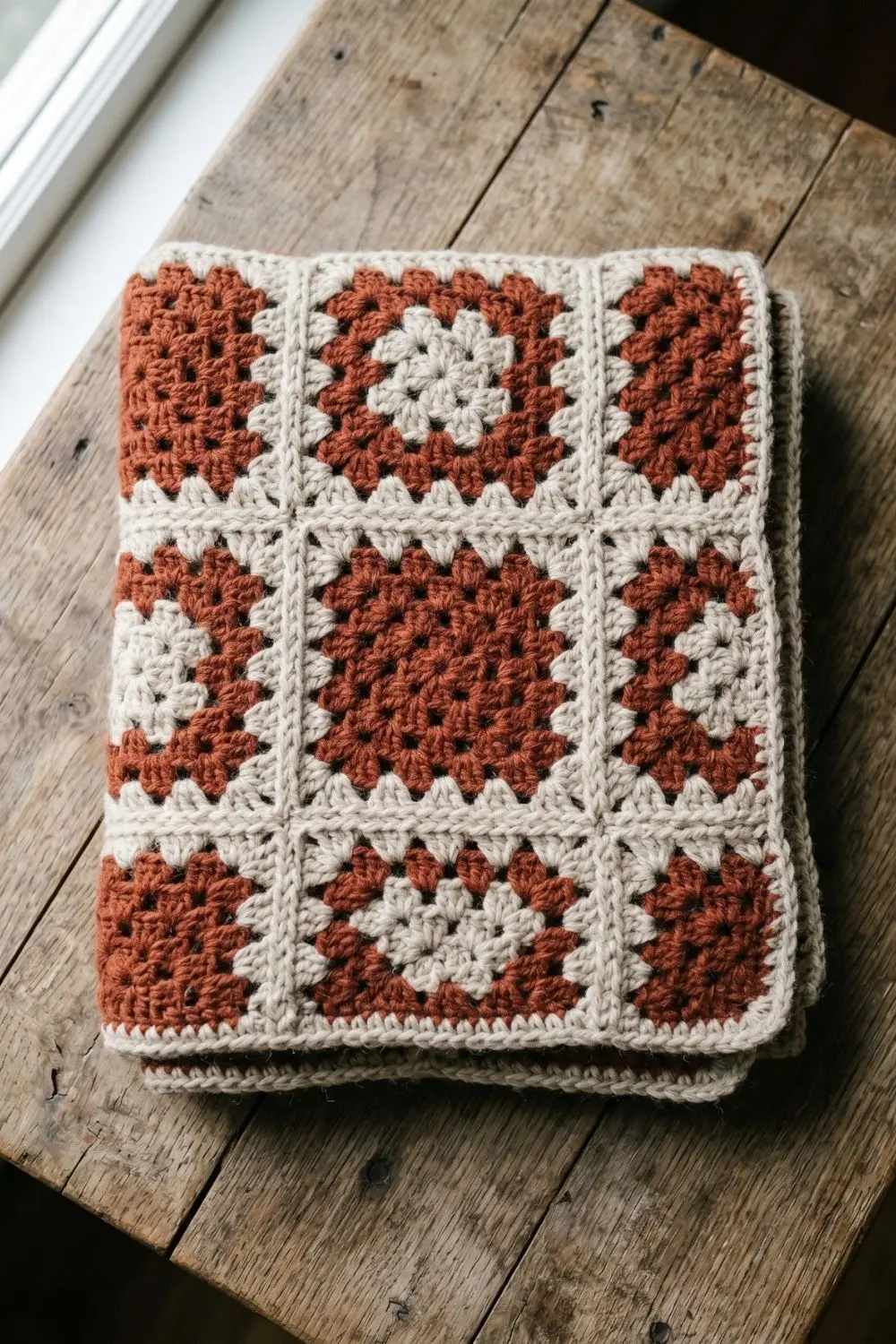
The most compelling contemporary throw designs treat colour the way an architect treats a floor plan: every decision deliberate, the whole reading as a single cohesive statement. Designers have moved away from random assortment toward strict two- or three-color systems — deep terracotta paired with undyed natural wool, or a progression from dusty sage into charcoal — where each square reinforces the larger composition.
Arrangement carries as much weight as colour. Some designers rotate alternate squares forty-five degrees to produce a diamond grid rather than a classic checkerboard. Others leave intentional gaps between joined units, so negative space becomes part of the pattern. Oversize squares — twenty centimetres per unit rather than the standard eight to ten — produce a bolder, more graphic result that reads well as a room’s focal textile.
A throw of this kind takes considerable time to complete. That investment, placed with the right artisan, produces a piece that functions as both working blanket and lasting home object.
Structured Bags Built from Modular Units
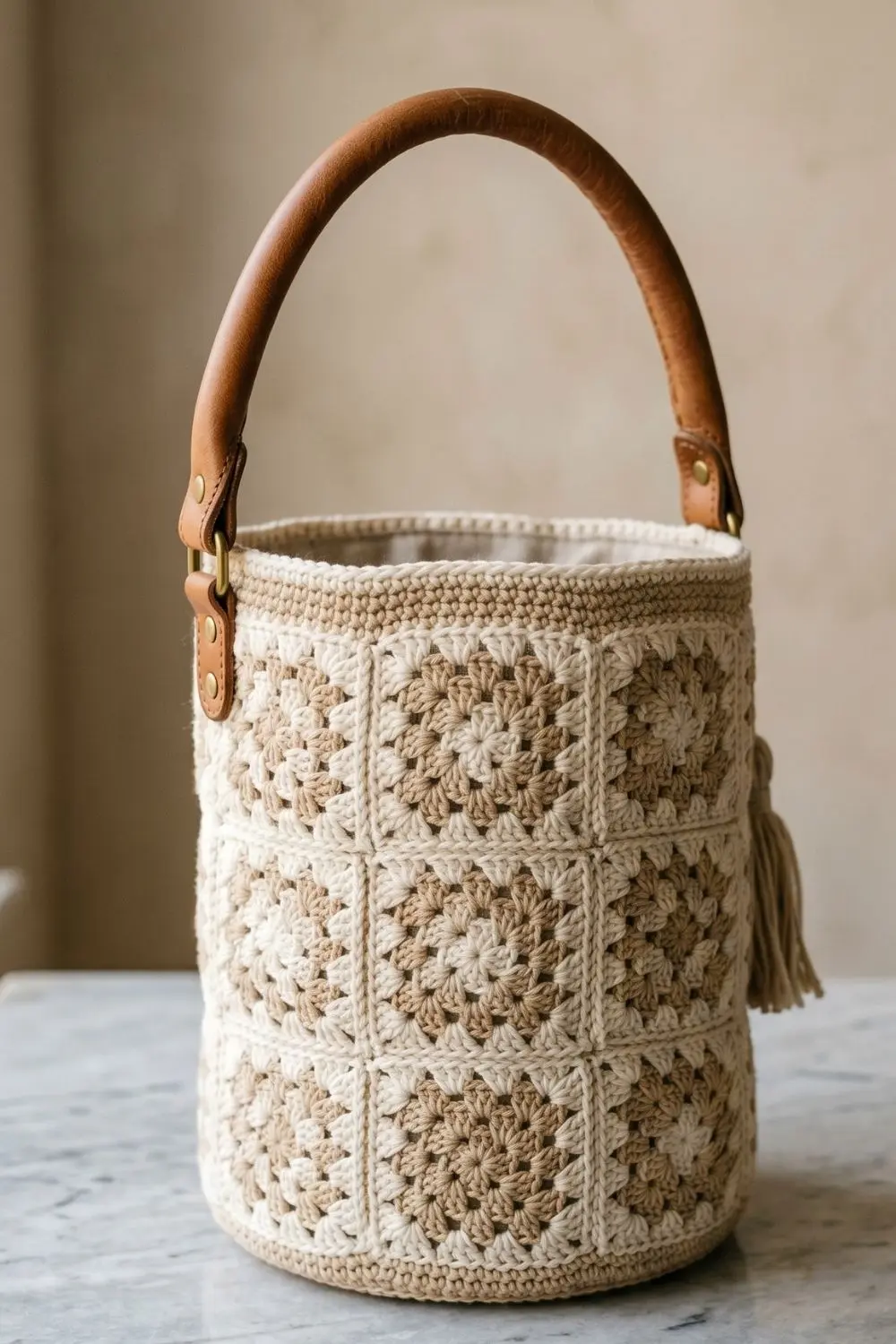
The granny square tote has had a sustained moment in fashion, but the more interesting applications go beyond the basic shopper. Structured bucket bags assembled from square motifs — with a rigid base, clean side seams, and a single rolled leather handle — translate the modular technique into an object with genuine utility and a considered silhouette.
Material choice determines the bag’s character entirely. Cotton yarn in a tight gauge produces something close to canvas in its firmness. Linen-cotton blends add a refined, slightly textured surface. Raffia inserts between cotton squares introduce contrast in both texture and tone. Lining the interior with sturdy woven fabric keeps the structure stable and makes the piece practical for daily use.
A well-proportioned square bag — roughly thirty centimetres wide, twenty-five tall — holds more than it appears to and ages beautifully as the yarn softens with use.
Wearable Panels: Cardigans, Vests, and Long Layers
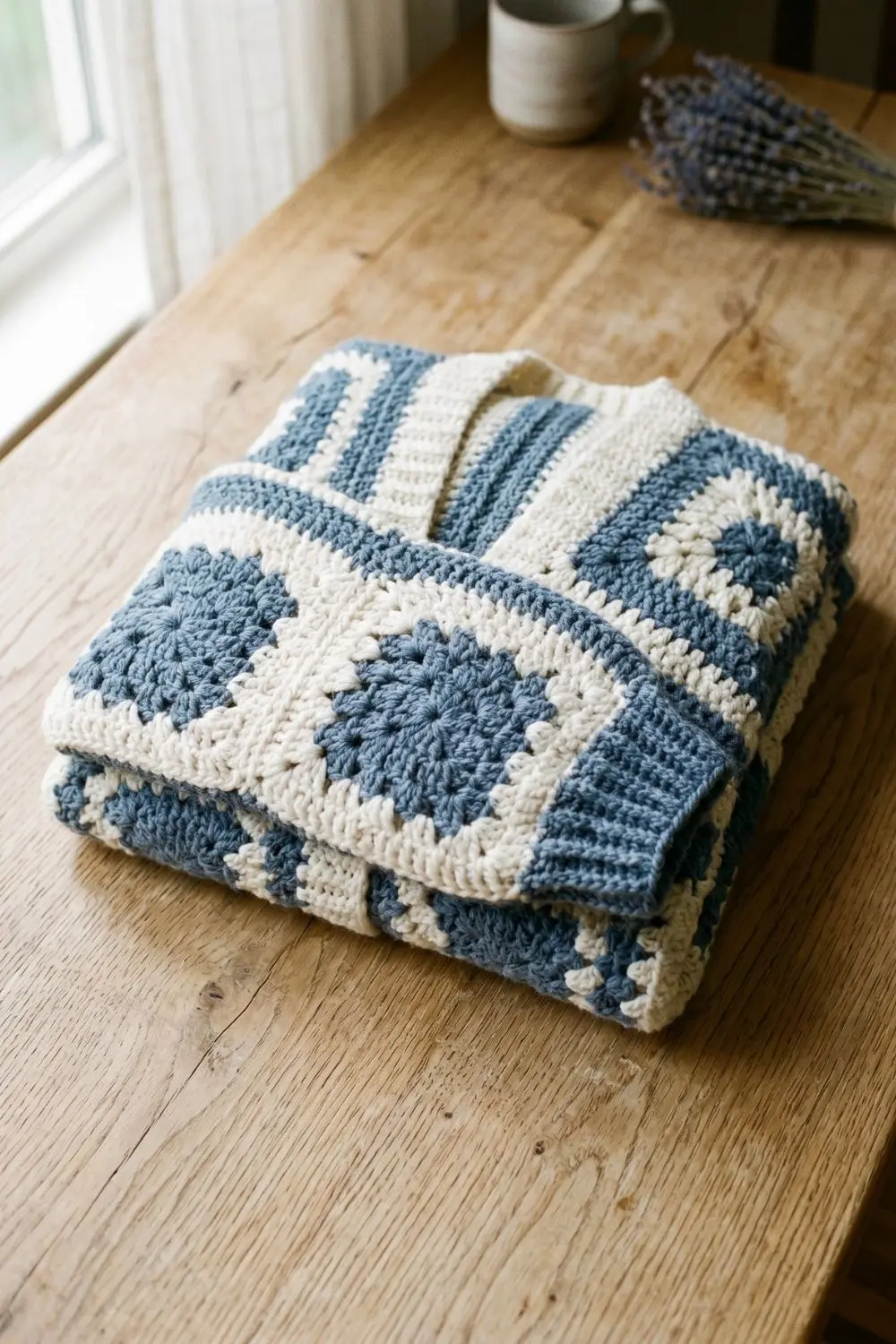
Contemporary crochet fashion has found a confident footing in modular construction. Cardigans assembled from individual squares bypass the complex shaping calculations of traditional garment construction: the modular units themselves define the structure, and the arrangement determines the drape and proportion.
The most wearable examples keep the silhouette generous — wide sleeves, a relaxed body, a length that falls to mid-thigh or below. Colour choices lean toward quiet contrasts: ivory and oat, dusty blue and warm white, deep plum and pale sand. Worn over a long dress or wide-leg trousers, a modular cardigan of this kind requires no additional layering to achieve a finished look.
Sleeveless vests assembled from larger panels offer a more accessible commission for a newer artisan — fewer joins, a faster finish, and the same graphic quality. Paired with an ankle-length skirt, the result is both relaxed and intentional.
Wall Panels: Textile Art for Vertical Surfaces
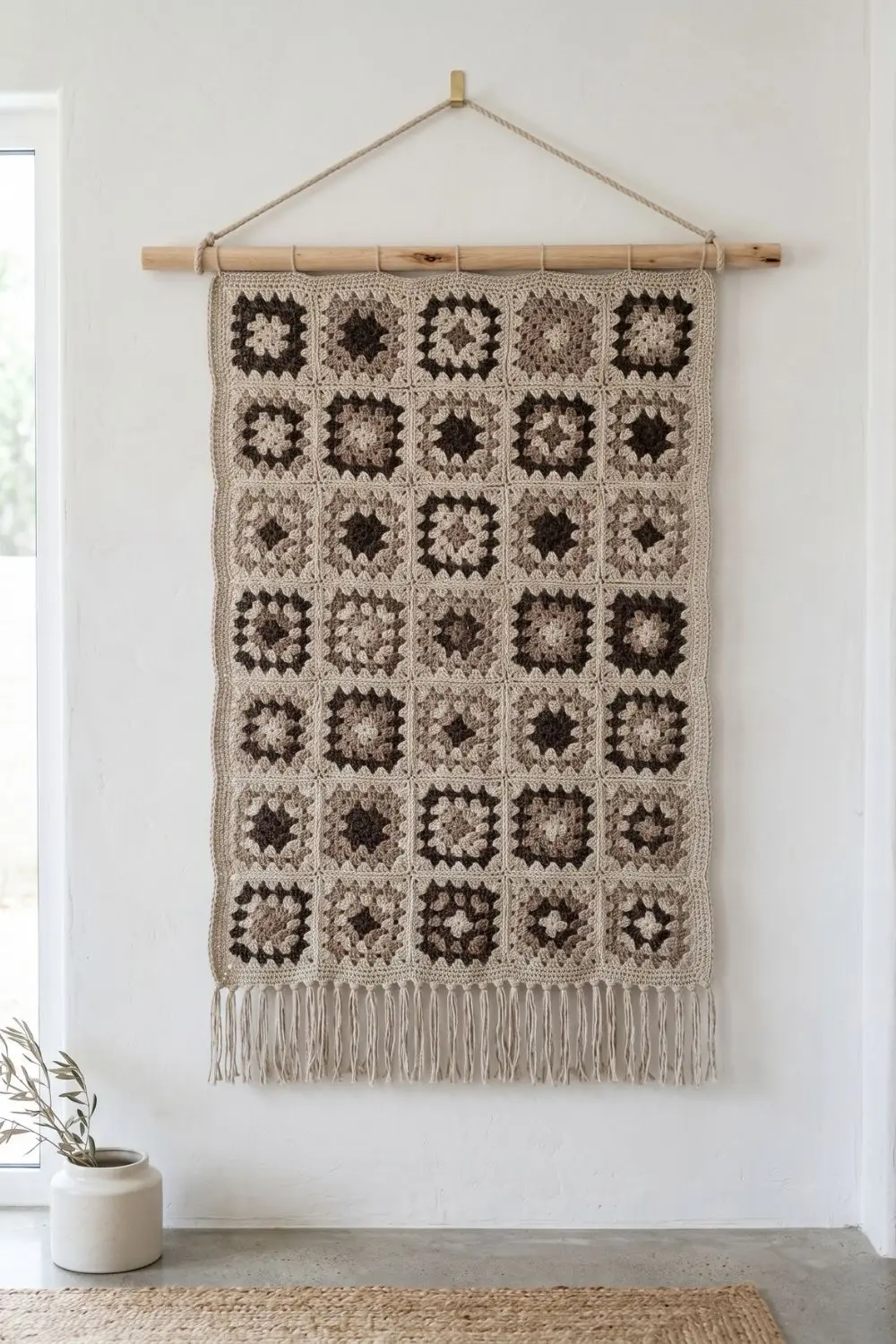
The granny square’s modularity makes it a natural candidate for wall-mounted textile work. A composition of fifty to eighty squares, assembled into a rectangular panel and mounted on a wooden dowel, occupies wall space the way a painting does — with weight, presence, and considered colour.
The most effective wall panels work with a restrained palette and let texture carry the visual interest. A three-colour composition in warm neutrals — raw linen, soft taupe, deep espresso — reads quietly from a distance and rewards close examination for the small variations between individual squares.
Scale matters significantly. A panel measuring one metre by eighty centimetres changes a room. A set of three smaller panels arranged as a triptych offers flexibility for different wall proportions.
The Collection at a Glance
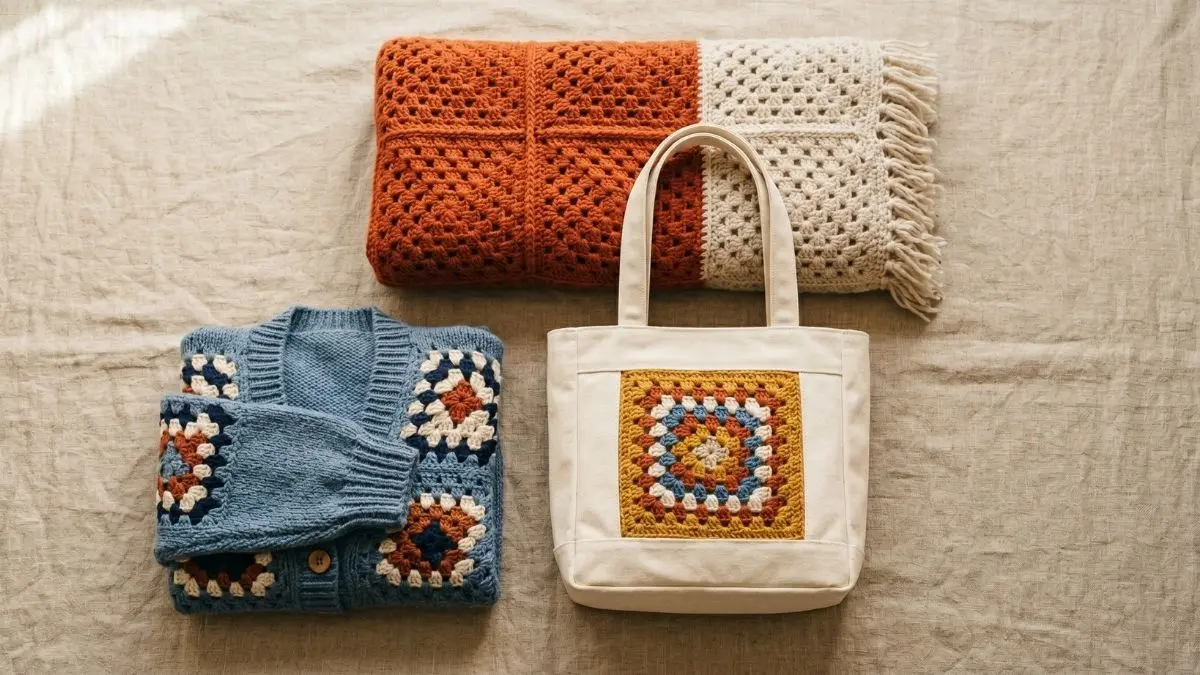
Four design directions, one surface. The throw anchors the composition at the back — terracotta squares against natural wool, folded to show the colour system at full scale. In front of it, the structured tote sits upright, its ivory and sand motifs pressed tight against each other by the linen lining inside. The cardigan lies folded to the left, dusty blue panels catching the light differently from every angle. Together, they make the case that the granny square’s strength was never the nostalgia — it was always the geometry.
About These Designs
The pieces shown throughout this post are visual concepts gathered for inspiration purposes only. Women’s Alphabet does not sell, produce, or distribute crochet patterns or finished items. If a design appeals to you, consider saving the image and sharing it with a skilled local artisan or crochet maker — they can help you realise a similar piece with the yarn weight, colour palette, and dimensions that suit you best.