

Why Kids Need a “Boredom Detox” (And How to Survive It)
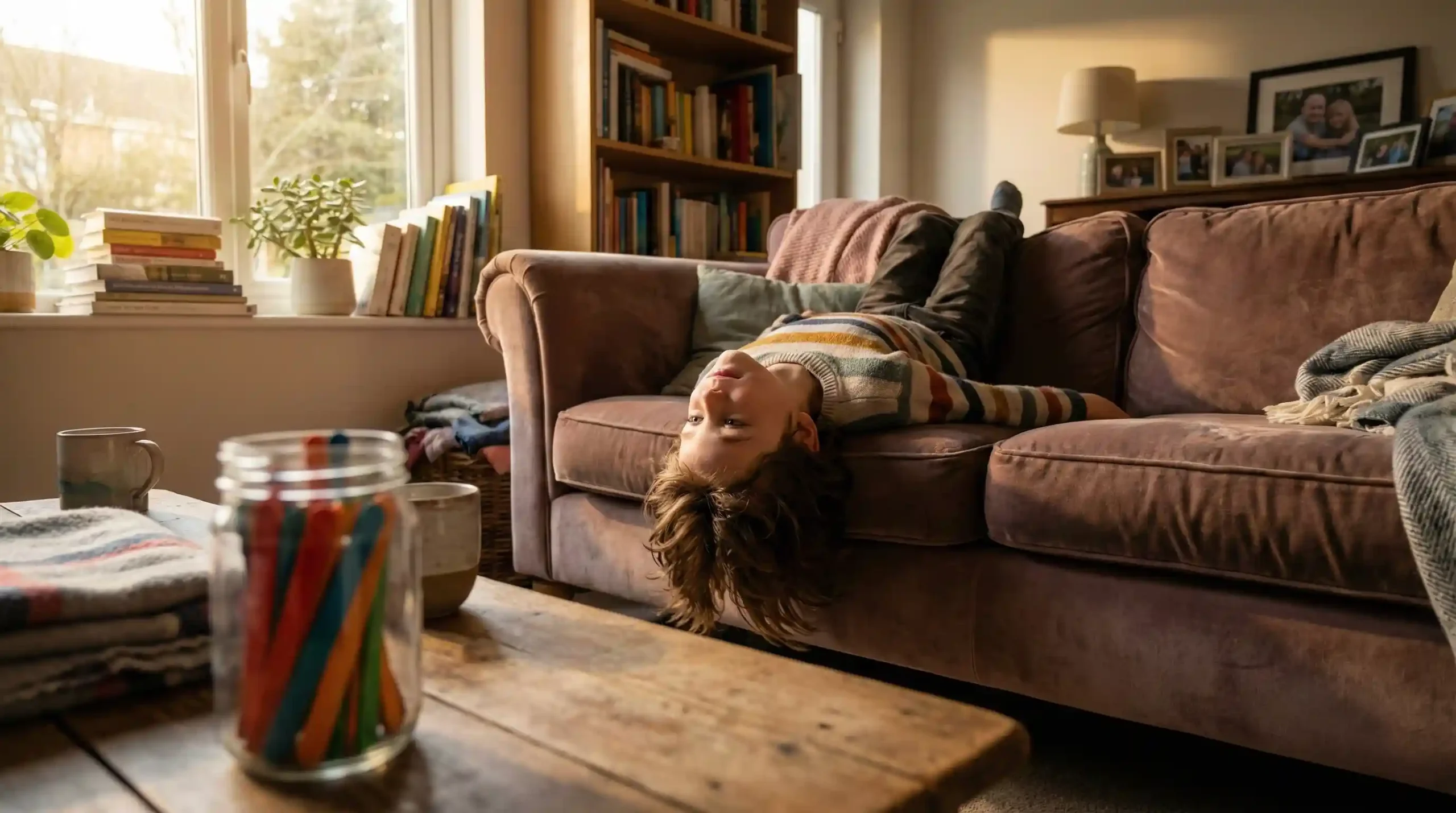
You know the look. The slumped shoulders, the heavy sigh, and the sentence that makes every parent’s stomach drop: “I’m bored.”
In today’s hyper-connected world, that phrase isn’t just a complaint about a lack of activity—it is often a physiological signal of a dopamine crash. Before you hand over the iPad to buy some peace, let’s look at what is actually happening inside that little brain. According to a comprehensive analysis of neuroscientific literature and community experiences, leaning into that boredom might be the best thing you ever do for them.
Here is how to navigate the “dopamine drop” without losing your mind.
The Biology of “Boring”: It’s Not About You
First, let’s alleviate some guilt. If your child seems physically uncomfortable doing nothing, it’s not because you haven’t provided enough toys. It’s because modern screens are designed to exploit the brain’s “reward prediction error.”
When a child scrolls through TikTok or opens a loot box in a game, they get a “supernormal” hit of dopamine—the molecule of motivation and seeking. Real life—drawing, walking, or staring at the ceiling—releases dopamine much slower.
According to research, when you take the screen away, the brain protests. That “boredom” is actually a withdrawal symptom. But here is the good news: pushing through it unlocks the default mode network (DMN). This is the brain’s “idea incubator” that only turns on when we aren’t focused on a specific task. It is where autobiographical memory, empathy, and problem-solving happen.
Decoding the Signal: What They Are Really Saying
Across child development theories, experts suggest that “I’m bored” is rarely about a lack of things to do. It is a code for one of four things:
- “I’m Dysregulated”: My dopamine just tanked, and I don’t know how to calm down.
- “I’m Lonely”: I don’t want an activity; I want connection with you.
- “I Lack Agency”: I’m so used to being directed by school and apps that I’ve forgotten how to direct myself.
- “Carry the Load”: This emptiness feels bad, and I want you to fix it for me.
The Withdrawal Phase: Brace Yourself
If you decide to go screen-free to treat boredom, you need to manage your expectations. It will get worse before it gets better.
Community discussions on platforms like Reddit describe a “detox” period often characterized by irritability, phantom vibrations (feeling the phone buzz when it isn’t there), and even physical fatigue. The brain feels “foggy” as it recalibrates to lower stimulation levels.
Collective Insight: Many parents report that if you can withstand the initial “tantrum” or restlessness (which experts note is the peak of the withdrawal), children often slip into a state of “deep play” shortly after. You just have to survive the gap.
Strategic Frameworks: How to Handle the Whining
You don’t need to be the “Entertainment Director.” Here are three battle-tested strategies from the research report.
1. The “Chores Bluff” (Benign Neglect)
This is a favorite in parenting communities. When a child complains of boredom, your response should be neutral and unhelpful regarding entertainment, but enthusiastic regarding contribution.
The Script: “You’re bored? That’s great! I have so much laundry that needs folding. You can help me!”
Why it works: It reframes the situation. If the alternative to boredom is a high-effort, low-reward task (housework), the child is suddenly motivated to find their own high-reward play.
2. The Boredom Jar: Scaffolding Choice
Going from total screen immersion to total freedom can be paralyzing. A Boredom Jar acts as a bridge.
- The Setup: Fill a jar with paper strips or popsicle sticks.
- Color Code It:
- Blue: Quiet solo play (Reading, Legos).
- Green: Artistic/Messy (Play-doh, painting).
- Red: Active (Jump rope, backyard run).
- Yellow: Service (Write a letter to Grandma, tidy a shelf).
- The Rule: No vetos. If you pick it, you do it for 15 minutes.
3. “Strewing” (The Art of Leaving Things Out)
This is a Montessori-based technique. Instead of saying “Go play with your blocks,” you simply leave a half-finished block tower on the coffee table.
Why it works: It bypasses the “demand avoidance” some kids feel when told what to do. It invites curiosity rather than compliance.
The “Bridge” Protocol: Crossing the Dopamine Gap
One of the biggest friction points is the transition from Screen to Real World. You cannot expect a child to go from a high-dopamine video game straight to homework.
You need a “Bridge Activity” that offers high sensory input to “wash” the screen trance away:
- Physical: Wrestling, tickle fights, or jumping jacks.
- Sensory: crunching on ice, eating a sour apple, or splashing cold water on the face.
Age-Specific Quick Tips
- Toddlers (2-5): They need sensory immersion. A bin of water and a whisk can be hypnotic for this age group.
- School Age (6-12): Focus on production over consumption. Instead of watching a show, have them write a script for one.
- Teens (13-18): They need mastery and risk. Cooking a complex meal or skateboarding provides a “slow dopamine” burn that is sustainable.
The Adult Mirror: It Starts With Us
We can’t ignore the elephant in the room. If we check our phones at every red light, we are teaching our kids that downtime is dangerous.
Research on “phubbing” (phone snubbing) suggests that parents who are physically present but digitally absent breed an environment of insecurity.
Try the “Toilet Rule”: Never take your phone into the bathroom. It sounds funny, but reclaiming those few minutes of biological necessity as “screen-free time” is a critical first step in retraining your own brain to tolerate silence.
Boredom isn’t an emergency. It’s a canvas. As the research reminds us, the goal isn’t to kill the boredom—it’s to build the strength to sit with it until the inspiration arrives.