
Chemical Sunscreen vs. Physical Sunscreen: The Honest Truth
Sunscreen is the non-negotiable step in any skincare routine. It is the best anti-aging product money can buy. But when you stand in the pharmacy aisle, you are faced with a choice: Chemical or Physical (Mineral)?
There is a lot of fear-mongering and confusion surrounding these two types of SPF. Does chemical sunscreen enter your bloodstream? Does physical sunscreen always leave a ghost-like white cast?
To help you make the safest choice for your skin and the environment, we are breaking down the science, the textures, and the pros and cons of each.
How Do They Work? (The Sponge vs. The Shield)
The fundamental difference lies in how they protect your skin from UV rays.
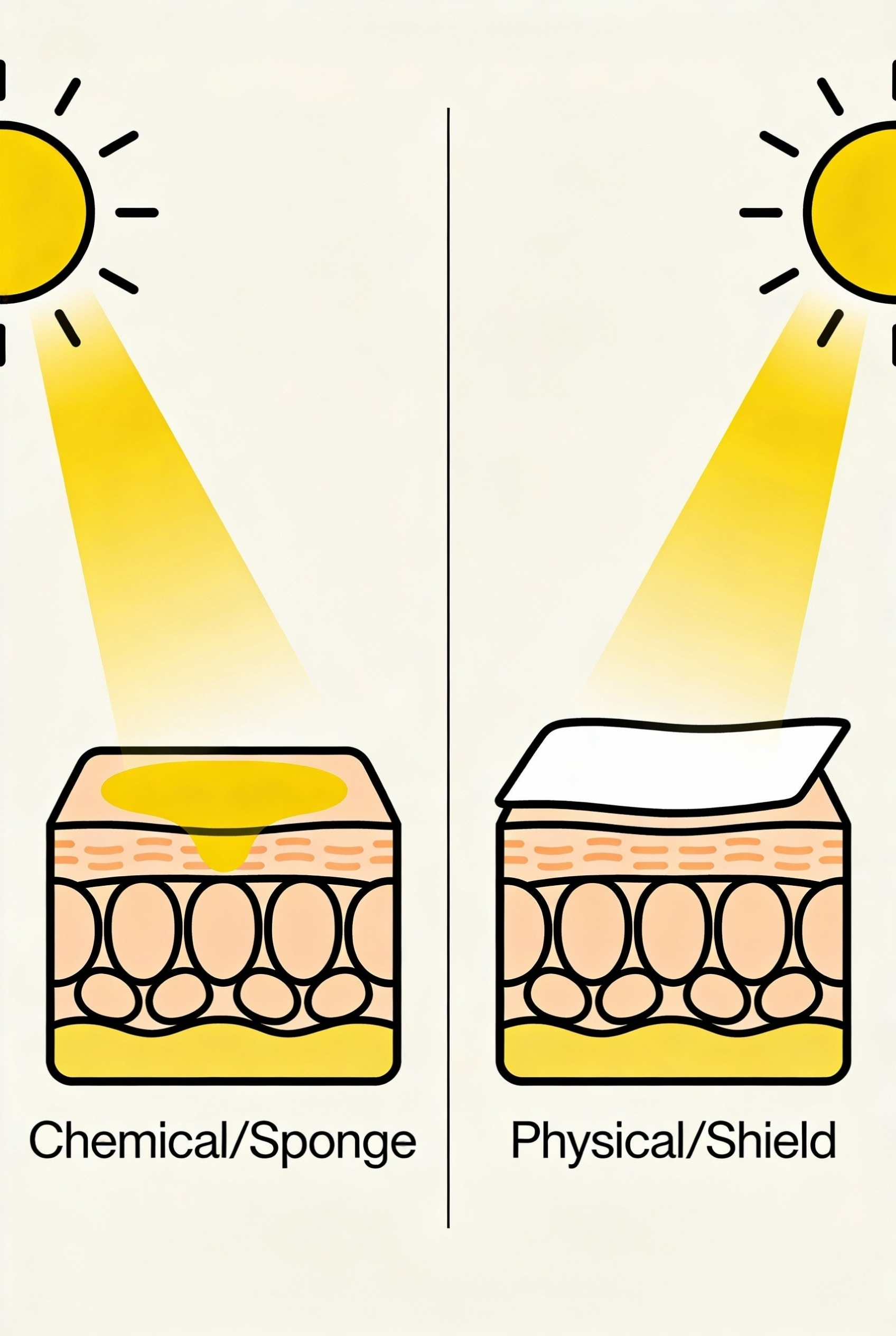
Chemical Sunscreen (The Sponge)
Chemical sunscreens contain organic (carbon-based) compounds like oxybenzone, avobenzone, and octisalate.
- Mechanism: They work like a sponge. They absorb UV rays, convert them into heat, and then release that heat from the skin.
- Texture: They are usually lightweight, transparent, and easy to spread.
Physical Sunscreen (The Shield)
Physical sunscreens (also known as Mineral sunscreens) contain active mineral ingredients: Zinc Oxide or Titanium Dioxide.
- Mechanism: They work like a shield or mirror. They sit on top of the skin and reflect/scatter UV rays away.
- Texture: They are naturally thick, white, and can be harder to blend.
Pros and Cons Breakdown
Neither is inherently “bad,” but they serve different skin types and lifestyles.
Chemical Sunscreen
- ✅ PROS: No white cast (great for deeper skin tones), water-resistant, easy to wear under makeup.
- ❌ CONS: Can cause stinging in sensitive eyes, generates heat (bad for Rosacea), takes 20 minutes to activate.
Physical (Mineral) Sunscreen
- ✅ PROS: Works immediately upon application, generally safer for sensitive skin and babies, less likely to clog pores.
- ❌ CONS: Can leave a white cast, rubs off easily (sweat/water), thicker texture.

🌿 Reef Safe Tip
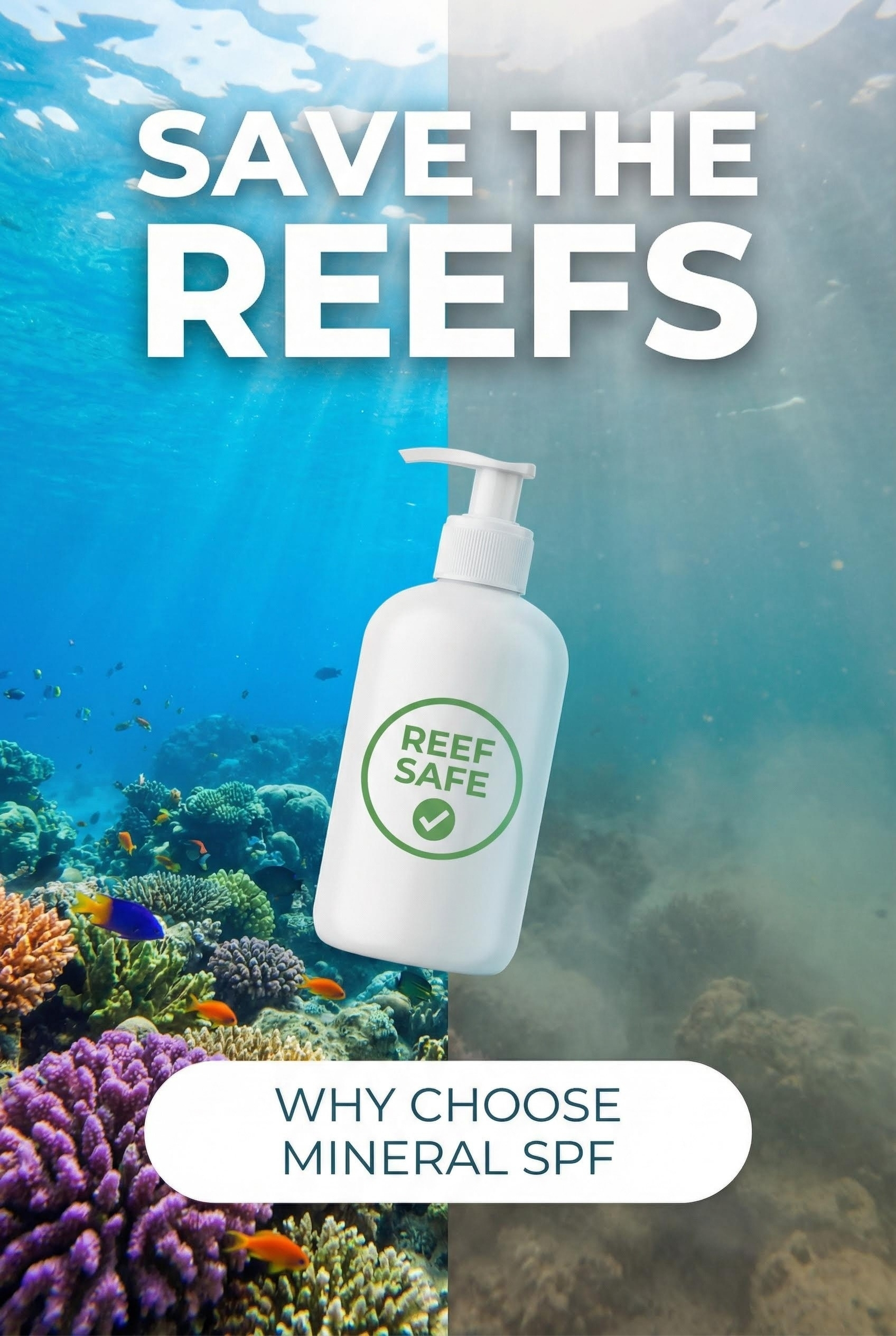
Going for a swim in the ocean? Look for Physical Sunscreens (Zinc Oxide/Titanium Dioxide) labeled “Non-Nano”. Some chemical filters like Oxybenzone are harmful to coral reefs and are banned in places like Hawaii.
The Comparison Chart
Here is a quick cheat sheet to help you decide.
| Feature | Chemical SPF | Physical (Mineral) SPF |
|---|---|---|
| Active Ingredients | Avobenzone, Oxybenzone | Zinc Oxide, Titanium Dioxide |
| Protection Style | Absorbs UV rays | Reflects UV rays |
| Activation Time | Wait 15-20 mins | Immediate |
| Finish | Invisible / Dewy | Matte / Can be White |
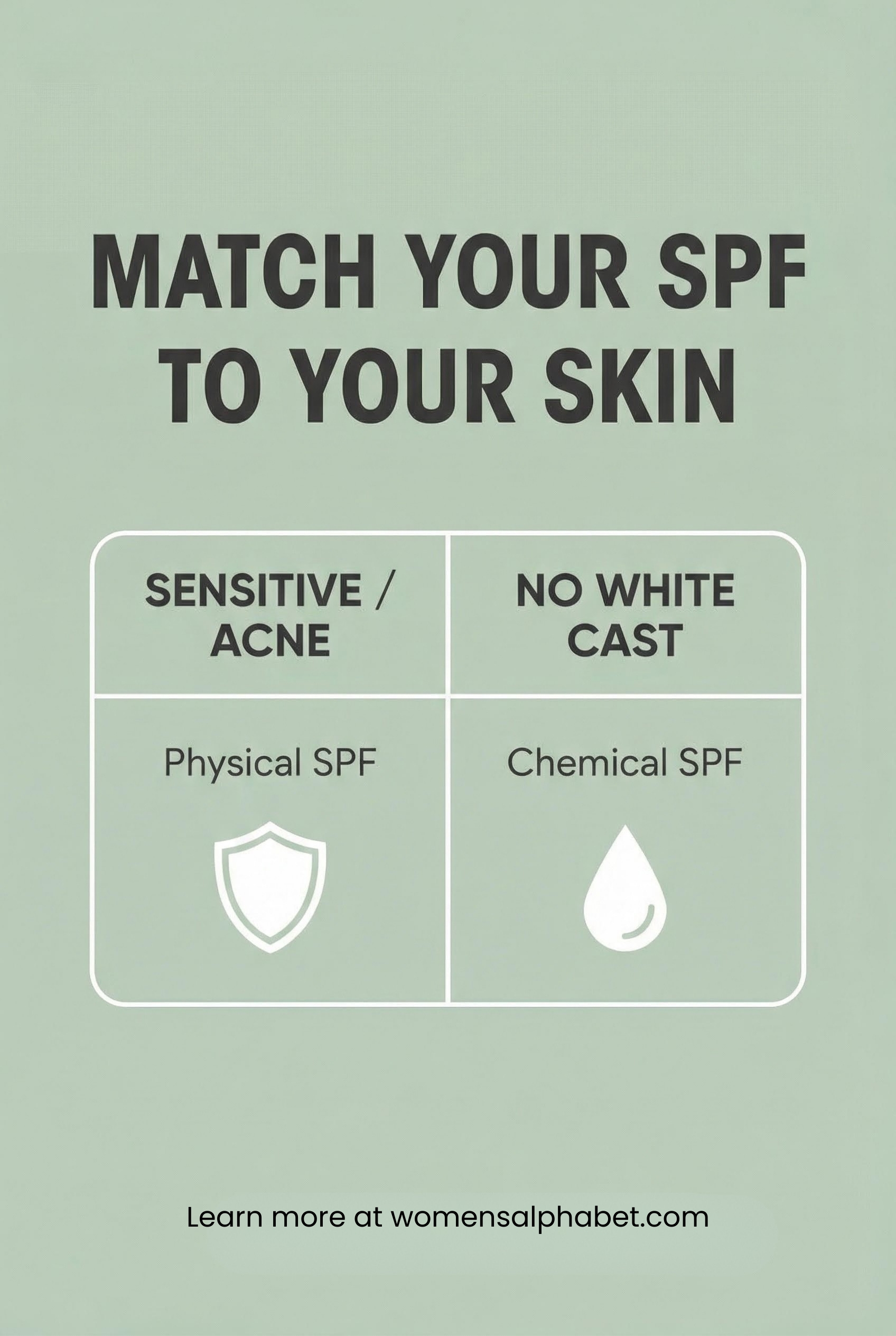
| Best For | Swimming, Sports, Makeup | Sensitive Skin, Acne, Kids |
Which One Should You Choose?
- Choose Chemical IF: You hate the feeling of heavy lotions, you have a darker skin tone and want zero white cast, or you need a waterproof formula for intense sports.
- Choose Physical IF: You have sensitive skin, rosacea, acne, are pregnant, or are looking for a “clean beauty” option that is safe for coral reefs.
The Hybrid Option
Nowadays, many brands offer Hybrid Sunscreens that mix both mineral and chemical filters. These aim to provide the safety of minerals with the elegance of chemical textures.
Remember: The best sunscreen is the one you will actually wear every single day!
📌 Save This for Later!
Don’t let this info get lost in your feed. Save this guide to your Pinterest Boards to keep these tips handy for next time.