

Cozy Knitted Pumpkin Patch
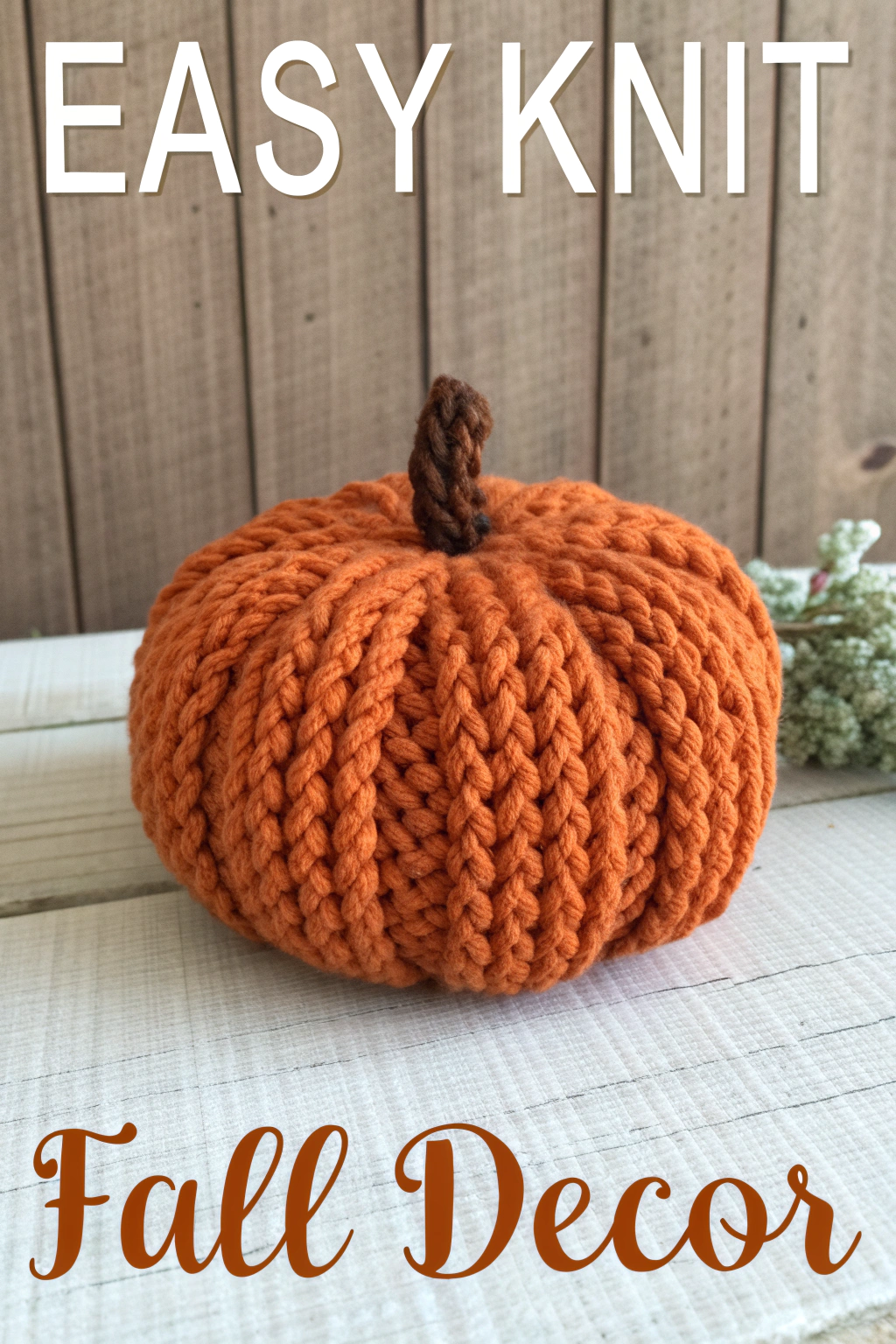
Ready to bring a touch of handmade warmth to your fall decor? This plump, cozy knitted pumpkin is just the project! It’s surprisingly straightforward to put together, even if you’re just starting your knitting journey. Forget complicated patterns; this guide focuses on simple stitches to help you fashion this charming autumn accent, exactly like the one pictured. Let’s gather our supplies and begin!
Getting Started: What You’ll Need
Before we dive in, let’s make sure you have everything ready. The pumpkin in the image is constructed using a thick, cozy yarn, giving it that lovely squishy appearance.
- 🧶 Yarn: 1 skein of Chunky weight yarn in a vibrant pumpkin orange (approx. 50-70 yards).
- 🧶 Yarn: Small amount of Chunky weight yarn in brown for the stem (approx. 5-10 yards).
- 🥢 Knitting Needles: Size appropriate for your chunky yarn (e.g., US size 10 / 6mm or US size 11 / 8mm). Check the yarn label for recommendations.
- ✂️ Scissors: For snipping yarn.
- 🪡 Tapestry Needle (or Yarn Needle): A large-eyed needle for sewing seams and weaving in ends.
- ☁️ Fiberfill Stuffing: For giving your pumpkin its plump shape.
Understanding the Basics (Simple Explanations!)
This pumpkin uses a ribbed pattern created with the Knit Stitch and the Purl Stitch. This technique creates the natural vertical segments you see on the pumpkin.
- Casting On: This is how you get your first stitches onto the needle to begin knitting.
- Knit Stitch (k): The most basic knitting stitch. Think “in, around, through, off.”
- Purl Stitch (p): The second basic stitch, often described as the opposite of the knit stitch.
- Binding Off: Securing your stitches when you’ve finished knitting a piece so they don’t unravel.
- Seaming: Sewing knitted pieces together.
- Gathering: Using a running stitch to pull the fabric together to close an opening.
Fashioning Your Pumpkin Body (Orange Yarn)
We’ll start by knitting a ribbed rectangle. The wide knit columns will form the pumpkin’s plump segments, perfectly matching the photo. For a pumpkin similar in size to the one shown, aim for a rectangle roughly 8 inches wide and 12-14 inches long.
- Cast On: Using your orange yarn, cast on 30 stitches. (For this pattern to work, your stitch count must be a multiple of 5).
- Row 1 (Right Side): *Knit 4, Purl 1. Repeat from * to the end of the row.
- Row 2 (Wrong Side): *Knit 1, Purl 4. Repeat from * to the end of the row.
- Repeat Rows 1 & 2: Continue repeating these two rows, creating wide knit ribs on the Right Side of your work. Keep knitting until your rectangle measures about 12-14 inches long.
- Bind Off: Once your rectangle reaches the desired length, bind off all stitches in pattern (following the pattern for Row 1 to keep the ribbing consistent). Leave a very long yarn tail (about 18-20 inches) for sewing.
Assembling the Pumpkin Shape
Now, let’s turn that ribbed rectangle into a recognizable pumpkin. The single purl columns will naturally become the indented segments.
- Seam the Side: Fold your rectangle in half widthwise, so the shorter edges meet and the right sides (the prominent ribbed sides) are facing each other. Using the long yarn tail you left and your tapestry needle, sew this side seam together neatly. You now have a tube.
- Gather the Bottom: Thread your tapestry needle with the yarn tail (or a new piece of orange yarn if needed). Weave the needle in and out (a running stitch) around the entire bottom edge of the tube. Pull the yarn firmly to cinch the opening completely closed. The ribs will naturally gather towards the center. Secure the yarn tightly with a few knots and weave in the end inside the pumpkin.
- Stuff It: Turn the pumpkin right-side out. Begin filling it with fiberfill stuffing. Don’t be shy! Pack it in firmly to get that nice round, plump shape visible in the image. The ribbed fabric will stretch to accommodate the stuffing. Leave a little space near the top edge.
- Gather the Top: Thread your tapestry needle again with orange yarn. Weave the needle in and out around the top opening, just like you did for the bottom. Pull to close the top, gathering it snugly around where the stem will go, and secure the yarn.
Making the Stem (Brown Yarn)
The pumpkin has a short, textured brown stem. We’ll make a small knitted piece and roll it.
- Cast On: Using your brown yarn, cast on 6-8 stitches.
- Knit: Work in Garter Stitch (knit every stitch of every row) for about 2-3 inches. Garter stitch produces a bumpy texture suitable for the stem.
- Bind Off: Bind off all stitches, leaving a short tail for sewing.
- Roll and Sew: Roll this small knitted rectangle tightly lengthwise into a stem shape. Use the yarn tail and your tapestry needle to sew the edge down securely, maintaining the rolled shape. Weave in any remaining ends.
Finishing Touches
- Attach the Stem: Position the brown stem into the gathered opening at the top of the pumpkin. Use either the remaining orange yarn from gathering the top, or a new piece of brown yarn, threaded onto your tapestry needle. Stitch the base of the stem securely to the top of the pumpkin, going through the gathered fabric and the bottom edge of the stem. Make sure it feels stable.
- Final Shaping: Give your pumpkin a final gentle squish to perfect its shape and emphasize the ribbed segments.
Your Cozy Autumn Addition!
Look at that gorgeous pumpkin you’ve brought into being! That rich orange texture and cute brown stem are ready to add warmth and charm to any corner. Display it proudly on a mantelpiece, shelf, or as part of a fall centerpiece.
Handmade decorations hold such special meaning, don’t they? We hope you enjoyed guiding the yarn into this delightful shape. If you make your own pumpkin, we’d absolutely love to see it! Share your finished piece and spread the cozy autumn vibes. Happy Knitting!

I’m following your pattern and it doesn’t look anything like the orange pumpkin in the picture. Am I doing something wrong? Is the pattern incorrect. The written pattern just makes a simple 2 columns of V’s and 2 columns of bumps. It doesn’t look anything like the printed pictures. I was interested in the pattern for the pictured pumpkin. It looked new and different that anything I’d done before. I’m disappointed and would really like the pattern for the pictured pumpkin. Please help.
Thank you so much for reaching out and for your keen eye! That’s an excellent question. You are absolutely right that the texture in the photo has a very specific, defined look, and you are following the instructions perfectly.
To achieve those extra plump and wide ribs you see in the picture, the pattern uses a slightly different ribbing ratio. We appreciate you pointing this out, and we have just updated the post to make this key detail even clearer for everyone!
Here is the updated instruction to get that exact look:
This Knit 4, Purl 1 pattern is what creates those lovely, wide pumpkin segments with the narrow grooves in between, just like the one pictured.
Thank you again for your valuable feedback—it helps us make our patterns better for the entire knitting community! We can’t wait to see how your beautiful pumpkin turns out.
Happy knitting!