
Gel Moisturizer vs. Cream Moisturizer: Best for Your Skin Type?
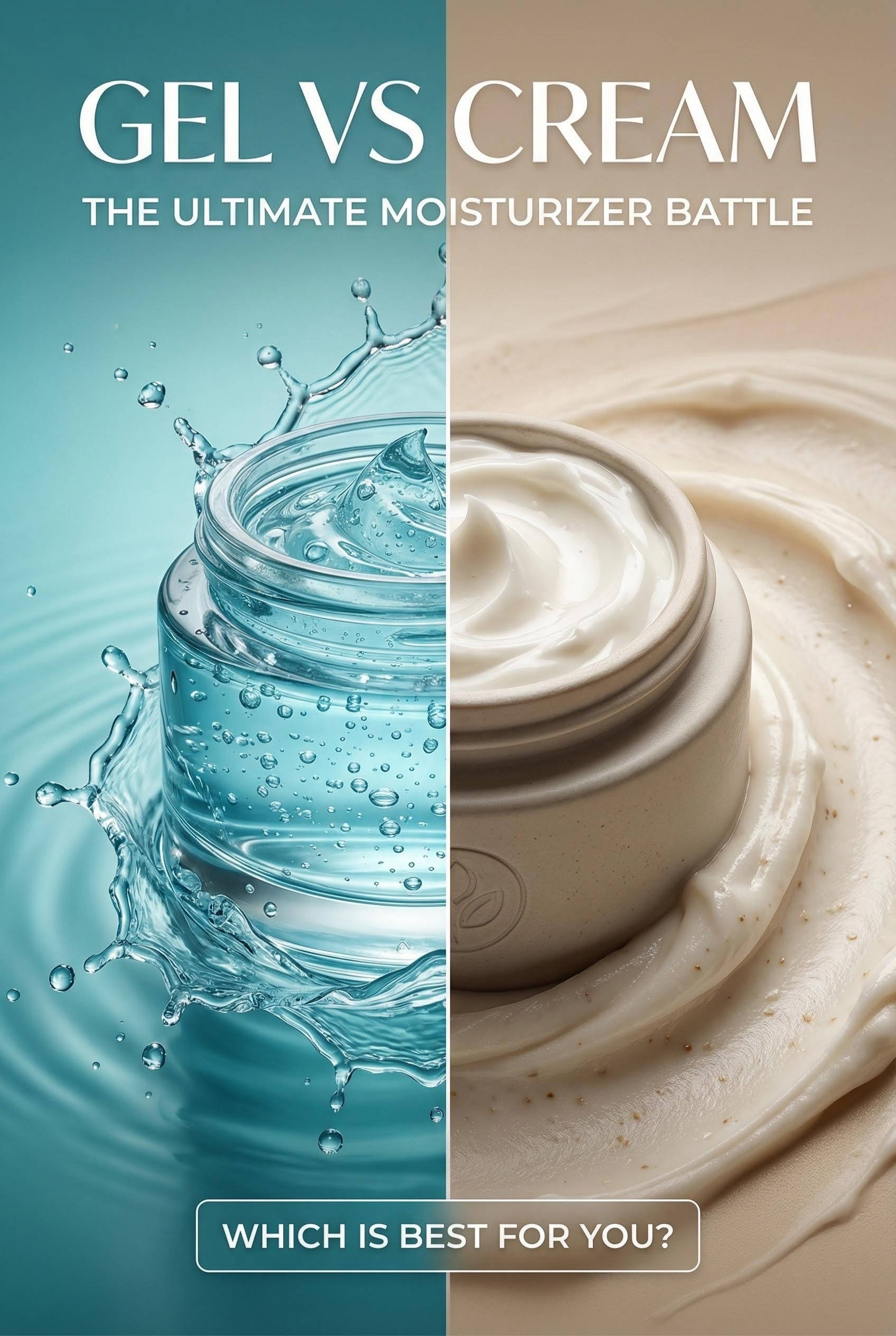
Standing in the skincare aisle can be overwhelming. You see rows of jars and bottles promising hydration, but the textures vary wildly. The two main contenders are always Gel Moisturizers and Cream Moisturizers.
Choosing the wrong texture is often the hidden reason why your skin feels greasy by noon or tight and flaky by evening. It is not just about the brand; it is about the delivery system. To build an effective skincare routine, you must understand the fundamental differences between these two formulations.
This detailed guide breaks down the science behind gels and creams, helping you determine exactly which one your skin is craving right now.
What is a Gel Moisturizer?
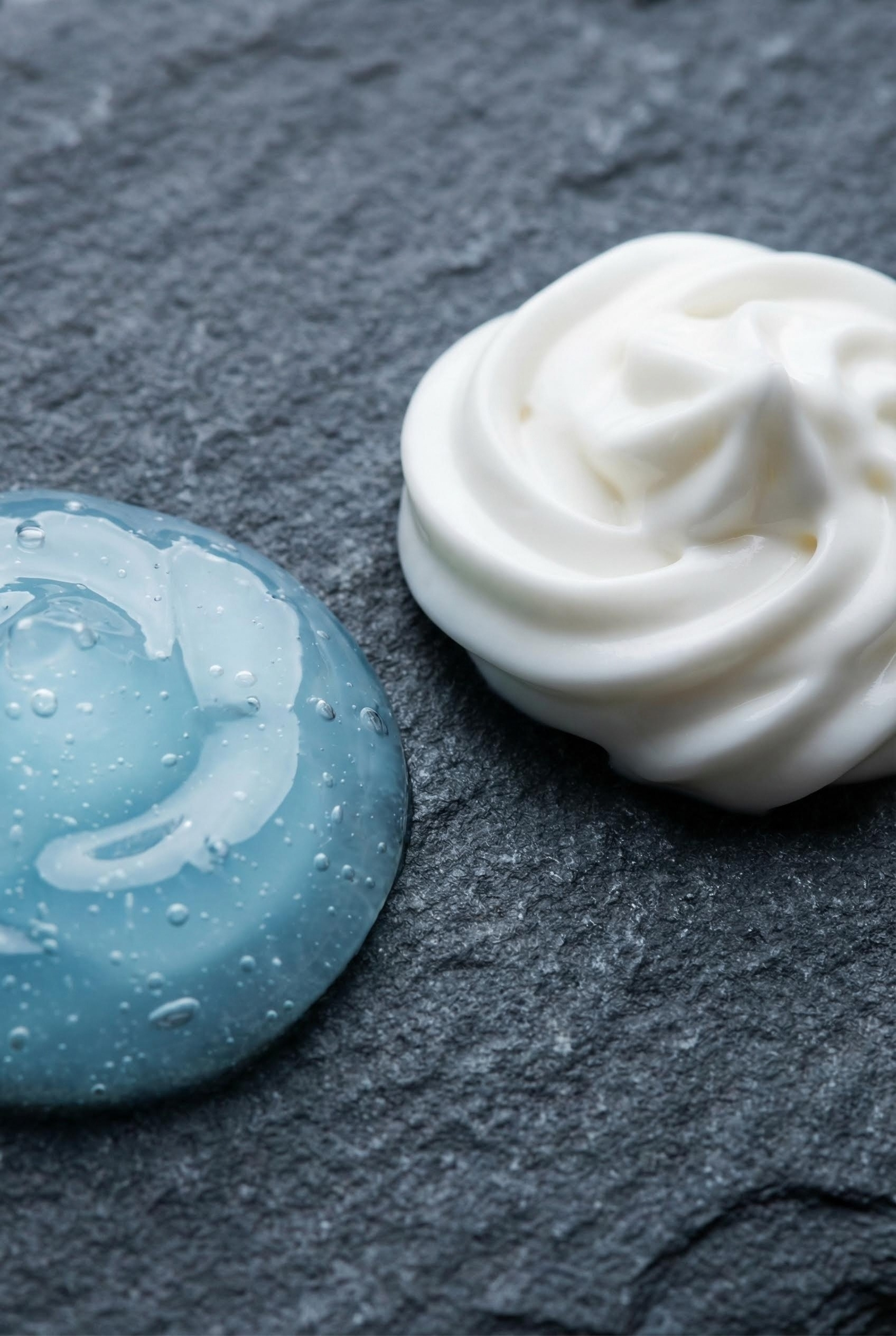
Think of a gel moisturizer as a glass of water for your face. These are water-based formulations that feel incredibly lightweight and refreshing.
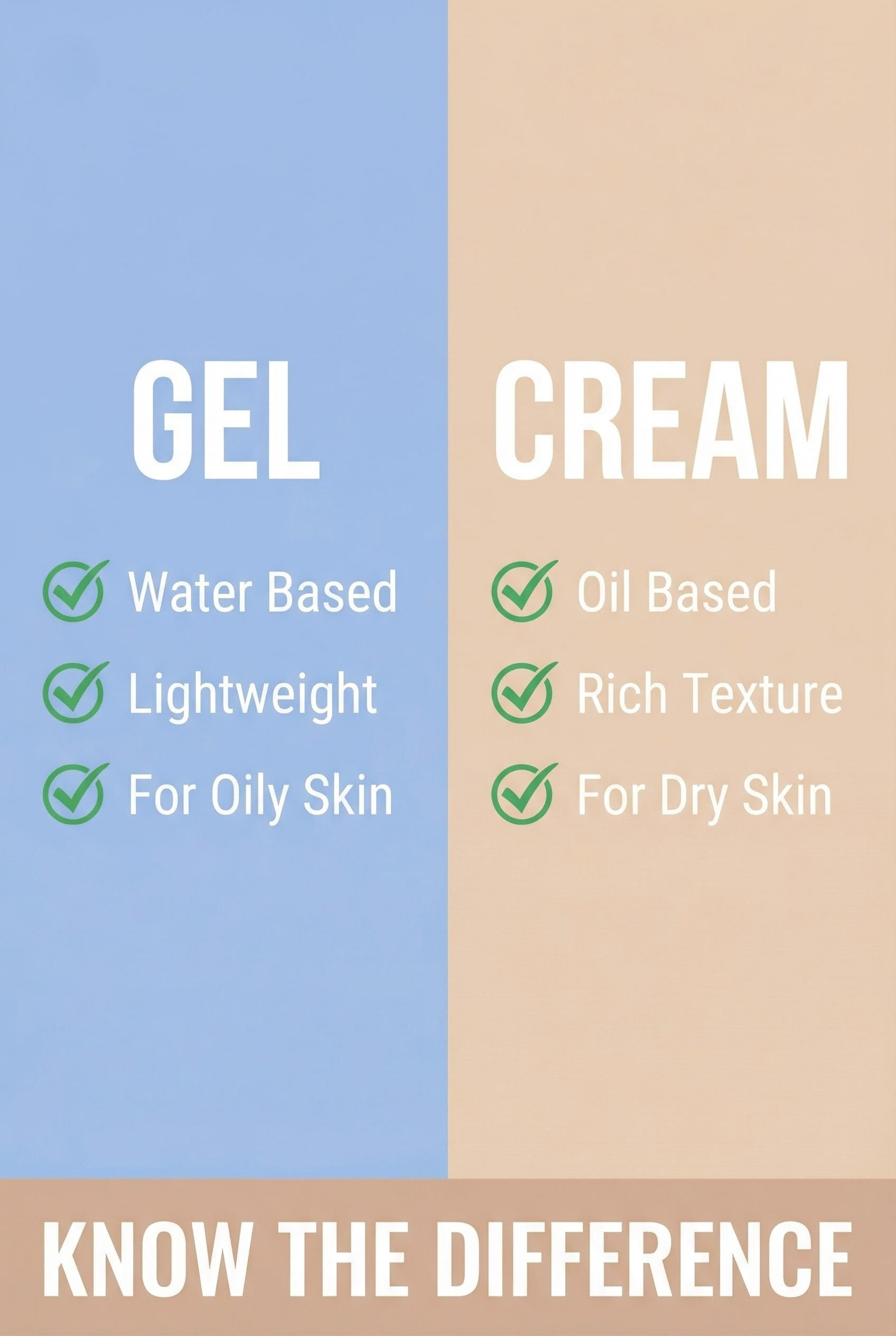
- The Base: They are primarily formulated with water and humectants (ingredients that attract water) rather than oils.
- The Feeling: When applied, they absorb almost instantly without leaving a sticky or greasy residue. They often provide a cooling sensation.
- Key Ingredients: You will often find Hyaluronic Acid, Aloe Vera, and Glycerin at the top of the ingredient list.
Who is it for?
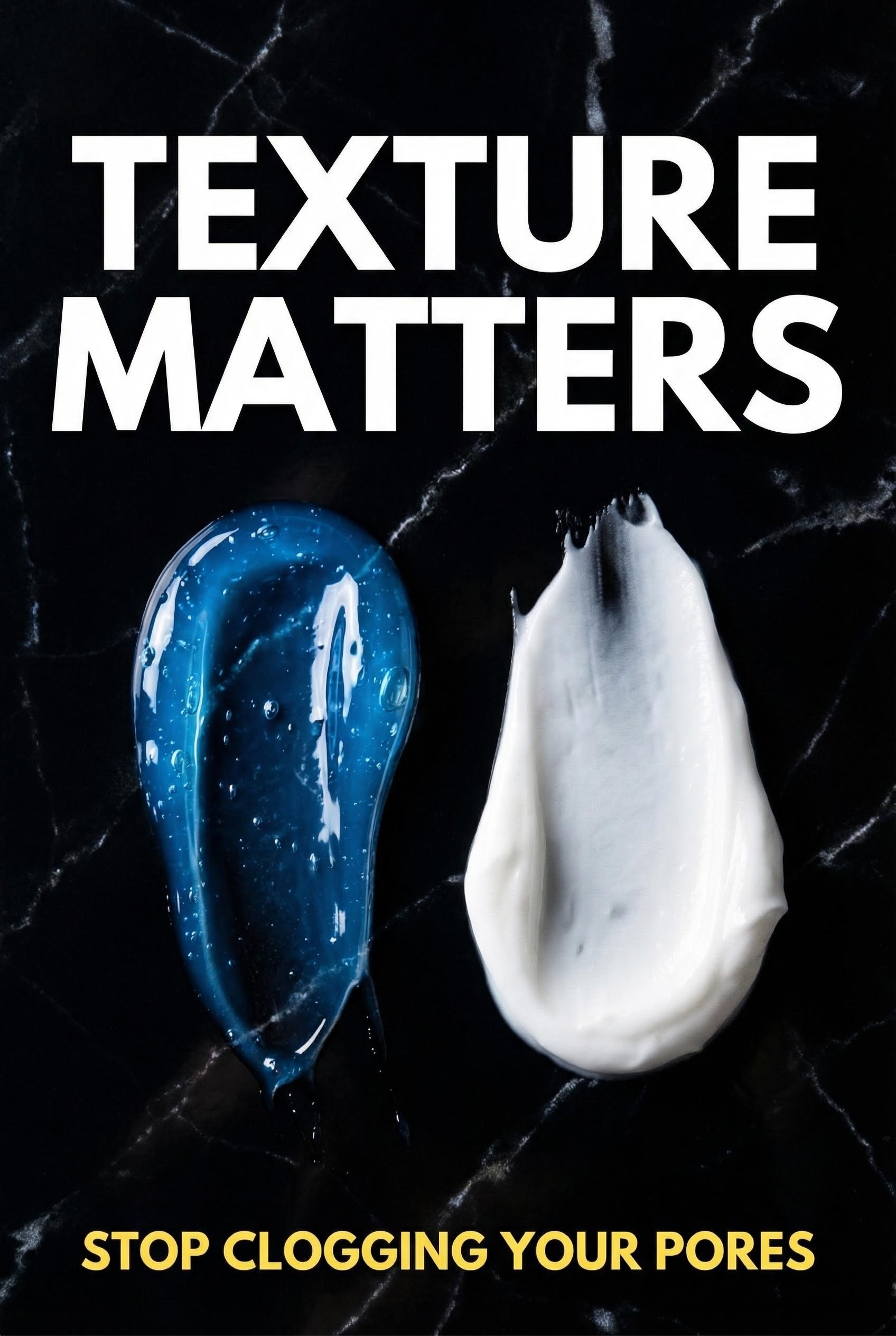
Gel moisturizers are the heroes for Oily and Acne-Prone Skin. Since they lack heavy oils and waxes, they hydrate the skin without clogging pores or adding shine. They are also excellent for those living in hot, humid climates where sweating is a concern.
What is a Cream Moisturizer?
If gel is water, cream is a cozy blanket. Cream moisturizers are thicker, richer, and designed to provide a protective barrier on the skin’s surface.
- The Base: These are emulsions of oil and water (usually with a higher oil content). They contain occlusives—ingredients that seal moisture into the skin.
- The Feeling: They feel luxurious and substantial. After application, they might leave a soft, dewy finish that lasts for hours.
- Key Ingredients: Look for Ceramides, Shea Butter, Lanolin, and various plant oils (like Jojoba or Squalane).
Who is it for?
Creams are the go-to for Dry and Dehydrated Skin. If your face feels tight after washing or if you have flaky patches, a gel simply won’t provide enough staying power. Creams repair the lipid barrier and prevent transepidermal water loss (TEWL).
The Head-to-Head Comparison
To make your decision easier, here is a direct comparison of how these formulas behave.
| Feature | Gel Moisturizer | Cream Moisturizer |
|---|---|---|
| Primary Base | Water | Oil & Water |
| Texture | Lightweight, Jelly-like | Thick, Rich, Buttery |
| Absorption | Fast, Matte Finish | Slower, Dewy Finish |
| Best Season | Summer / Humid Weather | Winter / Cold Weather |
| Pore Clogging | Low Risk (Non-comedogenic) | Moderate Risk (Depends on oils) |
💡 Professional Tip
Did you know your skin type can change with the seasons? Many experts suggest using a lightweight Gel Moisturizer during the hot summer months to prevent clogged pores, and switching to a richer Cream Moisturizer in the winter to combat wind and dry indoor heating.
Can You Have “Combination” Skin?
This is where things get interesting. Combination skin means you have an oily T-zone (forehead, nose, chin) but dry cheeks.
For combination skin, you have two smart strategies:
- The Gel-Cream Hybrid: Look for products labeled “Gel-Cream” or “Water Cream.” These offer the hydration of a gel with a slight addition of emollients, offering the best of both worlds.
- Multi-Moisturizing (Zone Method): Apply a gel to your T-zone to control oil, and use a heavier cream on your cheeks to prevent dryness. It takes a few extra seconds, but the results are worth it.
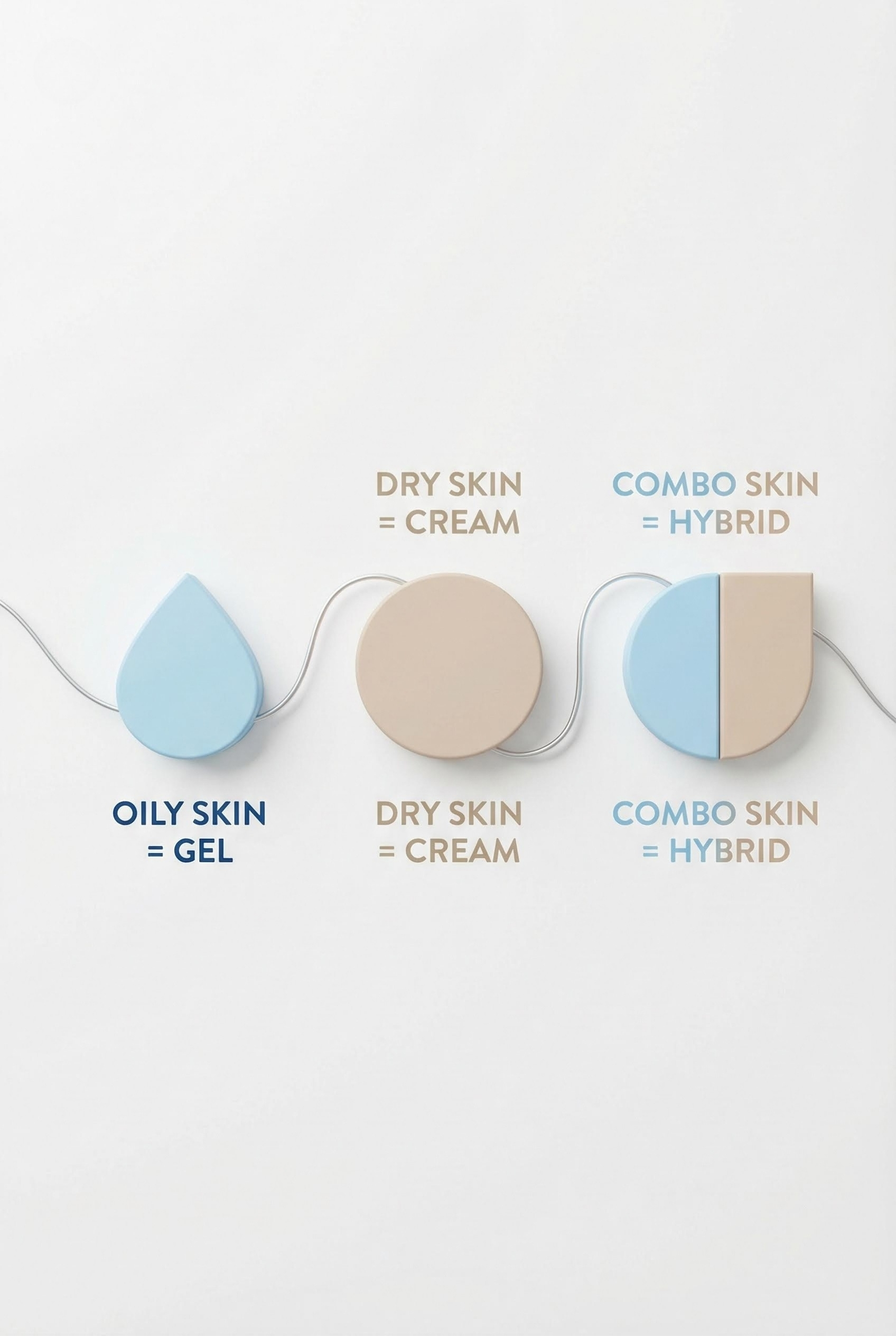
Final Verdict: Which One Should You Buy?
Listen to your skin. It communicates its needs clearly.
- Choose GEL if: You hate the feeling of product on your face, you break out easily, your makeup slides off during the day, or you live in a tropical climate.
- Choose CREAM if: Your skin feels tight, looks dull, has rough dry patches, or you are battling harsh winter weather.
Understanding this texture difference is the first step to a healthier, happier skin barrier.
📌 Don’t Have Time to Read? Pin It for Later!
Choose your favorite design below and save it to your Pinterest Boards so you never forget these tips.