
Save Your Clothes: The Ultimate Chemical-Free Stain Removal Guide
Every woman has faced that heart-sinking moment: A splash of olive oil on a favorite silk tunic, or a dark coffee ring on a pristine white tablecloth. The immediate reaction is often panic, followed by reaching for harsh, toxic bleaches that damage fabrics and irritate the skin.
But there is a better way. A way that aligns with the principles of avoiding waste (Israf) and maintaining purity without harmful chemicals.
This guide isn’t just a list of tips; it is the science of natural cleaning. By understanding the chemical nature of stains (acidic, oily, or protein-based), you can neutralize them using simple pantry staples.
Here is your masterclass in saving your wardrobe.
🛑 STOP! Read The 3 Golden Rules First
Before you touch that stain, you need to know the mechanics of fabric fibers. Doing the wrong thing in the first 60 seconds can set a stain permanently.
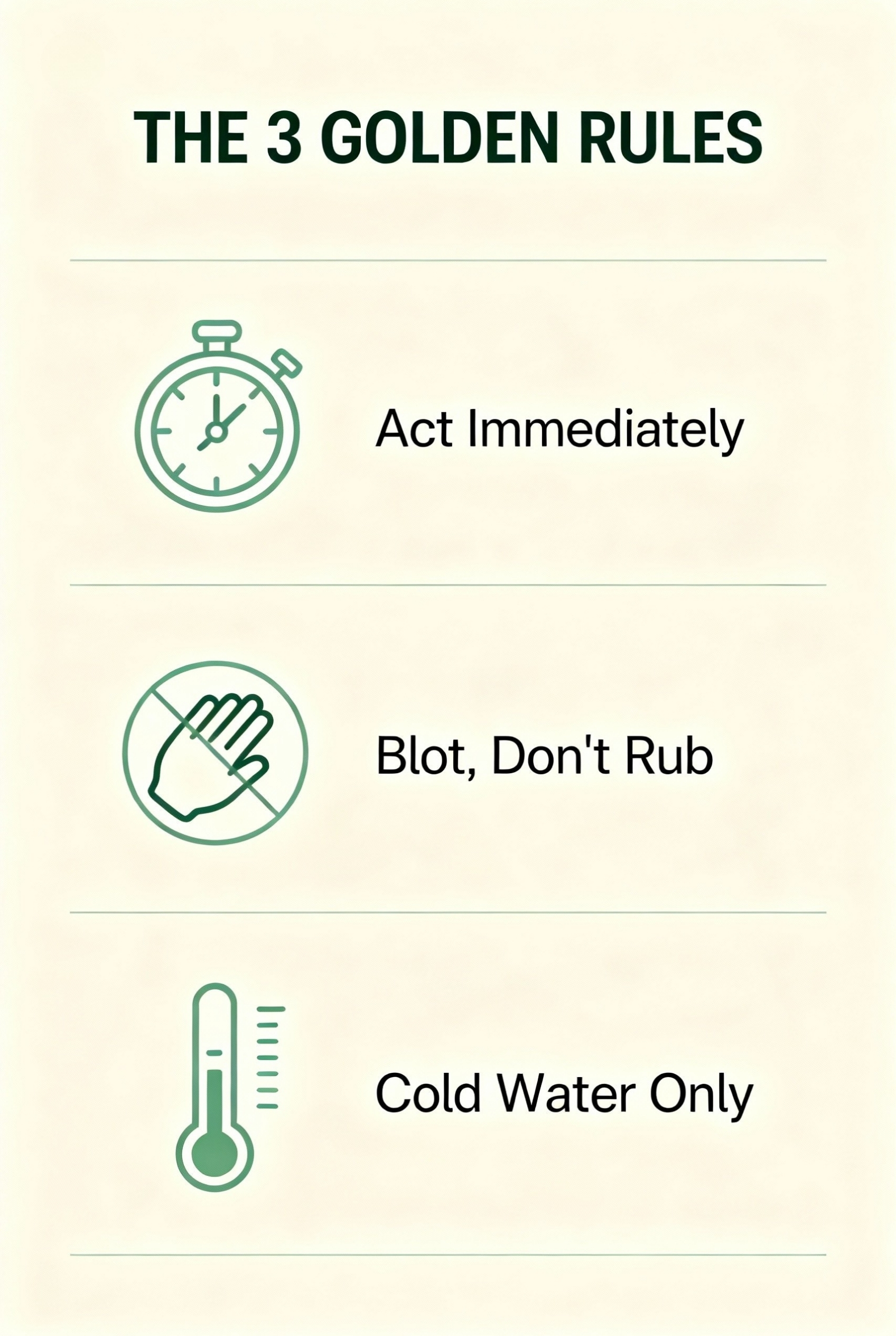
1. The “Blotting” Technique
Never rub a fresh stain. Rubbing applies friction that breaks down the fabric surface and pushes the pigment deeper into the weave. Instead, use a clean cloth or paper towel and press down gently to lift the substance off the surface.
2. Temperature Matters: The Protein Trap
Why cold water? Many stains (blood, milk, egg, sweat) are protein-based. Hot water “cooks” these proteins, causing them to coagulate and bind to the fibers instantly—just like boiling an egg. Always start with cold water.
3. Test for Colorfastness
Natural acids like lemon and vinegar are powerful. Before applying them to delicate fabrics like silk or dyed cotton, apply a tiny drop on an inner seam to ensure it doesn’t bleach the color.
🧪 The Science of The Pantry: How It Works
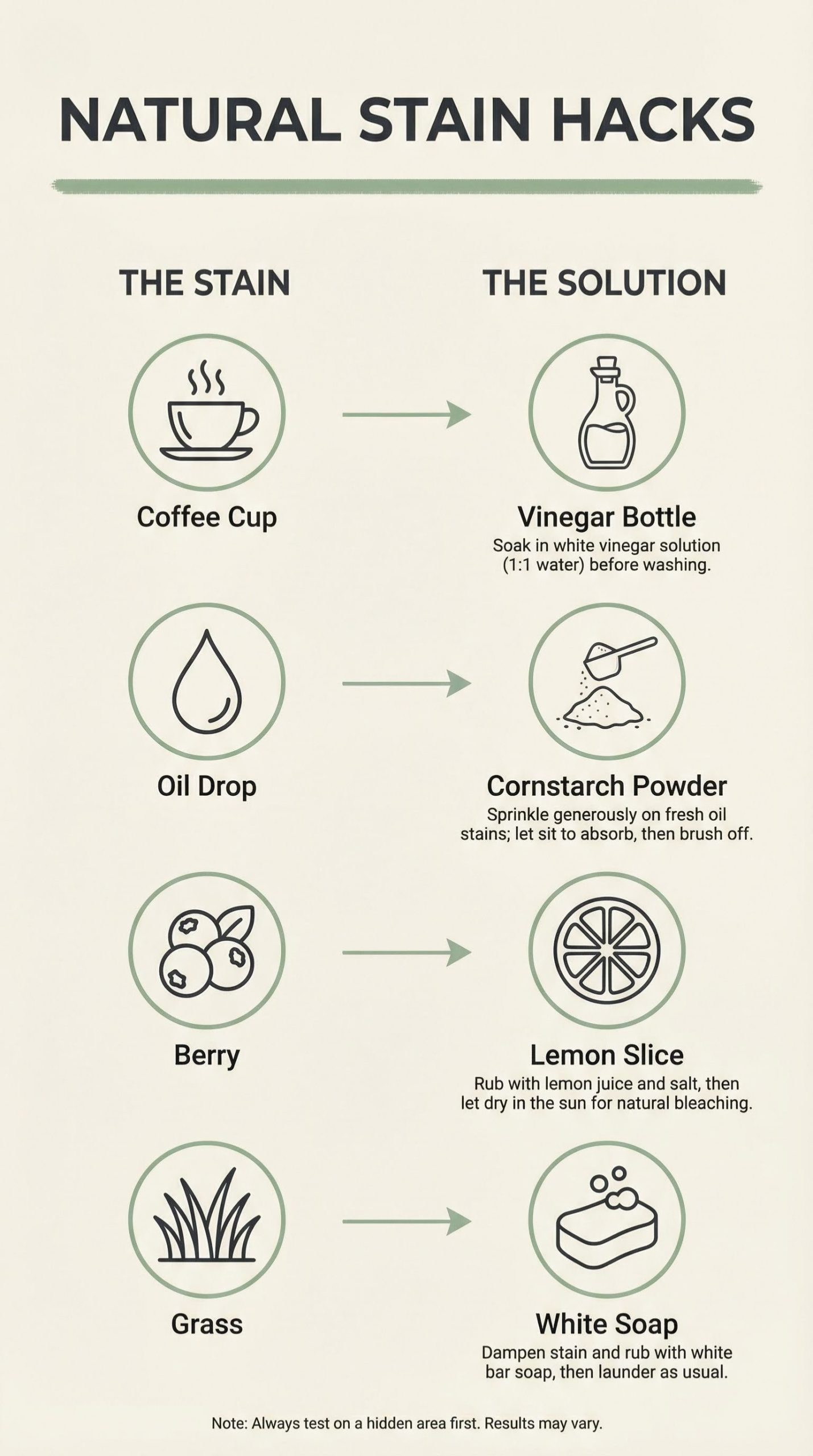
As illustrated in our featured infographic, specific stains require specific chemical opposites to remove them.
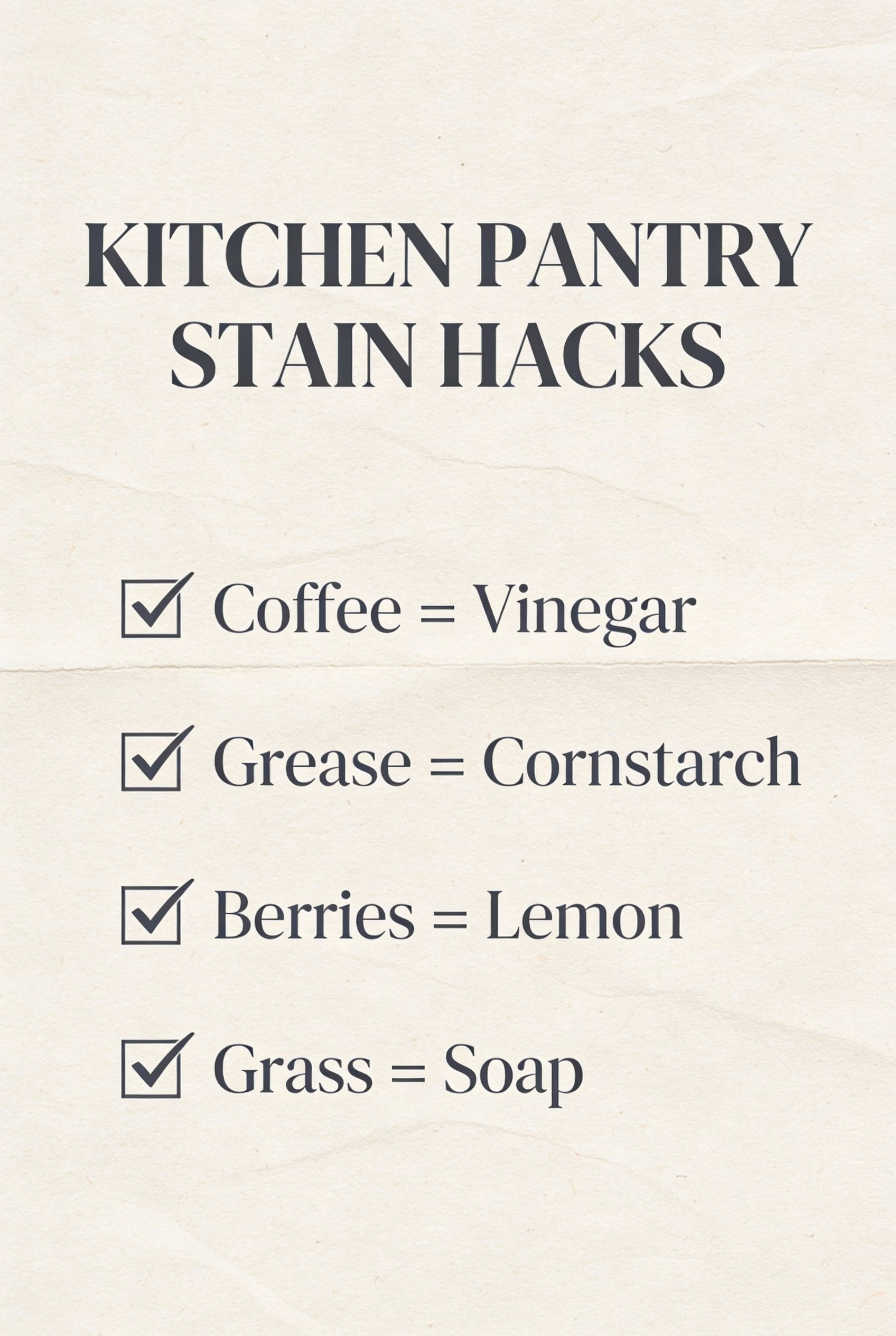
☕ Coffee & Tea (Tannins) -> White Vinegar
Coffee stains are acidic and contain tannins. White vinegar is mild acetic acid.
- The Method: Mix 1 part white vinegar with 2 parts cool water. Sponge the solution onto the stain. The vinegar helps to lift the tannin molecules from the fabric.
- Pro Tip: Do not use Apple Cider Vinegar; it contains pectin which can leave a residue.
💧 Oil & Grease (Lipids) -> Cornstarch
Oil is hydrophobic (repels water). Washing it immediately often spreads the grease. You need an absorbent agent first.
- The Method: Lay the garment completely flat. Cover the stain with a mound of cornstarch (or baby powder/baking soda). Let it sit for 30 to 60 minutes. The powder will physically suck the oil out of the fabric. Brush it off, then treat with a drop of dish soap.
🫐 Berries & Juice (Oxidizable) -> Lemon + Salt
Fruit stains are plant-based pigments. Lemon juice contains citric acid, a natural bleaching agent.
- The Method: Squeeze fresh lemon juice onto the stain and sprinkle salt over it. The salt acts as a mild abrasive to work the juice into the fibers.
- The Sun Hack: Place the treated garment in direct sunlight. UV rays activate the citric acid, boosting the whitening effect naturally.
🌿 Grass & Mud (Proteins/Pigments) -> White Soap
Grass stains are complex; they contain chlorophyll (dye) and proteins. Simple surfactants are needed to break them down.
- The Method: Pre-soak the garment in cold water. Rub a bar of plain white soap (like Castile soap) directly into the weave. An old toothbrush can be used gently here to work the soap between fibers.
💡 The “Don’t Dry” Warning
Never, ever put a stained garment in the dryer until you are 100% sure the stain is gone. The high heat of a tumble dryer will chemically bond any remaining residue to the fabric, making it nearly impossible to remove later. Air dry first to check your work!
🧴 DIY: The “Ultimate” All-Purpose Pre-Treater
Stop buying expensive spray bottles filled with unpronounceable chemicals. You can make a powerful pre-wash spray that works on 90% of daily stains.
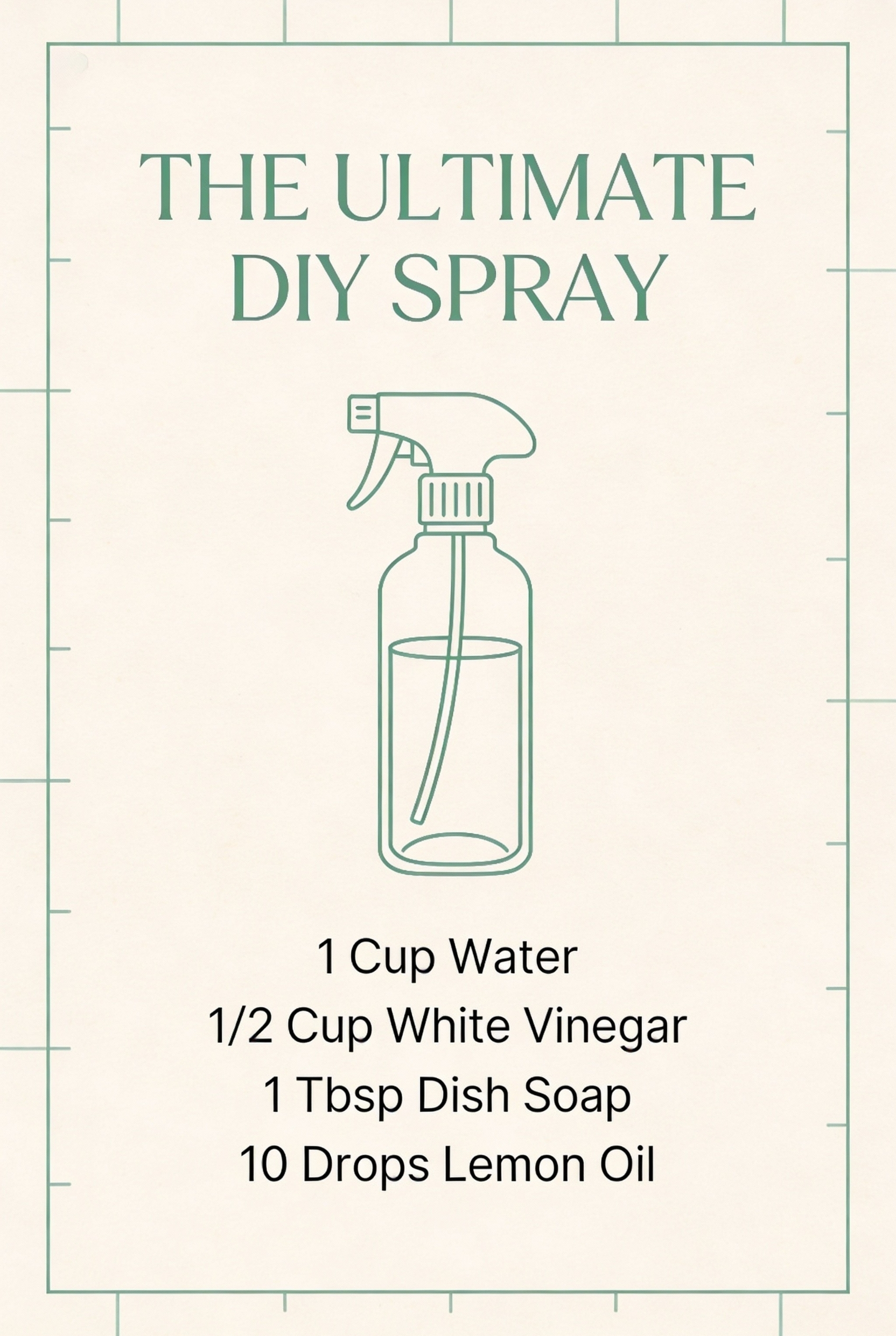
How to Make It:
- Get a clean, empty spray bottle.
- Combine water, vinegar, and dish soap (liquid).
- Add lemon essential oil for scent and extra grease-cutting power.
- Shake gently before each use.
- Spray on collars, cuffs, or spots 10 minutes before throwing clothes in the washing machine.
Frequently Asked Questions (FAQ)
Q: Can I use baking soda on dark clothes? A: Yes, but rinse thoroughly. Baking soda can leave a white, powdery residue if not washed out completely. It doesn’t bleach color like chlorine, but it can dull dark fabrics if left on too long.
Q: What about old, set-in stains? A: Old stains are harder but not impossible. Try soaking the garment overnight in a bucket of cool water with ½ cup of oxygen bleach (sodium percarbonate) or a cup of white vinegar. Patience is key here.
Q: Is this safe for septic tanks? A: Yes! All ingredients listed here (vinegar, baking soda, lemon, soap) are biodegradable and completely safe for septic systems and the environment.
📌 Save This for Later!
Don’t let this info get lost in your feed. Save this guide to your Pinterest Boards to keep these tips handy for next time.