

Forget Your Signature Scent: Why ‘Scent Stacking’ is the Only Trend You Need in 2026 (Expert Guide)
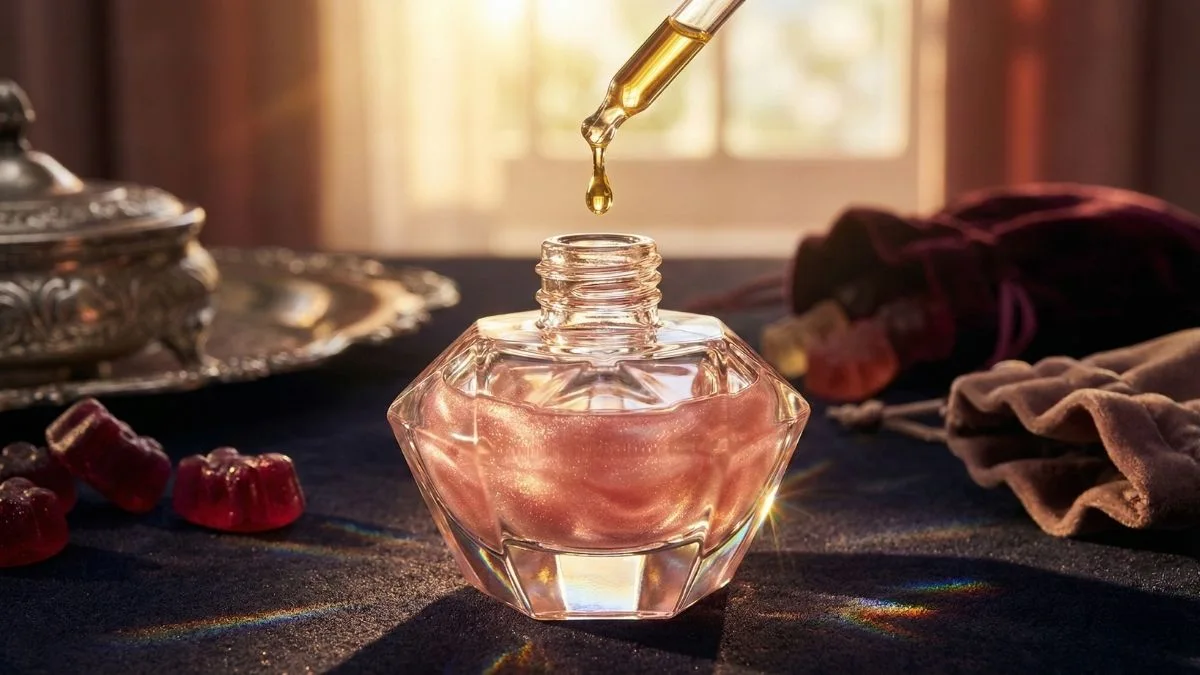
The global fragrance market is currently undergoing its most significant structural transformation since the mid-20th century. For decades, we operated on a model of monolithic brand loyalty—the concept of the “Signature Scent.” We were told to pick one bottle, whether it was the rebellion of Chanel No. 5 or the mystery of Opium, and wear it exclusively.
As we move through 2026, that paradigm has officially collapsed. We have entered the era of Scent Stacking.
According to recent industry analysis, the modern consumer is no longer a passive wearer but an active architect. Driven by a desire for 24-hour longevity and an “anti-algorithm” identity, Gen Z and Millennials are rejecting static, pre-bottled perfumes in favor of fluid, hyper-personalized olfactory construction.
In this comprehensive guide, we decode the Pinterest Predicts 2026 data, analyze the physics of fragrance longevity, and provide expert-vetted layering formulas to help you build your own fragrance wardrobe.
1. Market Forensics: Decoding the 2026 Shift
To understand the future of fragrance, we must look at the intent-driven data of the present. Pinterest, often a leading indicator of aesthetic shifts 12-24 months prior to mainstream adoption, provides the quantitative backbone for this trend.
The Metrics of Customization
The transition from passive buying to active blending is quantifiable. The Pinterest Predicts 2026 report highlights a staggering 500% increase in search volume for “perfume layering combinations.”
This metric signals a massive disruption. The primary query is no longer transactional (“buy floral perfume”) but educational (“how to mix vanilla and oud”). Further data points reinforce this trajectory of “Olfactory Autonomy”:
- “Signature Scent” (+125%): Interestingly, while the term remains popular, its context has shifted. Users are now searching for how to construct a signature, rather than buy one.
- “Perfume Notes” (+75%): Consumers are dissecting fragrances into their constituent parts—isolating notes like pistachio, saffron, or Ambroxan.
The Aesthetic Drivers: “Gimme Gummy” & “Vamp Romantic”
Fragrance trends are rarely isolated; they are olfactory reflections of broader visual trends.
- The “Gimme Gummy” Phenomenon: Driven by a desire for tactile, jelly-like textures, this trend translates into “textural gourmands.” We are moving away from photorealistic bakery scents toward scents that smell “chewy,” “sticky,” or “velvety.” Read more about the Gimme Gummy trend here.
- The “Vamp Romantic” Aesthetic: On the opposing end, there is a resurgence of dark, gothic romanticism. This drives the search for “Heavy Hitters” like Oud, Incense, and Leather to provide a “shadow layer” to lighter florals. See the full trend report analysis.
2. The Physics of Fragrance: Engineering the 24-Hour Scent
One of the primary “pain points” driving the layering trend is longevity. Consumers are frustrated by modern formulations that vanish from the skin after 3-4 hours. The solution lies in physics: specifically, hydrophobic anchoring.
The “Sandwich” Protocol
The most effective layering technique identified by experts is the “Sandwich Method.” This protocol exploits the varying evaporation rates of different mediums to lock scent molecules to the skin.
Step 1: The Lipid Primer (Hydration & Barrier)
Perfume alcohol is a solvent. When sprayed directly onto dry skin, it evaporates rapidly. To prevent this, applying an unscented or complementary lotion forms a lipid-rich barrier. This provides a “sticky” surface for the fragrance molecules to adhere to.
Step 2: The Hydrophobic Anchor (Oils & Balms)
This is the critical step. Oils are hydrophobic (water-repelling) and have a much lower vapor pressure than alcohol. They do not “flash off.” Instead, they sit on the skin and release scent slowly over 12-24 hours. By placing the oil under the spray, you trap the heavier elements.
Step 3: The Volatile Projector (EDP/EDT)
The final layer is the alcohol-based spray. Its function is projection (sillage). It picks up the scent molecules and throws them into the air, forming the “scent bubble.”
3. Molecular Stacking: The Rise of Functional Synthetics
Beyond the medium (oil vs. spray), the molecular structure of ingredients is the key to 2026’s trends. We are seeing a rise in “Molecular Perfumery”—using synthetics not just as notes, but as functional fixatives.
Iso E Super (The “Velvet” Lattice)
Iso E Super is a large, cyclic molecule known for its woody, cedar-like profile. When used as a base layer, it acts as a radiance booster. It doesn’t necessarily make a scent “heavier,” but it increases the diffusion and adds a “shimmering” effect to the fragrance layered on top. User experiences with Iso E Super.
Ambroxan (The “Mineral” Anchor)
Unlike Iso E Super, Ambroxan is sharp, mineral, and salty. It is extremely chemically stable. When layered under a fleeting floral or citrus, it acts as a magnetic anchor, “gripping” the lighter molecules and extending their life significantly. Watch: ISO E Super vs Ambroxan explained.
4. The Alchemist’s Cabinet: Trending Notes of 2026
To layer effectively, you need the right palette. The raw materials of 2026 are defined by high-contrast pairings.
- Pistachio: The “It” nut of 2026. Green, nutty, and creamy. It bridges the gap between fresh and sweet. Read about the biggest fragrance trends here.
- Oud (Agarwood): The ultimate “darkener.” Modern Ouds are smoother and resinous, perfect for transforming a daytime floral into an evening scent. Expert guide to layering with Oud.
- Rice / Paper Accords: Exemplified by scents like Diptyque L’Eau Papier. These notes are dry, starchy, and intellectual—a major trend for the “Smart Girl” or “Dark Academia” aesthetic.
5. Masterclass Formulas: Expert Layering Recipes
This section serves as a practical compendium for the “Scent Stacker.” These are specific, expert-vetted combinations trending on platforms like Reddit and TikTok.
Formula 1: “The Intellectual Ghost”
The Components:
- Base: Le Labo Another 13 (Ambroxan, Moss).
- Top: Diptyque L’Eau Papier (Steamed Rice, White Musk).
The Science: Another 13 is a molecular beast composed almost entirely of Ambroxan. It projects powerfully but can feel “cold.” L’Eau Papier is a delicate skin scent with poor longevity. Layering them anchors the delicate rice notes to the heavy Ambroxan lattice, producing a scent that projects the “Dark Academia” aesthetic across a room. Read the viral Reddit thread on this combo.
Formula 2: “The Smoky Vanilla”
The Components:
- Base: Le Labo Patchouli 24 (Birch Tar, Smoke).
- Top: Diptyque Eau Duelle (Bourbon Vanilla, Spices).
The Science: This is the ultimate “Vamp Romantic” stack. The vanilla smooths out the harsh, acrid edges of the smoke, achieving a “smoked vanilla bean” effect. Conversely, the smoke prevents the vanilla from feeling too simple or bakery-like. See why this combo lasts so long.
Formula 3: “The Forest Temple”
The Components:
- Base: Le Labo Santal 33 (Sandalwood, Cedar).
- Top: Le Labo Baie 19 (Petrichor, Wet Earth).
The Science: Santal 33 is a dry, dusty wood scent. Baie 19 captures the smell of rain hitting dry earth (petrichor). The wet, ozonic notes rehydrate the dry woods, evoking the hyper-realistic scent of a “Sandalwood forest during a rainstorm.” Expert advice on layering woody scents.
Formula 4: “Cleaned-Up Opulence”
The Components:
- Base: A heavy Oud (e.g., MFK Oud Satin Mood).
- Top: A simple, linear Vanilla (e.g., The 7 Virtues Vanilla Woods).
The Technique: Apply the Oud sparingly (1 spray maximum). Let it dry for 10 minutes to burn off the initial medicinal notes. Then, overdose the Vanilla (3-4 sprays) on top. The vanilla acts as a “softening veil,” turning the animalic oud into a rich, creamy, smoky truffle dessert.
6. Conclusion: The Fragrance Wardrobe
The concept of the “Signature Scent”—one perfume worn for 20 years—is dead. It has been replaced by the Fragrance Wardrobe.
In 2026, brands that succeed will be those that stop selling “solutions” (finished, untouchable perfumes) and start selling “tools” (layerable oils, molecules, and mists). For the consumer, this means absolute freedom. You wouldn’t wear a tuxedo to the gym, so why wear a heavy Oud? Scent stacking allows for micro-adjustments, letting you evolve your scent from a clean “Skin Musk” at the office to a vampy “Cherry Leather” for happy hour.
The future of fragrance is not about what is in the bottle, but what happens on the skin—and you are now the one holding the pipette.
Behind the Report: How We Predicted This
This industry analysis synthesizes predictive search data from the Pinterest Predicts 2026 forecast with advanced principles of olfactory chemistry. The layering protocols and scent profiles presented in this guide were developed by cross-referencing vapor pressure mechanics with emerging consumer aesthetic vectors, specifically incorporating the ‘Gimme Gummy’ and ‘Vamp Romantic’ macro-trends identified in global market reports.