
White Sugar vs. Coconut Sugar: Is One Really Healthier?
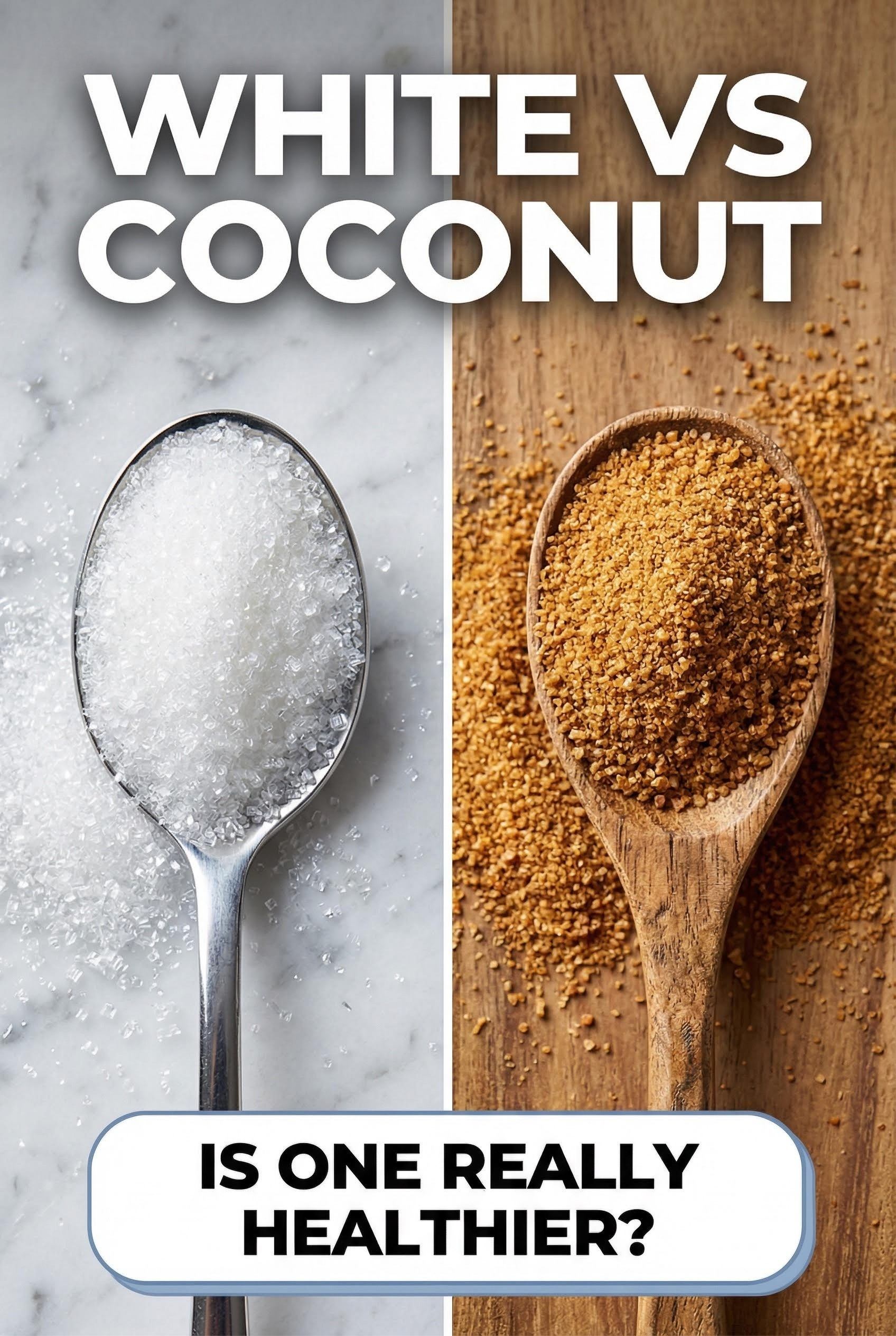
In the modern wellness world, sugar has become public enemy number one. We are constantly told to reduce our intake, quit sweets, and watch our waistlines. However, for those of us who love to bake or enjoy a sweet morning coffee, giving up sugar entirely feels impossible.
This dilemma has given rise to a booming market of “natural” sweeteners. Among them, Coconut Sugar reigns supreme as the darling of the health food aisle. It is marketed as a guilt-free, nutrient-dense, low-glycemic superfood. But is it really? Or is it just clever marketing wrapped in eco-friendly packaging?
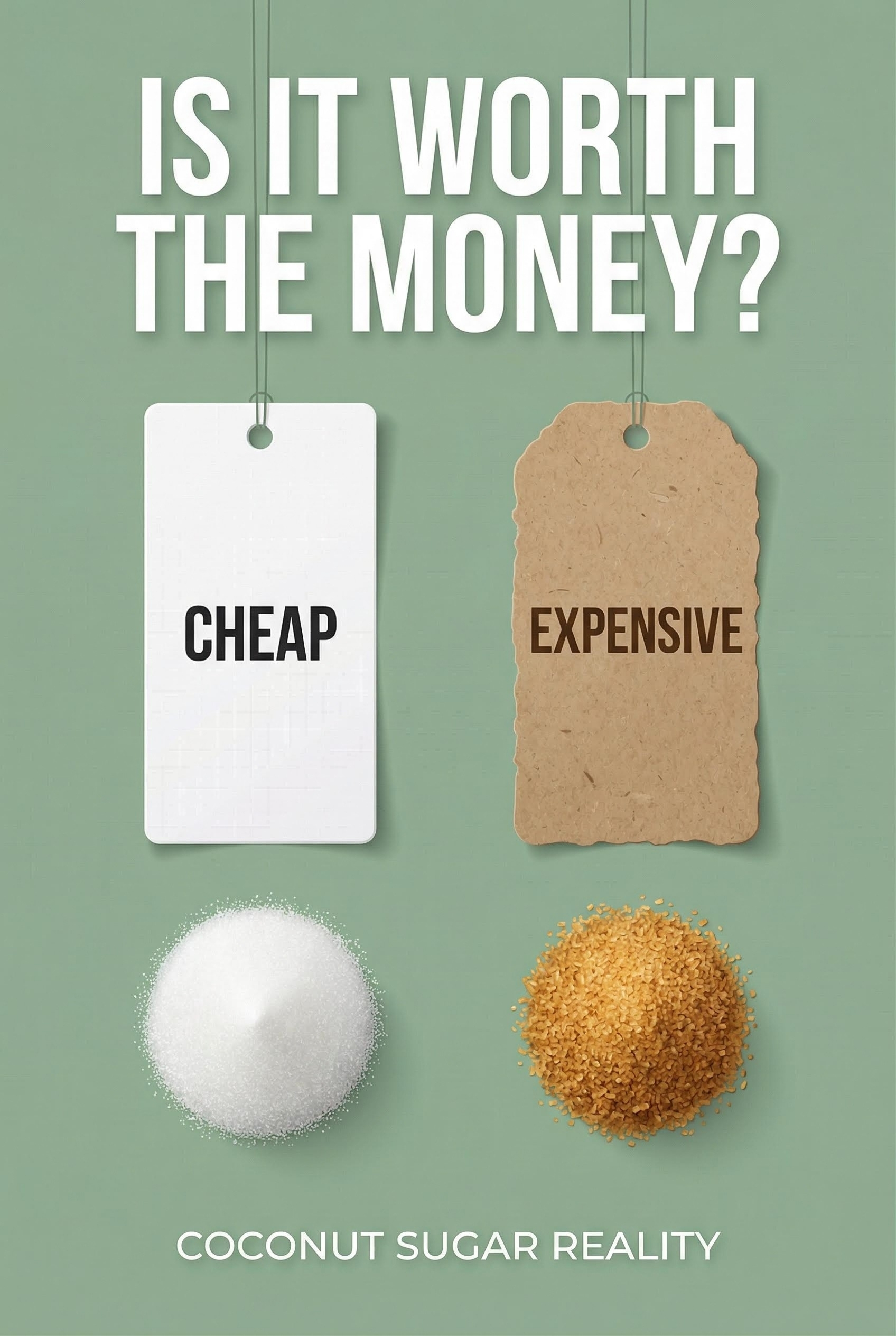
If you have ever stood in the baking aisle debating whether to spend $2 on a bag of white sugar or $8 on a bag of coconut sugar, this guide is for you. We are diving deep into the chemistry, nutritional profile, culinary uses, and honest health impact of White Sugar vs. Coconut Sugar.
The Contender 1: White Sugar (Table Sugar)
To understand the comparison, we first need to understand the standard.
What is it?
White sugar, scientifically known as Sucrose, comes from either sugar cane or sugar beets. The process involves extracting the juice, boiling it down to remove moisture, and spinning it in a centrifuge.
The Processing
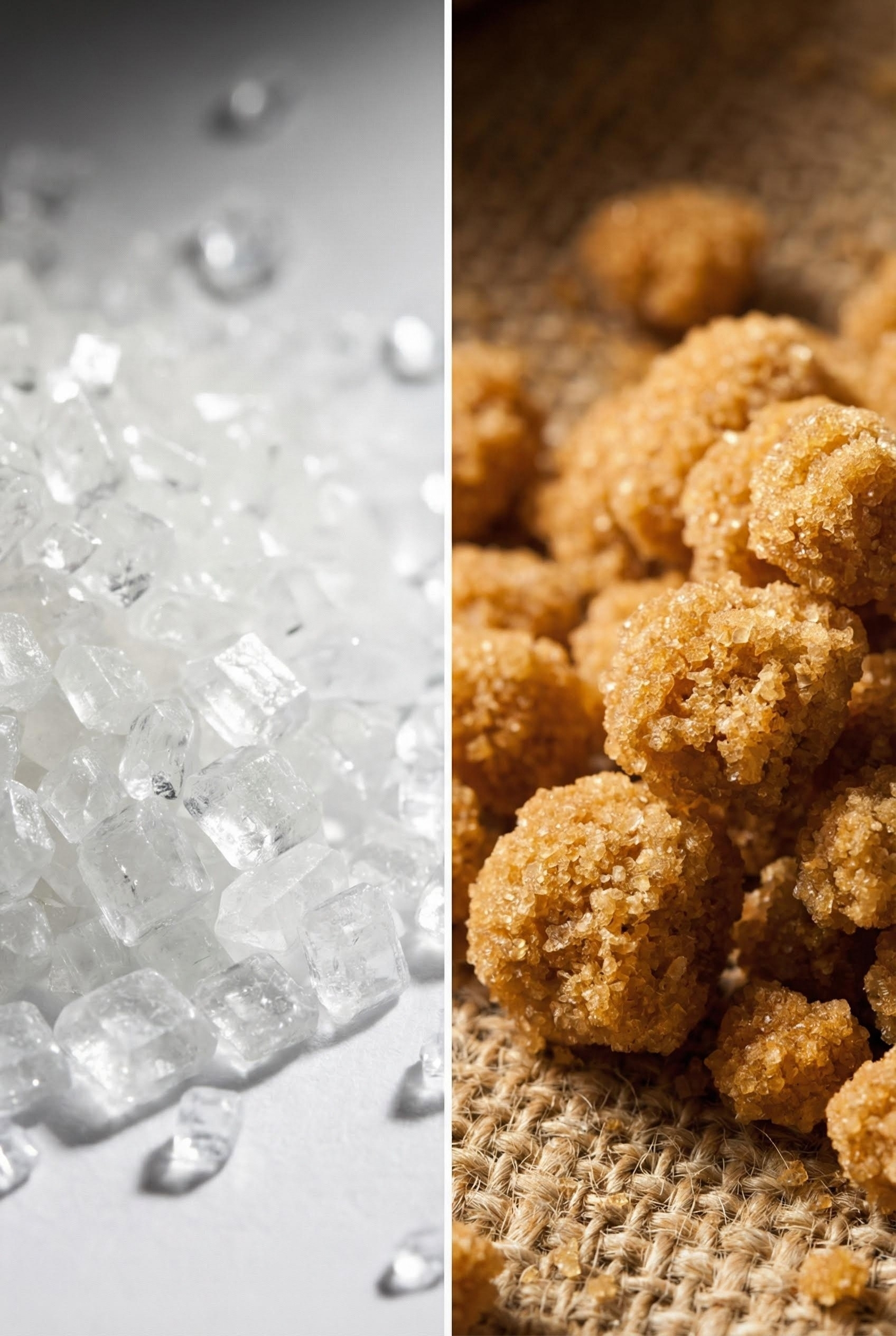
The key defining feature of white sugar is that it is highly refined. During processing, all naturally occurring molasses (which contains minerals) is stripped away to provide pure, white crystals.
- Composition: 50% Fructose + 50% Glucose.
- Taste: Pure, neutral sweetness. It doesn’t have a flavor profile of its own; it just makes things sweet.
The Contender 2: Coconut Sugar
Often confused with palm sugar, coconut sugar is specifically derived from the coconut palm tree.
What is it?
It is made from the sap of the coconut palm’s flower bud stem. Farmers cut the stem, collect the nectar, and boil it down until the water evaporates.
The Processing
Unlike white sugar, coconut sugar is unrefined or minimally processed. Because it isn’t centrifuged to death, it retains some of the raw plant material.
- Composition: 70-80% Sucrose, plus small amounts of pure Glucose and Fructose.
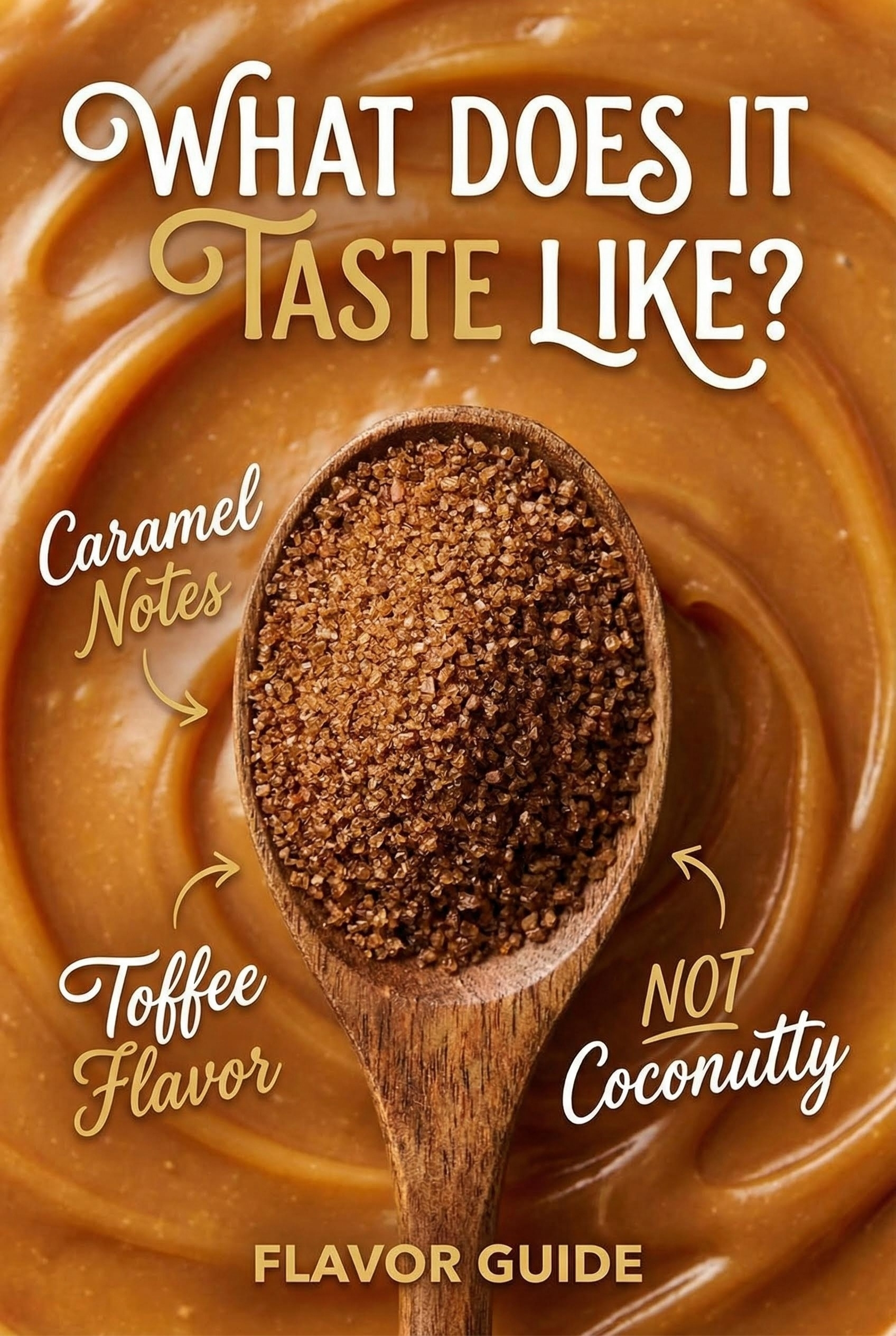
- Taste: It does not taste like coconut. It has a rich, caramel-like flavor, very similar to brown sugar.
Round 1: The Glycemic Index (GI) Battle
This is the main argument used by health enthusiasts to promote coconut sugar.
What is Glycemic Index? It is a measure of how quickly a food spikes your blood sugar levels.
- High GI (70+): Causes a rapid spike and crash (Hello, energy slump).
- Low GI (55 or less): Releases energy slowly and steadily.
The Scores:
- White Sugar: GI of approximately 60-65.
- Coconut Sugar: GI of approximately 35-54 (varies by batch).
The Verdict: On paper, Coconut Sugar wins. It contains a fiber called Inulin, which slows down glucose absorption. However, the difference isn’t miraculous. While it is slightly better for blood sugar stability, consuming large amounts will still trigger an insulin response. It is not a “free pass” for diabetics.
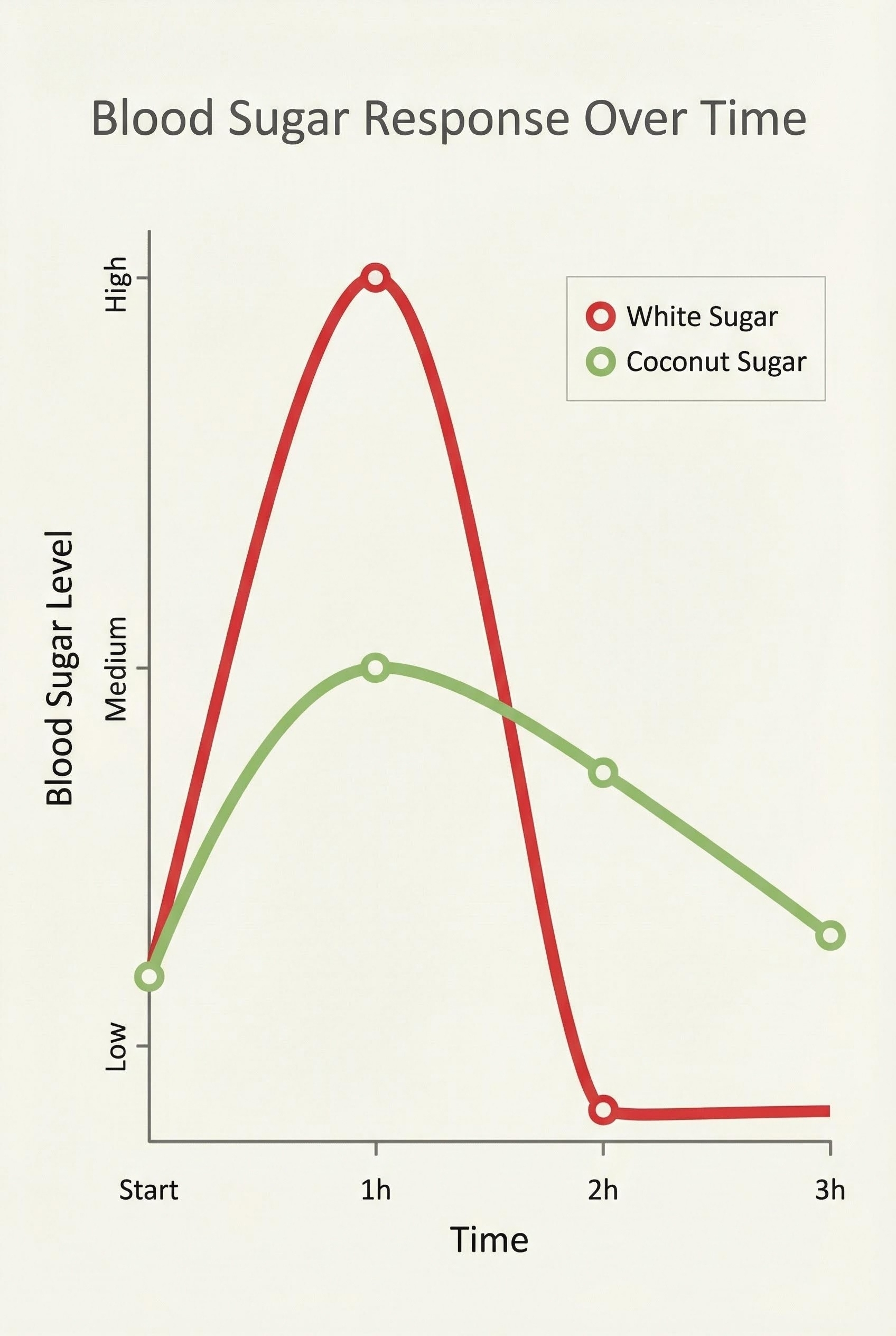
Round 2: Nutrient Density (The Mineral Myth)
You will often see claims that coconut sugar is packed with iron, zinc, calcium, and potassium. While this is technically true, context is everything.
White sugar provides zero nutrients. It is “empty calories” in the truest sense. Coconut sugar retains the minerals found in the sap because it hasn’t been stripped of its molasses.
But here is the catch: The amount of minerals is trace. To get a meaningful amount of iron or potassium from coconut sugar, you would have to eat cups of it every day. By that point, the negative effects of the sugar would vastly outweigh the benefits of the tiny mineral intake.
⚠️ Reality Check
Do not rely on sugar for your vitamins! Eating a handful of almonds or a single banana will provide you with 100x more minerals than a serving of coconut sugar, without the insulin spike.
Round 3: Baking and Culinary Use
Health aside, how do they perform in the kitchen?
White Sugar:
- Aeration: Essential for creaming with butter to make fluffy cakes and cookies.
- Color: Keeps light-colored baked goods (like angel food cake) white.
- Melting: Caramelizes evenly and clearly.
Coconut Sugar:
- Texture: It is slightly coarser and holds more moisture (similar to light brown sugar).
- Flavor: Adds a depth of flavor (toffee/caramel notes). Great for chocolate chip cookies, banana bread, and coffee.
- Limitation: It is terrible for recipes that need a white color (like lemon bars) or specific aeration (like meringues), as it can weigh down the batter.

The Fructose Problem
Here is a fact often overlooked: Sugar is Sugar.
When you ingest sugar, your body breaks it down into glucose and fructose.
- Glucose is used by every cell in your body for energy.
- Fructose can only be processed by your liver.
Excess fructose puts a strain on the liver, which can lead to metabolic issues, inflammation, and fatty liver disease over time.
- White Sugar is 50% Fructose.
- Coconut Sugar is roughly 35-45% Fructose.
While coconut sugar has slightly less fructose, it is still a significant load on your liver if consumed in excess. Your liver doesn’t care if the fructose came from a “natural” coconut tree or a “refined” beet; it processes it the exact same way.
Cost and Sustainability
- Cost: White sugar is dirt cheap. Coconut sugar can cost 4x to 10x more.
- Sustainability: Coconut sugar is actually quite sustainable. Coconut trees produce sap for 20 years and produce more sugar per acre than sugar cane, using less water.
Final Verdict: Is It Worth the Switch?
The answer isn’t a simple Yes or No. It depends on your goals.
Switch to Coconut Sugar IF:
- You enjoy the caramel-like flavor in your coffee and baking.
- You want a more sustainable, less processed ingredient.
- You have the budget for it.
- You want to avoid the “bone char” sometimes used to whiten refined sugar (making coconut sugar a definitive Vegan choice).
Stick to White Sugar IF:
- You are on a budget.
- You are baking delicate pastries (meringues, sponges).
- You think eating coconut sugar means you can eat more sugar.
The Honest Truth: Coconut sugar is the “lesser of two evils.” It is slightly less damaging than white sugar due to the lower GI and inulin content, but it is not a health food. It should be treated exactly like regular sugar: a treat to be enjoyed in moderation.
📌 Save This for Later!
Don’t let this info get lost in your feed. Save this guide to your Pinterest Boards to keep these tips handy for next time.