

The Real Reason Your Under‑Eyes Look Tired (Even When You Try Everything)

An evidence‑based guide for tired moms who want real results — not empty promises.
Why “just sleeping more” isn’t the full answer
If you’re a mom, you already know this truth: sleep is not always negotiable. And yet, the eye area is often the first place where fatigue shows up — dark circles, puffiness, fine lines, that hollow look that no concealer fully hides.
What most skincare content gets wrong is this: tired eyes are not one problem. They’re a combination of different biological processes, and each one needs a different solution.
Dermatology research shows that under‑eye fatigue usually comes from three main causes:
- Blood vessel congestion (the blue‑purple shadow)
- Fluid retention (morning puffiness)
- Structural thinning (hollows and fine lines)
Understanding which one you’re dealing with changes everything.
The eye area is different — and far more fragile
The skin under the eyes is about four times thinner than the rest of the face. It has less collagen, less oil, and almost no fat cushioning.
Add to that:
- Thousands of blinks per day
- Broken sleep cycles
- Elevated stress hormones
…and you get an area that shows fatigue fast — and recovers slowly.
This is why a “rich eye cream” can sometimes make things worse instead of better.
Dark circles: blue or brown? (This matters more than you think)
Before buying anything, do this simple test:
Gently pinch the skin under your eye and lift it slightly.
- If the darkness lightens → it’s vascular (blood‑related)
- If the color moves with the skin → it’s pigment‑related
Most tired moms deal with vascular dark circles, not pigmentation.
What actually helps blue‑purple circles
- Vitamin K Oxide – supports fragile capillaries
- Caffeine – temporarily constricts blood vessels
- Arnica – helps clear pooled blood under the skin
These don’t “bleach” the skin. They address the root cause.
Puffiness: when more hydration is not the answer
If you wake up with swollen under‑eyes, heavy night creams may be part of the problem.
Here’s why:
During sleep, fluids shift upward. Thick, occlusive products can trap that fluid — especially when combined with humectants like hyaluronic acid.
The result? More puffiness by morning.
What works better
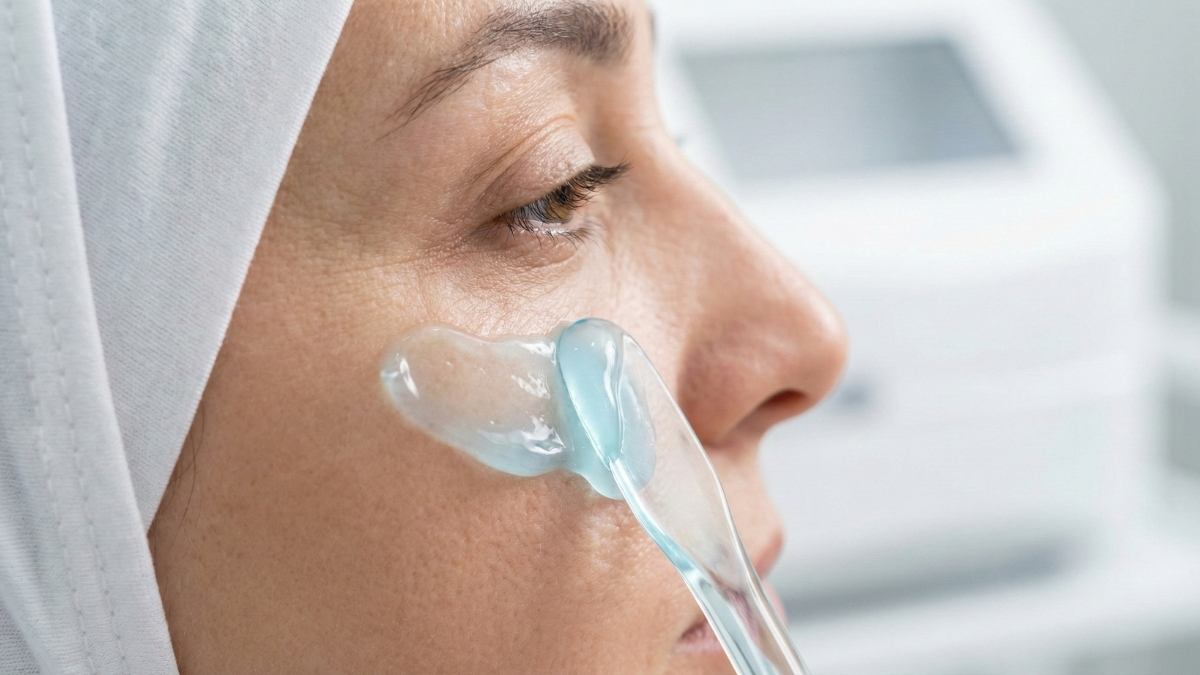
- Lightweight gels or serums
- Products with caffeine or circulation‑supporting peptides
- Applying product with gentle tapping (not rubbing)
- Keeping eye products in the fridge
Texture isn’t a preference — it’s a strategy.
Hollows and fine lines: what skincare can (and can’t) do
That sunken look under the eyes isn’t something a cream can fully “fill.” But skincare can make it far less visible.
Ingredients with real evidence
• Retinol (encapsulated) – thickens the skin over time
• Peptides – support collagen and elasticity without irritation
Retinol works slowly and needs patience. Peptides are gentler and more immediate.
If you’re pregnant or breastfeeding, bakuchiol and peptides are safer alternatives.
A simple, realistic eye routine for tired moms
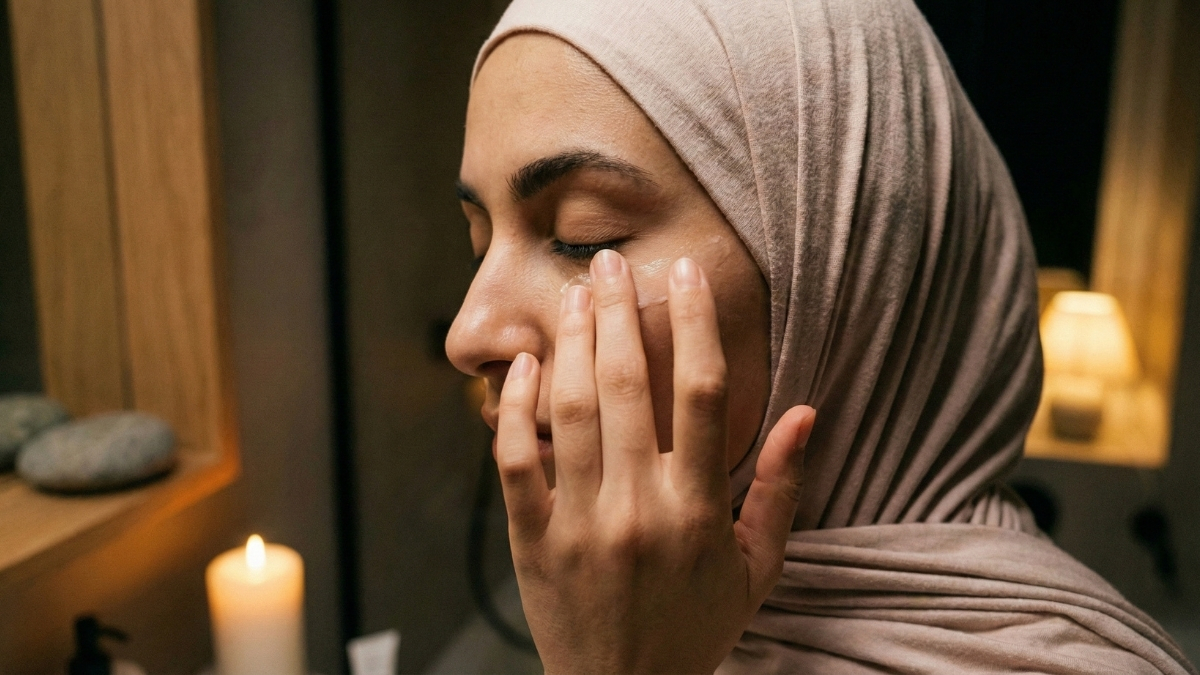
No 10‑step routines. Just what actually makes sense.
Morning
- Lightweight caffeine or peptide eye gel
- Gentle tapping application
- SPF around the eye area
Night
- If not pregnant/nursing: low‑strength or encapsulated retinol eye cream
- If sensitive or breastfeeding: peptide or bakuchiol formula
- Avoid heavy occlusive layers if puffiness is an issue
Consistency matters more than product count.
About our research approach
This article is based on a structured review of dermatology publications, clinical ingredient analyses, and real‑world formulation data.
We use AI‑assisted research tools to analyze multiple scientific and medical sources, then translate that information into clear, practical guidance — without exaggeration or marketing noise.
Our goal is simple: grounded content you can trust.
Final thoughts
Tired eyes don’t mean you’re doing something wrong.
They’re often just a reflection of biology, responsibility, and seasons of life.
The right approach is not expecting instant perfection, but understanding the natural reasons behind tired-looking under-eyes and choosing balanced, thoughtful care over time.