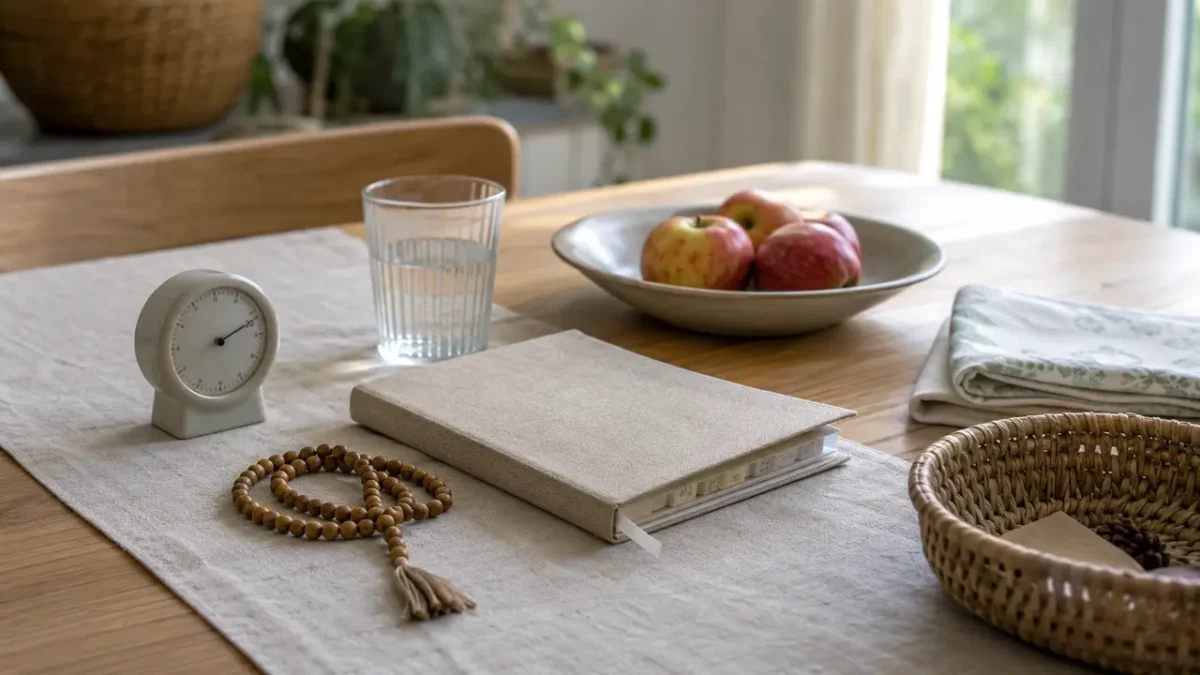
The internet’s version of a weekly reset often looks like an entire day surrendered to cleaning, meal prep, shopping, and color-coded lists. By the end, the person doing the resetting may need another day to recover.
Real life gives a different picture: a prayer pushed too close to the end of its time, a nearly empty refrigerator, one household bottleneck, and several obligations competing for attention. A useful reset should reveal those pressure points without turning stewardship into a performance.
This 20-minute reset is not tied to Sunday—or to any supposedly special productivity day. Choose a suitable quiet window and give four minutes to each of five anchors: worship, body, food, home, and duties.
1. Start With Worship, Not the Wish List
Check prayer times against appointments, travel, school runs, or work demands. Notice where a rushed transition could make salah harder, then prepare one safeguard: an earlier departure, a prayer kit in the bag, or a clear pause in the schedule.
This is not about turning worship into a productivity box. Surah Al-Hashr 59:18 calls believers to be mindful of Allah and consider what they have sent forward for tomorrow. Planning has its proper place: the calendar serves obedience and responsibility; it does not become the center of life.

2. Check the Body You Have Been Entrusted With
Next, check sleep opportunities, water, regular meals, and realistic movement. Ask: “What repeatedly made ordinary care harder last week?” Remove one obstacle instead of adding five new goals.
If late scrolling displaced sleep, try putting the phone in another room during one protected period. If movement disappeared, find where a brief walk already fits. A health concern needs qualified care, not diagnosis or treatment through a lifestyle checklist.

3. Plan Three Useful Meals, Not Seven Perfect Days
Choose three anchor meals that suit the household’s real week. Check what is available, list the missing ingredients, and decide which meal can provide useful leftovers. Keep halal suitability, food safety, allergies, budget, and family needs in view.
The current CDC guidance on meals and snacks emphasizes variety across vegetables, fruit, whole grains, protein foods, and unsweetened dairy. A short plan can make ordinary choices visible before hunger and time pressure take over.

4. Remove One Household Bottleneck
Do not “reset the house.” Find the one spot that repeatedly slows everyone down: the entry table where keys disappear, the laundry chair, the crowded lunch counter, or the bag repacked every morning.
Give that point one job. A tray can hold tomorrow-facing items; a basket can move undecided objects out of the work zone. The 15-minute kitchen reset uses the same principle: improve a real morning instead of reorganizing every cupboard.

5. Make the Calendar Answer to Duties, Not Noise
Mark what genuinely requires time: appointments, family needs, deadlines, promised help, necessary errands, and protected worship. Choose no more than two intentions and turn them into clear cues.
The National Cancer Institute’s overview of implementation intentions explains why “if–then” plans can help move a goal toward action. “If I finish ‘Isha, then I will place tomorrow’s essentials in the tray” is clearer than “I will be more organized.”

Why a Short List Can Be More Useful Than an All-Day Overhaul
An all-day project mixes deciding, cleaning, shopping, and catching up into one large promise. The short reset separates planning from doing: decide what deserves attention without pretending every task will be finished before the timer rings.
In one small sleep-laboratory study of 57 healthy young adults, participants who wrote a specific to-do list before bed fell asleep faster than those who recorded completed activities. The study does not prove that every list improves sleep, but it supports a modest point: specific writing can be more useful than vague mental rehearsal.
The measure is not how polished the planner looks. In Sahih Muslim 2664, the Prophet Muhammad ﷺ taught believers to pursue what benefits them, seek Allah’s help, and not lose heart. The reset should serve what is beneficial and possible—not perfectionism, waste, or display.
Your Reset Can Happen on Any Day
This is a practical tool, not a ceremony, and no virtue is attached to its timing. Choose a quiet period after Jumu‘ah, a weekday evening, or another suitable window that does not compete with worship, rest, family rights, or necessary work.
Keep the five anchors, but change the details. Travel may require a prayer-and-meal check; a school week may need a bag-and-kitchen check; a quieter week may need attention to family ties.
Try the Five-Anchor Test for Seven Days
At the next reset, do not ask whether the list was completed perfectly. Ask whether it protected what mattered:
- Worship: Did the plan make salah and other obligations easier to honor?
- Body: Did one obstacle to basic care become smaller?
- Food: Were three useful meals easier to assemble without wasteful overbuying?
- Home: Did one repeated bottleneck improve?
- Duties: Did the calendar reflect real promises and responsibilities?
If one anchor failed, shorten or move the action before adding anything. Judge the reset by whether it supports worship, health, home, and relationships—not by whether a day looks productive on camera.
Frequently Asked Questions
Does the weekly reset need to happen on the same day?
No. It is not tied to a religious observance or an imported weekend ritual. Use the time that best fits your responsibilities.
What if 20 minutes is not enough?
The timer is for choosing the next actions, not finishing every chore. Schedule a longer task separately only when necessary.
Is this a medical or mental-health method?
No. It is a lifestyle planning framework. It does not diagnose, prevent, or treat any condition, and it should not replace advice from a qualified professional.