Imagine this: The table is beautifully set, the fresh salad is tossed and ready, and all that is left is to slice up those beautiful, protein-packed hard-boiled eggs to finish the dish. You tap the shell on the counter, start to peel, and… disaster strikes. Half the delicate egg white clings stubbornly to the shell, leaving you with a mangled, crater-filled mess instead of a perfectly smooth oval. We have all been there, staring in frustration at a ruined snack over the kitchen sink.
If you are tired of this everyday kitchen heartbreak, grab your favorite mug of coffee, pull up a comfortable chair, and let’s have a chat about the ultimate solution. For years, kitchen wisdom has whispered about the “ice water bath” as the definitive secret to flawless peeling. But is it the whole truth?
Recently, the culinary world—from professional food scientists to passionate home cooks debating on community forums—has been buzzing with new, extensively tested insights. It turns out, the ice bath is only half of the equation. To achieve those perfectly smooth, diner-style eggs every single time, you need a specific combination of temperature shocks and a few clever peeling techniques. Today, we are diving deep into the fascinating science of the perfect boil, debunking outdated cooking myths, and sharing the exact, foolproof blueprint for easy-peeling eggs that will make your time in the kitchen significantly easier and much more enjoyable.
The Anatomy of a Stubborn Egg: Why Do They Stick?
Before mastering the solution, it deeply helps to understand the enemy: the egg membrane. Inside every eggshell lies a thin, incredibly strong membrane that surrounds the egg white (scientifically known as the albumen). When an egg is raw, the proteins within the white are tightly curled in compact little spheres. However, as heat is applied during the boiling process, these weak protein bonds break, and the proteins unfold and bond with each other to form a solid mass.
The frustrating problem occurs when the egg white proteins bond not just to each other, but also to that inner membrane. When an egg heats up too slowly, the proteins have ample time to act like a natural glue, fusing the white directly to the inner shell lining. This is precisely why peeling becomes a total nightmare; you are essentially trying to tear apart two surfaces that have chemically bonded together during the cooking process.
Furthermore, the freshness of the egg plays a massive role in this chemical reaction. Farm-fresh eggs are notoriously difficult to peel because their albumen is slightly more acidic, which makes that protein-to-membrane bond even stronger. As eggs sit in the refrigerator for a week or two, they naturally lose carbon dioxide through the microscopic pores in their shells. This process raises their pH level, making the whites less acidic and slightly easier to peel. But who wants to wait two weeks to enjoy a simple, healthy snack? You need a reliable method that works beautifully regardless of whether the carton was bought today or ten days ago.
The “Hot Start” – The Missing Piece of the Puzzle
For decades, classic cookbooks instructed us to place eggs in a pot of cold water, turn on the stove, and slowly bring everything to a boil together. Science now tells us this is the exact opposite of what you should do. Slowly heating the water gives those egg white proteins the perfect, leisurely environment to fuse tightly to the membrane.
The real game-changer, confirmed by extensive testing by food experts like J. Kenji López-Alt and widely discussed in culinary deep-dives on Serious Eats, is the “Hot Start.”
Instead of cold water, you must introduce your cold eggs directly into an already rolling pot of boiling water, or even better, a steamer basket filled with hot, circulating steam. This sudden, intense blast of heat shocks the outer layer of the egg white, causing it to cook and set almost instantly. Because the exterior sets so rapidly, it simply does not have the time to form those frustrating bonds with the inner membrane. The result is a clean, natural separation between the cooked egg and its shell.
The True Role of the Ice Water Bath
So, where exactly does the famous ice water bath come into play? If the hot start prevents the sticking, why bother with the freezing water at all? The ice bath serves two absolutely critical functions in the quest for the perfect egg:
First, it acts as the emergency emergency brake for the internal cooking process. Eggs retain a massive amount of residual heat. If you pull them from boiling water and simply set them on the kitchen counter or rinse them briefly, they will continue to cook internally for several minutes. This overcooking is exactly what causes that unappetizing, powdery, grayish-green ring around the yolk—a result of sulfur in the egg white reacting with iron in the yolk. Plunging the hot eggs directly into heavily iced water drops their internal temperature rapidly, stopping that chemical reaction and preserving a beautifully vibrant, creamy yellow yolk.
Second, thermal contraction is your best friend. While the hot start prevents the initial bonding, the extreme cold of the ice bath causes the cooked egg white to slightly contract and shrink away from the shell. The calcium shell itself remains rigid, but the inside pulls back just enough to loosen the overall grip. This dual-action shock—extreme heat followed immediately by extreme cold—is the absolute gold standard for flawless results.
The Foolproof, Step-by-Step Blueprint
Ready to put this fascinating food science into practice? Here is the exact, fail-safe method compiled from scientific testing and real-world kitchen successes.
Step 1: Prepare the Environment
Bring a pot of water to a rolling boil. If you have a steamer basket insert, use it! Steaming is incredibly gentle on the eggs and drastically reduces the chance of the shells cracking upon impact with the boiling water. While the water heats up, prepare a large bowl filled generously with ice cubes and cold tap water. Do not skimp on the ice; the water needs to be freezing cold to work effectively.
Step 2: The Hot Start
Take your cold eggs straight from the refrigerator and carefully lower them into the boiling water or steamer basket using a slotted spoon or kitchen tongs. Lower the heat just slightly to maintain a gentle boil (a violent, rapid boil will bounce the eggs around the pot and crack them). Set your timer. For a perfectly set, traditional hard-boiled yolk, 10 to 12 minutes is generally the sweet spot. For a softer, jammy yolk perfect for ramen or toast, aim for exactly 6 to 7 minutes.
Step 3: The Ice Shock
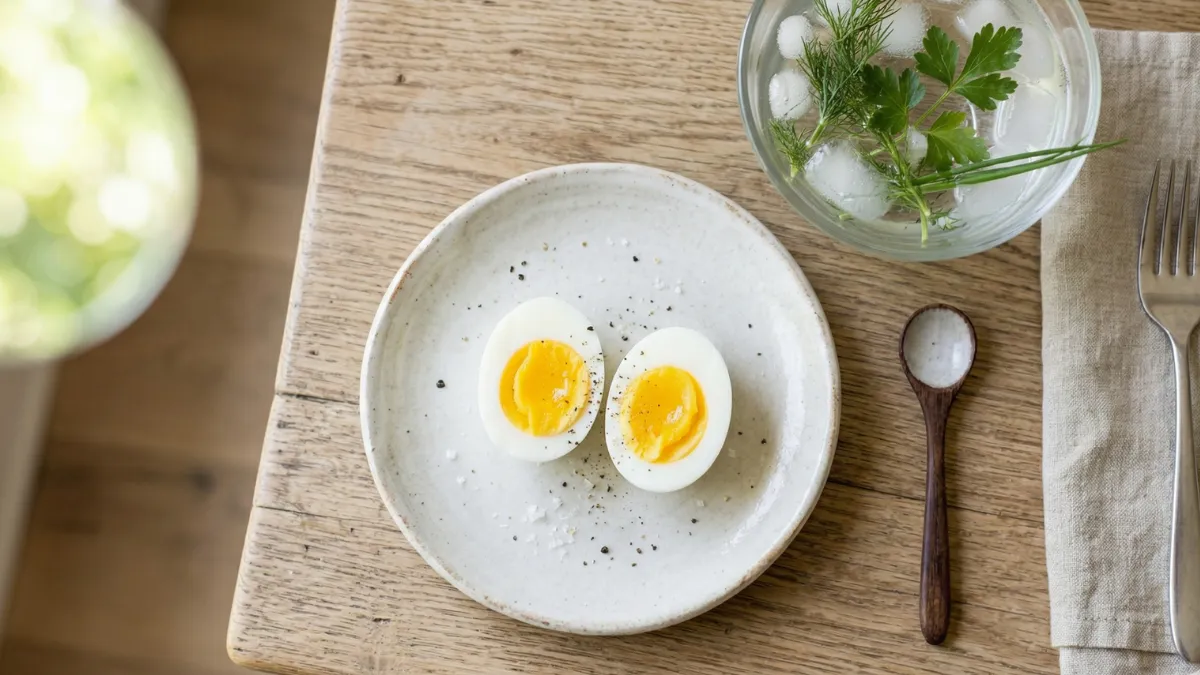
The moment your timer sounds, immediately transfer the eggs from the hot pot directly into your prepared ice water bath. Let them sit completely submerged for at least 10 to 15 minutes. They must be chilled to the core to allow that essential thermal contraction to happen.
Step 4: The “Crack and Soak” Technique
Here is a brilliant tactic heavily praised and tested in the r/Cooking community on Reddit. Once the eggs are completely cold, take one and gently tap it against the kitchen counter to form a fine web of cracks all over the shell. Pay special attention to the wider, bottom end of the egg, as this is where the natural air pocket resides.
Once cracked all over, do not peel it yet. Place the cracked egg back into the cold water bath for another minute or two. This brief pause allows the water to seep through the newly formed cracks and slip right underneath the membrane, acting as a natural lubricant between the shell and the egg white.
Step 5: Peel Under Water
Finally, peel the egg. Doing this either submerged directly in the bowl of water or under a gentle stream of cold running water from the tap will help flush away any tiny shell fragments and cleanly separate the membrane. The shell should slide off in large, incredibly satisfying ribbons.
Community Insights and Debunking Common Myths
If you spend any time browsing culinary forums, you will inevitably see endless debates about the “best” additions to boiling water. Let’s look at what the community experiences actually prove:
- The Vinegar and Baking Soda Debate: Many home cooks swear by adding a hearty splash of white vinegar or a spoonful of baking soda to the boiling water, claiming it softens the shell or alters the pH to make peeling easier. While adding these ingredients certainly does not hurt the cooking process, rigorous community testing shows that water additives have a negligible effect compared to the temperature shocks. The Hot Start and Ice Bath do 99% of the heavy lifting.
- The Spoon Peeling Trick: Some users recommend sliding a thin teaspoon under the cracked shell at the wide base to help curve along the egg’s natural shape and pop the shell off. This is a fantastic mechanical assist if you find your fingers are accidentally tearing the delicate egg white.
- Steaming vs. Boiling: A rapidly growing number of culinary enthusiasts advocate exclusively for steaming. Because steam is hotter and more consistent than boiling water (which drops in temperature the moment cold eggs are added), it provides a far superior “Hot Start” shock. It also prevents the eggs from bouncing into each other during the cook time.
Storing and Enjoying Your Perfect Eggs
Once peeled, your flawlessly smooth eggs are ready to be the absolute star of your dish. Whether you are neatly slicing them over a vibrant Mediterranean salad, mashing them for a classic, creamy egg salad sandwich, or simply sprinkling them with a pinch of flaky sea salt and cracked black pepper for a quick, protein-dense snack, the presentation will be bakery-window perfect.
If you are meal prepping for the week ahead, it is actually best to store hard-boiled eggs unpeeled in an airtight container in the refrigerator. The shell acts as a brilliant natural protective barrier, keeping them fresh and odor-free for up to a week. When you are ready to eat, simply give them a quick crack, a brief soak in a glass of tap water, and peel.
Mastering this everyday kitchen skill eliminates unnecessary frustration and elevates your daily meals. By respecting the simple science of temperature and utilizing the collective wisdom of home cooks worldwide, you will never have to settle for a mangled, difficult-to-peel egg ever again. The days of kitchen heartbreak over the sink are officially over; it is time to enjoy beautiful, perfect results, every single time.