Let’s be real for a second—grabbing a coffee, sitting down, and scrolling through a marketplace app has become the new “window shopping.” But in 2026, thrifting isn’t just a quirky hobby or a way to find “vintage vibes.” With the global economy shifting and a massive focus on sustainable living, buying second-hand has become a strategic lifestyle choice. It’s about being smart with your hard-earned money while ensuring you aren’t contributing to the “fast-everything” culture that’s cluttering our world.
The “Helpful Content” era of the internet has taught us one thing: people want real advice from real experiences. Some things are just objectively better when they aren’t brand new. Whether you are looking to form a more sustainable wardrobe or build a high-quality kitchen without the retail price tag, here are 7 things you should never buy full price.
1. Solid Wood Furniture (The “Anti-Fast” Movement)
We’ve all been there. You buy a flat-pack bookshelf, and by the time you move apartments once, it’s already wobbling. In 2026, the trend has shifted heavily toward “Legacy Pieces.”
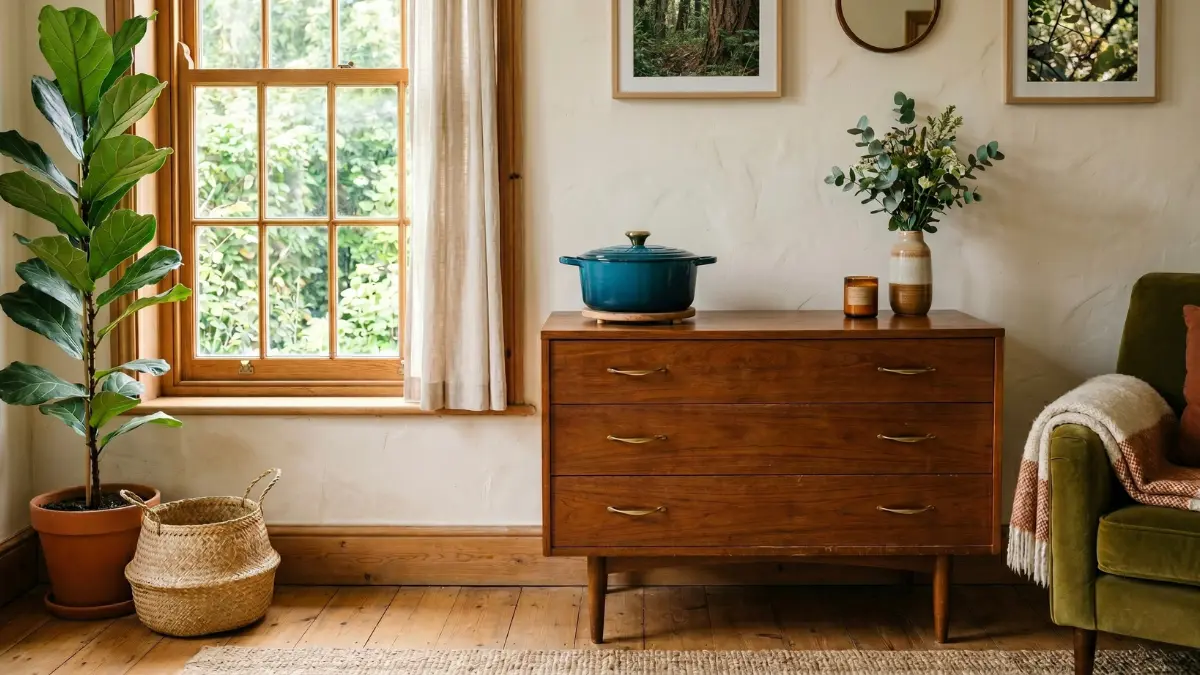
Modern furniture is often made of particleboard and MDF. However, if you look at local listings or estate sales, you can find solid oak, walnut, or mahogany pieces for a fraction of the cost. These items were constructed to last lifetimes.
Pro Tip from the Community: A popular sentiment on Reddit’s r/ThriftStoreHauls is that “if it survived the 70s, it will survive your kids.” Look for “dovetail joints” in drawers—that’s the hallmark of quality craftsmanship. Even if the finish is a bit scratched, a quick sanding and a new coat of natural oil can synthesize a look that looks like it cost thousands at a boutique.
2. High-End Kitchen Appliances
Did you know that a KitchenAid stand mixer or a Le Creuset dutch oven is almost indestructible? These are the “tanks” of the culinary world.
Lately, many people are listing these items because they realized they don’t bake as much as they thought they would. You can often find a professional-grade mixer—which usually retails for $500+—for under $200 because it has a tiny chip in the paint. Since these machines are developed with repairability in mind, even an older model can be serviced to run like new.
What to check:
- The Sound: If it’s a mixer, ask for a video of it running. It should hum, not grind.
- The Enamel: For cast iron, ensure there are no deep cracks in the interior coating.
3. Designer Handbags and Accessories
The resale market for luxury goods has exploded. Platforms like The RealReal and Vestiaire Collective have made authentication much more reliable than it was five years ago. In 2026, “Quiet Luxury” is still the dominant aesthetic, and nothing fits that better than a well-maintained, pre-owned leather bag.
Buying luxury second-hand is a triple win: you avoid the immediate “off-the-lot” depreciation, you get better quality leather (as many enthusiasts argue older batches were superior), and you contribute to a circular economy.
4. Children’s Gear (Except Car Seats!)
If you are a parent, you know that babies grow at the speed of light. That $800 designer stroller? They’ll be too big for it in 18 months. The “mom-to-mom” resale market is perhaps the most vibrant second-hand community out there.
Items like wooden cribs, high chairs, and strollers are perfect for the second-hand market. Most parents take excellent care of these items, and since they are used for such a short window, they often arrive in “like-new” condition.
Safety Warning: Always buy car seats brand new. You can never be 100% certain of their history or if they’ve been in a minor accident that compromised the structural integrity. Stick to the hard goods like strollers and high chairs for your savings.
5. Books and Media
In an age of digital subscriptions, there is a renewed soulfulness in owning physical books. But buying every new hardcover for $30? That adds up.
Between local “Little Free Libraries,” used bookstores, and sites like ThriftBooks, there is almost no reason to buy a book new unless you are supporting a specific author on their launch day. Plus, there is a certain “unexplained” charm in finding a book with a handwritten note on the inside cover from 1994. It adds a layer of history to your home library as you construct your collection.
6. Exercise Equipment
Every January, thousands of people buy treadmills, Pelotons, and weight sets with the best intentions. By March, those items often become very expensive clothes hangers.
By June, they hit the second-hand market.
If you are looking to build a home gym, wait for the “resolution fog” to clear. You can find dumbbells, kettlebells, and even high-tech rowing machines for 50-60% off retail prices simply because the owner needs the space back in their guest room. Weights, in particular, don’t “expire.” A 10kg iron plate is the same whether it was cast yesterday or twenty years ago.
7. Tools (Power and Hand Tools)
Whether you are a DIY enthusiast or just someone who needs a screwdriver occasionally, the second-hand market for tools is a goldmine. Brands like DeWalt, Milwaukee, and Makita build their professional lines to withstand daily abuse on construction sites. For a homeowner doing occasional repairs, a used professional tool will almost always outperform a brand-new “budget” tool from a big-box store.
Estate sales are particularly good for this. You can often find entire toolboxes filled with high-quality wrenches and hammers for next to nothing. These are the foundational items you need to synthesize a well-maintained home.
The 2026 “Trust Factor”: How to Shop Safely
To ensure you are following the best practices for both your wallet and your safety always follow these steps:
- Verify the Seller: On platforms like eBay, check ratings. A seller with a 5-star history over three years is a safe bet.
- The “Sniff Test”: When buying textiles or furniture, ensure they come from a smoke-free/pet-free home if you have sensitivities.
- Reverse Image Search: If a deal looks too good to be true (like a $100 Louis Vuitton), use Google Lens to see if the seller is using a stock photo or a photo stolen from another listing.
- Meet in Public: For local pickups, always choose a well-lit, public location. Many police stations now have “Safe Trade Zones” specifically for this.
Final Thoughts
Buying second-hand isn’t about “settling.” It’s about recognizing the inherent value in things that have already been formed and tested by time. It’s a way to build a life that is rich in quality but lean on waste.
So, before you click “Add to Cart” on that brand-new item, take five minutes to check the used market. You might just find something with more character, better quality, and a much friendlier price tag.