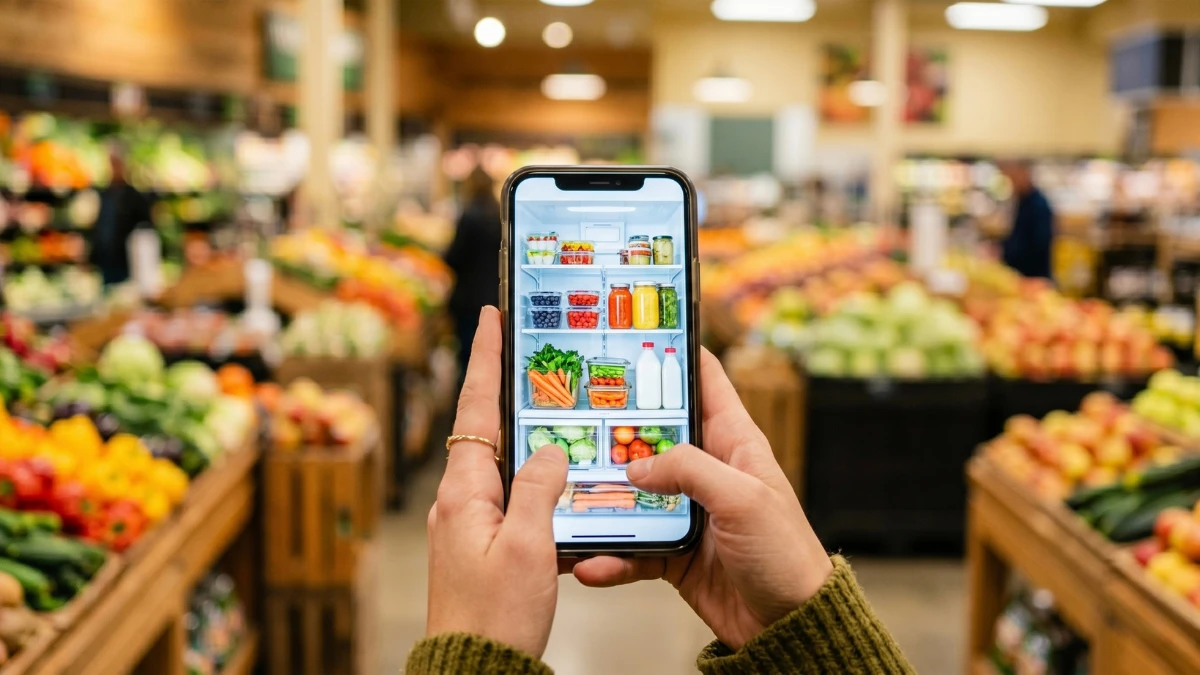
Picture this familiar scenario: standing in the middle of a crowded grocery store aisle, holding a jar of marinara sauce, staring blankly at the shelf while trying to recall if there is already an unopened jar sitting at home. You buy it just to be safe. Later, you unpack your grocery bags only to find three identical, unopened jars of the exact same marinara sauce hiding in the back of your pantry.
This universal household experience is frustrating, wasteful, and a direct drain on your budget. While traditional grocery lists and meticulous meal planning are fantastic tools, they often require a level of continuous discipline that busy individuals simply do not have the energy for every single week. Enter the most straightforward, zero-effort solution that is currently taking internet communities by storm: the “take a photo of your fridge” hack.
By simply snapping a few pictures of your refrigerator, freezer, and pantry shelves right before you walk out the front door, you carry a visual inventory of your kitchen directly in your pocket. This guide will explore exactly why this method is so highly praised, how real people are utilizing it to reduce waste, and the latest modern trends that are taking this simple visual trick to an entirely new level.
The Problem with Traditional Grocery Lists
To understand why a simple photograph is so effective, it is necessary to examine why traditional grocery lists sometimes fail us. Writing a list requires cognitive effort and forethought. Throughout the week, when the milk runs out or the last egg is used, someone in the household must remember to write that item down immediately. If that step is missed, the item is forgotten until the next time you need it.
Furthermore, traditional lists only tell you what you lack, not what you already possess. When you navigate a grocery store, you are bombarded by strategic marketing, bright end-cap displays, and unexpected clearance sales. When you spot heavily discounted bell peppers, your written list cannot tell you if you have the complementary ingredients at home to build a meal around them. Without knowing your current inventory, you either pass up a good deal or purchase the peppers, only to watch them spoil in the crisper drawer because you lacked the remaining components to utilize them properly.
Why the Visual Inventory Method Works So Well
Taking a photo of your open fridge, freezer, and pantry requires absolute minimum effort. It takes less than ten seconds and completely eliminates the need to rely on memory.
Psychologically, this method caters to visual learners and those who struggle with “object permanence”—a concept frequently discussed in online productivity and ADHD communities. If a jar of salsa is pushed behind a carton of milk, out of direct line of sight, the brain often registers it as non-existent. A quick photograph allows you to zoom in, scan the shelves, and verify exactly what items are hiding in the shadows of your refrigerator.
This hack empowers a strategy known as “reverse meal planning.” Instead of going to the store with a rigid list of required ingredients for a pre-determined recipe, you can look at your photos, see what ingredients you currently have, and purchase only the missing components needed to synthesize a complete dish. If your photo reveals half a cabbage and some carrots, you know you only need to pick up a protein to construct a stir-fry. It is a highly efficient way to operate a household kitchen.
Real Community Insights: Combating the “Sad Cilantro” Syndrome
The true value of this hack becomes apparent when reading real-life experiences shared across community forums. On platforms like Reddit, specifically in subreddits dedicated to frugal living and ADHD support, users frequently highlight how this visual inventory stops them from making repetitive purchasing errors.
One highly relatable discussion revolves around what users jokingly call the “sad fridge cilantro” syndrome. Fresh herbs, leafy greens, and highly perishable produce are notorious for spoiling before they are fully consumed. A shopper might buy a fresh bunch of parsley or cilantro, completely forgetting the wilting bunch they bought just four days prior. By checking a photo of the produce drawer while standing in the supermarket, shoppers are visually reminded of the perishables they already own. This prompts them to skip purchasing new herbs and instead buy complementary ingredients that will help them utilize the older produce before it goes bad.
Furthermore, these online communities emphasize how this hack mitigates the anxiety of grocery shopping. Supermarkets are intentionally designed to be overwhelming sensory environments, playing specific music, utilizing bright lighting, and placing high-margin items at eye level to encourage impulse purchasing. For individuals who already feel decision fatigue after a long workday, trying to mentally visualize the contents of their kitchen pantry can be an exhausting task. Pulling out a smartphone to look at a static, factual photograph cuts through the store’s marketing noise. It grounds the shopper in reality. You are no longer guessing if your family needs more yogurt; you have visual proof right in front of you. This psychological anchor prevents the panic-buying of staples and keeps the focus strictly on what the household genuinely requires.
Step-by-Step: How to Execute the Hack Flawlessly
While taking a picture sounds entirely self-explanatory, there are a few practical tips to ensure this method provides maximum utility.
1. Open Every Door and Drawer: Do not just snap a picture of the main refrigerator compartment. Open the crisper drawers so the vegetables are visible. Swing open the freezer door. Pull back the pantry doors. If you keep fresh fruit, onions, or potatoes in a bowl on the kitchen counter, take a photo of that as well.
2. Optimize the Angle and Lighting: Ensure the kitchen light is on so the back of the pantry is visible in the photo. If your shelves are deep, you might need to take one photo of the top shelves and another of the bottom shelves. The goal is clarity; if the photo is too dark or blurry, it will not help you while you are standing in the store aisles.
3. Don’t Forget the Condiment Shelf: One of the most frequent culprits of kitchen clutter is the refrigerator door where condiments are stored. Salad dressings, mustard, hot sauces, and mayonnaise often get duplicated simply because they take a long time to consume. When taking your photos, ensure you get a clear shot of the refrigerator door shelves. This specific area is where households tend to accidentally hoard multiples of the exact same item, slowly crowding out valuable storage space.
4. The Crucial Cleanup Step: Delete Afterward: This is perhaps the most important rule of the visual inventory hack. As soon as you return home from the grocery store and put your groceries away, you must delete the photos from your phone. If you forget to delete them, you risk opening your photo gallery during your next shopping trip a week later and making purchasing decisions based on an outdated inventory. Always ensure you are working with the freshest visual data.
5. Pair with a Running Text List for Staples: While the photo is brilliant for checking inventory, it cannot show you what was entirely consumed and thrown in the recycling bin yesterday. Therefore, the most robust strategy is a hybrid one: keep a simple notepad or digital list solely for items that are completely empty (like a finished bottle of olive oil), and rely on the photos for everything else.
The 2026 Trend: Merging Fridge Photos with Artificial Intelligence
One of the most exciting recent developments surrounding this household hack is its intersection with modern technology. In late 2024/2025 and throughout 2026, a fascinating new trend emerged across fitness, budgeting, and tech communities online. People are no longer just looking at their fridge photos manually; they are feeding these images directly into Artificial Intelligence tools.
Users on weight-loss and budgeting forums are sharing an incredibly smart digital workflow. They take a clear photo of their refrigerator shelves and upload it to AI assistants. They then provide a prompt such as: “Analyze this photo of my current fridge and pantry inventory. I also have standard dry spices. Formulate three high-protein, low-cost dinner recipes I can build using strictly what is visible here.”
The AI is capable of identifying the ingredients in the image—recognizing the half-empty jar of pesto, the block of cheddar cheese, and the carton of eggs—and synthesizing these variables into structured, actionable recipes. This digital integration takes the cognitive load entirely off the user. It completely removes the daily stress of deciding what to cook, drastically reduces food waste, and prevents unnecessary emergency trips to the grocery store. It is a perfect example of utilizing modern technology to streamline fundamental daily chores.
Expanding the Hack Beyond the Kitchen
Once you experience the efficiency of the visual inventory method at the grocery store, you will likely find yourself applying it to other areas of household management. The applications are limitless.
Before heading to a pharmacy or a wholesale club, snap a picture of your medicine cabinet to check your supply of pain relievers, bandages, and vitamins. Take a photo of your under-sink storage to verify if you actually need more dish soap, sponges, or window cleaner. You can even photograph your cosmetics drawer or office supply shelf before a major shopping trip.
Final Thoughts on Smarter Household Management
Managing a household and maintaining a budget requires practical, sustainable systems. Complex spreadsheets and color-coded meal plans are admirable, but they often fall apart during a stressful, busy week. The “take a photo of the fridge” hack succeeds precisely because it demands almost nothing from you. It is a five-second habit that leverages the tool you already hold in your hand to provide immediate, factual data when you need it most.
By embracing this visual strategy—and perhaps pairing it with the analytical power of modern AI—you can navigate the grocery aisles with absolute confidence, lower your monthly expenses, and ensure that every item you purchase actually serves a purpose in your kitchen. So, the next time you grab your keys to head to the supermarket, take a brief detour to the kitchen and let your camera do the heavy lifting.