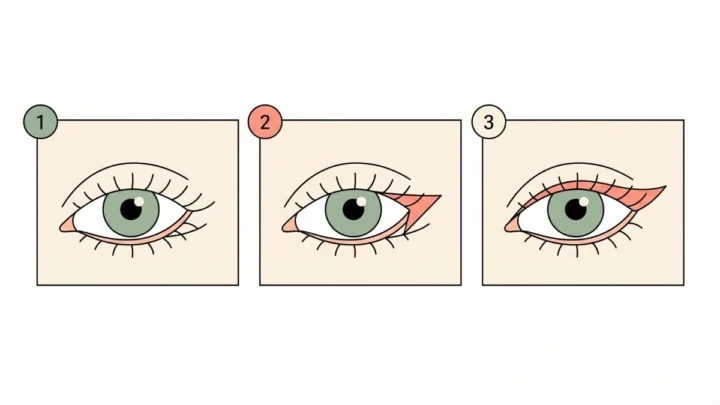
Most eyeliner advice talks about wings, colours, and staying power.
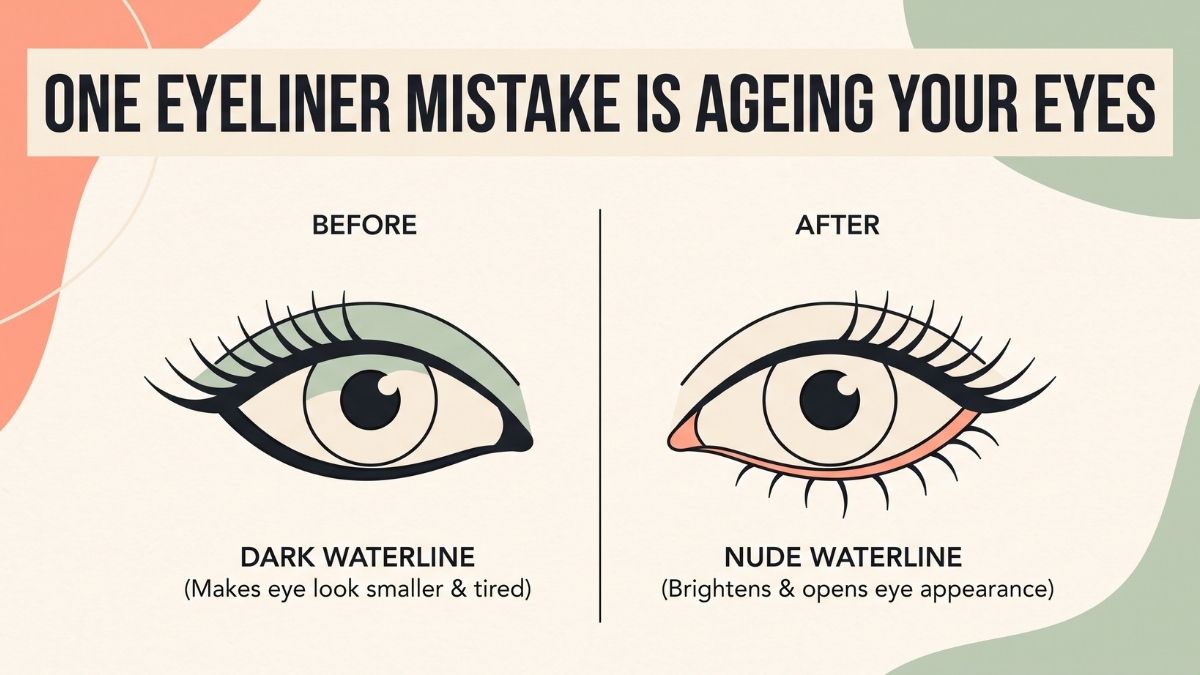
But one quiet habit, repeated on millions of lower lash lines every single morning, is the one actually adding years to the eyes.
It isn’t a colour choice or a tool. It’s where the liner goes.
Why the Waterline Works Like a Frame
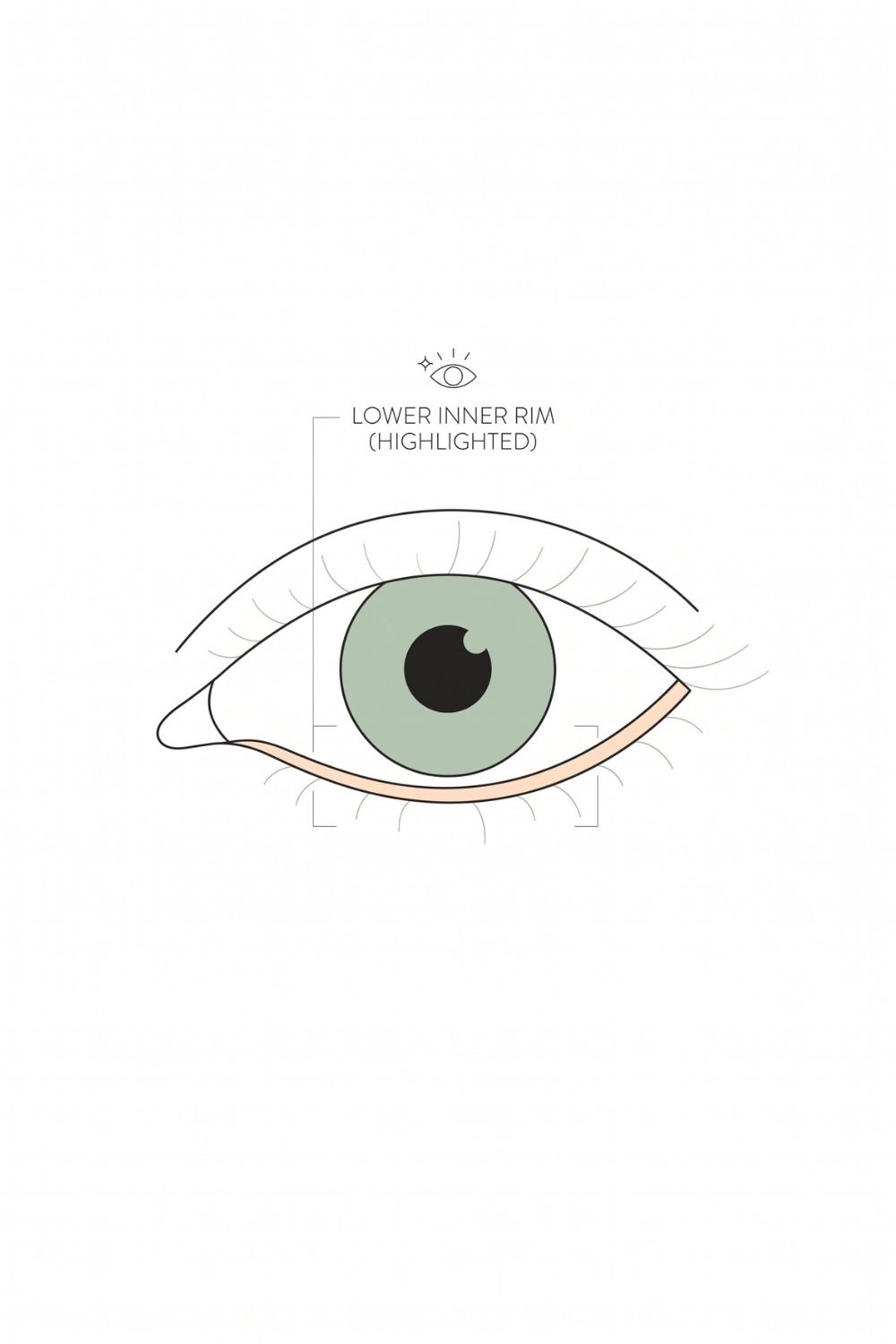
The waterline — that thin strip of pink-white tissue just inside the lash line — works like a frame around a painting. It separates the eye itself from the skin underneath it.
When that strip stays visible, the eye reads as open, bright, and clearly defined from the skin below it.
When it’s coloured in, the frame disappears, and the eye starts to blend into the under-eye area instead of standing apart from it.
See It Yourself in Five Seconds
This is easy to check on a real face, not just on paper.
Look in a mirror with no eyeliner on yet. Take a cotton bud or a clean fingertip and gently rest it just below the lash line, covering the pale waterline strip without touching the eye itself.
Notice how the eye looks slightly smaller and more closed the moment that strip is covered, then open and brighter again the second the fingertip moves away.
That small shift is the entire mechanism behind this mistake. Nothing else on the face changed, only whether that one pale line stayed visible.
The Mistake: Colouring In the Frame
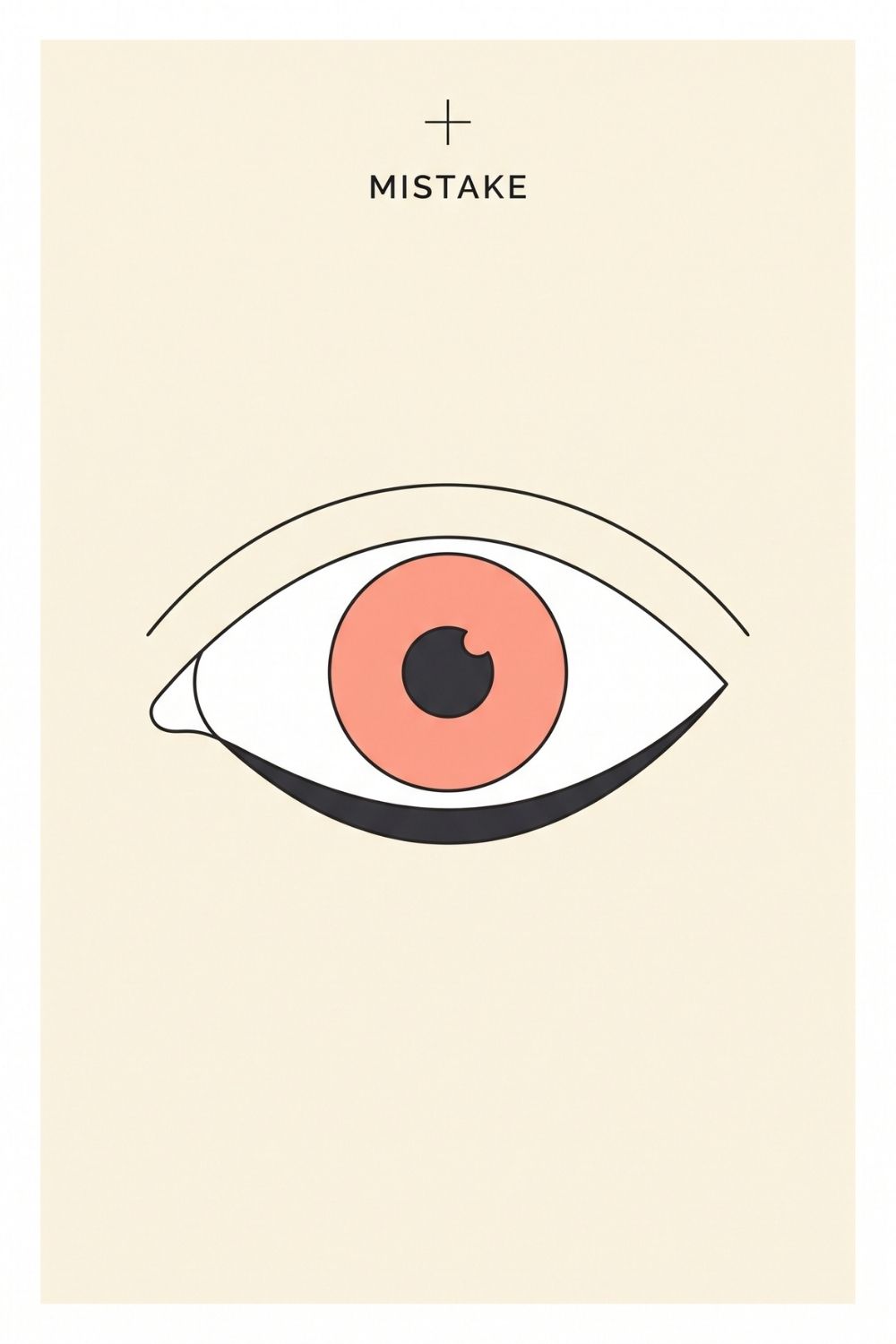
The mistake is tightlining the entire lower waterline in the same dark shade used on the upper lash line, all the way from the inner corner to the outer corner, every day, regardless of the look.
It feels like “finishing” the eye. Most tutorials never single it out as a separate decision, so it gets repeated without much thought.
“Waterline” and “lash line” get used interchangeably, but they’re not the same surface, and that’s part of why this mistake spreads so easily.
The lash line sits on the skin, right at the base of the lashes. Lining it, even darkly, doesn’t touch the eye’s mucosal tissue at all.
The waterline sits just inside that, on the wet, pink-white mucosa between the lashes and the eyeball itself. Colouring that strip in is a different action with a different result, even though both get called “lining the bottom” in casual conversation.
A line drawn along the lash line keeps definition. The same shade drawn along the waterline removes the frame. The two are often confused precisely because they sit millimetres apart.
According to a beauty expert writing for Glam, harsh, unbroken liner around the eyes is one of the most repeated ageing habits in everyday makeup, because it removes the natural contrast the eye relies on. A beauty writer with over 15 years of experience covers several versions of this same pattern, and the waterline is where it shows up the most.
What Removing the Frame Actually Does
Without that pale strip, two things happen at once.
The visible eye looks smaller, because the white-pink boundary that used to separate iris from skin is gone.
And anything sitting just underneath — fine lines, puffiness, dark circles — loses its frame too, so it reads as one continuous tired area instead of a separate, minor detail.
This is also why the same dark liner can look completely different on two people. On a smoother, more taut lower lid, removing the frame barely registers. On a lid with any creasing or shadowing, it removes the one thing that was keeping that shadowing contained.
The Fix That Takes the Same Few Seconds
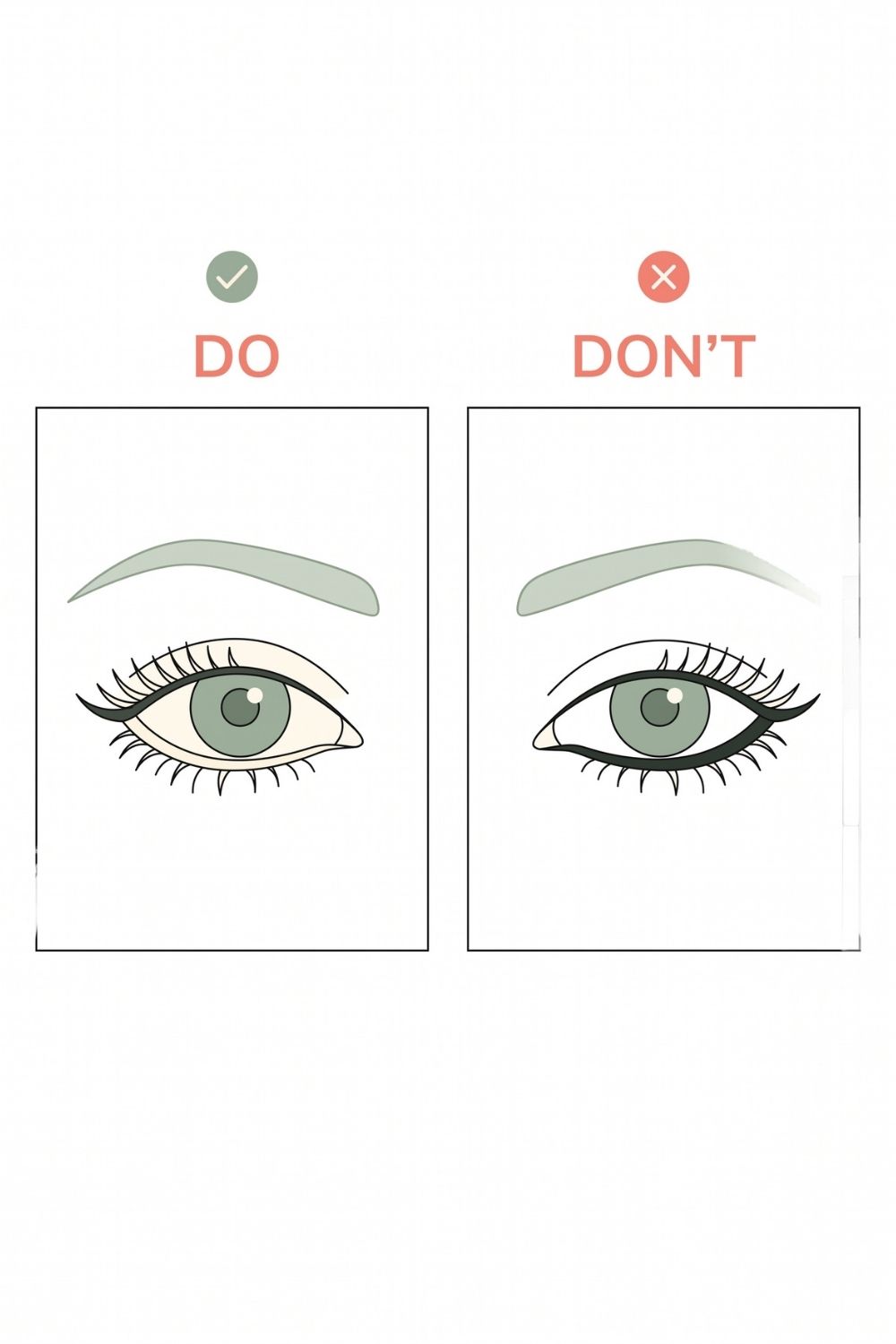
The fix doesn’t change the routine, only one colour in it.
Keep the dark, tightlined definition exactly where it currently works best: the upper lash line, close to the roots.
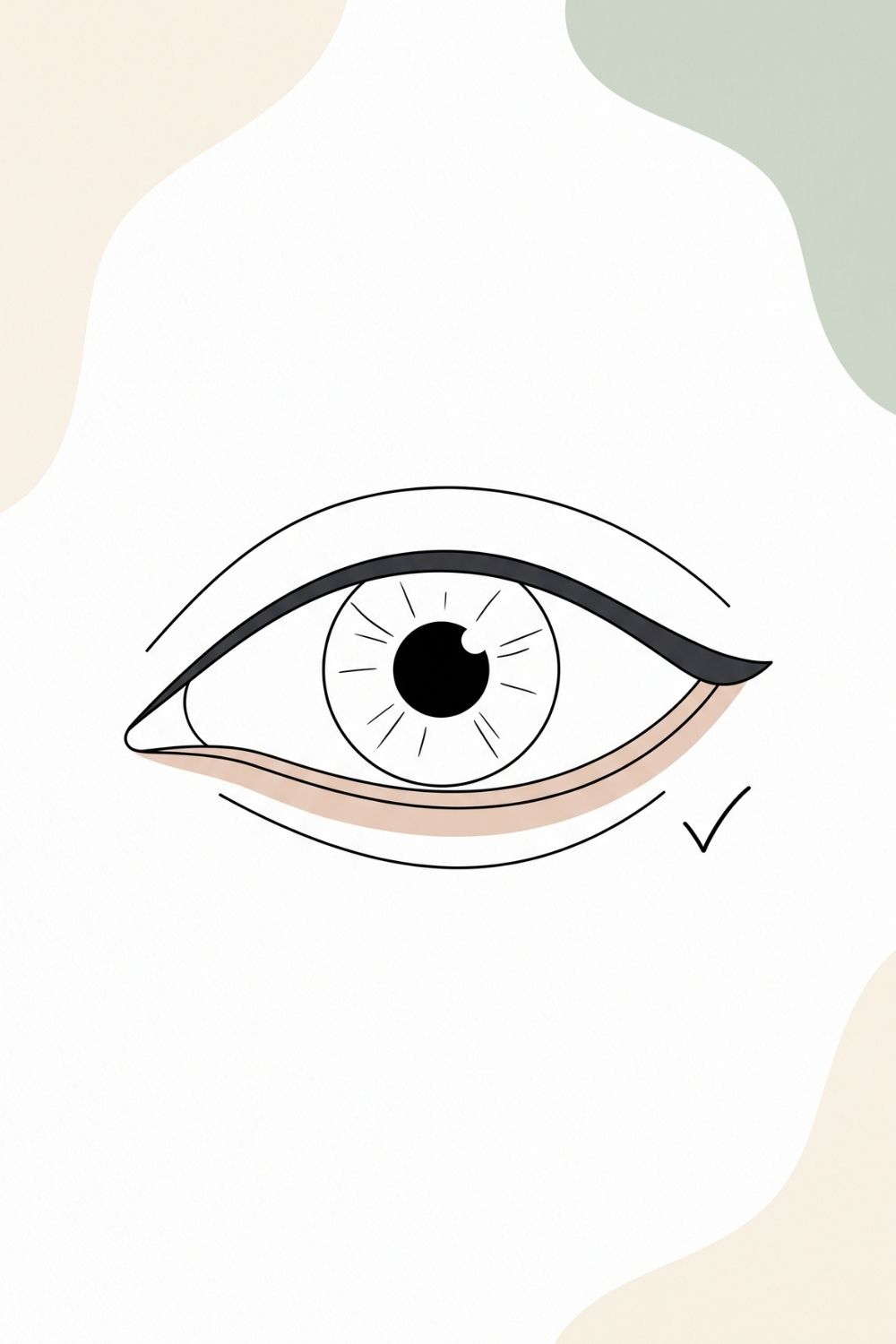
On the lower waterline, swap the dark shade for a nude, soft beige, or skin-toned pencil instead of skipping it. The line keeps doing its job — defining the eye — without erasing the boundary that keeps it looking open.
If a lower line is wanted in a darker shade, keep it on the lash line itself rather than the waterline, and taper it inward from the outer corner instead of running it the full length. A line that stops three-quarters of the way in reads as definition. A line that runs edge to edge reads as a shadow.
For a rushed morning, the whole adjustment takes the same amount of time as the mistake itself: dark liner stays on top, nude liner goes on the bottom waterline, and the rest of the routine doesn’t need to change at all.
This Fix Isn’t for Every Eye Shape
This fix isn’t universal, and it’s worth saying so directly.
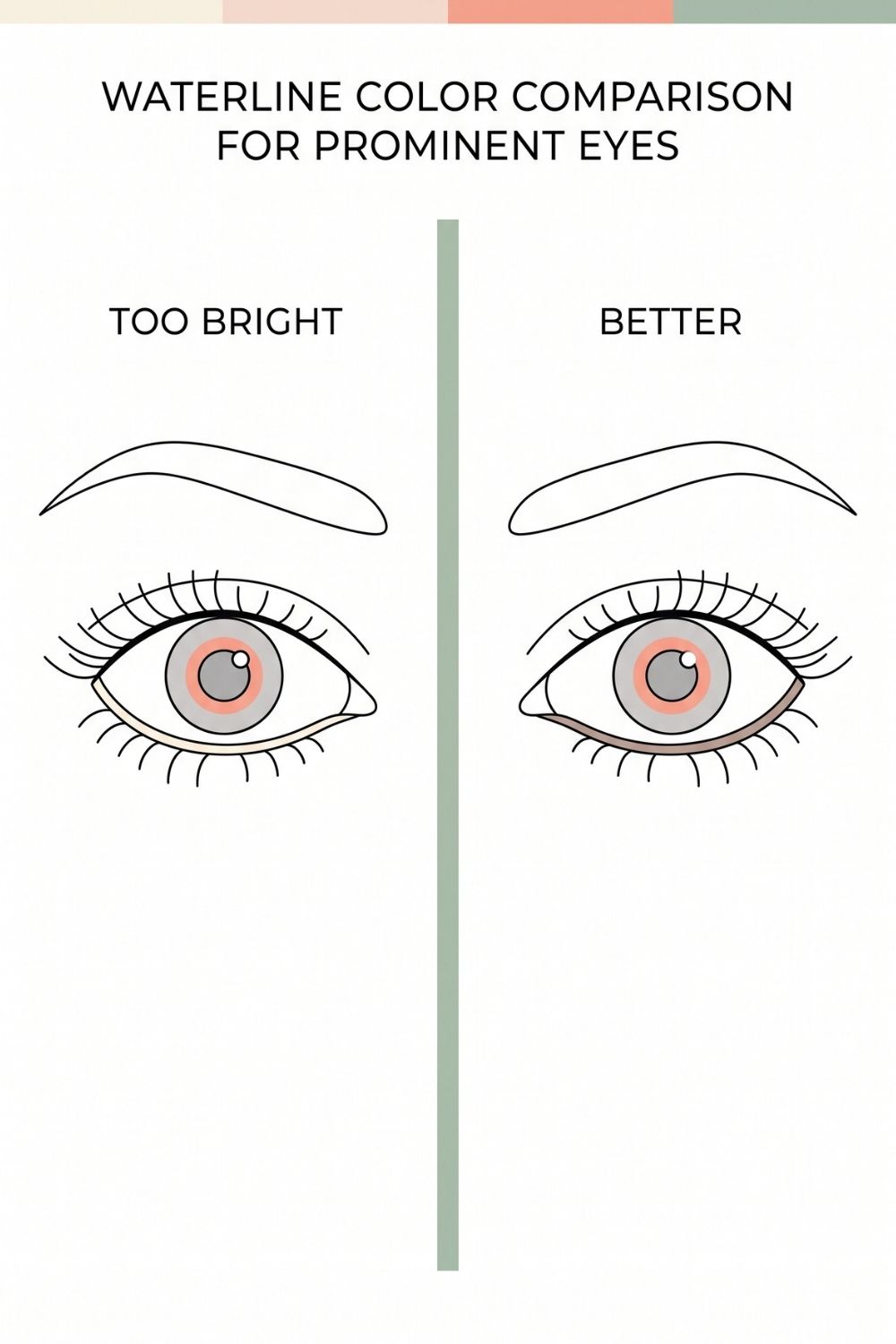
On eyes that are naturally more prominent or sit further forward in the socket, a bright nude or white waterline pencil can do the opposite of the intended effect — it brightens the whole area so much that the eye looks even more forward and rounded, rather than simply open.
For that eye shape, a soft taupe or warm mid-brown on the lower waterline gives most of the same lifted, awake effect without adding extra brightness to an area that’s already prominent. The goal stays the same — keep the frame visible — the exact shade just needs to match the eye it’s working on.
This same logic shows up in our piece on fixing droopy eyelids — the exact same waterline contrast, used there to lift the eye rather than to avoid ageing it.