Downturned eyes — where the outer corner points toward the cheek rather than the brow — change how a winged liner behaves.
Drawn the usual way, off the upper lash line, the wing simply follows that downward slope and drags the whole eye with it.
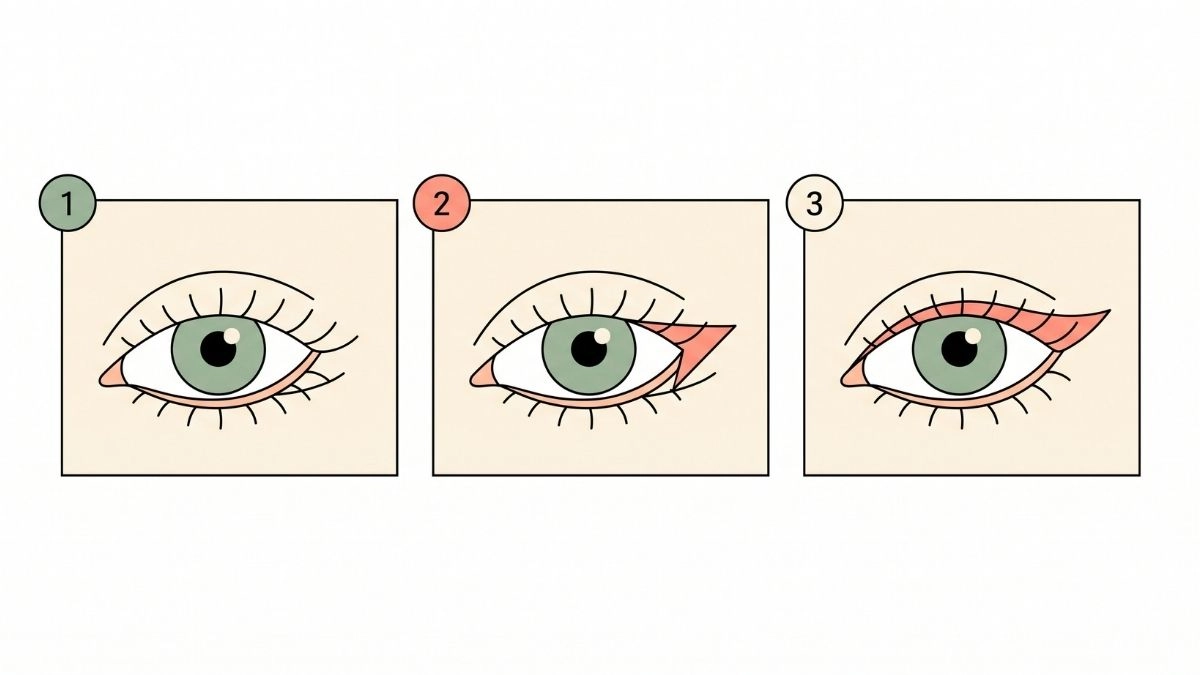
The reverse wing flips the starting point: the lift is built from underneath the lash line first, not from the top. The result is a corner that reads as lifted even though the eye shape itself slopes down.
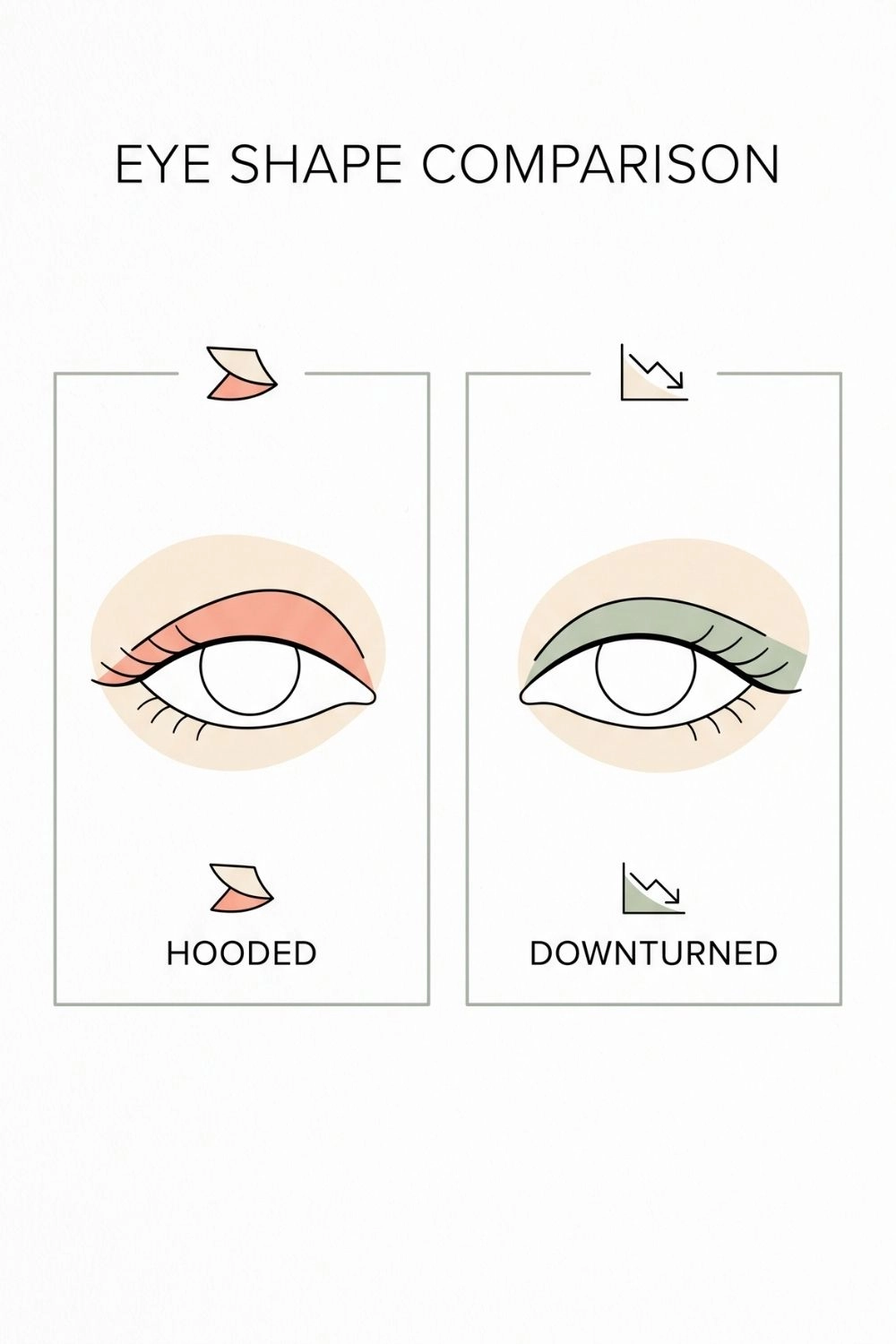
The Difference Between Downturned and Hooded Eyes
Most online guides use “hooded” and “downturned” almost interchangeably, but they describe two different things.
Hooded eyes are about skin — a fold of excess eyelid skin covers part of the lid when the eyes are open.
Downturned eyes are about the angle of the eye socket itself — the outer corner sits lower than the inner corner, regardless of how much lid skin is visible.
Someone can have downturned eyes with no hooding at all, which is why a hooded-eyes tutorial often doesn’t fix a downturned corner. The reverse wing addresses the angle directly, which is why it works for both shapes.
The Shape Mismatch Behind a Flat Wing
Most eyeliner tutorials assume an outer corner that sits level with, or above, the inner corner.
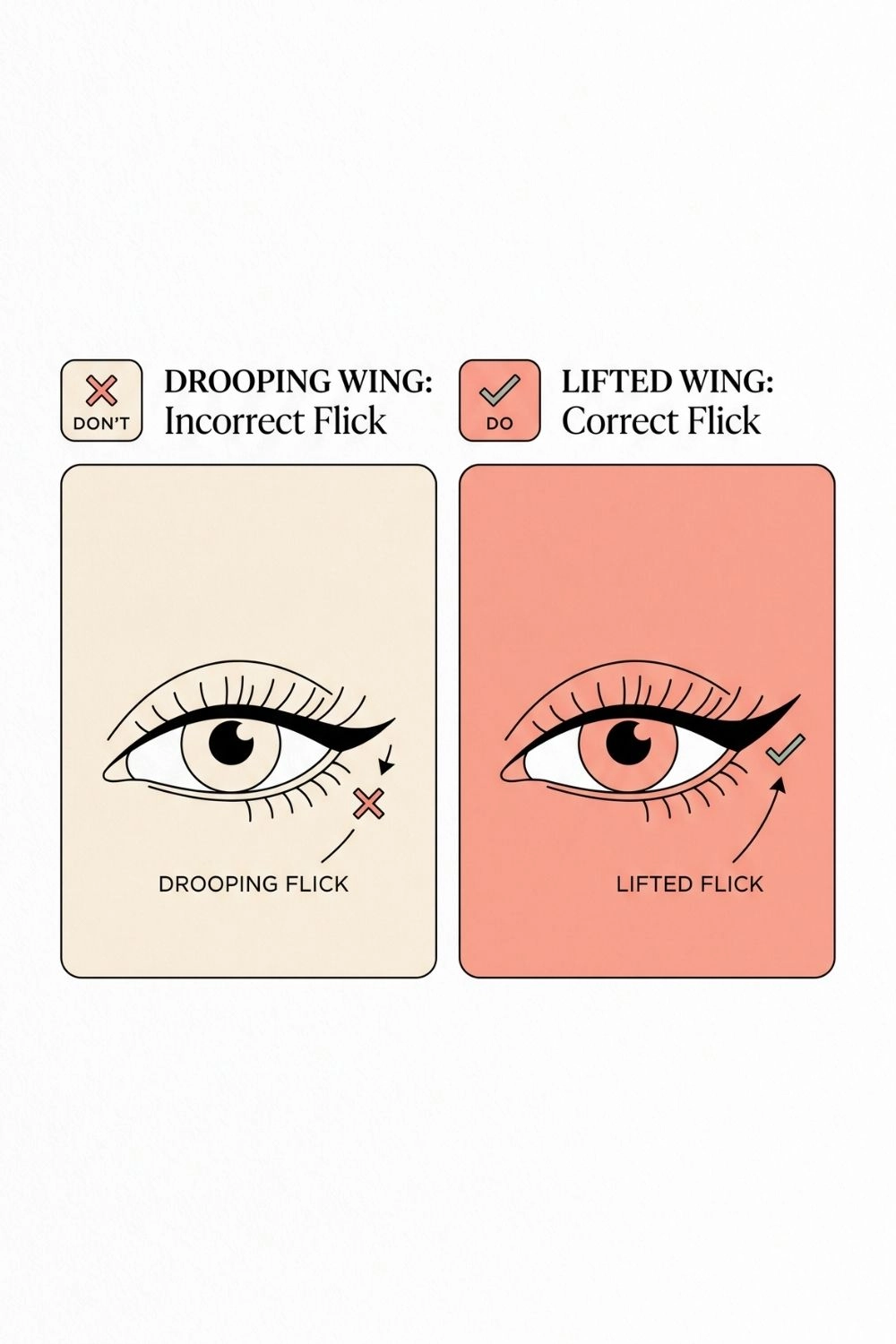
On downturned eyes, the outer corner sits lower, so a wing drawn straight off the upper lash line continues that same downward line instead of correcting it.
A make-up artist interviewed on the technique points to placement, not boldness, as the actual fix.
Skipping the underneath step is the single biggest reason a wing ends up looking flat rather than lifted.
The Reverse Wing Method, Step by Step
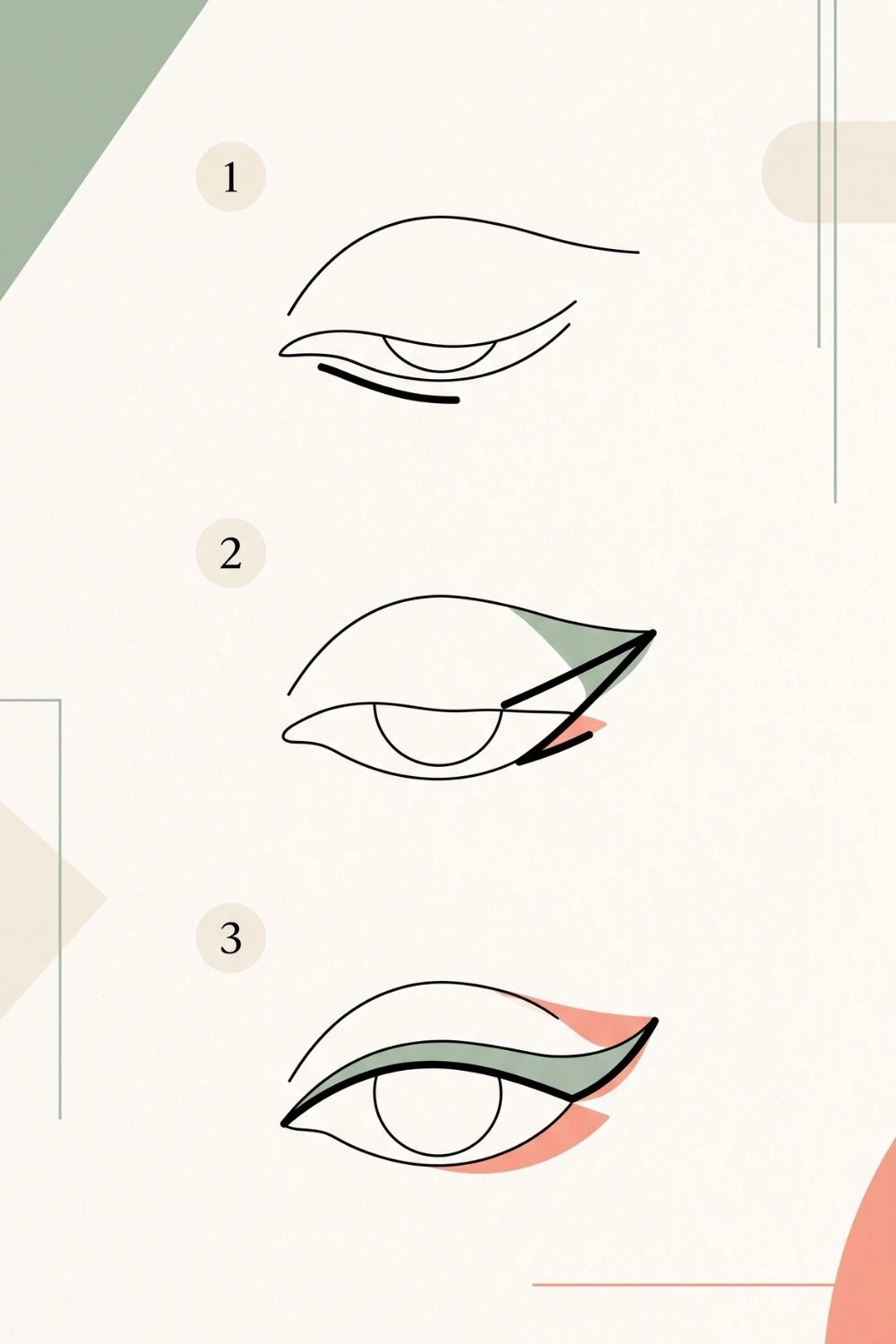
Start with a short flick underneath the outer corner, just below the lower lash line.
Angle it toward the tail of the brow, not out to the side — this underneath flick is the anchor that does the actual lifting.
Next, connect that flick to the upper lash line with one diagonal stroke and fill in the small triangle this forms.
Finish by lining the rest of the upper lash line as usual and joining it cleanly into the wing. A flexible, slightly angled brush makes this easier to control than a felt-tip pen, since the angle can be adjusted mid-stroke rather than committed to in one pass.
Adjusting for Asymmetry Between the Two Eyes
Most faces have one eye that sits slightly lower or more downturned than the other, which is normal rather than a flaw to fix.
Rather than mirroring the exact same flick angle on both sides, check each eye’s natural angle separately before drawing anything.
The eye with the more pronounced downturn usually needs the underneath flick started a touch higher, so both wings finish at roughly the same visual height when the face is viewed straight on.
Working on the more downturned eye first, then matching the second eye to it, gives a steadier result than copying a fixed template onto both sides.
Common Mistakes That Undo the Lift
The most frequent error is angling the underneath flick toward the corner of the eye instead of the tail of the brow.
This just replicates the same downward slope the technique is meant to correct.
A second mistake is thickening the upper lash line before the wing is finished, which buries the underneath flick.
Liquid liner also dries fast on the lower lash line, so working in small sections keeps the angle from setting wrong.
Myth vs Reality
Myth: A thicker wing always looks more lifted.
Reality: Thickness without the underneath anchor flick just looks heavier, not lifted. The lift comes from the angle, not the width.
Choosing the Right Liner Texture for This Technique
Liquid liner gives the sharpest line but dries within seconds, leaving almost no room to adjust the underneath flick once it’s down.
Gel liner stays workable slightly longer and has more friction against the skin, which makes the flick easier to hold at the right angle while it’s being drawn.
A guide to winged liner by eye shape notes that a pencil can be used first to map the angle, then gone over with liquid or gel for a crisper final line.
Powder eyeshadow with an angled brush is the most forgiving option to practice with, since mistakes blend away rather than needing to be wiped off and restarted.
Keeping the Lift in Place All Day
A thin layer of cream eyeshadow under the liner gives the line something to grip. This matters most on the lower lash line, where oil builds up first.
Setting the finished wing with a light dusting of matching powder eyeshadow keeps the edge crisp without adding bulk.
For anyone prone to smudging by midday, gel liner holds the underneath flick better than liquid, since it has more friction against the skin.
A Quicker Version for a Plain Morning
This technique still works as a shortened, two-minute version for days with no time pressure and no audience beyond the bathroom mirror.
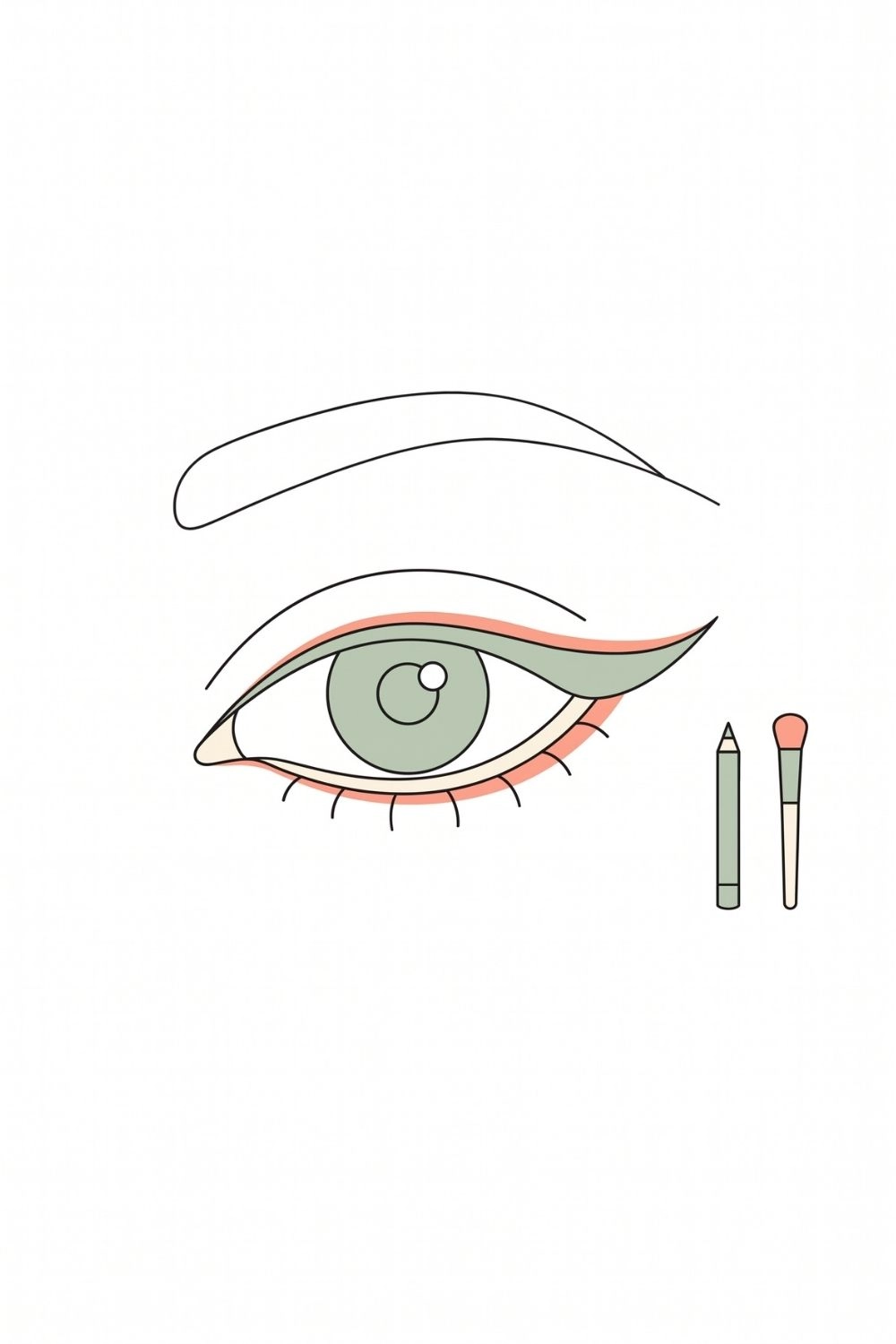
Skip the upper lash line entirely and draw only the underneath flick, then soften its edge slightly with a clean brush. The lift still shows from the front, even though the rest of the eye is left bare.
The reverse wing doesn’t fight the eye’s natural shape. It works with the angle that’s already there, which is why it tends to hold up through a long day far better than a wing forced into a shape the eye was never going to keep.