The first school bell may still be weeks away, but the 2026 lunchbox season is already underway. In its July back-to-school outlook, the National Retail Federation reported that 78% of shoppers expected higher prices this season.
That makes a useful packed lunch more than a pretty row of tiny containers. It should travel well, reuse familiar ingredients and still taste good when the lid opens at noon.
These seven cold lunchbox ideas follow one practical rule: keep the wet, crisp and dry parts apart until they are ready to be eaten. Each meal also uses ingredients that overlap with another box, so the shopping list stays manageable.
Keep “fresh until noon” safely chilled
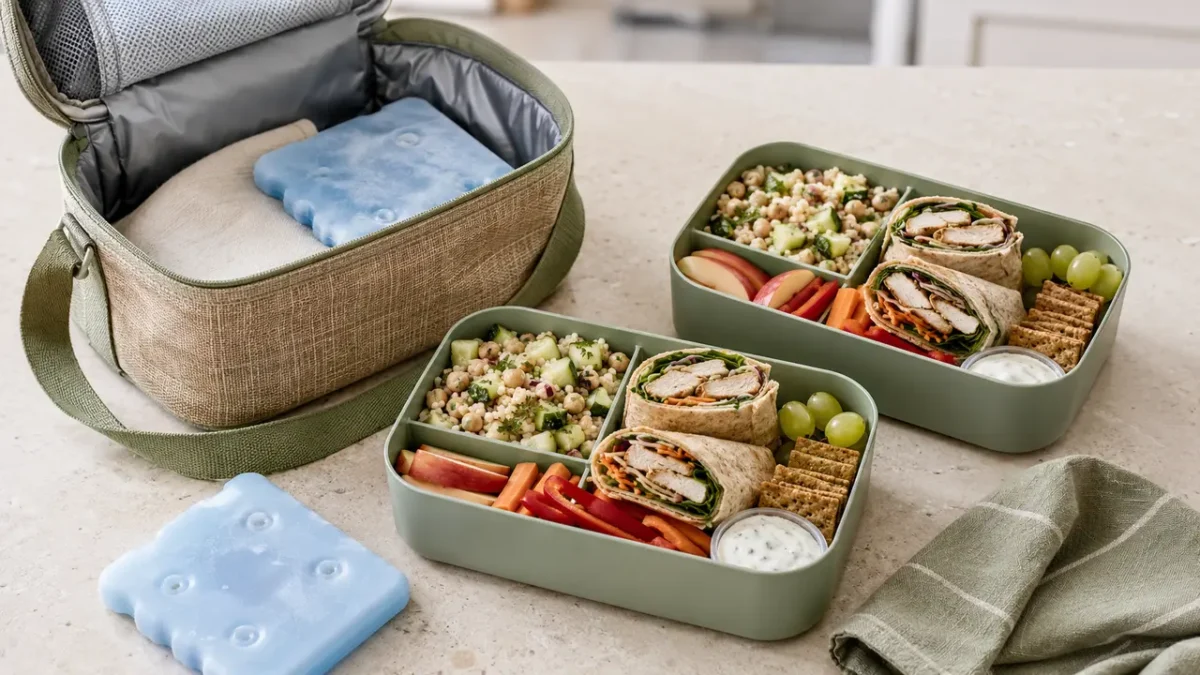
These ideas contain perishable foods. The USDA’s packed-lunch guidance recommends an insulated lunch bag and at least two cold sources. Place one above and one below the perishable food, or refrigerate the lunch promptly on arrival when a refrigerator is available.
The Women’s Alphabet Noon Test
A lunch can look excellent at 7 a.m. and disappoint five hours later. Women’s Alphabet uses a simple four-part check before a cold meal earns a place in the lunch bag:
- Anchor: a substantial base such as beans, eggs, yogurt, whole grains or fully cooked halal-certified chicken.
- Crisp: a fruit or vegetable that still has bite when chilled.
- Dry: pita, crackers, oats or breadsticks protected from dressings and juicy produce.
- Finish: a small leakproof cup of dressing, dip or seasoning added at lunchtime.
This is texture planning rather than fussy meal prep. It also reflects a broader 2026 move toward pairing protein with fiber-rich foods, noted in Penn State Extension’s food-trend review, without turning an everyday lunch into a nutrition project.
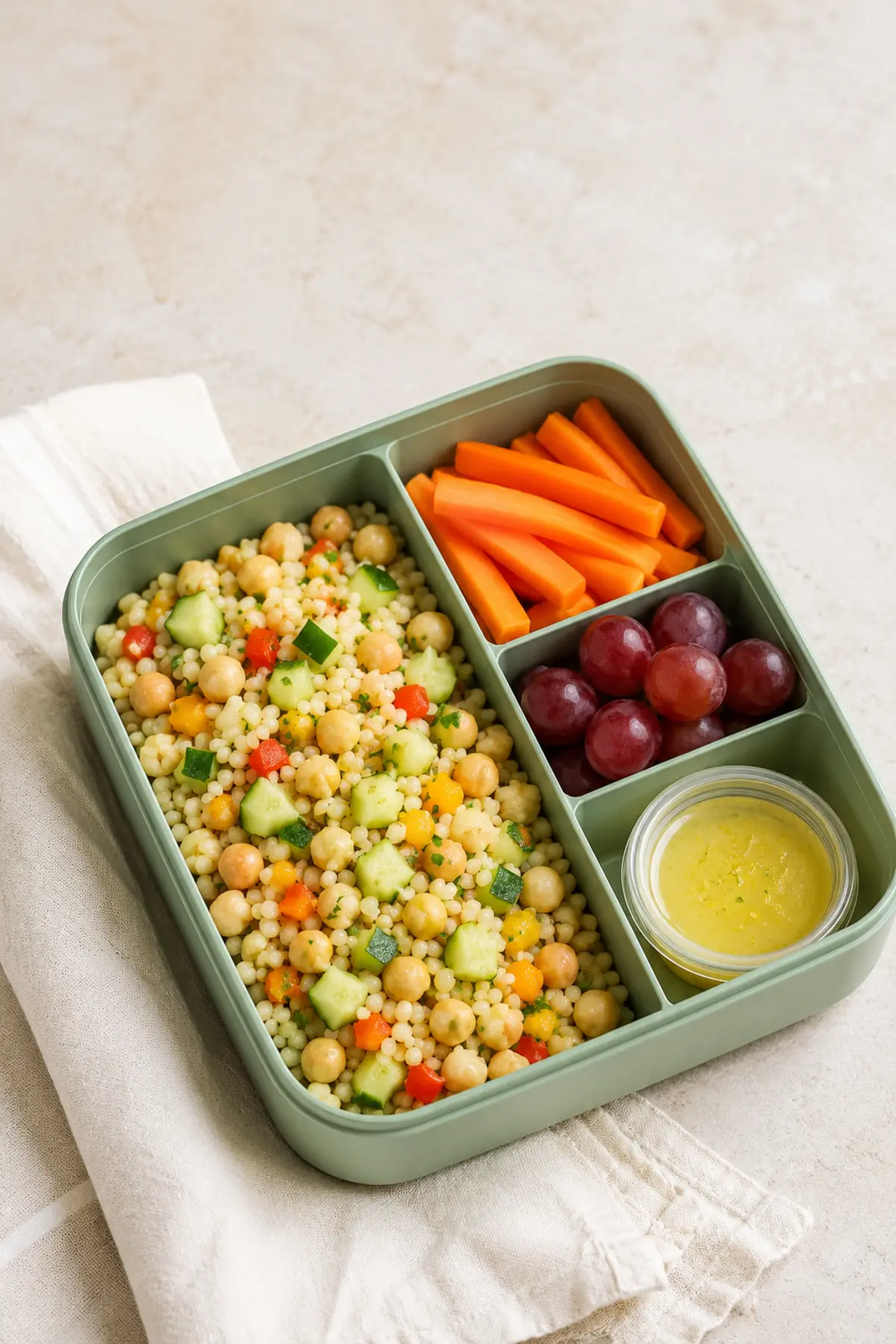
1. Lemon-Herb Chickpea Couscous Box
Pack: cooled pearl couscous, rinsed chickpeas, diced cucumber, bell pepper and parsley. Add carrot sticks and grapes in separate compartments, with lemon-and-olive-oil dressing in a small sealed cup.
Freshness move: drain the chickpeas and cucumber well, and leave the dressing off until lunch. The grains stay loose instead of absorbing liquid all morning.
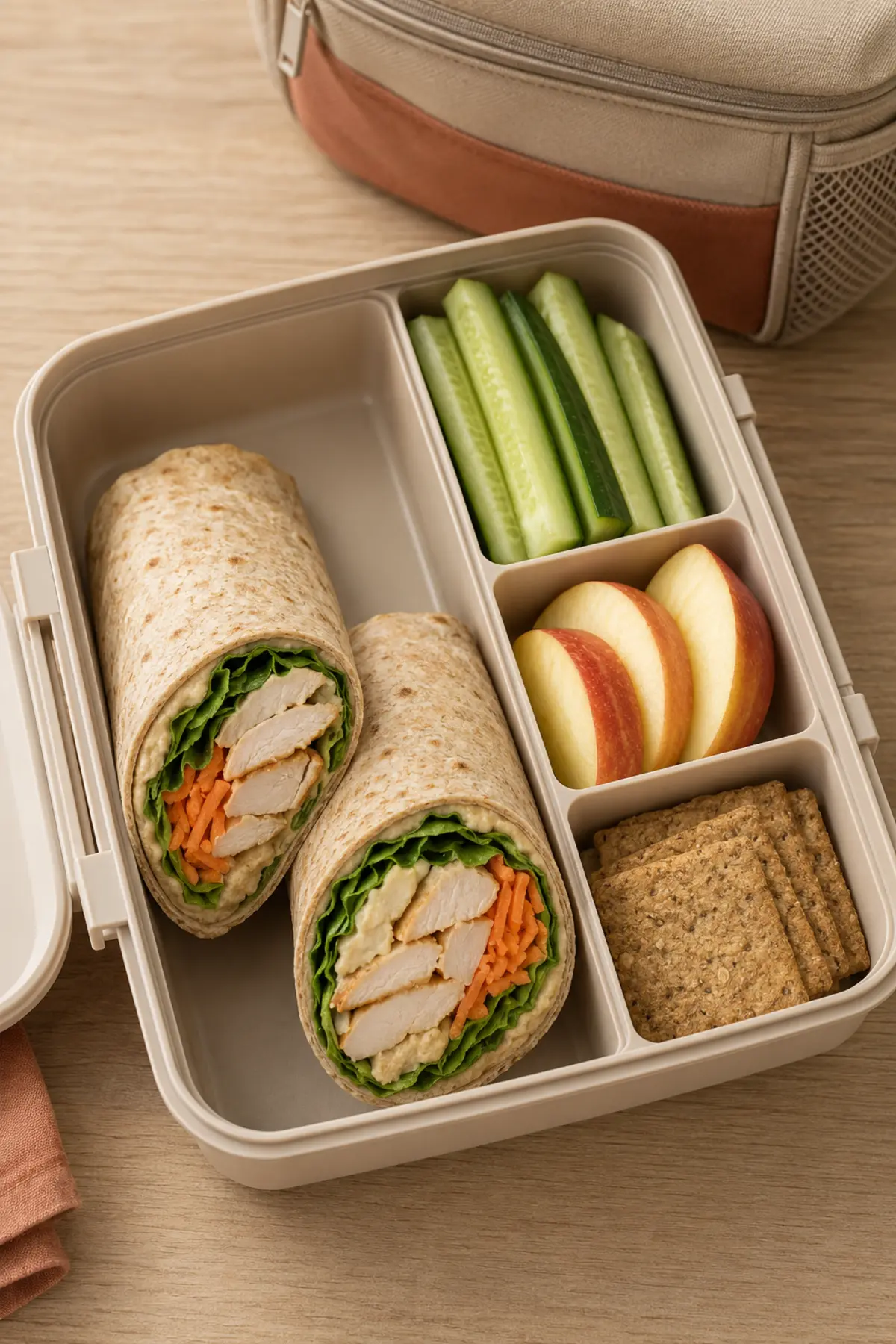
2. Halal Chicken Hummus Crunch Wrap
Pack: spread a thin layer of hummus over a whole-grain wrap, then add dry lettuce leaves, shredded carrot and fully cooked, completely chilled halal-certified chicken. Serve with cucumber spears, apple slices and crackers.
Freshness move: place the lettuce between the hummus and the wrap as a moisture barrier. Do not wrap chicken while it is still warm; cool it promptly and thoroughly first.
3. White Bean Pita Lunch Kit
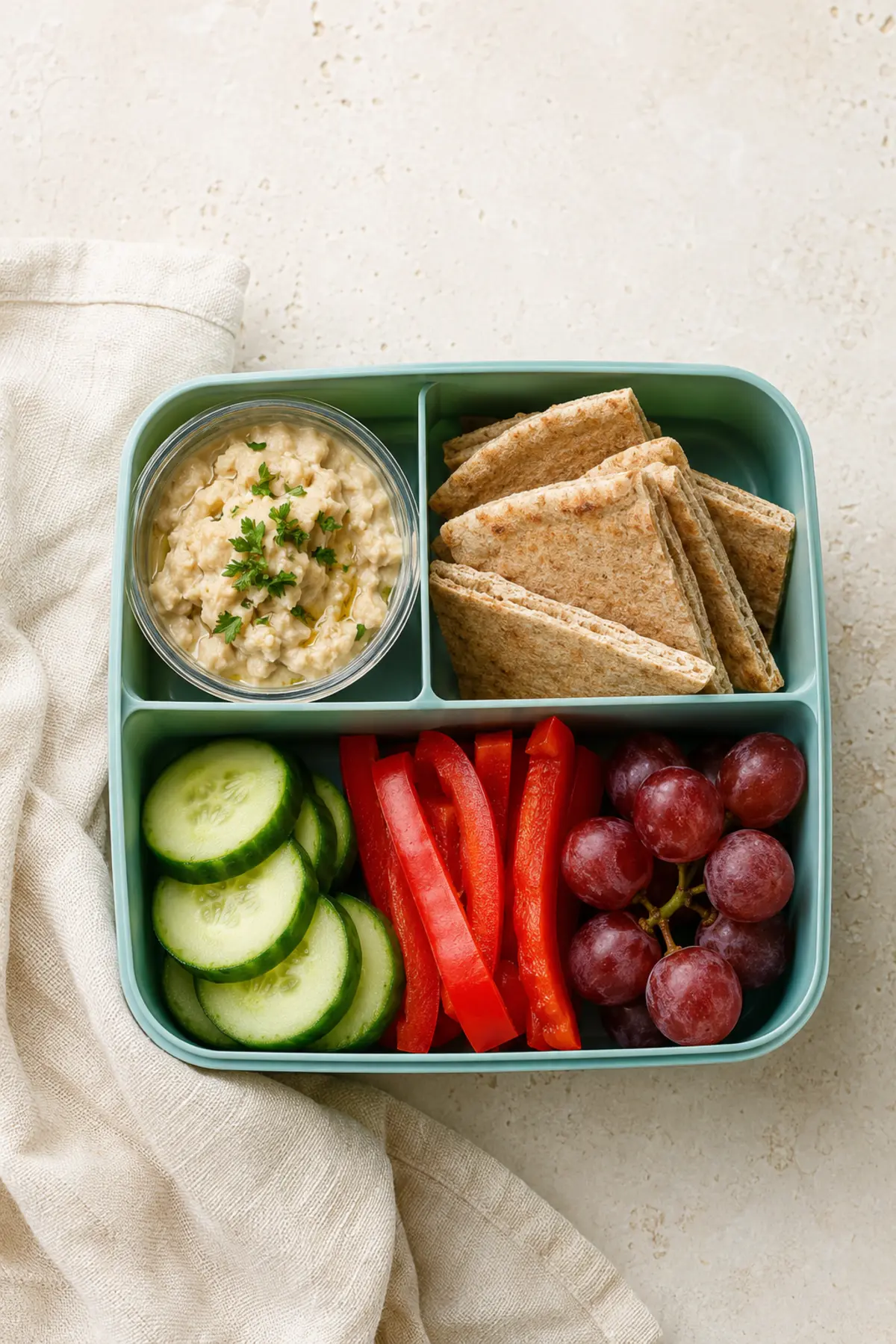
Pack: mash white beans with lemon, a little olive oil and parsley. Spoon the mixture into a sealed cup, then add whole-wheat pita triangles, cucumber rounds, red pepper strips and grapes around it.
Freshness move: treat this as a build-at-lunch pita rather than stuffing it in the morning. The extra ten seconds of assembly protects every crisp edge.
4. Cold Pasta, Pea and Pepper Box
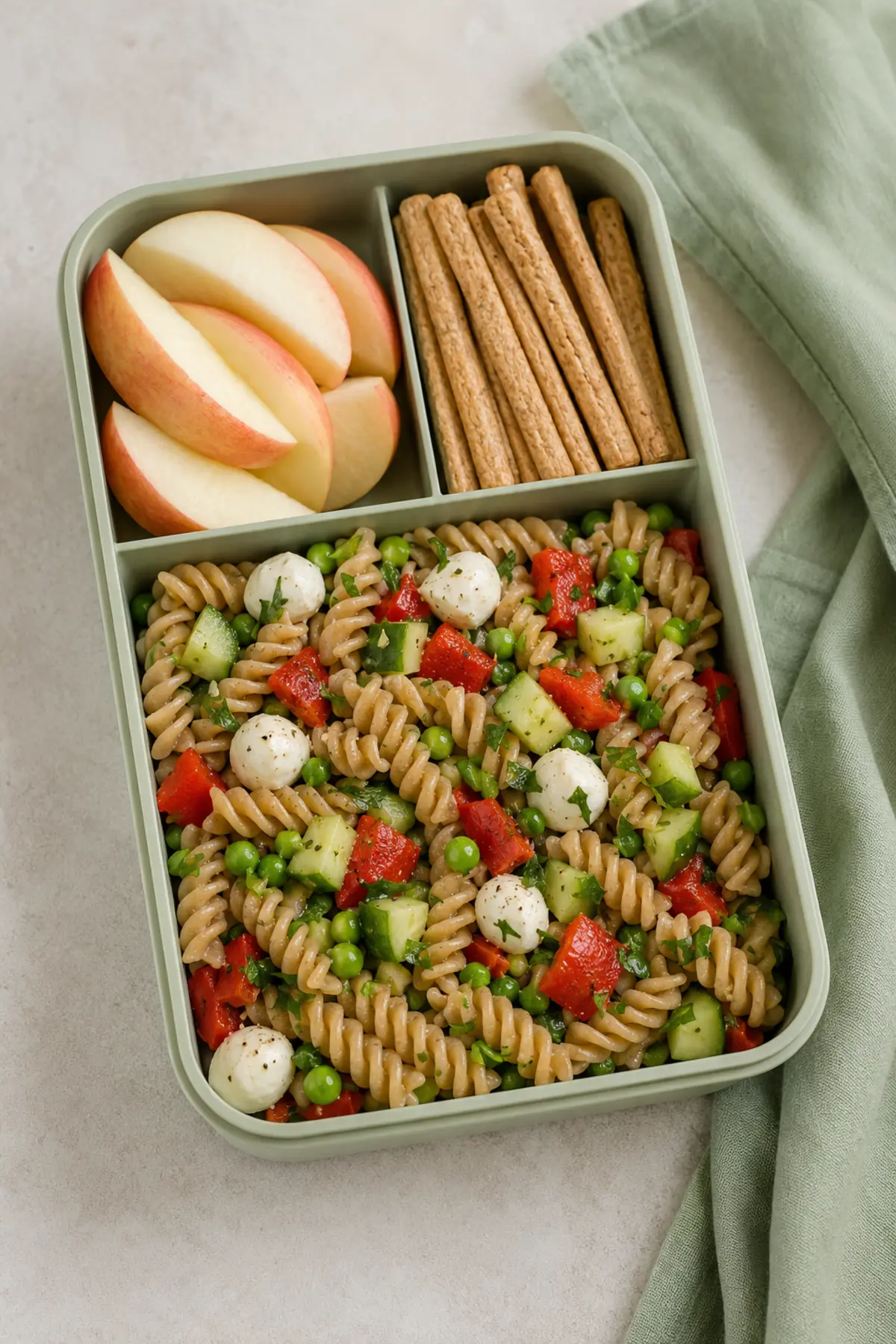
Pack: combine just-tender whole-grain fusilli with peas, cucumber, roasted red pepper, parsley and a few mozzarella pearls made with microbial rennet. Use only enough lemon dressing to lightly coat the pasta. Keep apple wedges and whole-grain breadsticks apart.
Freshness move: cool the pasta promptly before closing the container. A light coating travels better than a pool of dressing at the bottom.
5. Apple, Yogurt and Oat Crunch Box
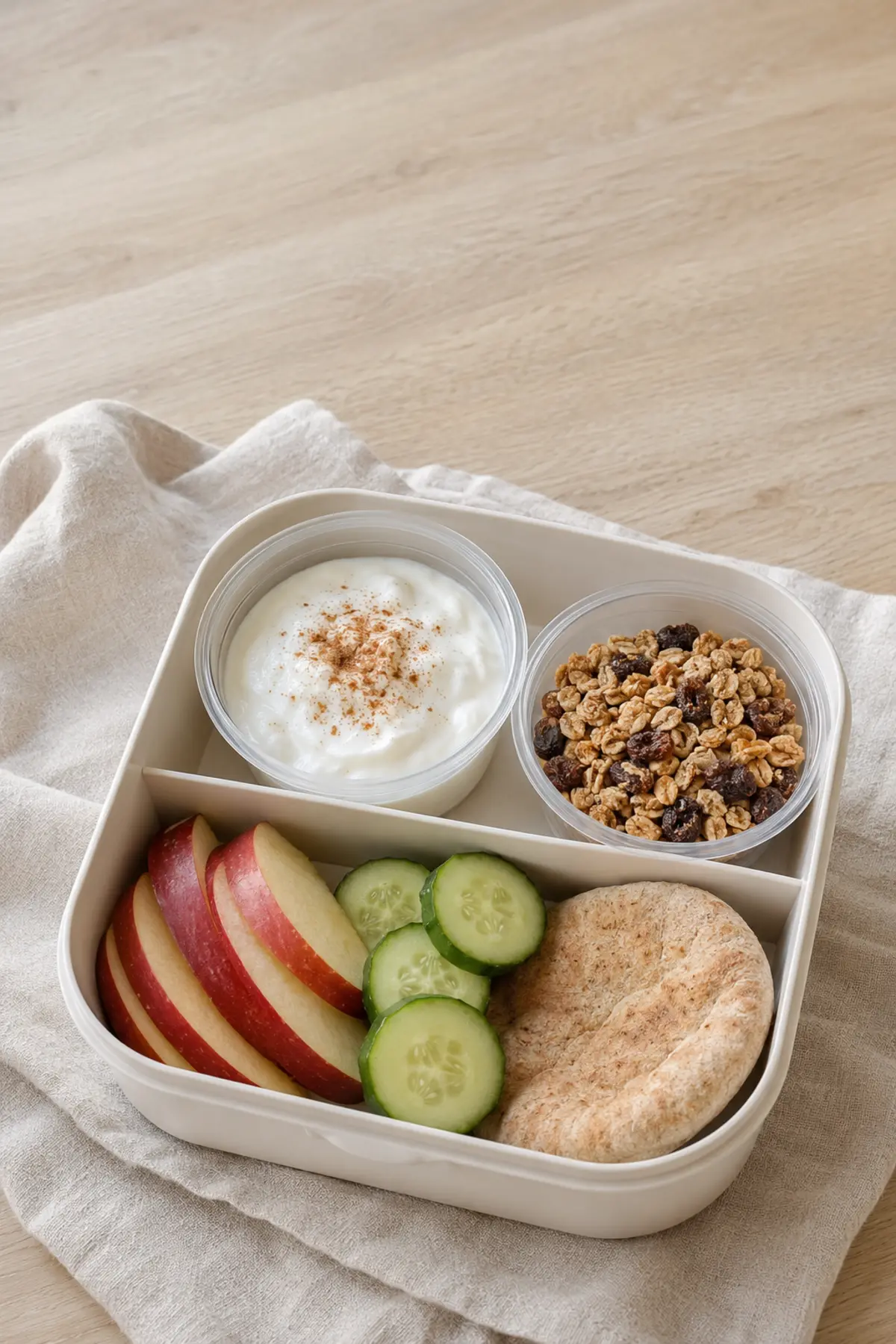
Pack: add thick plain yogurt to one leakproof cup and toasted oats with raisins to another. Include lemon-brushed apple slices, cucumber coins and a small whole-grain pita for a savory counterpoint.
Freshness move: the oats meet the yogurt only when the lid opens. This small separation is the difference between crunch and paste.
6. Black Bean and Corn Crunch Box
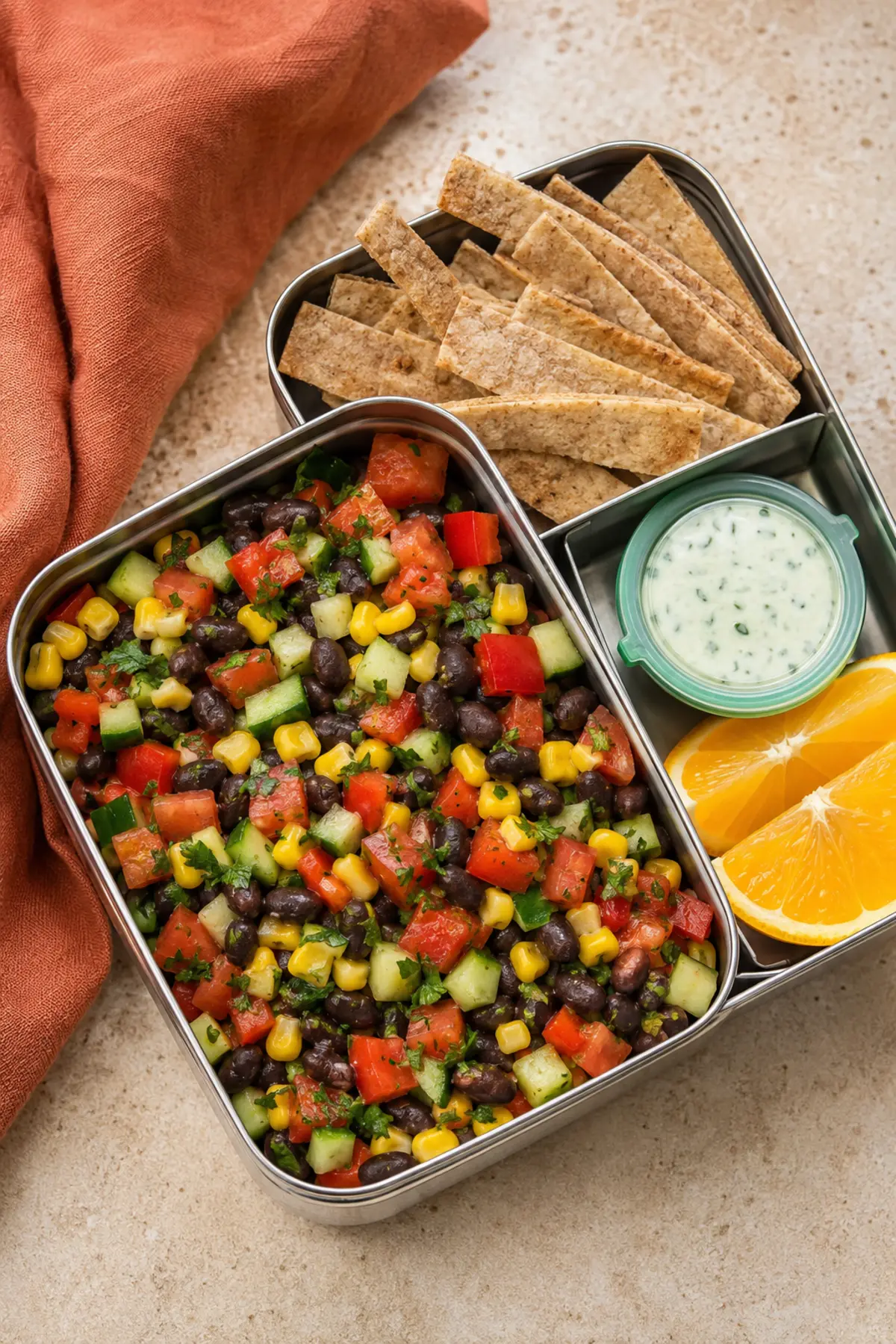
Pack: mix well-drained black beans and corn with diced red pepper, cucumber, tomato and parsley. Add baked whole-grain tortilla strips, orange wedges and a sealed lime-yogurt dip.
Freshness move: keep both salt and dip out of the bean mixture until lunchtime. Salt draws water from cucumber and tomato; delaying it helps the box hold its texture.
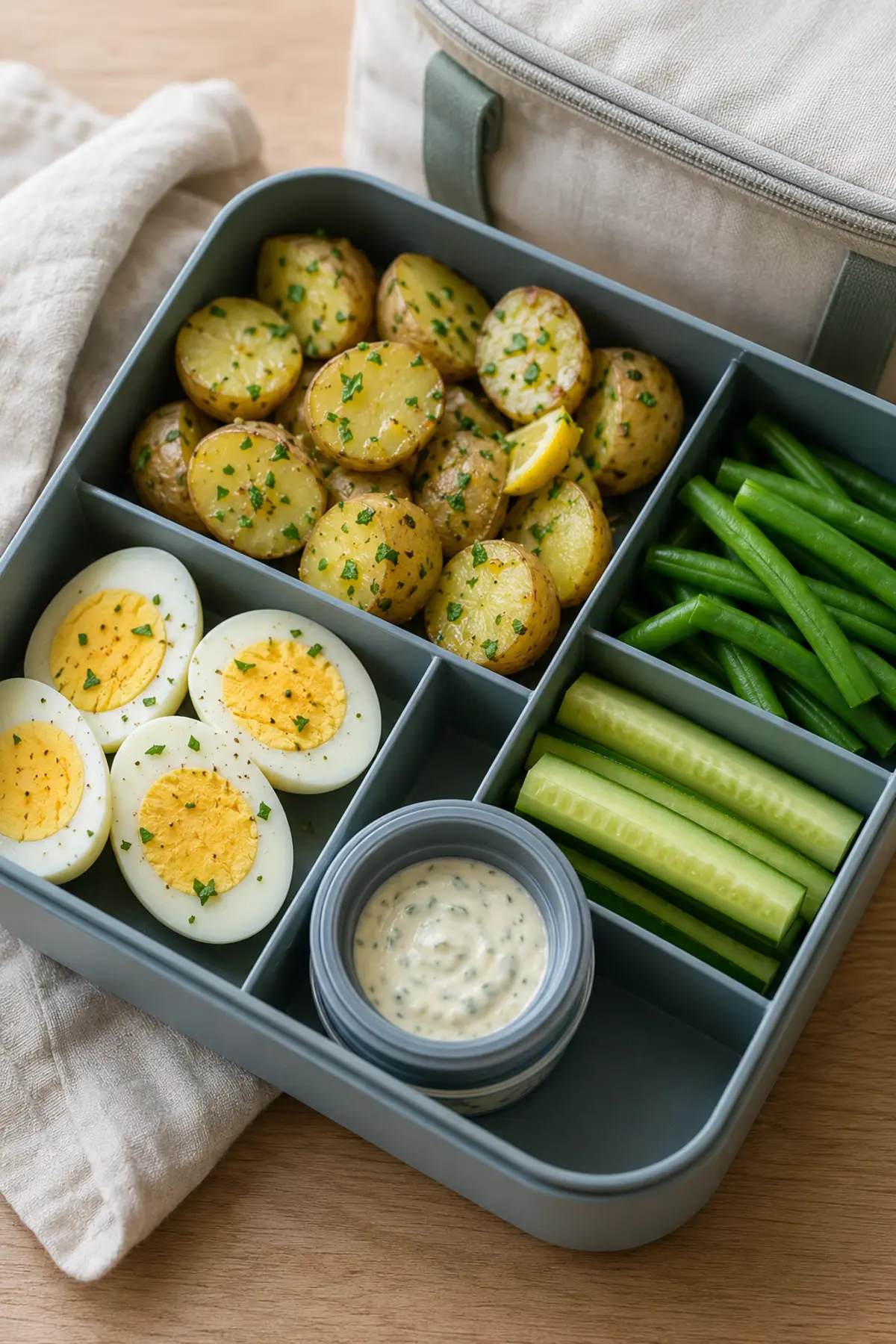
7. Herbed Egg and Potato Cold Box
Pack: pair fully cooked hard-boiled egg halves with chilled baby potatoes tossed lightly in lemon and parsley. Add cooked-and-chilled green beans, cucumber spears and a small yogurt-mustard herb dip.
Freshness move: let the potatoes cool completely in the refrigerator before sealing the box. Trapped warmth produces condensation, which softens the vegetables around it.
One Shopping Spine for All Seven Lunches
The economical part is not buying the smallest possible lunchbox. It is giving the same groceries more than one job.
- Cucumber, peppers, parsley and lemon move through several boxes without making them taste identical.
- Plain yogurt works as a main component, a herb dip and a lime finish.
- Pita, crackers, oats and tortilla strips supply different dry textures; choose two rather than buying every option at once.
- Chickpeas, white beans and black beans can be rotated according to what is already in the pantry.
A small lunch-prep shelf also makes this easier. The 15-minute summer kitchen reset shows how to group containers, lids and frozen cold packs into one “lunch launch pad” before busy mornings begin.
Cold Lunchbox Questions, Answered
Can these lunches be packed the night before?
Most components can be prepared ahead and refrigerated promptly. Keep dressings, dips, crackers, pita and oats separate, then move everything directly from the refrigerator into an insulated bag with two cold sources in the morning.
Are these lunches nut-free?
No nuts are included, but that does not make every box allergen-free. Standard hummus often contains sesame, while yogurt, cheese, eggs and wheat are also common allergens. Check the school or workplace policy and every ingredient label before packing for someone with an allergy.
A note from Women’s Alphabet
Women’s Alphabet does not sell the lunchboxes, containers or foods shown in this post. The visuals are editorial meal concepts for inspiration, not product listings or personalized nutrition advice. Adjust portions, ingredients and allergen choices to the eater’s needs, and follow local food-safety guidance.