There is a particular kind of houseplant that has quietly taken over Pinterest this year — one that never needs watering, never turns toward the light, and never drops a leaf on the windowsill. Worked entirely in yarn, these crochet botanicals have moved from novelty to genuine décor object, and the leaf that leads them all is the coleus: deep, richly coloured, and unmistakable on any shelf.
What follows is a look at five crochet plant styles worth saving — from the burgundy coleus that started the trend to a rainbow-leaf design built entirely around colour. Each one offers a different mood for a different corner of the home. For more ways to bring soft, handmade texture into a room, this collection of crochet home storage and styling ideas sits naturally alongside them.
Why It Works
A crochet plant carries the warmth and colour of foliage without any of the upkeep — no light, no water, no seasonal fading. On a shelf that gets little daylight, or in a home where real plants tend not to last, it holds its shape and shade indefinitely.
The Burgundy Coleus — Deep Colour With a Crisp Green Edge
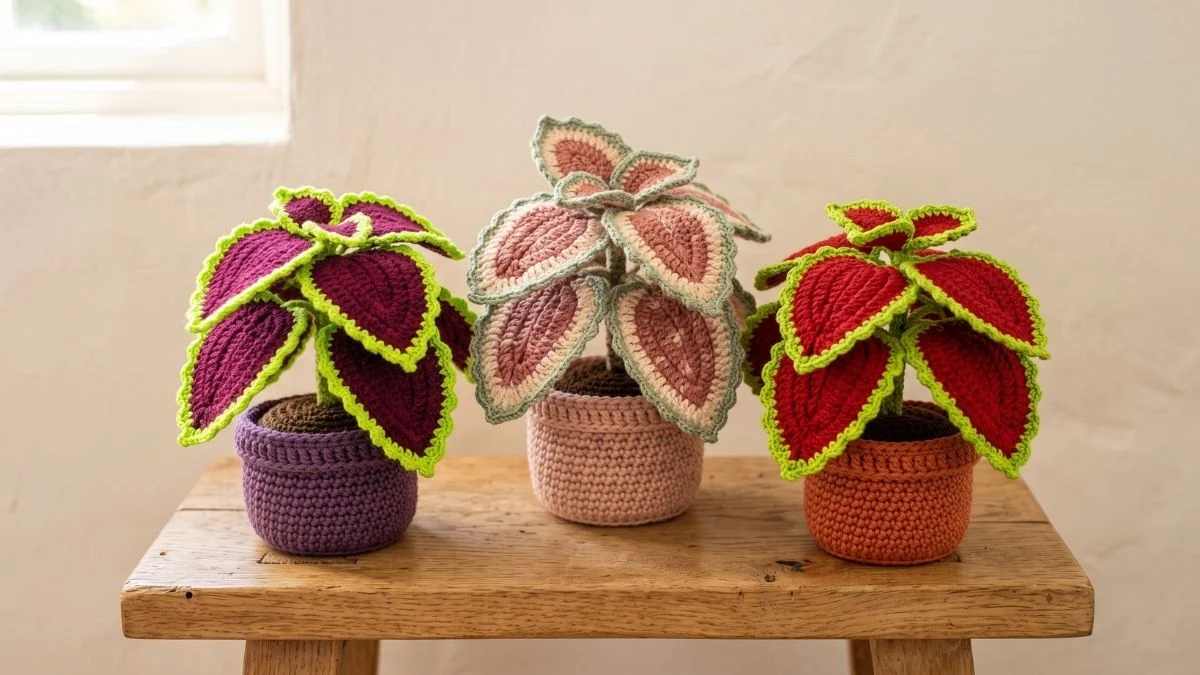
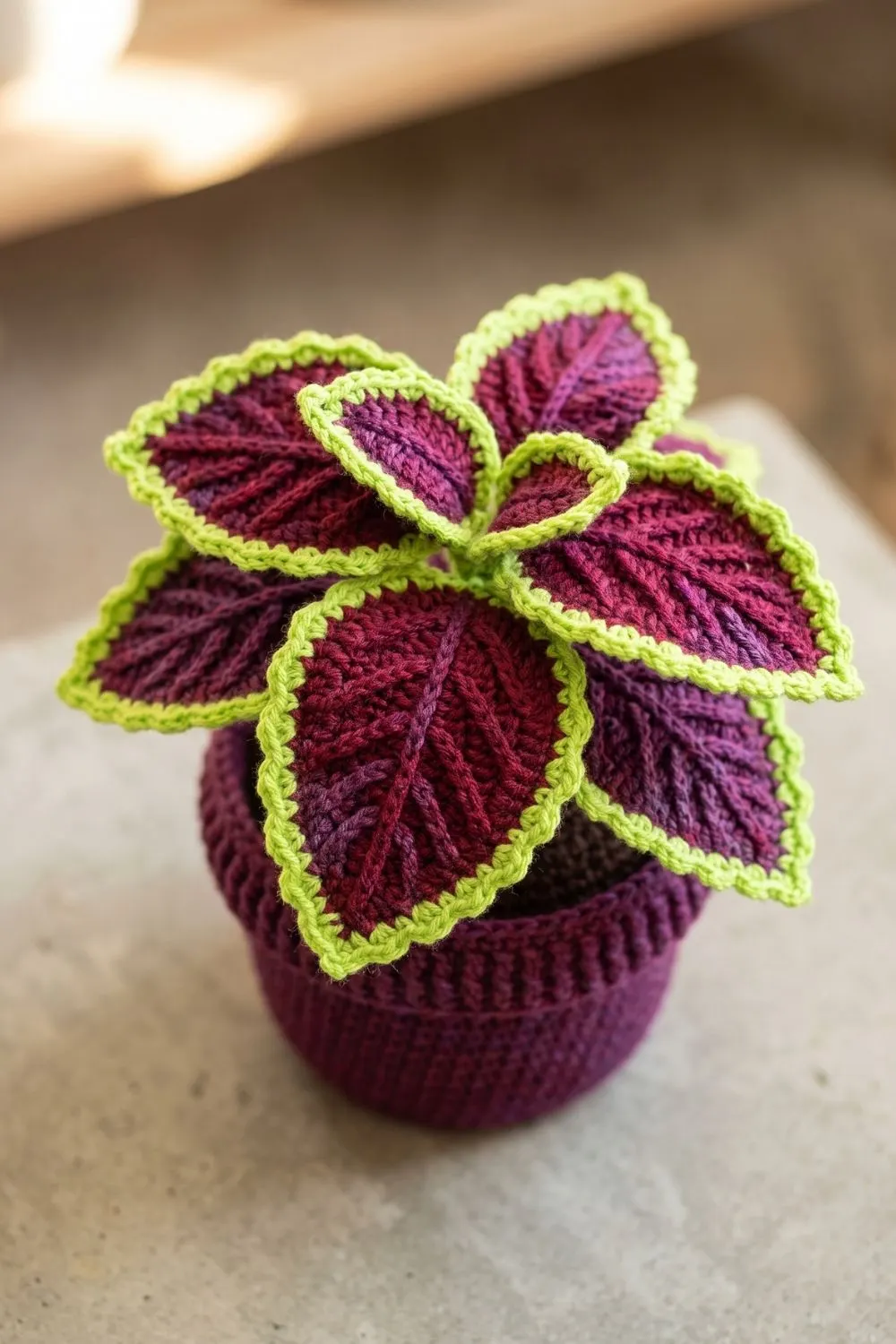
This is the design that set the tone. Its leaves are worked in deep burgundy-purple, each one finished with a bright, almost neon green scalloped edge that lifts the whole plant. A raised rib runs down the centre of every leaf, catching the light the way real coleus veining does, while the low round pot picks up the darkest shade in the foliage above.
The result feels bold without being loud — a plant that anchors a shelf, a mantel, or a windowsill and looks considered rather than kitsch. The living coleus has always been grown for its leaves rather than its flowers, prized for foliage that runs from near-black reds to bright lime, and this crochet version leans fully into that richness of colour.
The Misty Rose Coleus — a Softer, Quieter Palette
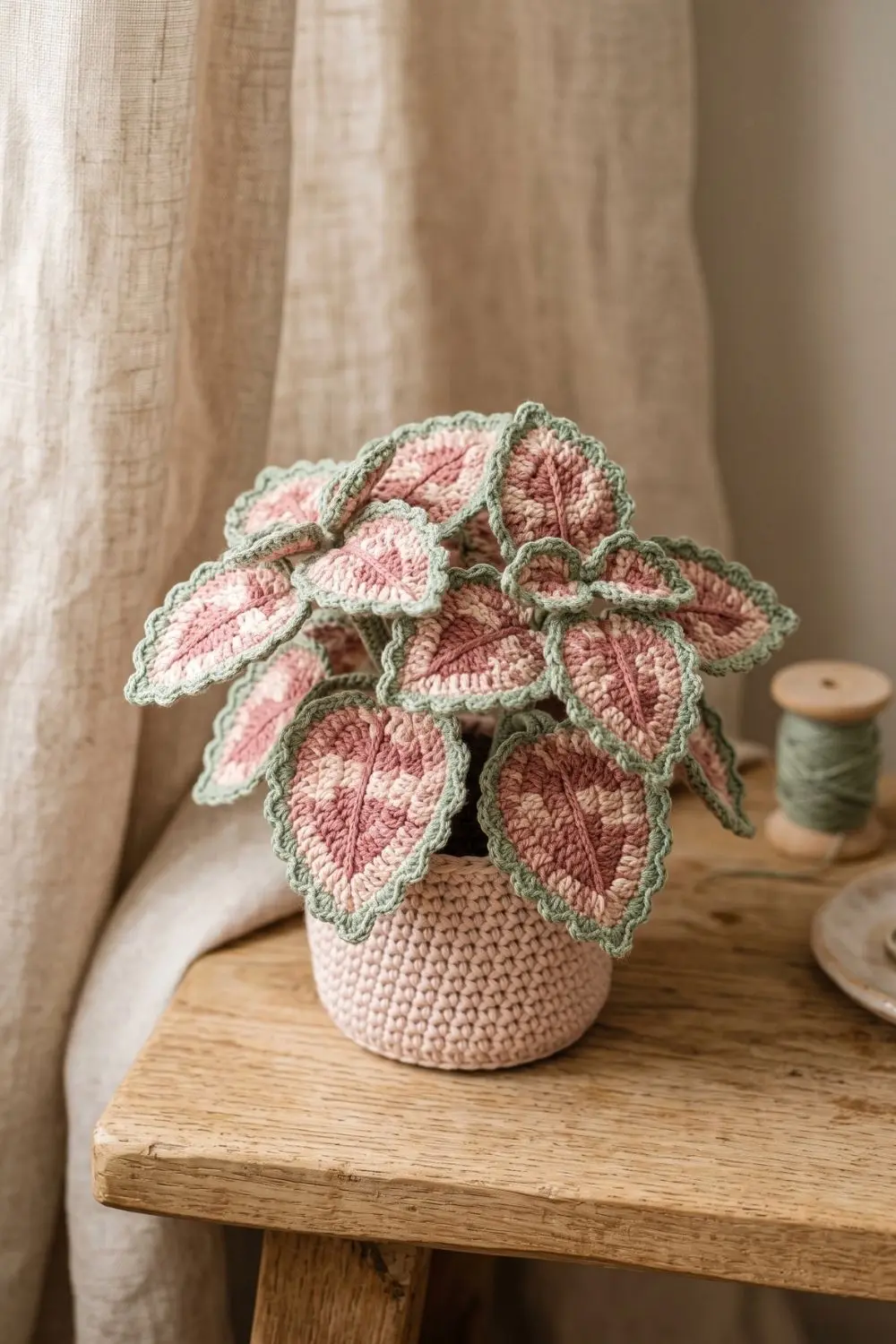
The same leaf shape, reimagined in dusty pink and cream with a soft sage edge, becomes something entirely gentler. Where the burgundy version makes a statement, the Misty Rose reads calm and warm — the kind of piece that settles naturally onto a bedroom shelf, a dressing table, or a reading nook.
It is a reminder of how much palette alone can shift a design’s character. Nothing about the structure changes, yet the mood moves from dramatic to soft. For a space already dressed in neutrals and warm tones, this is the coleus that belongs there.
The Red Coleus — Full, Leafy, and Generous
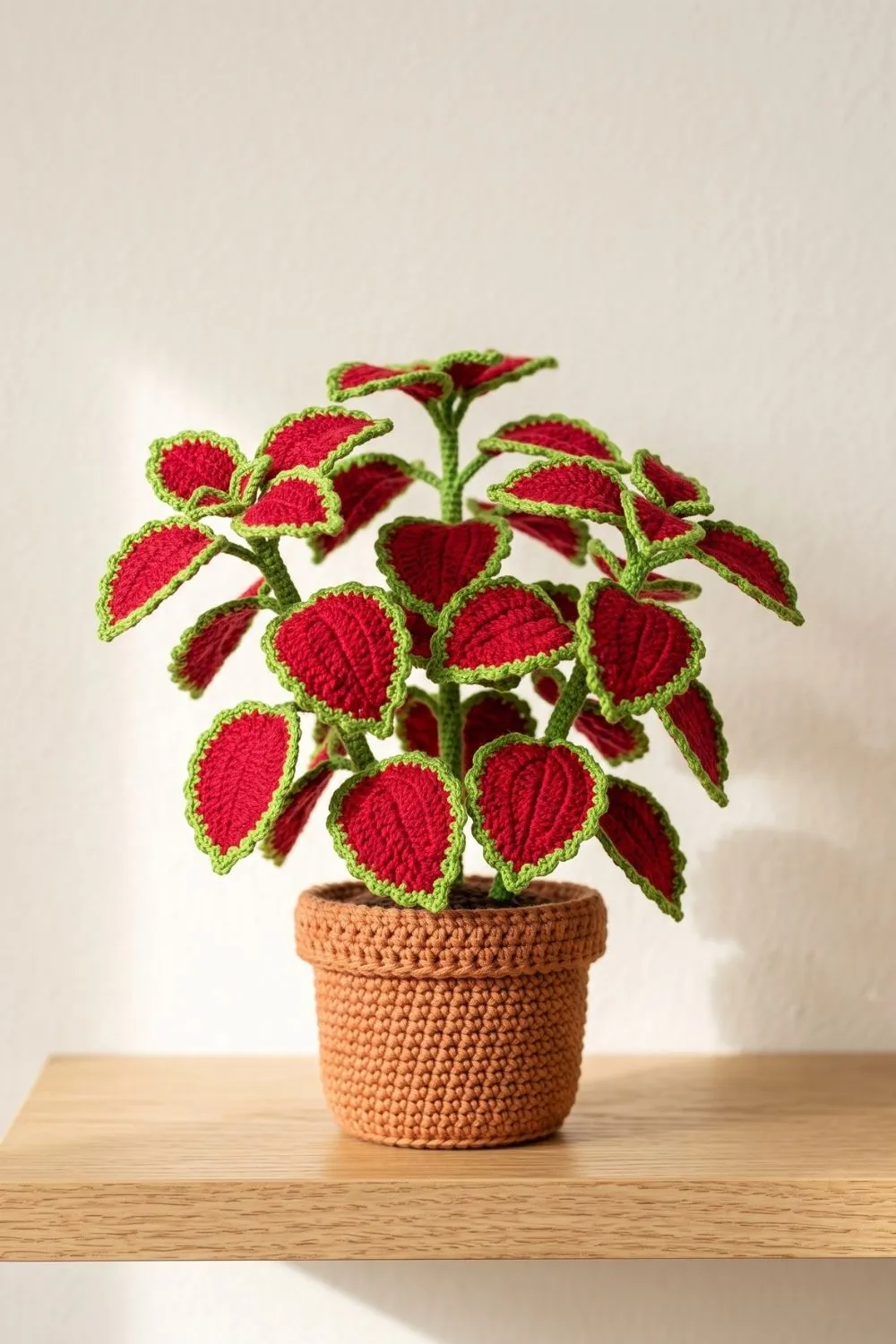
Fuller and taller than the others, the red coleus brings real presence. Its leaves are worked in a saturated crimson with the same crisp green edging, branching out from a central stem so the whole plant fills its space the way a thriving houseplant would. Set in a warm terracotta-toned pot, it reads as a complete, established plant rather than a small decorative accent.
This is the one for a shelf that needs a little life — a bookcase corner, a hallway console, a spot against a pale wall where its colour and structure can carry the whole vignette on their own.
The Heart Leaf Plant — Softness in Ivory
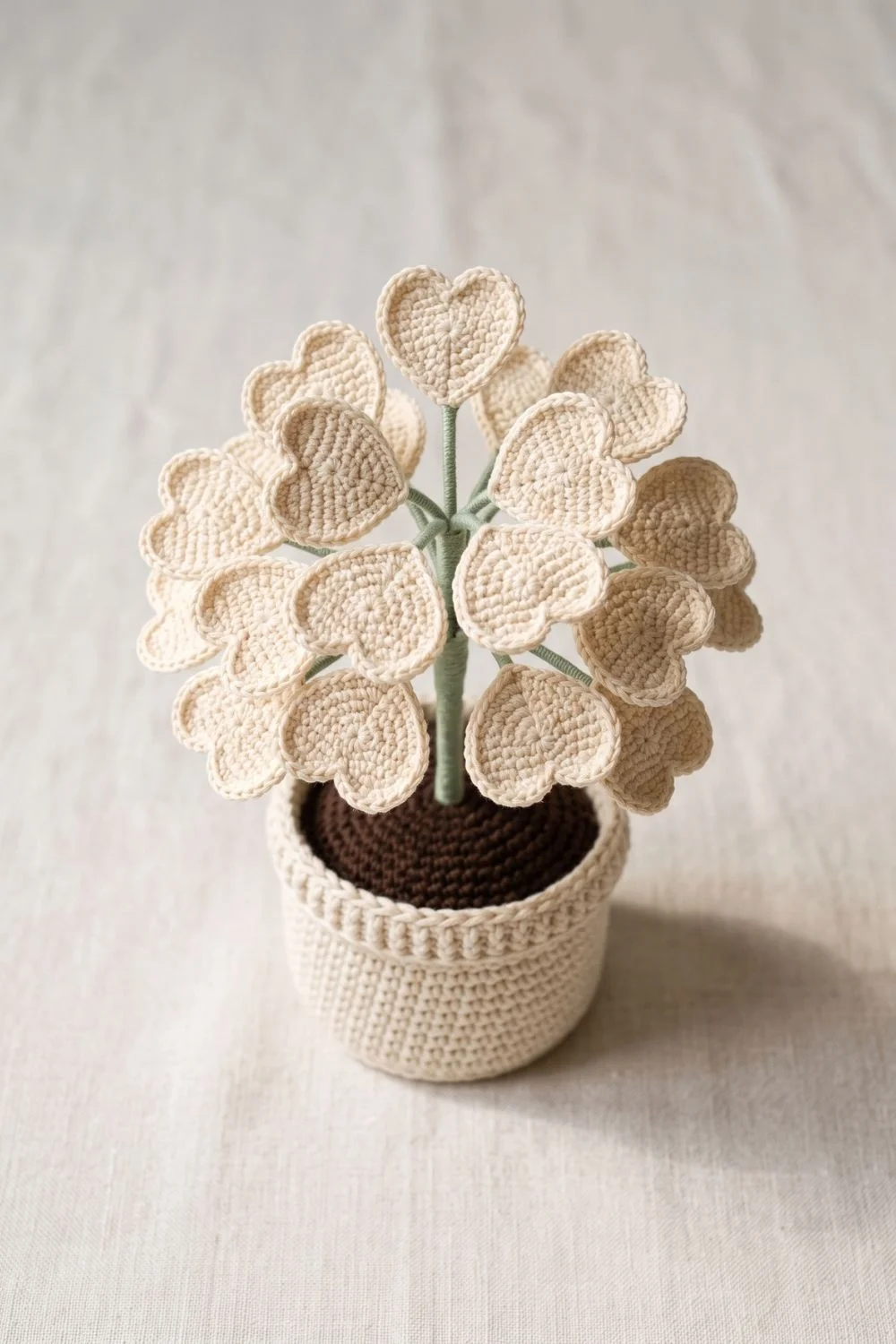
Not every design in this space is a coleus. The heart leaf plant gathers rows of small, rounded heart-shaped leaves in warm ivory around a slender sage stem, tucked into a cream pot. Where the coleus styles win on colour, this one wins on shape — soft, symmetrical, and quietly romantic.
Its neutral palette makes it endlessly easy to place. It suits minimalist shelves, Japandi-leaning interiors, and any room built around cream, oat, and natural wood. Fine cotton is what gives each little leaf its clean, defined curve, and it is that precision that makes the piece feel refined rather than plain.
The Rainbow-Leaf Plant — Built Entirely Around Colour
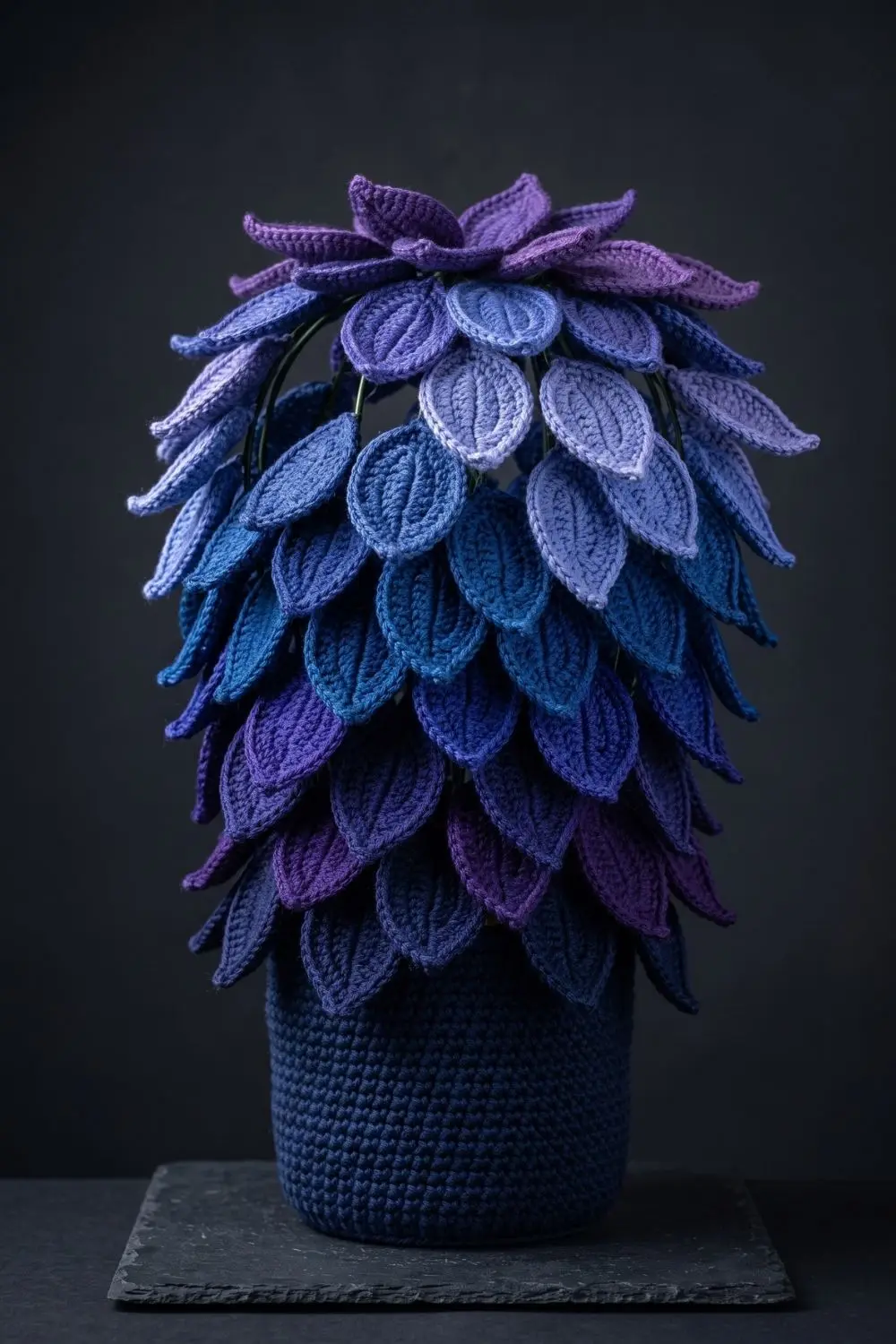
The last design abandons realism completely and embraces it as a strength. Its cascading leaves move through deep blue, violet, indigo, and soft lavender — a gradient no living plant produces, treating the plant form as a canvas for colour rather than a copy of nature.
Displayed against a dark background, it becomes a genuine statement piece: dramatic, tactile, and impossible to overlook. This is the crochet plant for a shelf that already has personality and wants something to match it — paired with dark ceramics or woven baskets, it more than holds its own.
A Simple Way to Choose
Save three of these designs in different colour families, then come back to the board in a couple of days. The one that still draws the eye is usually the right fit for the room — and the one worth commissioning first.
Each of these pieces is here as inspiration — a glimpse of what skilled makers are crafting with nothing more than yarn, a hook, and a good eye for colour. Saved to a board, any one of them becomes a clear visual brief to bring to a local artisan, and the starting point for a plant that will look exactly as fresh in five years as it does today.
About These Designs
The pieces shown throughout this post are visual concepts gathered for inspiration purposes only. Women’s Alphabet does not sell, produce, or distribute crochet patterns or finished items. If a design appeals to you, consider saving the image and sharing it with a skilled local artisan or crochet maker — they can help you realise a similar piece with the yarn weight, colour palette, and dimensions that suit you best.