By late summer, feet can look as if they need a full repair project: a rough heel, a little dryness around the edges, a patch of skin that feels thicker after weeks of heat, shoes, dust and repeated washing. The natural response is often to scrub harder. But rough-looking skin is not always a sign that more surface needs to be removed. Calluses form in response to friction and pressure, and they can help protect the skin underneath.
The more useful end-of-season question is not “How do I make this skin disappear?” It is “What is making this area dry, thick or uncomfortable, and what is the gentlest step that answers that problem?” Women’s Alphabet’s rule for this routine is simple: softer, not thinner. The aim is comfortable, intact skin—not the most aggressively polished surface.
Start With a Five-Minute Baseline
Begin with ordinary care before reaching for a file. Wash your feet with warm—not hot—water and a mild cleanser, then pat them dry carefully. Pay special attention to the spaces between the toes, where moisture can linger. The CDC’s foot-hygiene guidance also recommends keeping toenails short and clean, changing socks at least once a day, and checking the skin for cuts, sores, swelling, dryness or other changes.

Once the skin is clean and still slightly damp, apply a fragrance-free cream or ointment to the heels, soles and other dry areas. A thicker cream or ointment is usually more useful for dry skin than a very light lotion. Keep moisturizer out of the spaces between the toes; that area needs to stay dry.
This small sequence—wash, dry, moisturize—often tells you whether the problem is mainly dryness. If the rough feeling settles after a few days of consistent moisture, there may be no reason to add a scrub at all.
Decide Whether the Roughness Needs Filing
A little filing can be reasonable when a particular callus feels genuinely thick and the surrounding skin is intact. It should be a targeted tool, not a daily ritual. If you cannot point to one rough area, or if you are reaching for the file after every shower, pause and look at the source of the friction first.
If a short warm soak helps soften a callus, keep it brief. The AAD advises soaking a corn or callus in warm water for about five to 10 minutes, then using a pumice stone gently and taking care not to remove too much skin. That last part matters: removing too much can cause bleeding and increase the risk of infection.

Use one light pass over the thickened area, then stop and moisturize. Do not use a blade, razor or sharp tool to cut hard skin at home. Do not file over an open crack, blister, bleeding point, rash or tender patch. A smooth-looking result is not worth turning a minor rough spot into an injured one.
Let Moisture Do More of the Work
For dry or cracked heels, the American Academy of Dermatology recommends moisturizing within five minutes of bathing. Its public guidance lists creams containing 10% to 25% urea, an alpha hydroxy acid or salicylic acid as options for dry, cracked heels. These are active ingredients, so follow the product directions and stop if the skin stings or becomes irritated.
For a simpler finish, use a plain fragrance-free cream and, if your heels are very dry, a thin layer of petroleum jelly over the cream before bed. Clean cotton socks can help keep the ointment in place. This is an optional moisture seal, not a “one-night miracle” challenge and not a reason to stack several exfoliating products.

Give the routine several days before deciding that it has failed. Skin does not need to feel glass-smooth to be healthy-looking, and a little natural texture is not a problem that must be erased.
Check the Friction Before You Add More Care
Calluses are often a record of pressure. Look at the shoes you have worn most frequently this summer: are they tight across the toes, rubbing one edge, worn down on one side or lacking enough cushioning? The AAD notes that ill-fitting shoes are a common cause of corns, while calluses can develop where repeated friction or pressure meets the skin.

Rotate shoes when possible so each pair can dry fully. Change socks when they are damp, choose materials that dry quickly or wick moisture away, and use shoes that fit without squeezing the toes. If odor, itching, peeling or persistent moisture is the main concern, treat that as a separate issue rather than scrubbing harder; our separate foot-odor guide covers that problem on its own terms.
The Seven-Day Softer, Not Thinner Reset
Use this short test at the end of the season. It is deliberately boring: the point is to find out what helps before buying another product or turning the foot file into a habit.
- Day 1: Wash gently, dry carefully and apply a fragrance-free cream to dry areas.
- Day 2: Notice where the skin still feels rough, tight or uncomfortable. Do not file yet unless one intact callus is clearly the issue.
- Day 3: Check the shoes and socks connected with that area. Change one friction source if you can.
- Day 4: If the callus remains thick and intact, use a brief warm soak and one gentle filing session. Stop before the skin feels tender.
- Day 5: Return to moisture only. Keep cream away from between the toes.
- Day 6: Check for cracks, redness, swelling, pain, itching, peeling or a change in the nails.
- Day 7: Keep the smallest routine that leaves the skin comfortable: usually washing, careful drying, moisturizing and better friction control.

The test gives you a useful answer without turning care into a performance. If moisture helps, keep moisture. If a shoe keeps rubbing, address the shoe. If a tool leaves the skin sore, it has already given you its answer.
When Scrubbing Is the Wrong Response
Do not assume that itchy, burning or peeling skin is simply “dead skin.” Athlete’s foot can cause itching, burning, scaling, peeling and painful cracks, and the AAD advises seeing a dermatologist if it is not improving or is getting worse. Scrubbing an infection can irritate the skin and spread the problem to other areas.
Arrange professional advice for painful calluses, repeated deep cracks, bleeding, redness, warmth, swelling, a wound, persistent odor with skin changes, or a nail that becomes thick, yellow or crumbly. If you have diabetes, reduced sensation, poor circulation or another condition that affects healing, do not cut or aggressively file calluses yourself. The AAD specifically recommends medical care for foot calluses in people with diabetes because cracks and breaks in thickened skin can become serious.
Keep the Routine Small Enough to Repeat
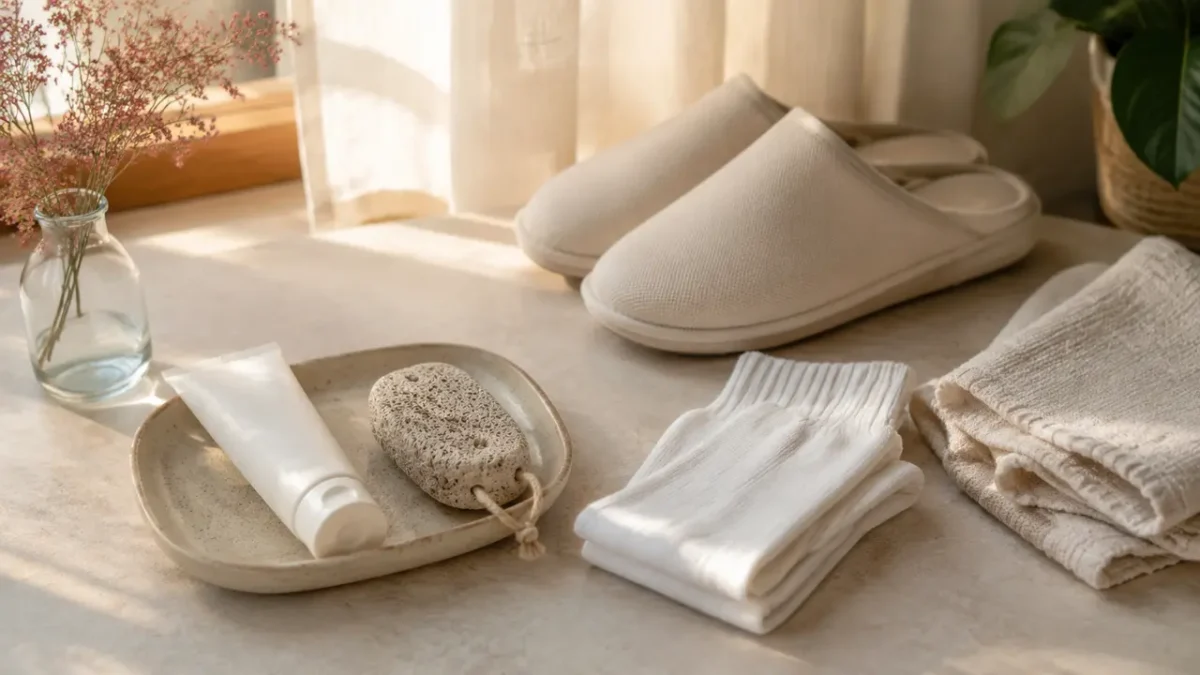
End-of-season care does not need a new basket of products or an exhausting bathroom session. A clean towel, a suitable moisturizer, sensible footwear and an occasional gentle tool—only when it has a clear job—are enough for many people.

There is a quiet kind of dignity in caring for the body Allah has entrusted to us without waste, excess or needless discomfort. The goal is not to chase a perfectly polished image before the next season begins. It is to notice what the skin is saying, remove the source of avoidable friction, and keep the beneficial steps that can be repeated.
Women’s Alphabet care note
This article offers general foot-care information, not a diagnosis or individualized medical advice. Do not cut, aggressively file or apply active products to injured skin. If symptoms are severe, persistent, spreading, painful or otherwise concerning—or if you have diabetes, reduced sensation or poor circulation—ask a qualified healthcare professional for advice.
Sometimes the kindest end-of-summer routine is the one that leaves the file in the drawer. Start with comfort, let moisture do its work, and make every extra step earn its place.