

5 Geometric Crochet Wall Hangings That Make a Minimal Home Feel Complete
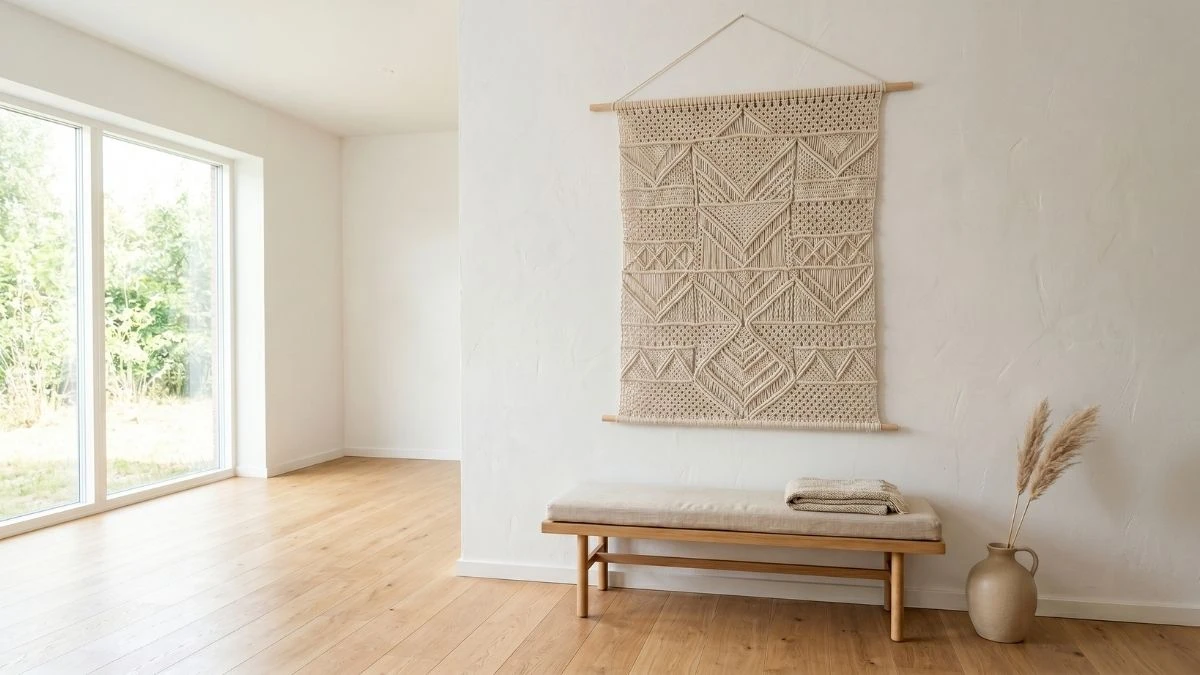
A bare wall in a minimal home is not a problem to solve. It is a surface that asks for intention. Geometric crochet wall hangings occupy a quiet space between textile art and interior architecture: structured enough to satisfy a careful eye, warm enough to soften the hard lines of a modern room.
What separates a well-chosen wall hanging from decorative clutter is geometry — the use of repeating forms that hold their own against clean walls without competing with them. The five designs gathered here share one quality: restraint. Each works with negative space as deliberately as with yarn, and each is presented as a visual starting point rather than an instruction.
If a piece appeals to you, the final section of this post explains how to bring it to life through a skilled local artisan.
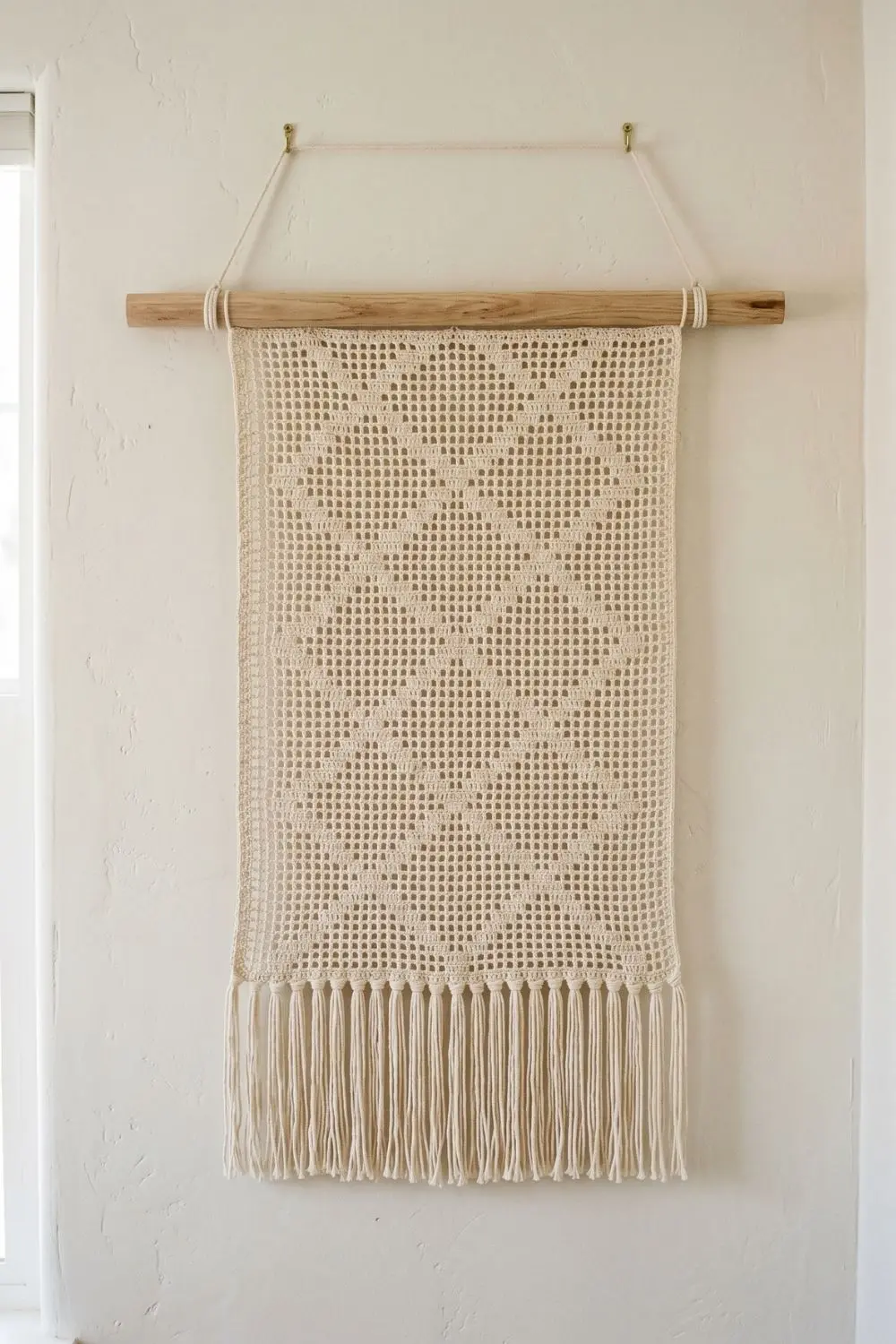
1. Diamond Grid Filet Hanging
The diamond grid is the most enduring form in geometric textile work. In filet crochet — an open-work technique built on a foundation of mesh squares — a diamond-grid hanging reads as architectural even in its softest cotton version. The key is scale: a hanging that fills roughly one-third of a wall section builds proportion without dominating.
Natural undyed cotton or a raw linen-blend yarn keeps the textile honest against a white or warm-plaster wall. A straight wooden dowel at the top holds the form in place. The fringe, if included, should be cut to a uniform length and combed smooth — not left uneven.
2. Half-Circle Sunburst
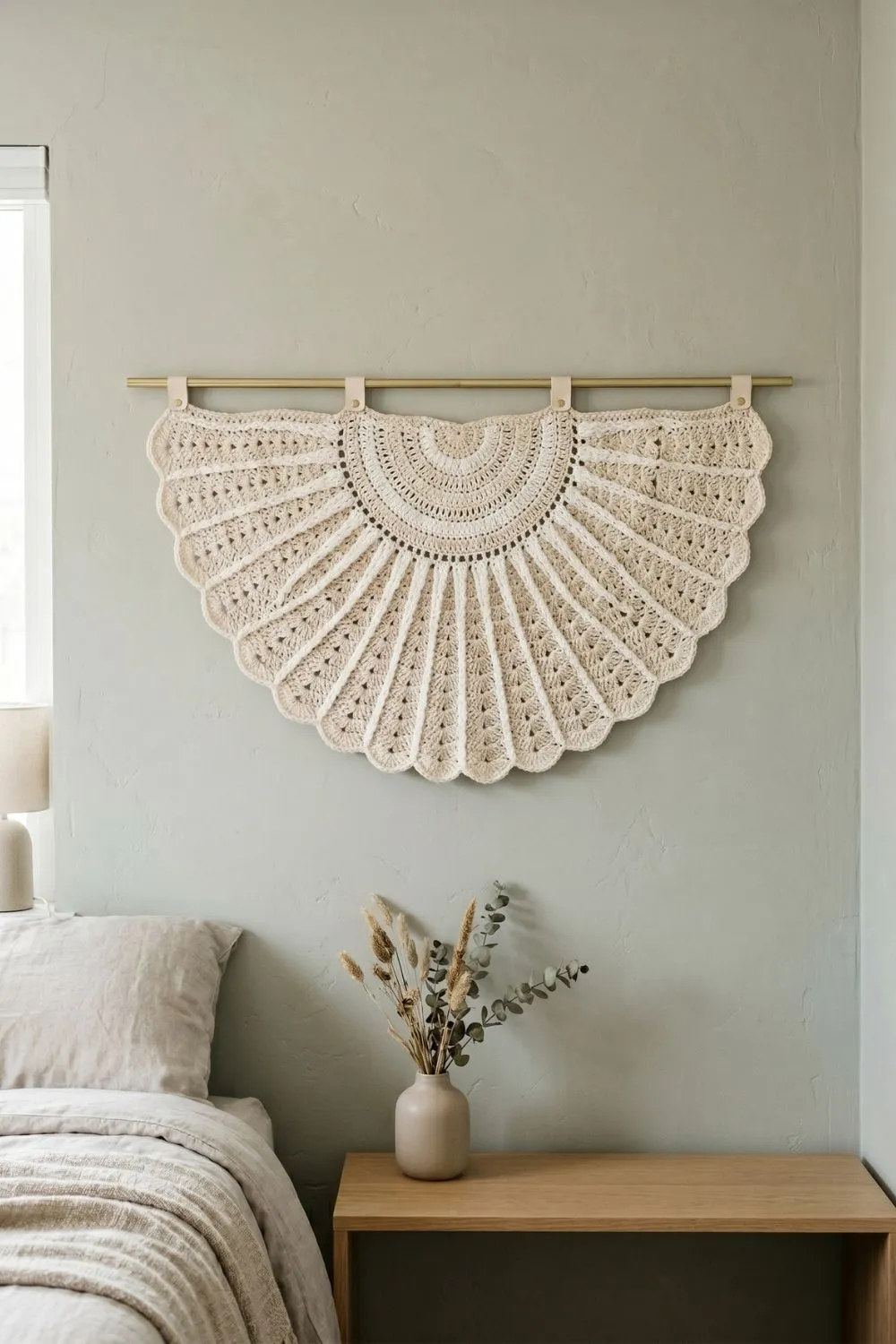
The half-circle form sits at the intersection of geometry and natural reference — it suggests an arch without literally quoting one. A sunburst hanging is worked outward from a centre point and cut at the diameter to produce the flat edge that rests against the wall or hangs from a concealed rod.
Texture choice matters here. A raised post-stitch fan or a relief shell stitch in each radiating section gives the surface enough shadow detail to hold interest at a distance, while the overall silhouette stays simple. Off-white or a single pale sage reads cleanest. A two-tone version — cream outer, ecru inner — adds depth without color noise.
3. Triangle Cascade in Tapestry Crochet
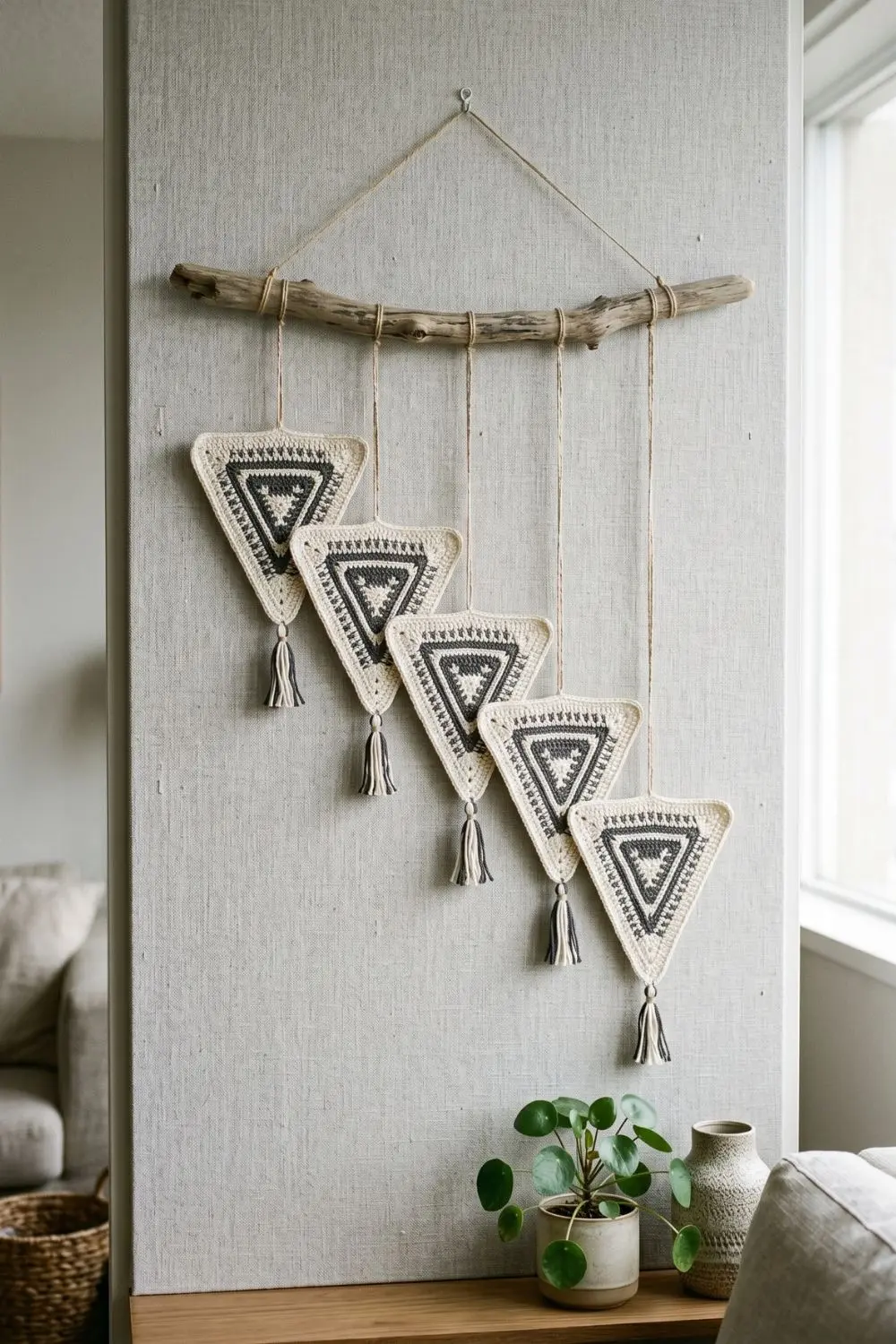
A cascading triangle composition works through repetition: identically sized triangular motifs arranged in a descending row, connected along their top edges. In tapestry crochet — where two yarn colours are carried simultaneously — each triangle can carry a small inset motif without becoming decorative noise.
The two-colour discipline is important. Natural and charcoal, or ivory and a muted terracotta, give the cascade rhythm without colour competition. A driftwood branch makes a more considered mount than a plain dowel here; the slight irregularity of the branch contrasts the strict geometry of the triangles and makes both feel more deliberate.
4. Square Mesh Panel
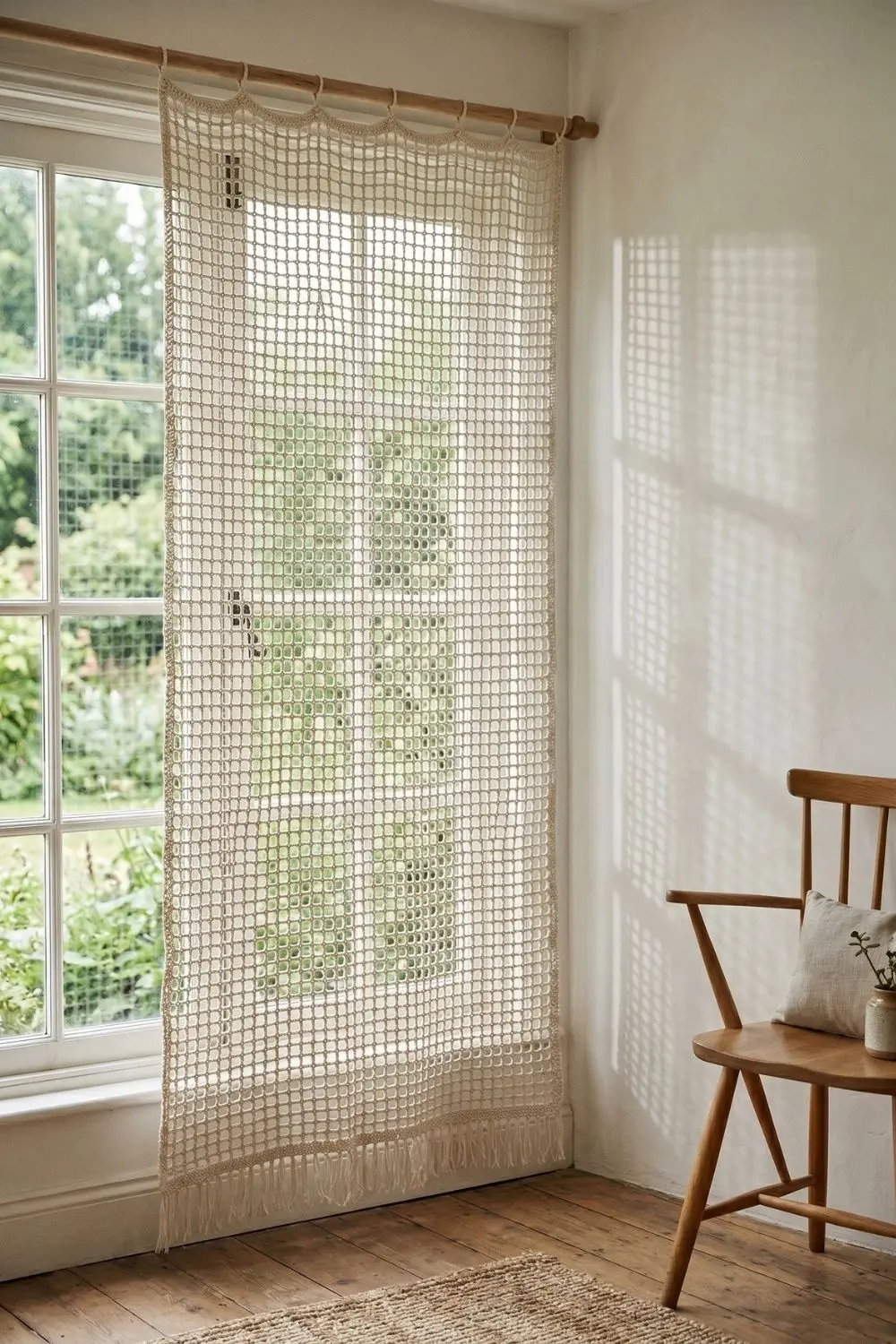
The square mesh panel is the quietest of the five — and in the right room, the most effective. It is a single rectangular piece worked in large-scale open mesh, where the squares are generous enough to reveal the wall behind them. The hanging functions more like a textile screen than a decorative object; the wall colour becomes part of the composition.
This format works especially well beside a window, where light passes through the open mesh and casts a faint grid shadow on the adjacent surface. The yarn should be firm — a tightly twisted cotton or a cotton-linen blend — to keep the squares square rather than allowing them to shift over time.
5. Concentric Hexagon on a Copper Frame
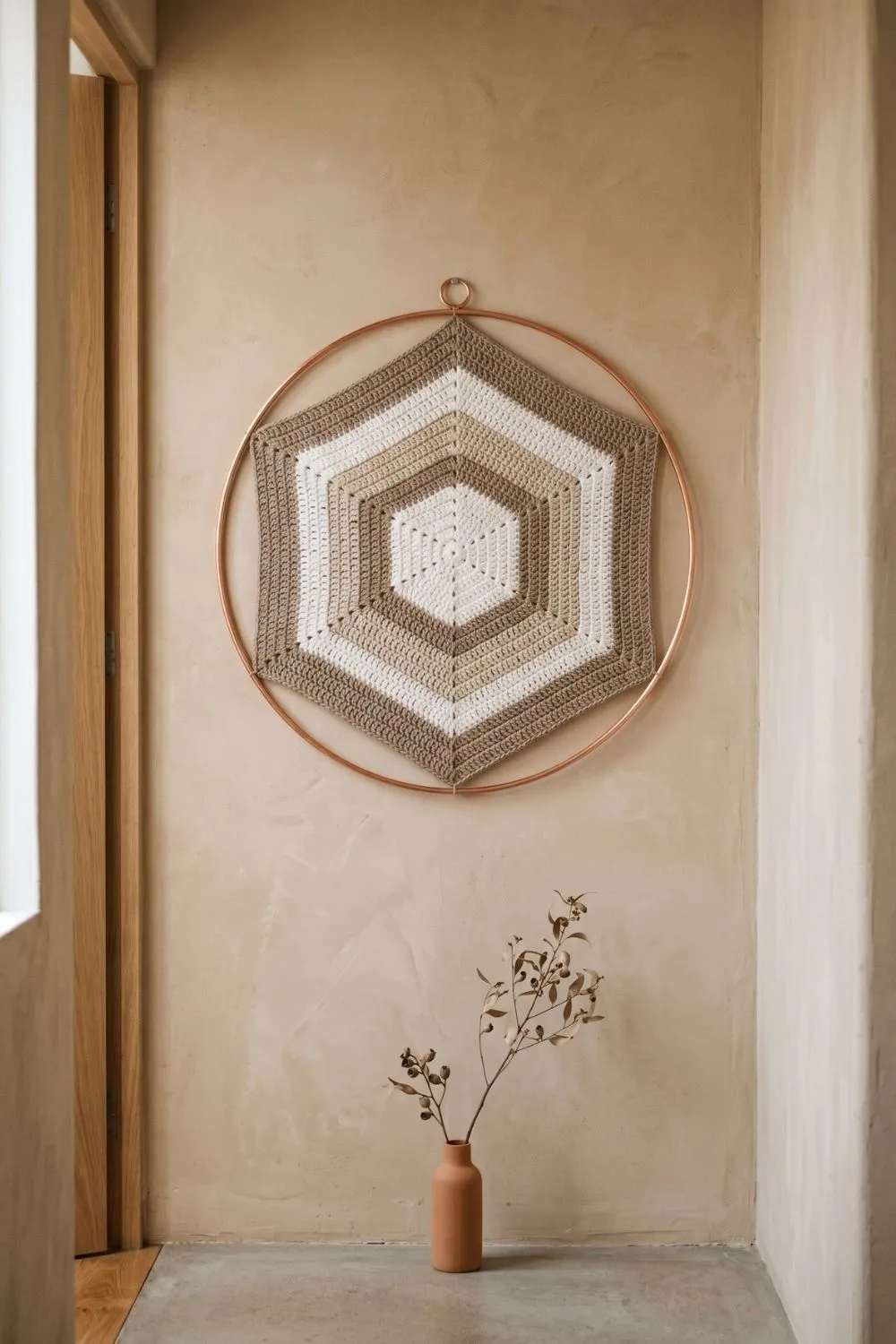
The concentric hexagon is the most structured of the five forms — a motif built outward from a single central hexagon through rounds of increasingly larger hexagons in alternating tones. The result is a piece with visible concentric rings of colour and texture that reads as geometric art rather than craft object.
The colour palette should stay within two or three tones of the same family: oyster, linen, and warm taupe work well together, as does a monochrome white-to-charcoal progression. Mounting on a circular embroidery hoop or a hand-bent copper frame at the same diameter as the outer hexagon edge gives the piece a finished, gallery-ready appearance that suits a hallway or a dedicated accent wall.
About These Designs
The pieces shown throughout this post are visual concepts gathered for inspiration purposes only. Women’s Alphabet does not sell, produce, or distribute crochet patterns or finished items. If a design appeals to you, consider saving the image and sharing it with a skilled local artisan or crochet maker — they can help you realise a similar piece with the yarn weight, color palette, and dimensions that suit you best.
