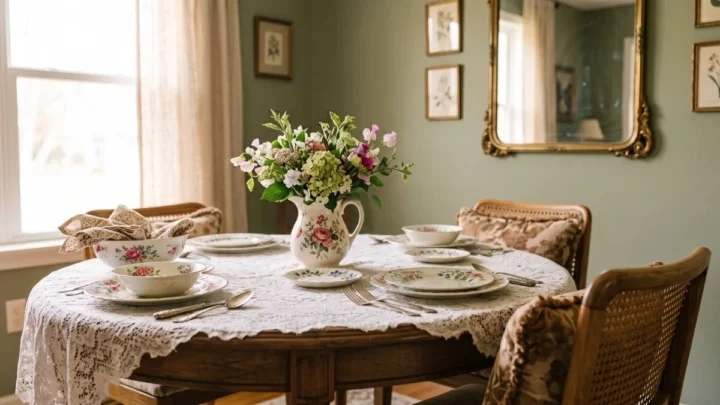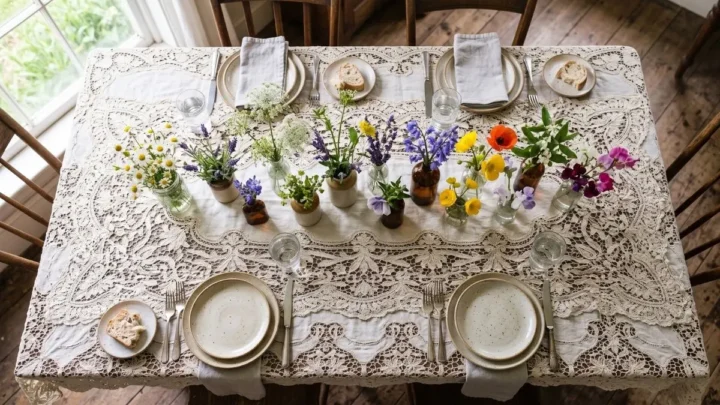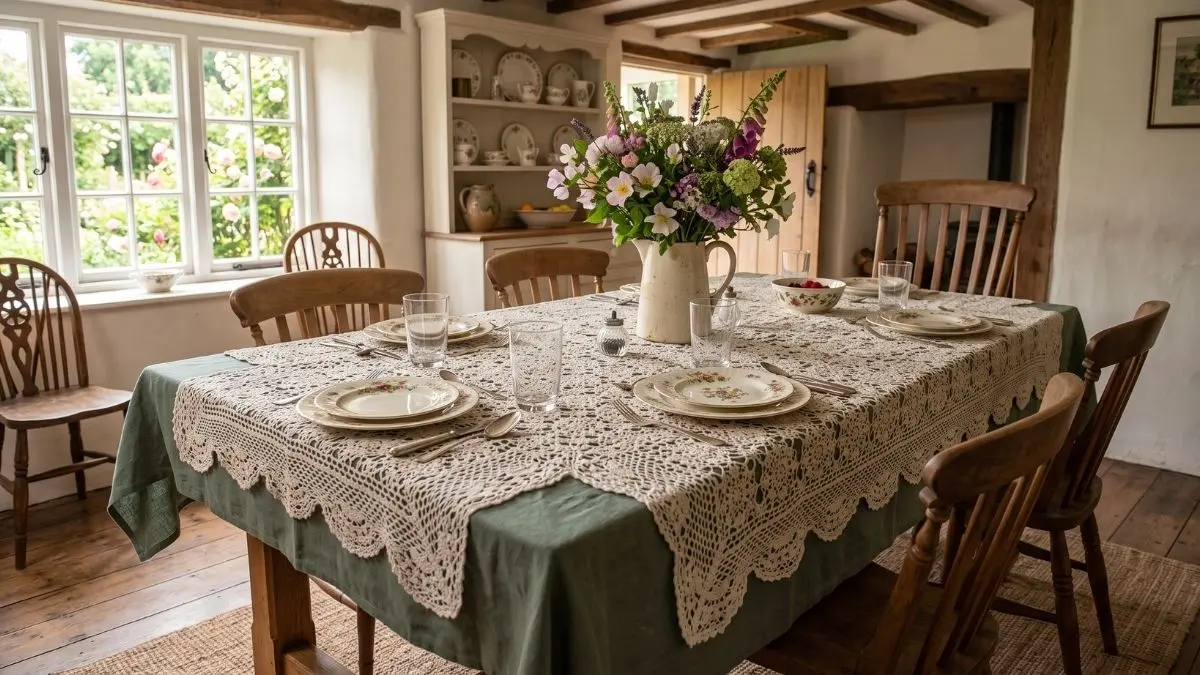
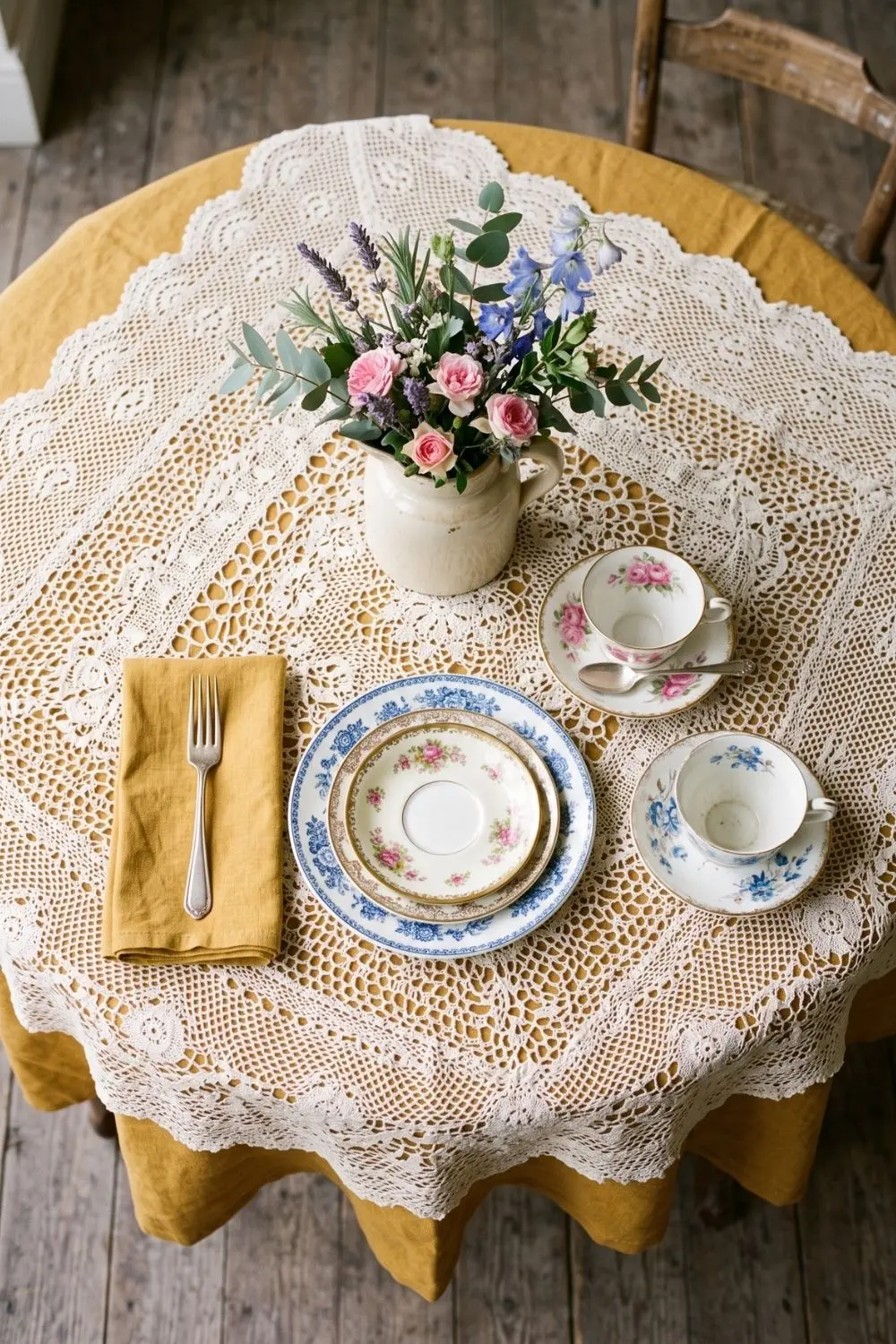
The fastest way to give a dining table a vintage feel is not buying antique furniture. It is layering: one solid-colour tablecloth underneath, one lace cloth on top. The solid base makes the lace pattern visible, the lace softens the solid colour, and together they build a table that looks collected over decades rather than bought last week. The whole technique takes about ten minutes once the steps are clear.
Here are the six steps, in the order that actually matters.
Step 1: Start With the Right Solid Base
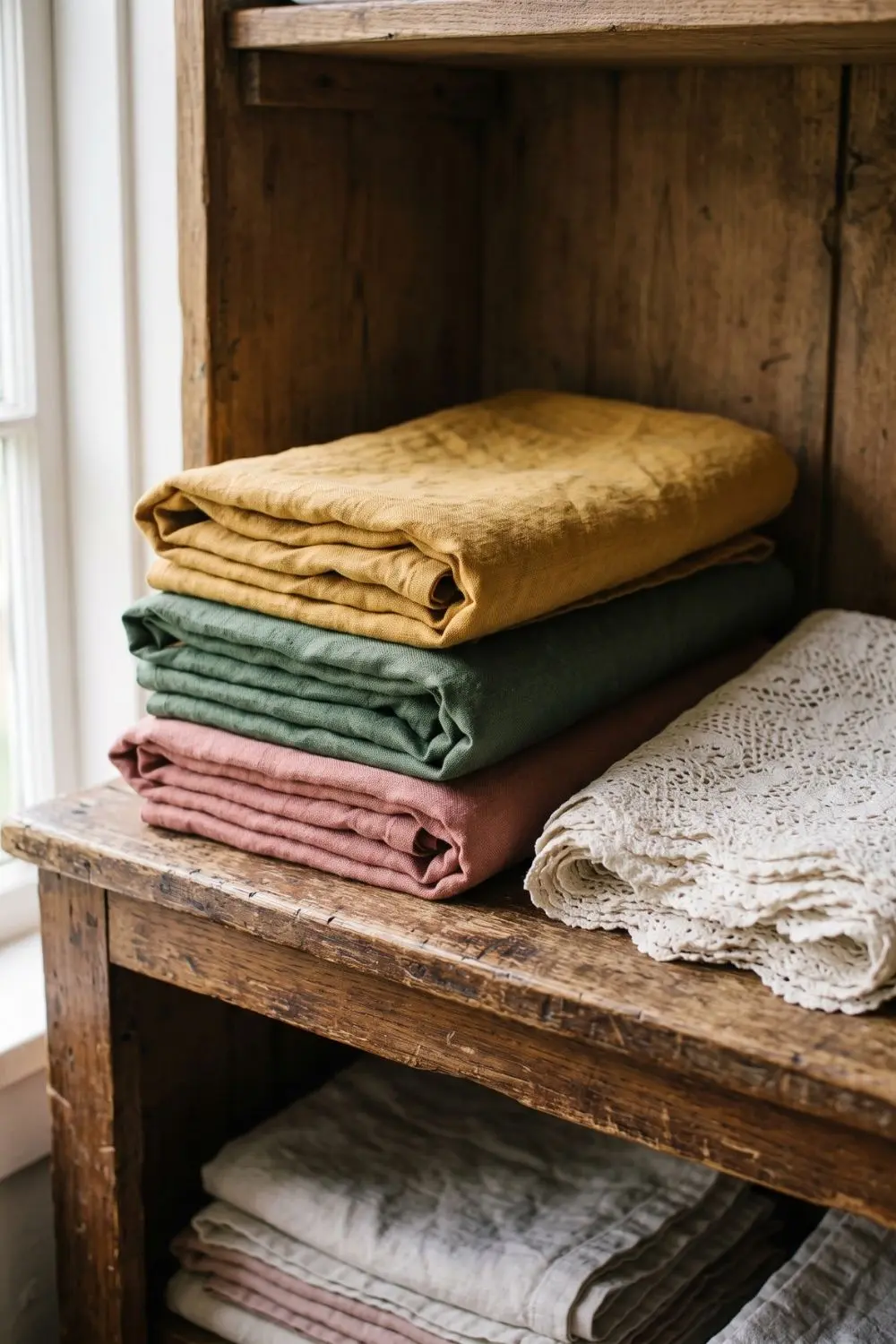
The base colour does most of the work, so choose it first. Deep and dusty tones — sage green, dusty rose, teal, mustard, even charcoal — push the lace pattern forward, while pale bases like beige or soft grey give a quieter, washed-out effect. A useful rule: the more intricate the lace, the darker the base can go, because fine openwork needs contrast to read from across the room. Ivory or cream lace over a coloured underlay is a long-standing pairing in table styling for exactly this reason — the warm-toned lace keeps the look soft where bright white can feel harsh.
Step 2: Choose Lace With Vintage Character
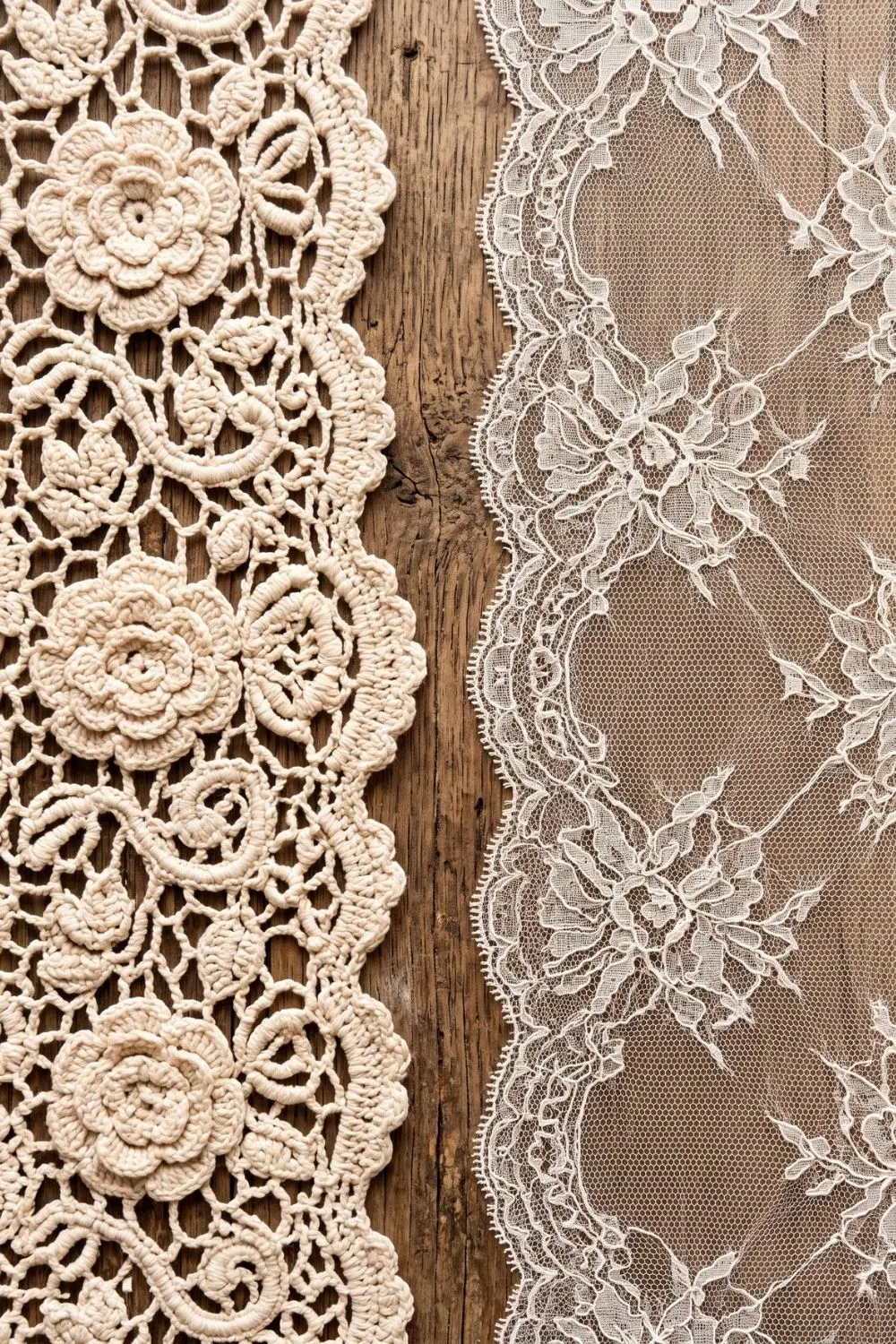
Not every lace reads as vintage. Crochet-style and heavier openwork lace with floral or scalloped motifs carries that handed-down feel, while very fine, sheer machine lace leans modern and sleek. Scalloped or frilled edges add to the effect; straight-cut hems look newer. Colour matters too: ivory, cream, and ecru feel older than optic white. Second-hand shops and family linen cupboards are worth checking before buying new — a cloth with a small flaw can sit strategically under a serving dish.
Step 3: Layer in the Right Order
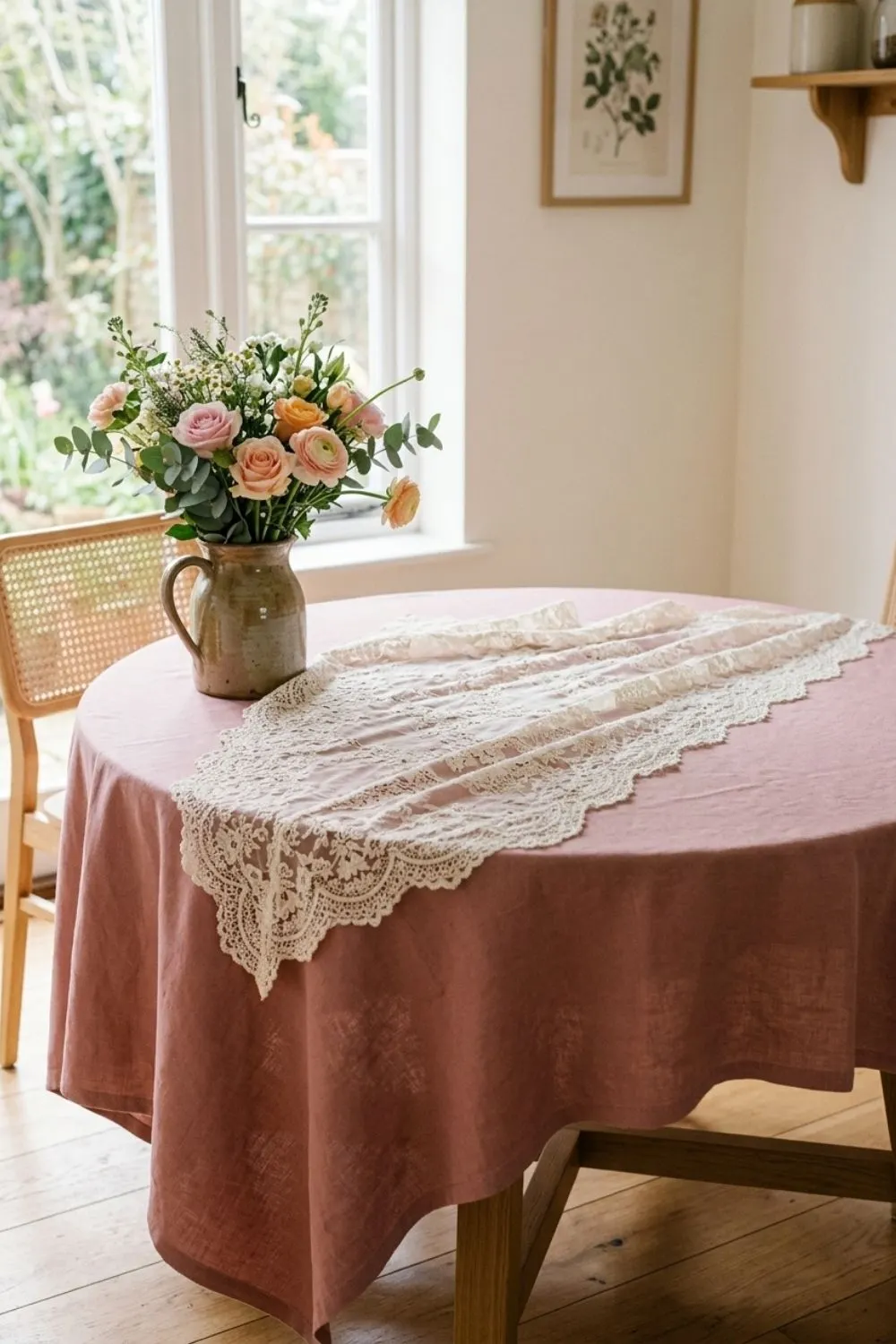
The order sounds obvious but the details are where tables go wrong. Lay the solid cloth first and smooth it completely — every wrinkle underneath shows through openwork lace. Centre it, then lay the lace over it and centre that separately; the two cloths rarely have identical dimensions, so centring the lace against the table rather than against the base cloth keeps the pattern symmetrical where people actually see it. If the lace slides on a slick base fabric, a few discreet safety pins at the corners hold everything in place.
Step 4: Check the Drop on All Sides
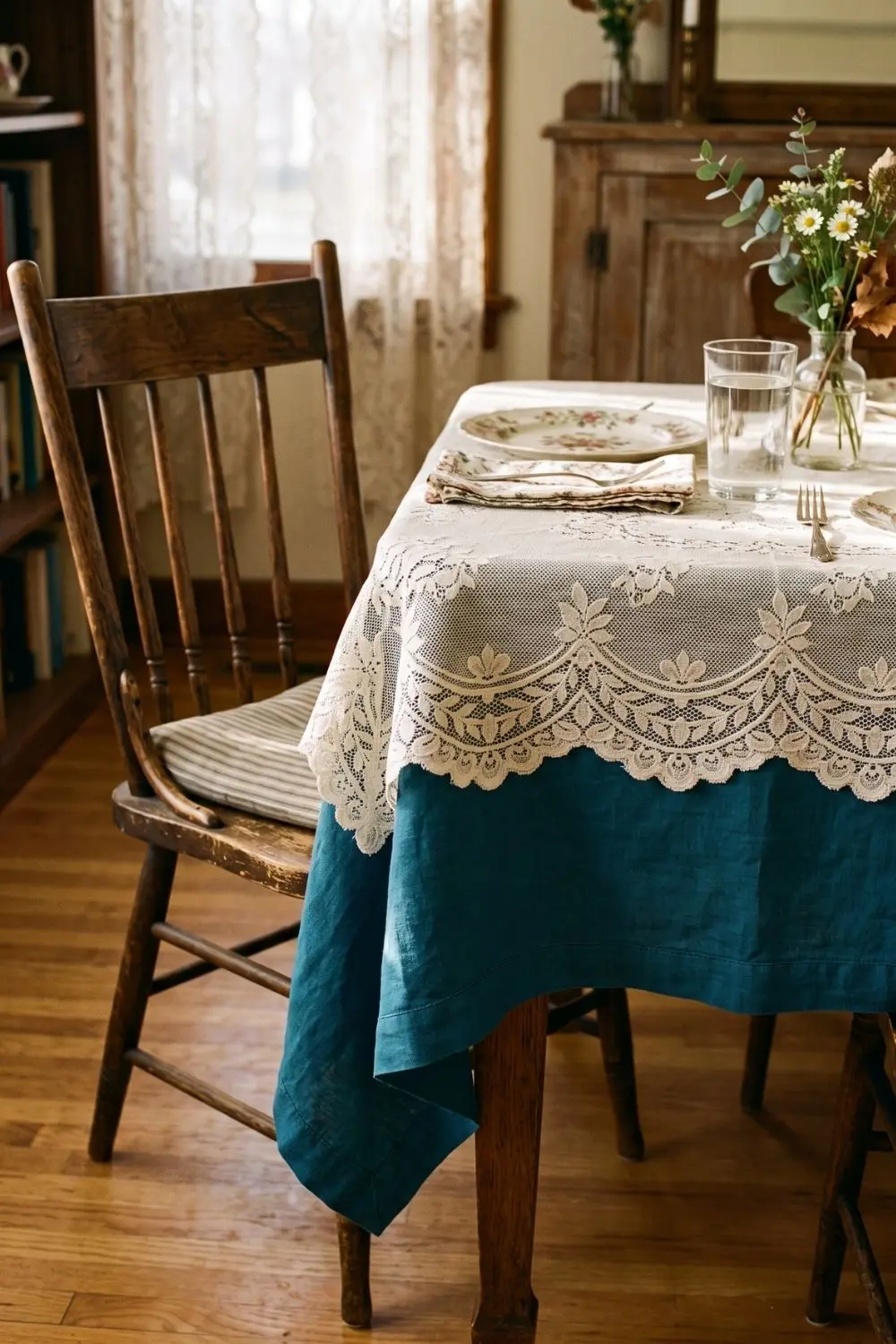
The drop — how far each cloth hangs past the table edge — decides whether the layering looks intentional or accidental. Two combinations work reliably. Either let the solid base drop noticeably lower than the lace, so a band of solid colour frames the lace hem, or match the two drops almost exactly for a more formal, tailored effect. What rarely works is a lace layer hanging lower than the base, which reads as a sizing mistake. No full-size lace cloth available? A lace runner down the centre gives the same vintage note; runner guides typically suggest around 12 to 18 inches of width depending on table size.
Step 5: Style the Top With a Light Hand
Layered cloths are already the statement, so the tabletop should stay quiet. Vintage or mismatched china, a low jug of fresh flowers, and simple glassware are enough.
Anything tall, shiny, or busy competes with the lace instead of sitting on it. One practical habit: keep the centre of the table lightly covered so the lace pattern stays visible between place settings — the pattern is the whole point of the exercise.
Step 6: Care for the Lace So It Lasts
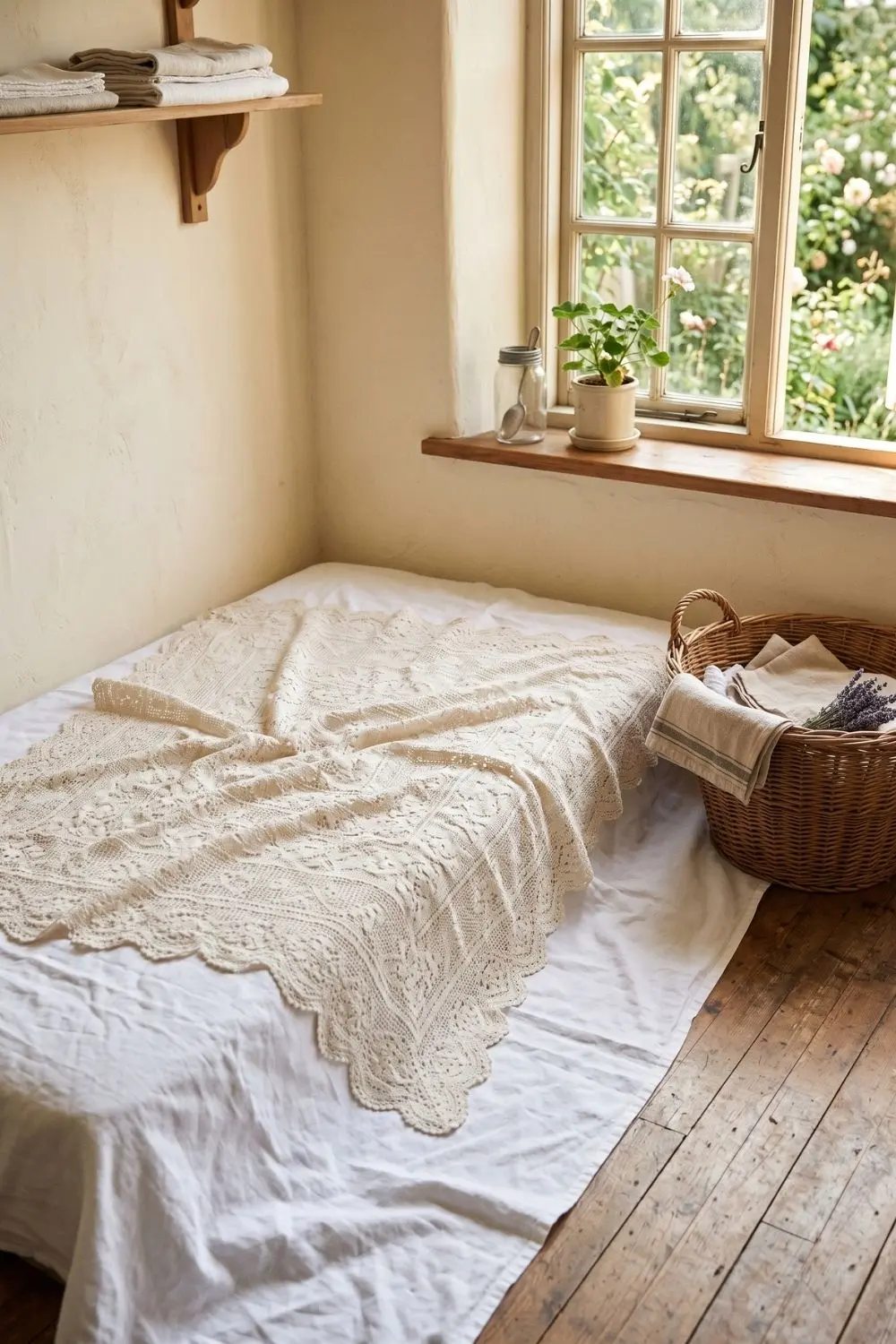
Vintage-style lace survives on gentle handling. Wash on a delicate cycle or by hand, skip the dryer, and lay flat or hang to dry — heat is what distorts openwork. Store lace flat or loosely rolled rather than sharply folded, and keep the heavier solid cloths at the bottom of the stack. Guides on vintage linens also recommend rotating pieces between uses so the same cloth is not absorbing every dinner; treating stains promptly matters more with openwork than with any solid fabric.
Frequently Asked Questions
Which solid colours work best under ivory lace?
Dusty rose, sage green, teal, and mustard are the most forgiving. All four are dark enough to show the pattern but soft enough to keep the vintage mood.
Can a lace tablecloth go directly on a bare wooden table?
Yes — the wood grain acts as the “solid layer” and suits farmhouse-style rooms. A solid cloth underneath simply gives more colour control and protects the surface.
Does the lace need to match the base cloth in size?
No. A slightly smaller lace layer over a larger base is a classic look. Only avoid the reverse, where lace hangs below the base hem.
A layered table is one of the few decorating moves that costs almost nothing if the linen cupboard already holds a solid cloth. Add one lace layer, check the drop, and the same table that hosted last week’s homework session suddenly looks like it belongs in a countryside guesthouse. Save this guide for the next time the dining room needs a lift without a single new piece of furniture.
About These Images
The table settings shown throughout this post are concept visuals gathered for inspiration purposes only. Women’s Alphabet does not sell or distribute the tablecloths, linens, or decor pieces featured here. Actual lace texture, colour, and drape will vary depending on the specific fabric, weave, and lighting in your own dining room, so it’s worth seeing a piece in person before committing to a full table setting.