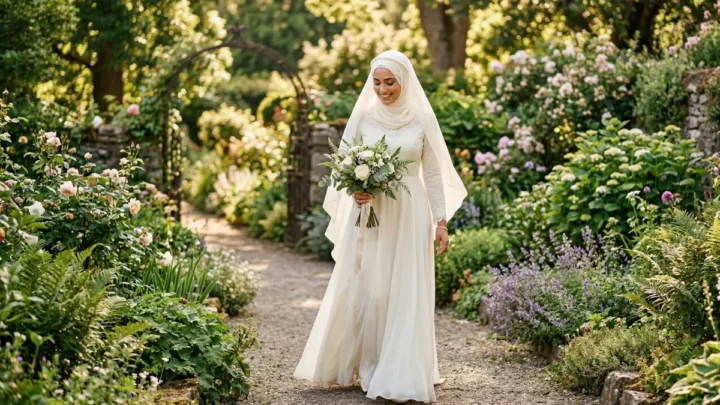
A wedding mood board can begin with one clear dress idea and quietly turn into a wall of flowers, table settings, arches, stationery and venue colors. The result may look polished, yet still fail at its most important job: helping the bride choose and explain the gown.
For a Muslim bride, modesty is not a decorative theme to add at the end. It is a principle that should guide the neckline, sleeves, opacity, fit, movement and hijab plan from the first saved image. A useful modest bridal mood board therefore keeps the dress—not the décor—at the center of every decision.
The Women’s Alphabet method below turns a collection of pretty references into a focused, tailor-ready plan. It also leaves room for current bridal details without allowing a passing trend to weaken the bride’s non-negotiables.
Write the dress brief before you pin anything
Start with four short lines: silhouette, coverage, fabric behavior and overall finish. For example: “A-line; high opaque neckline and full sleeves; matte fabric with gentle structure; restrained embroidery.” This gives every later image a reason to stay or leave.
Then add a non-negotiables card. It might include opaque lining, no sheer panels, a fit that does not trace the body, full wrist coverage and a hijab arrangement that covers the hair, neck and chest. Test the plan for sitting, walking, reaching and being photographed from the side—not only for a still front view.
Before a bridal appointment, The Knot recommends looking for repeated themes in necklines, fabrics and silhouettes. For a modest board, add opacity, ease and layering to that same review.

Give the dress 60 percent of the board
A simple visual ratio keeps the gown from disappearing: 60 percent dress and core fabric, 25 percent supporting garment details and 15 percent setting and palette. This is a Women’s Alphabet editing tool, not an industry rule, so the exact measurements can flex. The hierarchy should not.
Use the largest space for one main gown direction, one alternate silhouette and close references for the neckline, sleeve, skirt and back. The second zone can hold lined lace, buttons, cuffs, hijab fabric, veil edge or an overlayer. Only the smallest zone needs venue stone, greenery, paper or color chips.
If the board still reads as “sage garden wedding” before it reads as “opaque high-neck A-line gown,” the supporting material is too loud. Reduce it until the dress becomes the first thing the eye understands.

Sort supporting ideas into three clear lanes
Instead of one crowded collage, use three lanes: form, coverage and construction and setting. Form holds the silhouette and proportion. Coverage and construction holds sleeves, lining, closures and fabric behavior. Setting holds only the environmental references that genuinely affect the gown.
This prevents a common mood-board mistake: saving several beautiful images that contradict one another. Professional mood-board guidance recommends removing duplicates and keeping the strongest version of an idea. Go one step further and remove any image that cannot be assigned to a lane or translated into a dress decision.

A stone venue may support a matte Mikado gown because both feel structured. A soft garden palette may support a lightly embroidered veil edge. But a tablescape should not occupy the space needed to show how the sleeve meets the cuff or whether lace requires an opaque backing.
Make every modesty requirement visible
Words such as “modest,” “covered,” or “hijab-friendly” are too broad for a dressmaker to interpret safely. Pin the exact solution: collar height, sleeve width, cuff closure, opaque underlayer, back closure, skirt ease and hijab-to-neckline overlap.
Do not rely on a styled photograph to prove opacity. Ask for a real swatch and view it against a contrasting surface in daylight. Lace that looks dense on a screen may still need full lining; a pale crepe may become more revealing under strong light; and a close sleeve may outline the arm even when it covers the skin.
The same care applies to movement. A neckline can sit correctly while standing and shift when seated. A cuff can cover the wrist until the arm is raised. Put movement notes beside the visual references so modesty remains part of the construction, not a last fitting correction.

Let current bridal trends pass through a modesty filter
Current 2026–27 bridal reporting highlights structured Mikado, draping, textured appliqués, long veils and capelet-like accessories. The latest New York Bridal Fashion Week report also notes strong interest in maximal fabrics and deliberate folds.
These ideas can inform a modest gown without importing the runway look as a whole. Mikado can give an A-line skirt quiet structure. Draping can move to the skirt rather than cling across the bodice. Appliqué can frame an opaque collar or cuff. A capelet can add a layer, but it should not be used to disguise an unsuitable base dress.
Save construction, texture or proportion—not a revealing neckline that would require the entire gown to be rebuilt. Brides who need a starting vocabulary can compare these decisions with Women’s Alphabet’s guide to elegant hijab-friendly bridal dress directions for 2026, then bring only the relevant details onto the new board.

Turn inspiration into a tailor-ready decision sheet
A finished board should answer questions, not merely set a mood. Under each saved detail, add one sentence explaining what it controls: “collar height,” “opaque sleeve shape,” “lined lace placement,” “skirt volume,” or “veil edge only.”
Mark three statuses: fixed, open to advice and do not use. This makes a fitting conversation much clearer. The dressmaker can see where technical guidance is welcome without mistaking a religious or personal boundary for a flexible preference.
Bring the board with actual swatches when possible. Screen color varies and two ivory fabrics can look unrelated in the same light. A physical sample also lets the bride compare weight, opacity, drape, surface texture and how the hijab fabric sits beside the gown.

Run the seven-check board audit
Before sharing the board with a boutique, dressmaker or family member, check it once without adding anything new:
- Can someone identify the intended silhouette in five seconds?
- Are the neckline, sleeves, lining, fit and hijab coverage shown clearly?
- Does every lace or light fabric reference include an opacity plan?
- Are duplicate or contradictory dress images removed?
- Does décor occupy no more than a small supporting zone?
- Is each trend translated into a modest construction detail?
- Could a dressmaker explain the next fitting decisions from this board alone?
If the final answer is no, do not add more inspiration. Edit. A smaller board with a clear hierarchy will serve the dress far better than a beautiful collage that asks the gown to compete for attention.
Women’s Alphabet does not sell bridal gowns or tailoring services. The visuals in this guide are inspiration-only and are not product listings, exact sewing patterns or substitutes for qualified religious or professional tailoring guidance. Fabric, fit, opacity and movement should be checked in person before final approval.