

Why You Should Never Store Tomatoes in the Fridge (And What to Do Instead)
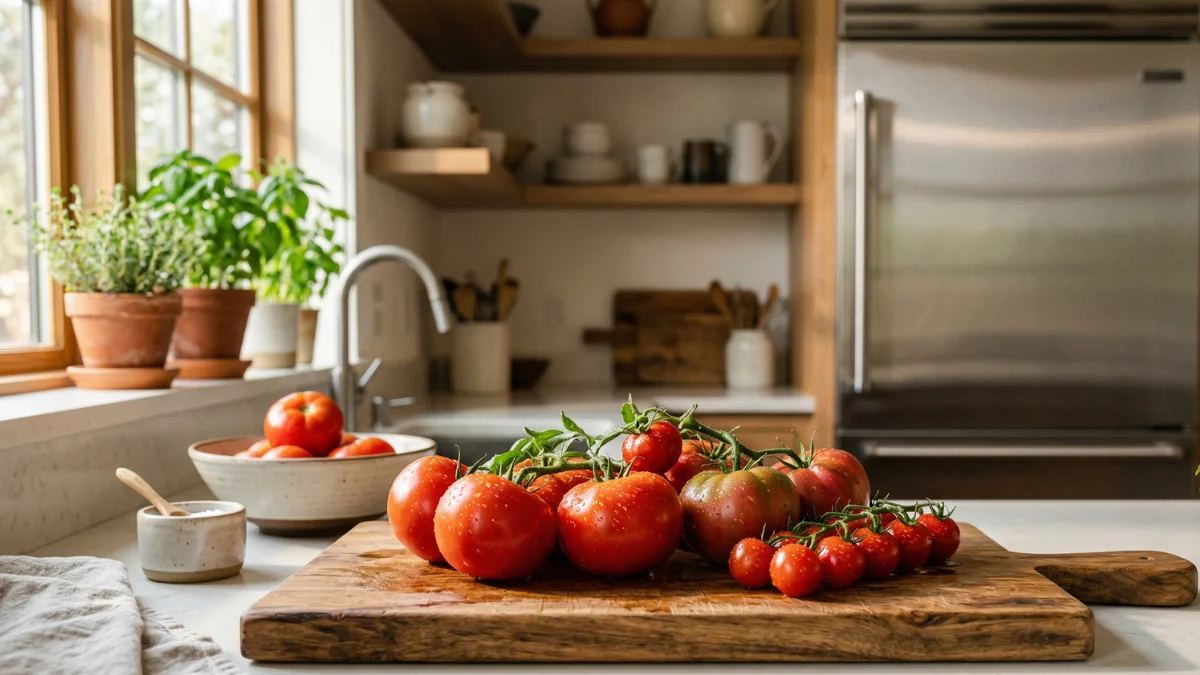
Picture this: You have just brought home a gorgeous, ruby-red, perfectly plump tomato from the farmer’s market or the local grocery store. Your mind is already assembling a vibrant Caprese salad, a rich pasta sauce, or a perfectly layered, savory sandwich. But then comes the fateful moment of unpacking the groceries. Where does that beautiful tomato actually go? If your first instinct is to pop it right into the crisp, cool environment of your refrigerator, you are certainly not alone. For decades, the debate over proper tomato storage has divided kitchens, families, and chefs worldwide.
Traditional culinary wisdom has always enforced a strict, uncompromising rule: never, ever put tomatoes in the fridge. But why? Is it just an outdated kitchen myth, or is there hard science behind the countertop crusade? And more importantly, with recent studies shaking up everything we thought we knew about food preservation, what is the actual best way to keep your tomatoes fresh, flavorful, and safe to eat? Grab a cup of coffee, settle in, and let’s dive into the fascinating, slightly controversial world of tomato storage.
The Science of the Chill: What Happens Inside a Cold Tomato
To understand why the refrigerator has long been considered the ultimate enemy of the tomato, we have to look closely at what happens on a cellular level when this fruit gets cold. Tomatoes are originally warm-weather fruits, thriving in the heat and sun. They are highly sensitive to temperatures dropping below 50°F (10°C). Most home refrigerators are set somewhere between 35°F and 40°F, which is basically an arctic winter for these delicate, water-dense fruits.
When a tomato is subjected to this level of persistent cold, two major structural and chemical changes occur:
- Halted Aroma Synthesis: The irresistible, earthy, summery smell and taste of a fresh tomato do not just happen by chance. They are the result of complex chemical pathways where specific enzymes synthesize volatile aroma compounds (such as hexanal and cis-3-hexenal). When a tomato enters the fridge, the cold temperature essentially flips the off switch on these crucial enzymes. The biological machinery that builds flavor shuts down completely. Research has shown that over time, these pathways are permanently altered, meaning that even if the tomato is warmed up later, it may never regain its full, robust flavor profile. It becomes a hollow shell of what it could have been.
- Cellular Breakdown and the “Mealy” Texture: Have you ever sliced into a refrigerated tomato only to find the flesh inside has turned grainy, mushy, or “mealy”? This phenomenon is known scientifically as chilling injury. The cold temperatures irreversibly disrupt the membrane lipids within the tomato’s cell walls. As the cell walls degrade and collapse, they lose their ability to hold onto moisture effectively. The result is a textural nightmare that ruins salads and leaves your sandwiches soggy and unappetizing.
The Variety Factor: Heirlooms vs. Supermarket Staples
Not all tomatoes react to the cold in the exact same way, and understanding what type of tomato you have on your hands is half the battle.
Heirloom varieties—those stunning, oddly shaped, incredibly flavorful tomatoes you find at farmers’ markets—are particularly vulnerable. They generally have much thinner skins and higher water content than standard varieties. Because of this delicate structure, they suffer from chilling injury much faster in a cold, dry fridge, losing their premium texture almost overnight.
On the other hand, the standard, uniform tomatoes purchased from large supermarket chains are often bred specifically for durability during long shipping routes. Because of this, they are frequently picked while still green and completely under-ripe. If you take an under-ripe supermarket tomato and place it straight into the refrigerator, you completely halt its ripening process, locking it into a pale, firm, and flavorless state forever.
The Great Community Debate: What Real Home Cooks Experience
If you take a quick stroll through popular culinary forums like Reddit’s r/Cooking, you will quickly see that the strict “no fridge” rule is hotly contested in real-world kitchens. While many purists strictly adhere to countertop storage, claiming they would never subject their precious produce to the chill, others raise very valid, practical points about their daily environments.
For instance, home cooks living in hotter climates (think Texas, Florida, or Mediterranean regions) frequently point out that leaving tomatoes on a counter when the ambient room temperature is hovering around 80°F is a fast track to mold and fruit flies. As one Reddit user aptly noted in a massive storage thread, “I keep seeing people say tomatoes should be stored on the counter, not the fridge. However, in my experience, they go bad WAY faster on the counter! I eat them all in a day or two anyway, but if I need them to last, the fridge is the only option.”
The community consensus strongly agrees on one vital exception: if you are dealing with a tomato that is already fully ripe and on the verge of turning soft, the refrigerator acts as a necessary pause button to prevent outright food waste.
The Plot Twist: Recent Studies Shake Up the Rules
Just when we thought the science was settled, recent research from the past few years has introduced a juicy plot twist. A contentious study highlighted by ScienceAlert brought together a panel of experienced taste testers to assess various tomato breeds. The researchers carefully tracked the tomatoes throughout the entire post-harvest process and compared ones kept at room temperature with ones kept in the fridge for a few days.
The surprising result? For short-term storage of already fully ripe tomatoes, the panel could not detect a significant flavor difference between the chilled and room-temperature fruits.
Another recent NSF-funded study tracking hundreds of home kitchens found that while long-term refrigeration (over a week) undeniably damages flavor compounds and texture, the strict “never refrigerate” rule might be slightly exaggerated for short-term preservation. The key takeaway from these newer findings is that the stage of ripeness and the length of time spent in the cold are the true deciding factors. If a tomato is beautifully ripe, a couple of days in the fridge will not immediately destroy it—provided you follow one crucial, non-negotiable step before eating it (which we will cover below).
The Ultimate Guide: What to Do Instead
So, how do you navigate the conflicting advice, the intricate science, and the reality of your unique kitchen environment? Here is the ultimate, foolproof guide to storing tomatoes for maximum flavor, ideal texture, and proper food safety.
1. The Countertop Rule for Unripe Tomatoes
If your tomatoes are firm, slightly pale, or not yielding slightly to a gentle squeeze, they are not fully ripe. These must stay on the countertop at room temperature to allow their flavor profiles to develop naturally. Find a spot out of direct sunlight—a cool, shaded corner of your kitchen island or counter is perfect. Pro Tip: Store them stem-side down! The stem scar is the most vulnerable part of the fruit where moisture escapes and bacteria can enter. Placing them upside down helps them retain water and extends their counter life. Also, be sure to keep them away from ethylene-producing fruits like bananas and apples, which emit gasses that can cause your tomatoes to over-ripen much too quickly.
2. The “Pause Button” for Fully Ripe Tomatoes
Let’s say you have a perfectly ripe, deep red, slightly soft tomato, but your dinner plans changed and you are not planning to eat it until tomorrow or the day after. If your kitchen is warm, leaving it out might turn it into mush. This is the one time the refrigerator is your absolute best friend. Place the fully ripe tomato in the fridge to hit the pause button on the ripening process. It will safely buy you an extra two to three days of life without causing severe chilling injury.
3. The Crucial “Warm Up” Phase
If you do utilize the fridge to save a ripe tomato from spoiling, you cannot eat it cold. Eating a tomato straight out of the fridge is a guaranteed way to experience dull, muted, and totally flat flavors. Take the tomato out of the refrigerator at least an hour or two before you plan to serve it. Allowing it to come back up to room temperature helps “wake up” whatever aroma enzymes are still active, bringing back a significant portion of its natural, earthy taste.
4. Cut Tomatoes Belong in the Fridge (Always!)
This is where culinary preference takes a permanent back seat to food safety. Once you slice into a tomato—whether it is a wedge, a half, or chopped pieces for a salsa—you have broken the protective skin. According to FDA safety guidelines, exposed cut tomatoes can support the rapid proliferation of harmful bacteria like Salmonella. Sliced tomatoes must always be stored in an airtight container in the refrigerator and consumed within a couple of days.
5. What About Cherry and Grape Tomatoes?
Because of their much smaller size, cherry and grape tomatoes have a higher surface-area-to-volume ratio, making them even more susceptible to chilling injury, flavor loss, and shriveling in the cold, dry air of a fridge. Keep them unwashed in their original ventilated clamshell (if purchased that way) or loose in a single layer on a ceramic plate at room temperature. Only chill them if they are visibly wrinkling and you absolutely need to stretch them for one more day.
How to Salvage a Mealy, Refrigerated Tomato
We have all been there. You accidentally refrigerated a tomato for way too long, or you bought a batch from the store that was clearly kept in cold storage during winter transport. You slice into them and they are grainy, watery, and taste like absolutely nothing. Do not throw them away!
While they are no longer suitable for a fresh, raw salad or a delicate sandwich, they are absolutely perfect for cooking. Heat acts as a brilliant, transformative equalizer. When you roast, sauté, or simmer tomatoes, you are breaking down the cell walls anyway and concentrating their natural sugars. Toss those sad, mealy tomatoes on a sheet pan with a generous drizzle of olive oil, fresh garlic, salt, and pepper, and roast them at 400°F (200°C) until they blister, burst, and caramelize. The resulting flavor will be so intense, rich, and savory, you will completely forget they were ever subjected to the dreaded chill of the fridge.
The Final Verdict
The great debate over tomato storage will likely continue in kitchens for generations to come, but the modern consensus brings a refreshing dose of common sense: room temperature remains the undisputed gold standard for developing and maintaining that quintessential, sun-ripened flavor. However, the refrigerator is no longer the absolute villain it was once made out to be.
When used strategically as a short-term preservation tool for fully ripe or already cut fruits, the fridge can effectively prevent unnecessary food waste without completely sacrificing your culinary experience. Respect the fruit, give it the right environment to thrive based on its stage of ripeness, and your summer salads, fresh salsas, and homemade sauces will be all the better for it. Enjoy the vibrant, robust flavors that are naturally formed, and remember to always let your tomatoes warm up before taking that first, glorious bite!