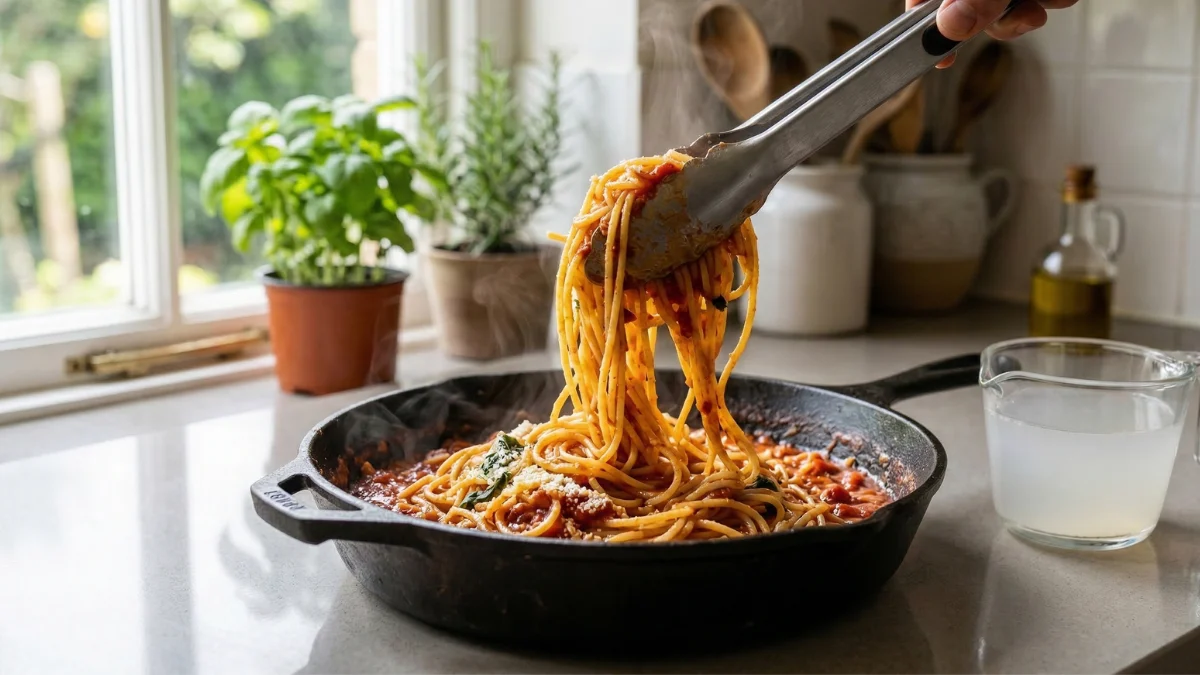
Imagine sitting down to a beautifully plated bowl of spaghetti. The sauce clings perfectly to every single strand, offering a glossy, luxurious finish that feels like it belongs in a high-end restaurant. You might wonder if the secret lies in hours of simmering, expensive imported tomatoes, or a highly guarded family recipe. In reality, one of the most transformative elements in Italian cooking is something most of us pour straight down the drain: the cloudy, starchy water left behind after boiling noodles.
Known as “liquid gold” in professional kitchens, this starchy byproduct is the bridge between a good meal and an unforgettable one. It is the defining factor that prevents tomato sauce from pooling water at the bottom of the plate and keeps oil-based sauces from turning greasy. By understanding the straightforward principles behind this humble ingredient, anyone can elevate their home cooking to professional standards. Grab a cup of coffee, settle in, and let us explore the fascinating mechanics and practical applications of this essential culinary technique.
The Core Concept: Understanding Mantecare
In Italian culinary traditions, there is a specific word for the process of bringing sauce and pasta together into a harmonious, velvety finish: mantecare. Often translated simply as emulsifying or bringing together, mantecare relies heavily on the physical properties of the starch released during boiling.
When dried pasta enters boiling salted water, the heat and moisture cause the starch granules to swell and burst. This process, known as gelatinization, releases starch molecules—primarily amylose and amylopectin—into the surrounding liquid. As the noodles cook, the water becomes increasingly cloudy and slightly viscous. This viscosity is exactly what you want.
Recently, the mechanics of this process have even gained significant attention from the scientific community. In late 2025, researchers from the Institute of Science and Technology Austria (ISTA) were awarded the Ig Nobel Prize in Physics for their meticulous study on the phase behavior of Cacio e Pepe. Their research highlighted how the starch in the boiling liquid acts as a crucial stabilizing agent. When heated, the proteins in cheese want to denature and clump together. However, the starch molecules physically entangle with these proteins, preventing them from forming those dreaded, rubbery lumps. The result is a perfectly smooth, stable sauce. It is a brilliant example of everyday physics happening right on your stovetop.
The Physics of Emulsification: Why Oil and Water Finally Mix
We all know the basic rule of liquids: oil and water do not mix. If you pour olive oil into a glass of water, the oil will stubbornly float to the top. This same principle applies to your dinner. If you toss plain boiled noodles with olive oil, butter, or the rendered fat from guanciale, the fat will simply coat the noodles in a slick, greasy layer, while any watery elements from tomatoes or vegetables will separate and pool at the bottom of your bowl.
This is where the starchy cooking liquid steps in as a functional emulsifier. An emulsion is a stable suspension of two immiscible liquids. While starch is not a traditional emulsifier in the same way egg yolks are for mayonnaise, the swollen starch particles from the pot increase the viscosity of the liquid and act as a physical barrier. When you vigorously stir or toss the noodles, fat, and starchy water together in a hot pan, the starch particles prevent the tiny droplets of fat from coalescing back together.
The outcome is a thickened, uniform sauce that coats the noodles beautifully. It feels rich and luxurious on the palate, yet it does not rely on heavy cream to achieve that texture. This method highlights the pure flavors of your ingredients, whether you are preparing a simple garlic and oil (Aglio e Olio) or a robust, meaty Bolognese.
Community Insights: Real Experiences from the Kitchen
The difference between a theory and a reliable kitchen habit often comes down to community experience. Home cooks and professionals alike frequently discuss the transformative power of this technique on platforms like Reddit. In the highly active cooking communities, the consensus on this topic is incredibly strong and offers immense practical value.
In a popular discussion about what to do with pasta water, users emphasize that it is a “day of” ingredient meant to be used immediately. One community member explained that adding a ladle of starchy liquid to a pan of slightly undercooked noodles and sauce, followed by vigorous stirring, will beautifully thicken the mixture and serves as an absolute game changer for home cooks.
Another crucial piece of advice from the community revolves around how you transfer the noodles. In a thread discussing how to incorporate sauce, experienced cooks suggest a technique often used in restaurants: skipping the colander entirely. Instead of dumping the noodles into a strainer in the sink, use a pair of kitchen tongs or a spider skimmer to lift the spaghetti directly from the boiling pot and drop it straight into the simmering sauce. This method naturally brings along the perfect amount of starchy liquid clinging to the noodles, bypassing the need to measure it out entirely.
Furthermore, users point out that the liquid acts primarily as a binder rather than just a thickener. It glues the flavors to the surface of the food. If you find your meals turning out watery, it usually means the components have not been agitated enough in the pan, or the liquid has not been allowed to simmer and reduce to the correct consistency.
A Step-by-Step Guide to Mastering the Technique
To fully harness the potential of this culinary secret, you need to follow a few straightforward steps. It is not just about dumping a cup of liquid into your pan; it is about timing, temperature, and technique.
1. Optimize Your Boiling Setup
Many home cooks use massive pots filled to the brim with water. While you need enough room for the noodles to move freely and cook evenly, using too much water dilutes the starch concentration. Aim for a moderate amount of water so the resulting liquid is visibly cloudy and rich in starch by the time the boiling process is done. Also, ensure the water is generously salted—it should taste pleasantly salty, like a seasoned broth. This salt will season the noodles from the inside out and add crucial flavor to your final sauce.
2. Time the Transfer Perfectly
The goal is to finish cooking the noodles in the sauce itself. Therefore, you should pull your pasta out of the boiling pot about two to three minutes before it reaches the al dente stage according to the package directions. It should still have a noticeable, slightly hard bite in the center.
3. The Crucial Pan Finish
Have your sauce warming in a wide skillet right next to your boiling pot. Using tongs or a slotted spoon, transfer the undercooked noodles directly into the skillet. Ladle in about half a cup of the hot, starchy cooking liquid. Turn the heat under the skillet to medium-high.
4. Agitate and Emulsify
This is where the transformation happens. You must toss, stir, and agitate the contents of the skillet vigorously. The mechanical action of tossing forces the fat and the starchy liquid to combine. As the noodles finish their last few minutes of cooking directly in the pan, they will absorb the flavored liquid, and the surrounding sauce will reduce and thicken. Watch closely: you will see the exact moment the watery sauce transforms into a glossy, unified coating that clings to every strand. If the pan looks too dry before the noodles are tender, simply add another splash of the hot liquid.
Common Pitfalls to Avoid
Even with the right technique, a few common missteps can hinder your success. Keep these practical tips in mind to ensure a perfect dish every time:
- Never Rinse Your Noodles: This is a cardinal rule of Italian cooking. Rinsing cooked noodles under tap water washes away all the precious surface starch needed to bind the sauce, leaving you with slippery food that repels flavor.
- Skip the Oil in the Pot: A persistent myth suggests that a splash of olive oil prevents the noodles from sticking together in the boiling water. In reality, the oil simply floats to the top, coats the noodles as you pull them out, and acts as a barrier that stops the sauce from adhering properly. A gentle stir during the first minute of boiling is all you need to prevent sticking.
- Manage Your Heat: Pay attention to temperature control when working with cheese-heavy dishes. As the recent physics studies highlighted, introducing cheese to liquid that is actively boiling will cause the proteins to instantly separate and form tight clumps. Always remove the pan from the direct heat source and let it cool for a brief moment before vigorously stirring in your grated cheese and starchy liquid.
The Final Verdict
Incorporating this simple step into your cooking routine is one of the most effective ways to upgrade your meals. It requires no special equipment, no extra grocery shopping, and no complex culinary training. By simply recognizing the value of the starchy byproduct sitting in your pot, and using a little vigorous stirring, you can produce beautifully cohesive, restaurant-quality dishes right in your own kitchen.
The next time you prepare a meal, resist the urge to drain that liquid gold down the sink. Save a cup, finish your noodles in the pan, and watch the science of emulsification work its wonders. Your dinner guests will be asking for your secret recipe, and you will know it was right there in the pot all along.