

The $2 “Wax Paper” Cabinet Hack That Solves Your Worst Kitchen Cleaning Nightmare
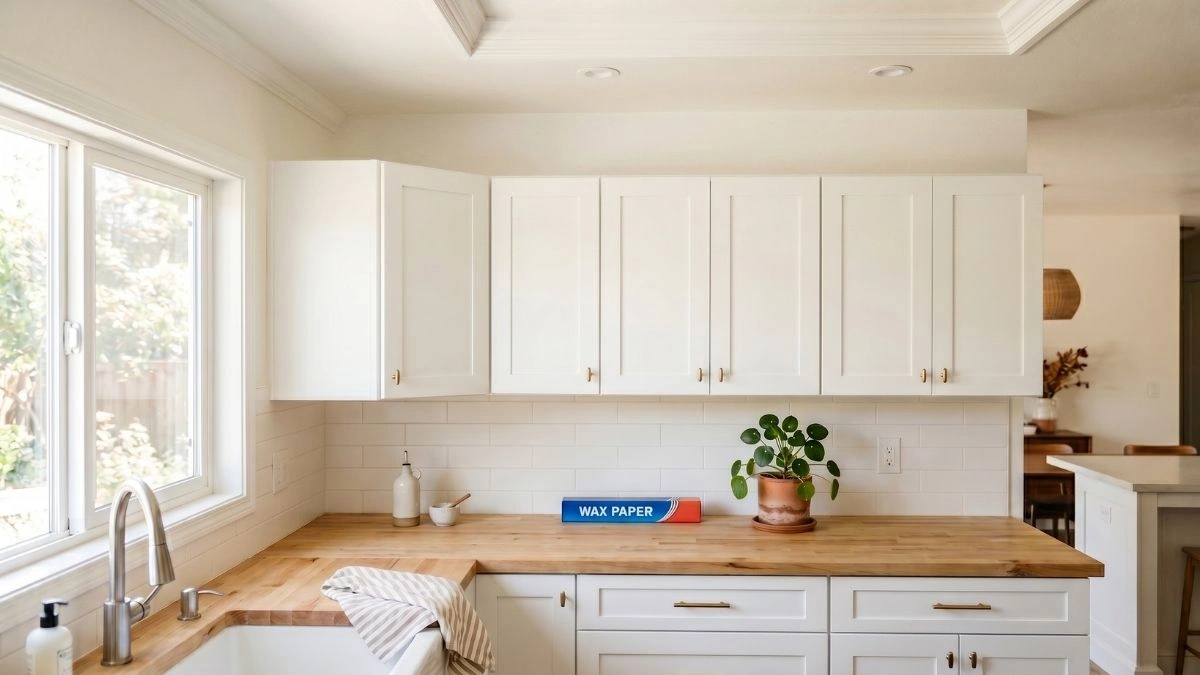
Walk into your kitchen. Look up. If your kitchen cabinets do not reach all the way to the ceiling, you have a hidden problem resting right above your head. Every time you sear a steak, fry an egg, or simmer a rich sauce, microscopic particles of aerosolized oil float upward. They eventually settle on the highest horizontal surfaces in the room. Concurrently, standard household dust circulates through your HVAC system and lands in the exact same spot. These two elements mix and synthesize a dense, sticky, cement-like sludge. You ignore it for months, maybe years. Then, one day, you climb a step stool to retrieve a rarely used roasting pan, and your hand sticks to the wood.
Why do we spend hours scrubbing a surface nobody even sees? You do not have to. A simple roll of wax paper from your pantry provides a permanent, low-cost solution to this endless cycle of scrubbing.
The Agony of the Initial Clean
Before you deploy this preventative method, you must face the existing grime. Thousands of homeowners on cleaning forums like Reddit’s r/CleaningTips share horror stories about tackling this specific chore. Many users report spending entire weekends armed with heavy-duty degreasers just to penetrate the top layer of sludge.
Do not grab a sponge right away. If you try to wipe away a thick layer of polymerized grease with a wet rag, you only smear the mess further into the wood grain. Instead, take a plastic putty knife or an old credit card. Gently scrape the surface. You will watch the grease roll up into thick, satisfying ribbons. Once you remove the bulk of the physical residue, spray a high-quality citrus degreaser or a heavy-duty dish soap solution over the wood. Let the solution sit for five minutes. The chemical agents break down the remaining lipid bonds. Finally, wipe the wood clean with a microfiber cloth.
You just completed the hardest part. Now, you ensure you never have to repeat this exhaustive process again.
How the Wax Paper Hack Actually Works
You might wonder why you should use wax paper instead of standard paper towels or bare wood. The secret lies in the hydrophobic coating. Manufacturers coat wax paper with a thin layer of food-safe paraffin or soybean wax. This specific coating repels moisture and traps grease perfectly.
When airborne oil particles land on the wax paper, the waxy surface catches them instantly. The grease does not seep through the paper to damage your cabinet finish. Furthermore, the slightly tacky texture of the wax grabs floating dust bunnies from the air and anchors them down. You essentially build an invisible, disposable shield on top of your cabinetry.
When spring cleaning season arrives next year, you simply climb your step ladder, roll up the dirty sheets of wax paper, and throw them in the trash. The wood underneath remains pristine. You lay down a fresh layer of wax paper, and you finish the entire chore in under five minutes.
Step-by-Step Execution Guide
Implementing this system requires minimal effort, but you must do it correctly to maximize the benefits.
- Measure Your Cabinets: Take a measuring tape and find the depth and width of your cabinet tops. You do not need exact millimeter precision, but you want to ensure total coverage.
- Cut and Overlap: Tear off strips of wax paper. Lay them flat across the surface. Ensure the pieces overlap by at least an inch. This overlap prevents grease from sneaking through the cracks and reaching the wood.
- Secure the Edges: Kitchens experience significant airflow. If you run a powerful ceiling fan or a strong range hood, the draft might lift the lightweight paper. You do not want the paper blowing off the cabinets. Place small, heavy objects on the corners to weigh the paper down. Flat river rocks, ceramic drapery weights, or even a few spare metal washers work perfectly. Some homeowners use a single thumbtack in the back corner of the wood, but weights offer a damage-free alternative.
- Set a Yearly Reminder: The wax paper absorbs the mess silently. You will completely forget it rests up there. Set a simple calendar reminder on your phone for one year from today to swap the sheets.
Wax Paper vs. Parchment Paper vs. Newspaper
As this method gains traction on platforms like Pinterest and TikTok, people constantly debate the best material for the job. Let us analyze the top contenders discussed by home organization experts so you can choose the right option for your home.
Newspaper and Junk Mail: Many frugal homeowners strongly prefer old newspapers or thick promotional mailers. This option costs nothing and recycles paper waste. However, newspaper lacks a protective barrier. If heavy grease settles on the paper, the oil eventually bleeds right through the porous material and stains your cabinet tops.
Parchment Paper: Bakers love parchment paper for its heat resistance. Many Reddit users prefer parchment for cabinet tops because the paper carries a heavier physical weight than wax paper. The extra weight means it resists blowing around in the wind much better. However, manufacturers utilize a silicone coating for parchment rather than a wax coating. While silicone prevents food from sticking in the oven, it does not grab and trap airborne dust quite as aggressively as the tacky surface of wax paper.
Wax Paper: The traditional champion. It costs less than two dollars a roll at any grocery store. The paraffin coating actively repels grease and captures dust simultaneously. It strikes the perfect balance between affordability and chemical functionality.
A Note on Safety: A few online critics point out that wax paper contains flammable properties. While true, the top of your kitchen cabinets sits far away from open flames or heating elements. Unless you plan to store lit candles on top of your upper cabinetry, the fire risk remains virtually nonexistent.
Alternative Ways to Utilize Wax Paper in Your Cleaning Routine
Once you buy a roll for your cabinets, you will discover that wax paper possesses incredible versatility for household maintenance. You can completely transform your cleaning routine with a few extra sheets.
Polishing Chrome Faucets Hard water leaves frustrating white mineral spots on your shiny sink fixtures. The second you turn the tap on, the water ruins your freshly cleaned metal. Take a crumpled piece of wax paper and vigorously rub it over your clean, dry faucets. The friction transfers a microscopic layer of wax onto the metal. This barrier repels water droplets instantly. The water beads up and rolls off, extending the life of your shine by several days.
Protecting Refrigerator Drawers The crisper drawer easily becomes the dirtiest area of any refrigerator. Onion skins shed, berries leak juice, and condensation forms a messy pool at the bottom of the plastic bin. Line the bottom of your empty crisper drawers with two sheets of wax paper. When a vegetable inevitably spoils and leaves a sticky puddle, you simply lift the wax paper out and toss it away. The plastic drawer underneath requires zero scrubbing.
Lubricating Sticking Doors and Drawers Older homes feature wooden drawers and doors that swell with humidity. When a drawer sticks, rub a crumpled sheet of wax paper aggressively along the wooden tracks. The wax coats the wood fibers and drastically reduces friction. The drawer will glide smoothly without the need for messy chemical lubricants or expensive hardware replacements.
The Final Takeaway
Home maintenance should not consume your weekends. The smartest homemakers do not clean more; they clean smarter. By utilizing the unique properties of common household items, you can automate your most frustrating chores. The wax paper cabinet hack proves that sometimes the best solutions cost less than a cup of coffee. Grab a roll, cover those high surfaces, and reclaim your free time. Your future self will thank you immensely next spring when you skip the ladder and leave the heavy degreasers under the sink.