

The Viral “Olive Oil” Trick for Scratched Wood Furniture: Does It Actually Work?
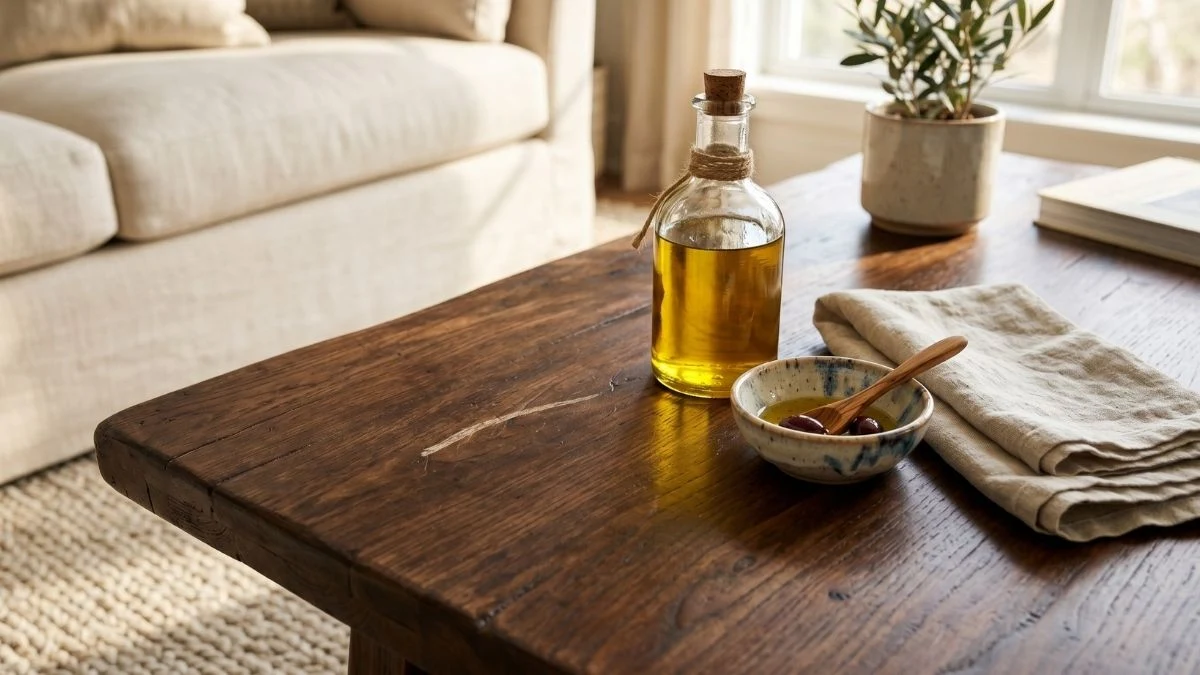
We have all experienced that sudden sinking feeling. You move a decorative vase, slide a heavy ceramic mug, or drop a set of keys, and there it is: a glaring, light-colored scratch across the surface of your beautiful dark wood furniture. When a beloved coffee table or an antique dresser gets damaged, the immediate instinct is to rush to the internet for a quick, effortless fix. If you spend any time on Pinterest or TikTok, you have undoubtedly encountered the most famous DIY furniture hack of them all: the olive oil and vinegar trick.
The promise is incredibly appealing. By simply mixing pantry staples, you can allegedly buff away scratches and restore dark wood to its former glory in seconds. It sounds brilliant, inexpensive, and entirely natural. But before you raid your kitchen cabinets and start pouring salad dressing ingredients onto your expensive dining table, we need to pause and look at the facts.
In recent years, furniture restoration experts and passionate home caretakers have started speaking out against this viral trend. While the immediate results might look spectacular on camera, the long-term reality is vastly different. Today, we are going to break down exactly what happens when you put olive oil on wood, look at real experiences from internet communities, and explore the expert-approved methods that actually repair dark wood without causing hidden damage.
The Anatomy of the Viral Recipe
To understand the trend, we first need to look at the recipe that has been shared millions of times across social media platforms. The standard mixture usually calls for three parts olive oil mixed with one part white vinegar. Proponents of the method instruct users to whisk these ingredients together, dip a soft cloth into the mixture, and buff it directly into the scratched wood surface.
The rationale behind the recipe seems logical at first glance. The vinegar is supposedly there to clean the surface, removing any built-up grime or wax that might be trapped inside the scratch. The olive oil is meant to condition the wood, penetrating the exposed fibers, hydrating them, and darkening the raw mark so it blends seamlessly with the surrounding dark stain.
And truthfully? If you apply this mixture to a scratch right now, you will be amazed. The scratch will vanish almost instantly. The wood will look rich, glossy, and beautifully restored. But this visual triumph is merely a temporary illusion born out of basic physics, not an actual repair.
The Science: Why the Scratch Disappears (Temporarily)
When dark wood is scratched, the clear protective finish (like polyurethane or lacquer) and the top layer of wood stain are broken. This exposes the raw, unfinished wood underneath, which is almost always a light, pale color. This sharp contrast between the pale raw wood and the dark stained surface is what makes the scratch so obvious to the eye.
When you rub olive oil into that scratch, the liquid fills the microscopic gaps and soaks into the raw wood fibers. Liquid naturally refracts light differently than dry wood. By saturating the pale fibers, the oil deepens their color, making the light scratch suddenly appear dark. It is the exact same principle as dropping water onto a light gray t-shirt; the wet spot looks significantly darker until it dries.
The problem is that olive oil does not repair the protective finish, nor does it permanently stain the wood. It simply sits there, masking the visual contrast.
The Reality Check: Why Olive Oil Ruins Wood
This brings us to the most critical point and the reason why professional woodworkers strongly advise against this DIY hack. The failure of the olive oil trick lies in the chemical nature of the oil itself.
In the world of wood finishing, oils are categorized into two main groups: drying oils and non-drying oils. Drying oils—such as linseed oil, tung oil, or walnut oil—undergo a chemical process called polymerization when exposed to oxygen. They absorb into the wood, interact with the air, and eventually harden, forming a solid, protective barrier.
Olive oil, along with vegetable oil, coconut oil, and canola oil, is a non-drying oil. It will never cure. It will never harden. It remains a liquid suspended inside the fibers of your furniture. Because it is a food product exposed to oxygen and room temperatures, it will inevitably oxidize and go rancid.
Over a period of weeks or months, the olive oil trapped in your furniture will begin to spoil. It develops a sour, unpleasant odor that is notoriously difficult to remove. Furthermore, as it sits on the surface, it becomes slightly sticky and tacky. This stickiness acts like a magnet for household dust, pet hair, and microscopic debris, eventually forming a dark, grimy paste inside the scratch. What started as a brilliant quick fix eventually turns into a sticky, foul-smelling mess that requires professional stripping to fully resolve.
Real Experiences from the Reddit Community
A quick dive into home maintenance communities like r/CleaningTips and r/woodworking reveals a sharp divide between those who just tried the hack and those living with the long-term consequences.
One user on a popular cleaning thread shared their initial excitement: “I used the oil and vinegar trick on my antique mahogany dresser right before moving out to get my deposit back. It looked flawless instantly!”
However, the responses from experienced woodworkers paint a different picture. A highly upvoted comment from a furniture restorer noted, “Please stop doing this to heirloom pieces. We get so many tables in our shop that smell like old salad dressing. The oil goes rancid, softens the surrounding finish, and forces us to sand down much deeper to remove the spoiled wood.” Another user lamented how their coffee table became a “dust trap,” where every scratch they treated eventually turned into a distinct black, fuzzy line due to trapped dirt.
The Expert-Approved Alternatives for Dark Wood
Now that we know why pantry oils belong in the kitchen, how should we actually address those frustrating scratches? Fortunately, there are several highly effective, safe, and inexpensive methods to restore dark wood furniture.
1. The Black Tea Method
For dark woods like mahogany, cherry, or walnut, ordinary black tea is a remarkable and safe solution. Black tea contains high levels of tannins, the exact same natural compounds found in dark woods.
- How to do it: Place a black tea bag in a mug and add just two or three tablespoons of boiling water. Let it steep for at least ten minutes until the liquid is extremely dark and concentrated. Dip a cotton swab into the tea and carefully dab it directly onto the scratch. The wood will absorb the tea, and the tannins will naturally darken the raw fibers. You can apply multiple coats, letting it dry in between, until the scratch matches the surrounding wood. It will never go rancid or sticky.
2. The Walnut Meat Trick
If you have a superficial scratch, a raw walnut is an excellent tool. Unlike olive oil, the natural oil found inside walnuts is a drying oil, meaning it is safer for wood surfaces.
- How to do it: Take a piece of raw walnut meat (pecans also work well) and gently rub it diagonally across the scratch. The friction will warm the natural oils, which will transfer into the scratch along with tiny particles of the nut, filling the gap and darkening the wood simultaneously. Polish the area with a soft cloth afterward.
3. Mineral Oil and Beeswax
If your table looks dull overall and has many micro-scratches, skip the kitchen oils and purchase a dedicated wood conditioner made from food-safe mineral oil and beeswax. Mineral oil is an inert petroleum byproduct; because it is not organic, it cannot oxidize, spoil, or go rancid.
- How to do it: Apply a small amount of the wax and mineral oil blend with a microfiber cloth, working it into the scratches in circular motions. The mineral oil hydrates the wood safely, while the beeswax forms a hard, protective barrier that fills fine lines and restores the original luster.
4. Commercial Wood Touch-Up Markers
For deep gouges where the wood is physically indented, traditional methods might not suffice. High-quality wood touch-up markers or wax fill sticks are inexpensive and designed specifically for this purpose. They come in sets of varying dark shades (oak, maple, cherry, mahogany). You simply color in the scratch, wipe away the excess immediately with a cloth, and let it dry. The result is permanent, safe, and indistinguishable from the original finish.
Final Thoughts on Furniture Care
In the age of viral internet tips, it is easy to be swayed by solutions that promise instant gratification using items we already have at home. The olive oil and vinegar trick is the perfect example of a technique that prioritizes a quick visual result over the actual health and longevity of the material.
Dark wood furniture brings warmth, elegance, and grounding energy to a room. Whether it is a thrifted vintage find, a family heirloom, or a brand-new investment piece, it deserves to be treated with materials that will preserve its structural integrity.
Keep the olive oil reserved for your cooking, and invest just a few extra minutes in utilizing the right tools for your furniture. By relying on natural tannins from black tea, proper drying oils from walnuts, or inert mineral waxes, you can seamlessly erase those daily wear-and-tear marks, ensuring your beautiful dark wood pieces remain pristine for decades to come.