

Why You Should Buy Children’s Socks in Only One Color: The Ultimate Parenting Hack for 2026
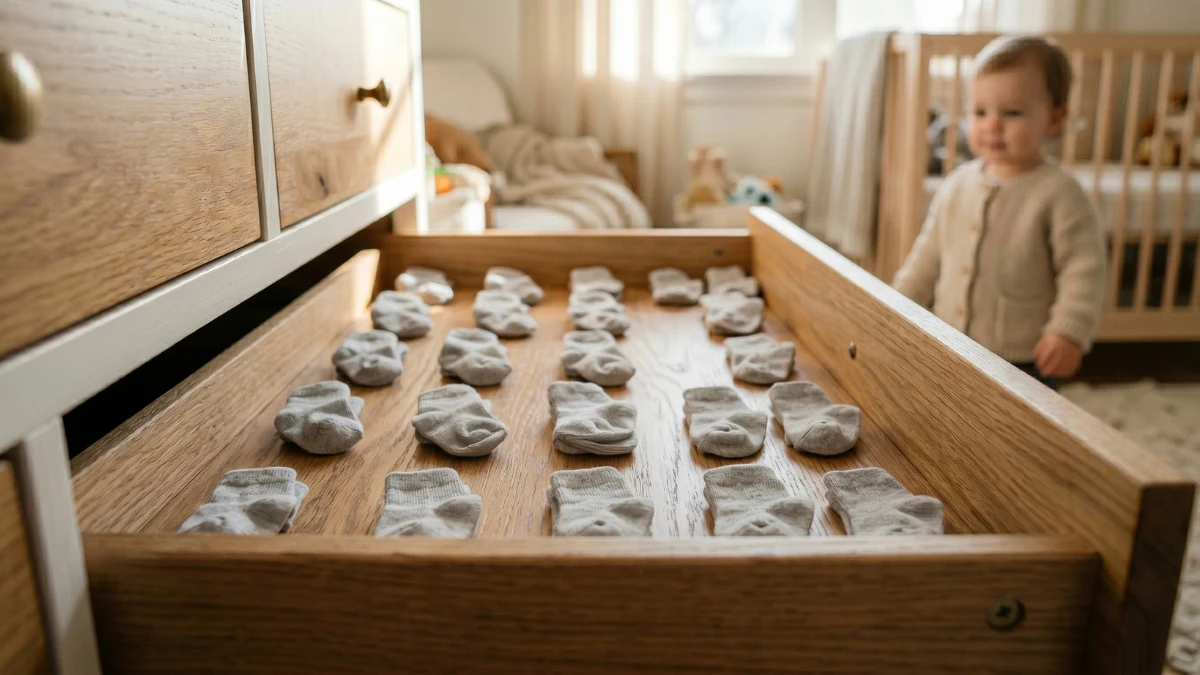
Picture this: It is 7:45 AM. The school bus arrives in exactly ten minutes. Shoes are on, backpacks are packed, but there is a desperate search through a mountain of laundry for the elusive left sock that matches the blue-and-red striped one. Sound familiar?
The mystery of the missing sock is a universal parenting struggle. Whether swallowed by the washing machine, left at a soft play center, or hidden under a car seat, children’s socks possess an unparalleled ability to vanish.
But what if a simple, highly effective strategy could eliminate this daily stress entirely?
Enter the single-color sock rule. Buying children’s socks in only one color is rapidly becoming the most highly recommended organization hack among parents today. This strategy is not about restricting choices; it is about building a seamless, stress-free morning routine. By the end of this guide, the appeal of those mismatched multi-packs will fade, and a completely new approach to children’s wardrobes will be constructed.
The Hidden Frustrations of Multi-Colored Sock Packs
It is easy to be drawn to the adorable multipacks at the store. The ones featuring five different pastel shades, or a mix of stripes, polka dots, and little animal faces. They look fantastic on the shelf, but once they enter a home, they form a logistical nightmare.
Purchasing a pack with six different designs is not just buying socks; it is assigning a matching puzzle to be solved every single laundry day. When—not if—one of those socks goes missing or develops a hole in the toe, its partner is instantly rendered useless. It results in either throwing away a perfectly good sock or tossing it back into the drawer in the vain hope that its mate will reappear someday.
Over months and years, this builds up into a massive pile of orphaned socks. Financial resources are wasted on replacements, and valuable time is lost trying to pair them up.
5 Reasons the “One Color Strategy” is an Absolute Game-Changer
1. Zero Morning Friction
Decision fatigue is real, especially before 8:00 AM. When every sock in the drawer is identical, there are zero decisions to be made. It is simply a matter of reaching in, grabbing any two socks, and the task is complete. There is no hunting, no matching, and no negotiating about why the yellow sock cannot be worn with the green one. This method synthesizes a morning environment where getting dressed becomes an automatic, frictionless process.
2. The Ultimate Financial Efficiency
Think about the mathematics of identical clothing items. Purchasing twenty pairs of identical black socks essentially provides forty individual, interchangeable units. If one gets lost at daycare or tears at the heel, a whole pair does not need to be thrown away. There are simply thirty-nine socks left. Every single sock is a perfect match for any other sock in the drawer. Over the course of a year, this drastically reduces the number of socks that need to be purchased.
3. Instant Laundry Sorting
Folding laundry is tedious enough without having to play a matching game. With the one-color rule, the pairing process takes seconds. They do not even have to be folded together. Many households simply utilize a dedicated communal basket or a specific drawer and toss all the identical socks in loosely. This straightforward approach saves hours of laundry sorting time every single month.
4. Brilliant Size Coding for Siblings
For households with multiple children, sorting socks becomes exponentially more complicated. Dealing with different sizes that often look nearly identical when folded is a tedious chore. The one-color rule solves this beautifully through color-coding.
Assigning a specific color to each child based on their size is a brilliant tactic. For example, the oldest child wears exclusively black socks, the middle child wears exclusively grey, and the toddler wears white. When pulling clothes out of the dryer, it is instantly clear exactly whose room the socks belong in. The visual distinction eliminates the need to stretch and measure socks against each other. When the younger child grows into the next size bracket, they simply inherit the next color code. This method scales perfectly as families grow.
5. Empowering Child Independence
Children naturally want to do things themselves, but finding matching pairs can be visually overwhelming for a toddler. When the drawer only contains identical items, it empowers them to dress themselves successfully every single time. They can grab any two items from the bin and get it right, which builds their confidence and reduces their dependence on adults during the morning rush.
Real Community Experiences: What Parents Are Saying in 2026
Looking at modern parenting communities on platforms like Reddit, the single-color sock system is consistently praised as a life-saving wardrobe adjustment. In recent 2026 threads discussing toddler organization hacks, parents repeatedly emphasize how liberating it is to completely abandon the matching game.
A common piece of advice shared in these active communities is the “communal bin” method: abandoning the act of folding altogether. Instead, a dedicated basket of identical socks is kept near the shoe rack or front door. Children simply grab what they need on their way out.
Furthermore, parents highlight how this method holds up during travel and vacations. Packing for family trips becomes incredibly straightforward when it only requires grabbing a handful of identical socks, rather than carefully counting out matching pairs that might easily get separated in hotel laundry bags. It is a highly practical, stress-reducing approach backed by the daily experiences of thousands of families.
How to Transition to the One-Color System
Ready to make the switch? Here is a step-by-step guide to developing a new system without overwhelming the current setup.
Step 1: The Great Purge
Gather every single child’s sock in the house. Check the laundry baskets, under the beds, and in the shoe closet. Sort out the ones that are too small, have holes, or have been missing their partner for over a month. Donate the good pairs and repurpose the worn-out ones as cleaning rags.
Step 2: Choose a Household Color Strategy
Decide which colors make the most sense for the family dynamics. If a school uniform dictates a specific color, the choice is already made. If the sibling size-coding method is being used, pick distinct, easily distinguishable colors.
Step 3: Buy in Bulk
Once a decision is made, purchase a large quantity of the exact same brand and style. Buying in bulk ensures that the texture, length, and shade are exactly identical. Look for high-quality, breathable cotton blends with reinforced heels to ensure they last as long as possible.
Which Color Should Be Chosen?
Selecting the right color is crucial for this system to work flawlessly. Here is a breakdown of the most popular choices:
- Black: The absolute champion of hiding dirt. Black socks will never show those stubborn floor stains, making them look newer for much longer. They are excellent for active kids and blend well with most dark footwear.
- Grey: The perfect middle ground. Grey socks are highly versatile, do not show dirt as quickly as white, and are slightly softer visually than harsh black. They are often available in large bulk packs and are widely recommended by parents.
- White: Classic and clean, but they come with a warning. White socks show every speck of dirt and require regular bleaching or soaking to maintain their crisp look. However, they are the easiest to find in any store if an emergency top-up is ever needed.
Dealing with Requests for “Fun” Patterns
A common concern is that children might miss their fun, character-themed socks. If expressing personality through footwear is important, patterns do not have to be eliminated completely.
The best compromise is to maintain the one-color rule for standard daily and school wear (Monday through Friday), and establish a small, separate section for weekend novelty items. Alternatively, some parents fully embrace the “intentionally mismatched” trend that has gained traction recently. By purchasing various patterned socks and simply allowing them to be worn mismatched, the stress is still eliminated. As long as the expectation of finding pairs is dropped, the ultimate goal is achieved. It is all about constructing a routine that works for specific household needs.
The Sustainable Angle: Reducing Textile Waste
Beyond the personal convenience and financial savings, the one-color sock strategy is actually a highly sustainable choice. The global clothing industry produces a massive amount of textile waste every year, and orphaned socks are a notable contributor to household fabric trash.
When a unified system is utilized, every single sock is worn until it physically wears out, rather than being discarded prematurely simply because its partner was lost. By maximizing the lifespan of every purchased item, overall consumption is reduced. This contributes to a more sustainable, eco-friendly household model. It is a small, actionable change that builds up to a significant positive environmental impact over time, proving that functional organization can also be environmentally responsible.
Final Thoughts
Managing a household requires juggling a hundred different responsibilities at once. It is impossible to control every aspect of the day, but it is possible to control the systems implemented at home. By switching to a single-color sock strategy, efficiency is chosen over chaos.
Less time will be spent sorting laundry, less money will go toward replacing lost items, and a much smoother morning routine will naturally develop. It might seem like a minor wardrobe adjustment, but it is exactly these small, practical changes that drastically improve daily life. Simplify the drawer, embrace the ease of the process, and enjoy the peace of mind that comes with knowing every sock is always a perfect match.