

Cinnamon Oil: Beauty Booster for Skin & Hair
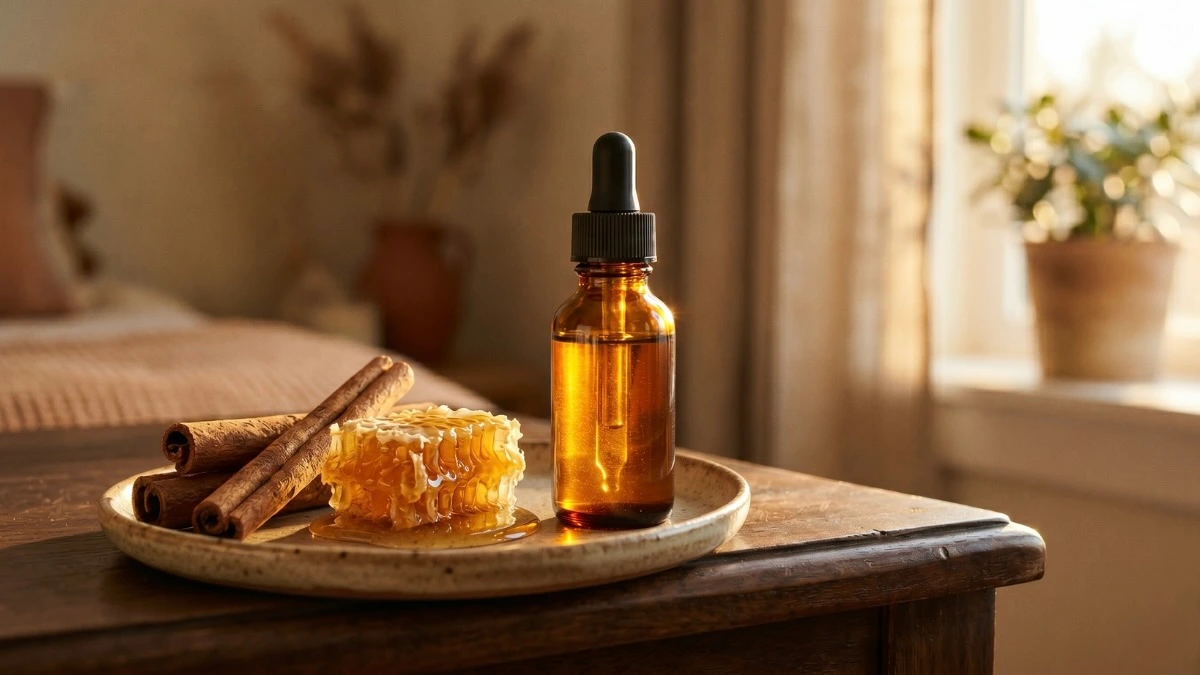
Cinnamon oil not only smells wonderful, but can also care for skin and hair in a unique, natural way. We explain why this is so and how to safely incorporate it into your daily routine.
Who doesn’t like the comforting smell of cinnamon? Most of us are likely to associate it with cozy winter days, soothing teas, and warm family gatherings. However, cinnamon is much more than just a delightful aromatic spice for wholesome treats. Cinnamon oil, in particular, has long been cherished as an effective, natural remedy for overall well-being. In addition, the correct use of cinnamon oil offers remarkable nourishment for both skin and hair, helping you maintain a healthy, natural glow without the need for harsh chemicals.
Cinnamon Oil: Natural Nourishment for Radiant Skin and Hair
Cinnamon oil can support the natural functions of our body and thus have a highly positive effect on the condition of our skin and hair:
- The antioxidants contained in cinnamon oil protect the skin from free radicals, supporting graceful aging and helping the skin maintain its elasticity.
- The oil deeply strengthens the skin, hair roots, and nails.
- It stimulates healthy blood circulation, which allows it to encourage hair growth (when applied to the scalp) and promotes cellular renewal of the skin.
- Acts as a supportive natural remedy against hair loss.
- Promotes a naturally radiant, healthy, and fresh complexion.
- Cinnamon oil has powerful antifungal and antibacterial properties, which make it a wonderful natural defense against acne, blemishes, and minor rashes.
- Effectively locks in moisture for dry and tired skin.
How to Safely Use Cinnamon Oil for Skin and Hair
Patch Test: Cinnamon Oil Can Cause Sensitivities
Since cinnamon oil is highly potent and can trigger allergic reactions in sensitive individuals, you should always test it on a small area of skin first—for example, in the crook of your arm. Wait to see how your skin reacts. A slight warming sensation or tingling is normal, but if it burns, itches, or reacts with severe redness, the oil must be washed off immediately with a gentle soap and should no longer be used.
You must also ensure that cinnamon oil never comes into contact with your eyes or mucous membranes, as these areas are extremely sensitive. Important note: Pregnant women should avoid using cinnamon oil, as its stimulating properties can cause uterine contractions.
Always Dilute Cinnamon Oil Before Use
Never use cinnamon essential oil neat (pure) directly on your skin. It must always be blended with a gentle carrier oil. To do this, simply mix a few drops of the cinnamon oil into nourishing bases like jojoba oil, sweet almond oil, or coconut oil.
It is also possible to mix a tiny amount of the oil with your clean facial care products (cream or lotion) as well as your daily body moisturizer. For hair care, just add two to three drops of cinnamon oil to your regular shampoo. You can also elevate a standard hair mask by adding a few drops of this aromatic oil. Mixing with a carrier oil is strictly recommended for scalp treatments. The golden rule of essential oils applies here: Never apply undiluted oil straight to the skin!
DIY Natural Care Routines with Cinnamon Oil
Many natural skincare enthusiasts on platforms like Reddit’s Natural Beauty community emphasize the effectiveness of cinnamon oil. Users frequently share how a single drop mixed with a gentle carrier oil has helped soothe their dry scalp issues and clear up occasional breakouts naturally. Here are some of the best DIY recipes you can try at home:
Instructions: Soothing Scalp Massage with Cinnamon Oil
- 100 ml of almond oil
- 1 to 2 drops of pure cinnamon oil
Warm the almond oil slightly in a water bath. It shouldn’t be much warmer than your natural body temperature. Mix the two oils together and massage the blend gently into your scalp using your fingertips. Leave the treatment on for about 20 minutes to deeply nourish the roots, and then wash your hair thoroughly with a gentle, sulfate-free shampoo.
Instructions: Cinnamon Oil Hair Treatment for Dry Hair
- 100 ml coconut oil
- 50 ml of almond oil or macadamia oil
- 5 drops of cinnamon oil
- 2 teaspoons of pure honey
Coconut oil is usually solid at room temperature and should first be warmed up gently in a water bath so that it becomes liquid. Mix it thoroughly with the two teaspoons of honey, the macadamia (or almond) oil, and the five drops of cinnamon oil. Spread this beautifully fragrant mixture evenly over your hair and massage it gently into the scalp. The hair treatment should be left to absorb for at least 45 minutes. For even better absorption, wrap a warm towel around your head during this time. Finally, wash it out with a gentle shampoo. You can look forward to remarkably soft, shiny, and healthy-looking hair.
Instructions: Honey and Cinnamon Oil Mask for Clear Skin
- 1 drop of cinnamon oil
- 2 tbsp pure honey (preferably a medically proven, high-quality honey such as Manuka honey)
Mix the ingredients together in a small bowl. Always test the mixture in the crook of your arm or on your wrist first to ensure it doesn’t trigger an allergic reaction. If your skin handles it well, spread the cinnamon-honey mask over your freshly cleansed face and let it sit for about 10 minutes. Wash off gently with lukewarm water.
If your skin responds well to this soothing mask, you can gradually increase the exposure time up to 30 minutes in future applications. This natural facial treatment can be used once or twice a week to maintain a clear, glowing complexion.
Cinnamon Oil: Origin, Varieties, and Production
Allah did not create all cinnamon oils equal. Cinnamon oil can be obtained from different types of cinnamon trees: primarily from the Ceylon cinnamon tree (native to Sri Lanka) and from Cassia cinnamon (the Chinese cinnamon tree). The Cassia variety usually contains a higher proportion of a natural compound called coumarin, which can be irritating in large amounts. For skincare, it is highly recommended to invest in the gentler, purer, though slightly more expensive, Ceylon cinnamon oil.
The premium oil of the Ceylon tree is extracted from the inner cinnamon bark through a careful steam distillation process. The cinnamon bark oil is initially almost colorless and has a slightly thick consistency. Only after a certain curing and storage time does it take on its famous reddish-brown hue and begin to release its characteristic, comforting cinnamon scent.
There is also a variant known as cinnamon leaf oil, which is distilled from the leaves of the tree. This type smells more herbaceous and strongly aromatic (often reminiscent of the scent of cloves). It is darker than the bark oil and is known to have an even stronger antibacterial effect, making it highly valued in natural cleansing routines.