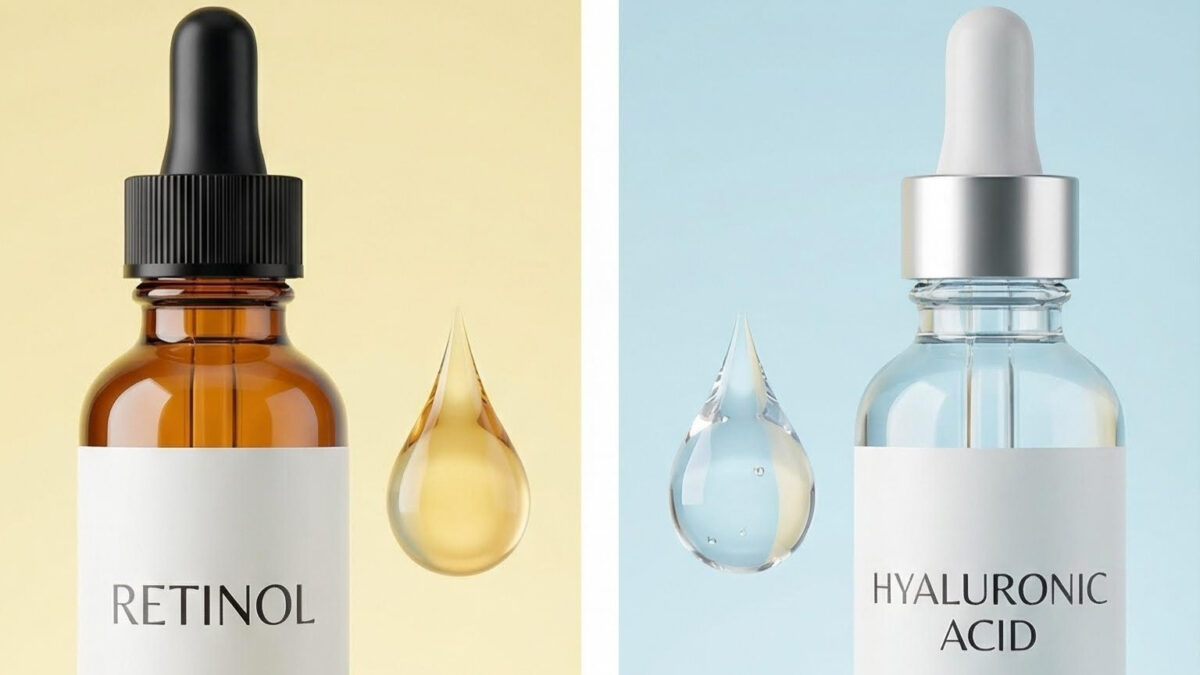
Navigating the world of skincare ingredients can feel like a chemistry lesson. Two of the most popular buzzwords in the beauty industry are Retinol and Hyaluronic Acid. Both are superstars in their own right, promising glowing, youthful skin. But when you have both bottles sitting on your bathroom counter, a common question arises: Can you use them together, and if so, which one goes on first?
Understanding how these ingredients interact is the key to unlocking their full potential without causing irritation. Here is the ultimate guide to the Retinol vs. Hyaluronic Acid debate and the correct order of application.
Understanding the Power Players
Before diving into the routine, it is essential to understand what each ingredient actually does for the skin. They serve very different purposes, which is why they make such a great team.
What is Retinol?
Retinol is a derivative of Vitamin A and is considered the gold standard for anti-aging. It works by accelerating cell turnover, stimulating collagen production, and unclogging pores. It is a potent active ingredient that targets fine lines, wrinkles, and acne. However, because it is so powerful, it can sometimes be drying or irritating, especially for beginners.
What is Hyaluronic Acid?
Hyaluronic Acid (HA) is a humectant, meaning it draws moisture from the air into your skin. It can hold up to 1,000 times its weight in water. Unlike acids that exfoliate (like glycolic or salicylic acid), Hyaluronic Acid is purely for hydration and barrier repair. It is gentle, soothing, and suitable for almost every skin type.
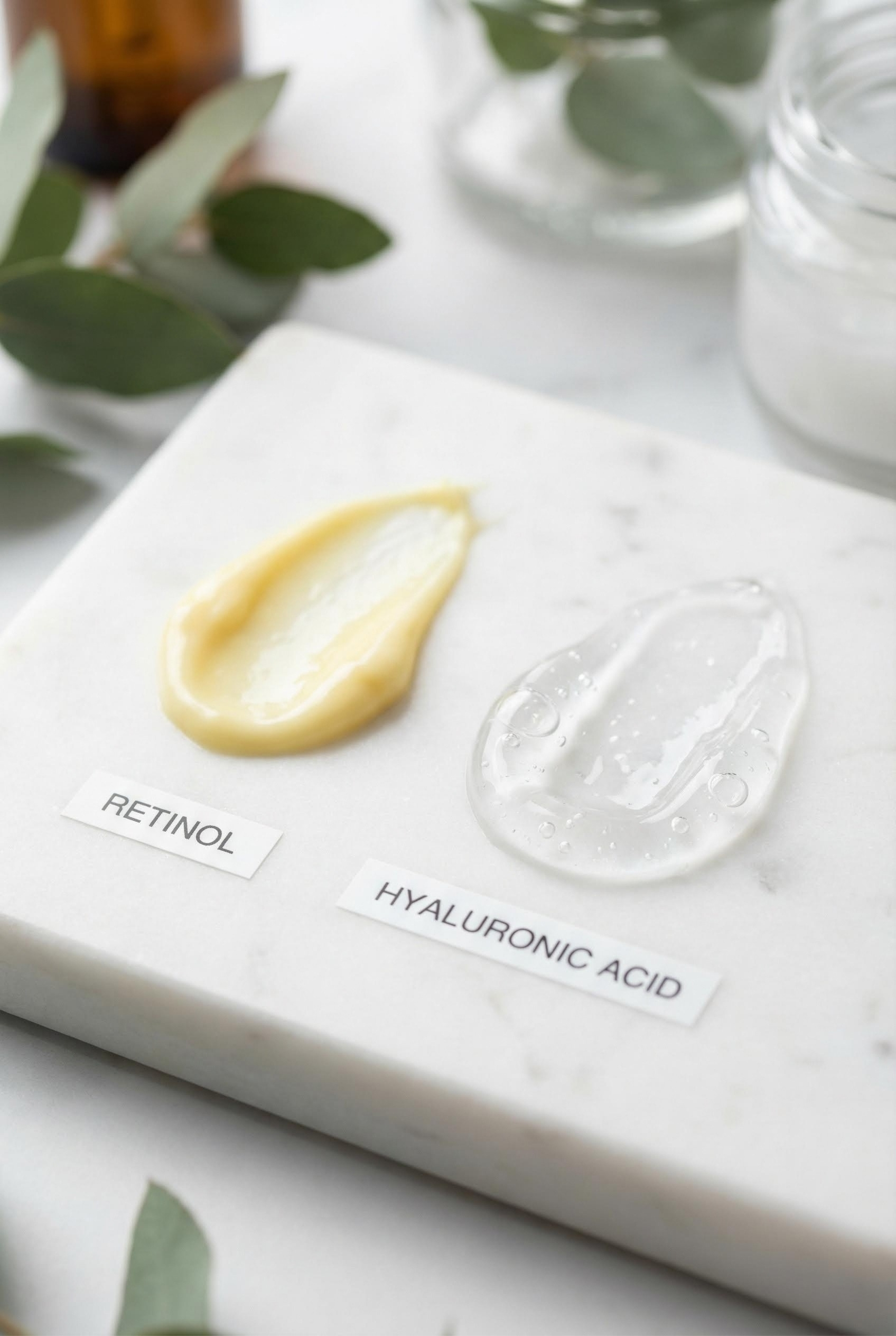
Retinol vs. Hyaluronic Acid: The Comparison
While they are often compared, it is not really a competition. Instead, think of them as complementary forces.
- Function: Retinol speeds up renewal; Hyaluronic Acid provides deep hydration.
- Side Effects: Retinol can cause dryness and peeling (“the retinol uglies”); Hyaluronic Acid soothes and hydrates.
- Timing: Retinol is best used at night due to sun sensitivity; Hyaluronic Acid can be used morning and night.
The beauty of this duo lies in their contrast. Hyaluronic Acid helps to counteract the drying effects of Retinol, making the active ingredient more tolerable for the skin.
💡 Skincare Tip
Never apply Retinol to damp skin unless specifically instructed by the brand. Damp skin acts like a sponge and can absorb the Retinol too quickly, leading to irritation. Always wait for your face to dry completely before applying Retinol.
The Golden Rule: Which Comes First?
This is the most critical part of the routine. The general rule of skincare layering is “thinnest to thickest”, but when dealing with actives like Retinol, pH levels and skin sensitivity also play a role.
The Best Order for Most Skin Types
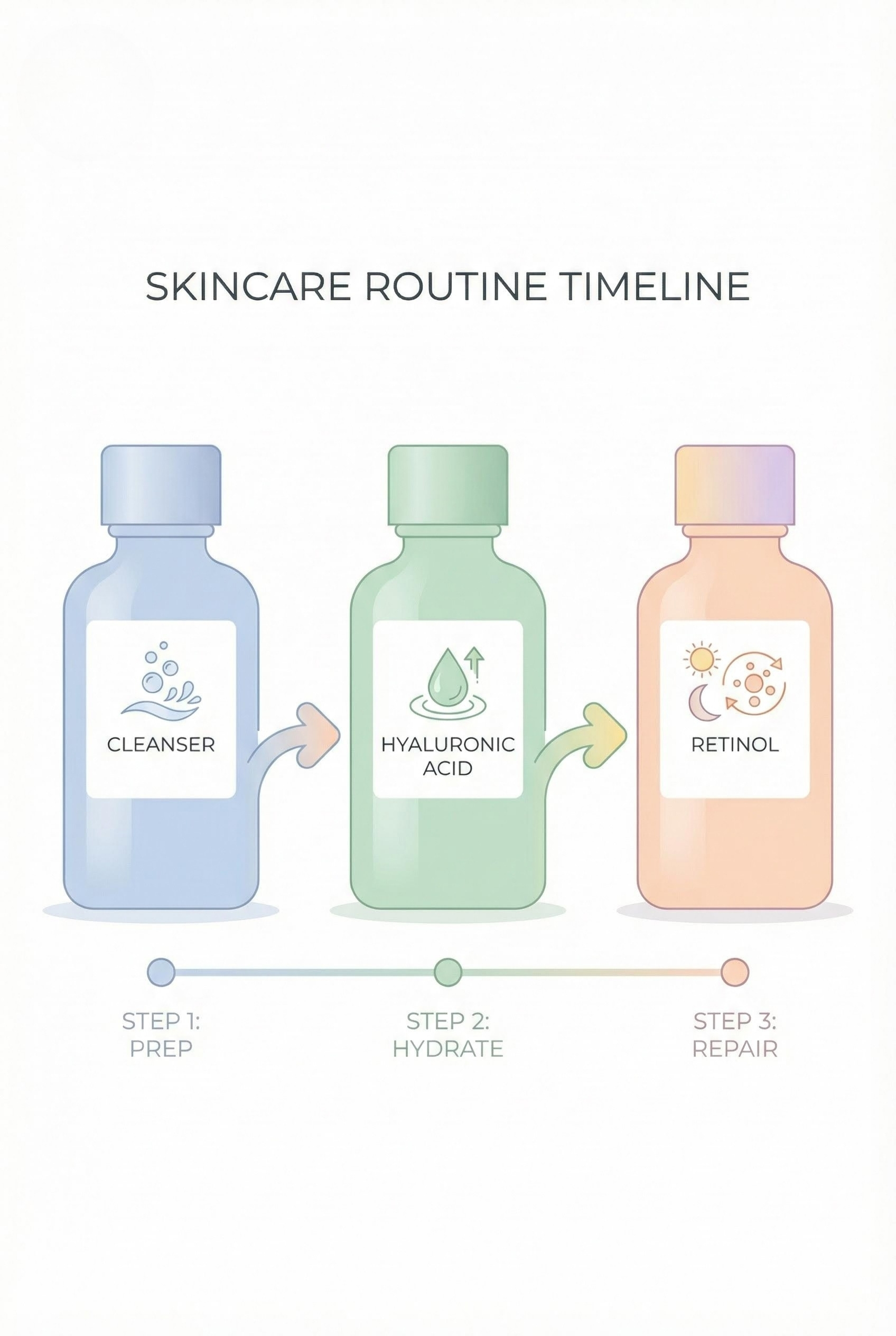
1. Hyaluronic Acid First (The Buffer Method) For most people, especially those with sensitive skin, applying Hyaluronic Acid before Retinol is the safer bet. This method is often called “sandwiching” or buffering.
- Step 1: Cleanse your face.
- Step 2: Apply Hyaluronic Acid to slightly damp skin (this locks in moisture).
- Step 3: Wait for the Hyaluronic Acid to dry down completely.
- Step 4: Apply a pea-sized amount of Retinol.
- Step 5: Finish with a moisturizer.
Using HA first makes a lightweight barrier that keeps the skin hydrated while allowing the Retinol to work without causing excessive dryness.
2. Retinol First (The Potency Method) If your skin is very resilient and you have been using Retinoids for a long time, you might prefer applying Retinol first to maximize penetration.
- Step 1: Cleanse and dry your face completely.
- Step 2: Apply Retinol.
- Step 3: Wait 20 minutes for absorption.
- Step 4: Apply Hyaluronic Acid and Moisturizer.
However, for the vast majority of users, the first method (HA > Retinol) is recommended to maintain a healthy skin barrier.
Can You Mix Them Together?
Technically, you shouldn’t mix them in the palm of your hand before applying. Retinol is a delicate molecule, and mixing it directly with a water-based serum like Hyaluronic Acid might affect its even distribution or efficacy. Layering them one by one is always the superior method.
Summary
So, Retinol vs. Hyaluronic Acid isn’t a battle; it’s a partnership.
- Hyaluronic Acid is the hydrator.
- Retinol is the transformer.
Using Hyaluronic Acid before Retinol helps to cushion your skin, reducing irritation while keeping it plump and dewy. This combination is one of the best ways to achieve a smooth, glowing complexion without compromising your skin barrier.