

5 Reasons Why You Should Freeze Your Onions for 10 Minutes Before Chopping
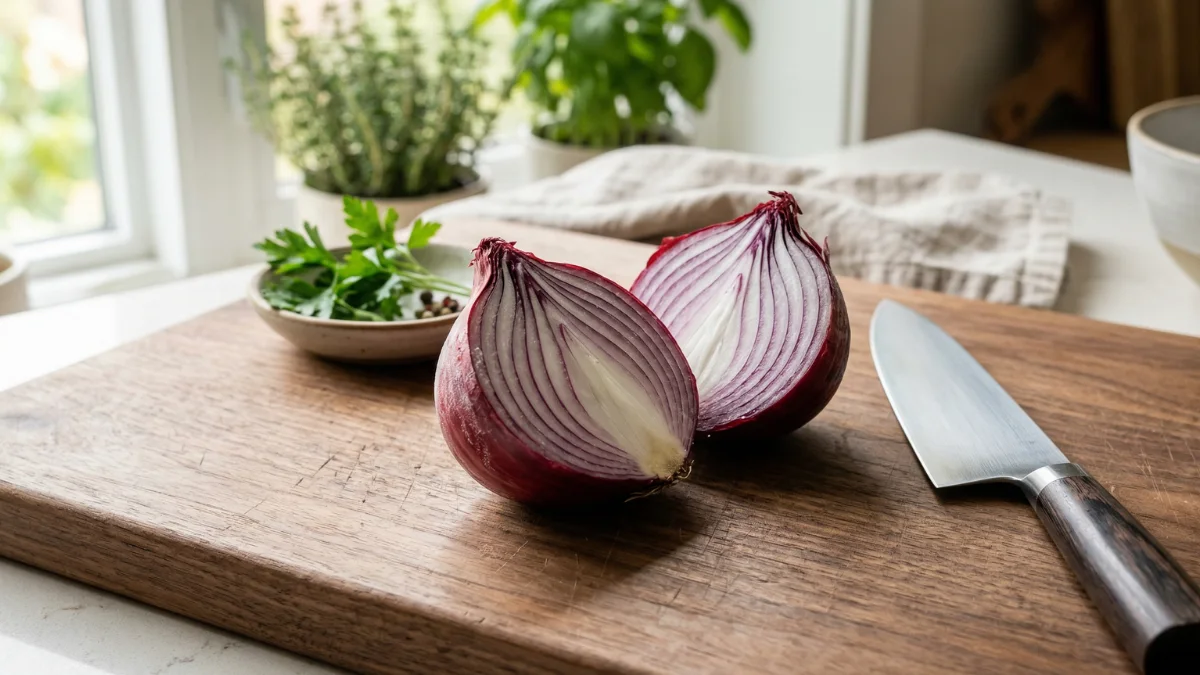
If you have ever stood at your kitchen counter, knife in hand, sobbing uncontrollably over a cutting board while trying to prepare dinner, you are absolutely not alone. We have all been there, wiping away tears with the back of our sleeves, wondering why such a delicious and essential ingredient has to cause so much distress. Onions are the foundational building blocks of flavor for countless recipes worldwide. From rich, slow-simmered stews to fresh, vibrant summer salads, they provide a depth of taste that is simply irreplaceable.
However, the physical toll of preparing them often feels like an unnecessary kitchen penalty. Over the years, we have seen endless tips, tricks, and old wives’ tales promising a tear-free experience. But what if I told you that the most effective, science-backed solution requires zero special equipment, costs absolutely nothing, and is already sitting right there in your kitchen?
It is the simple act of placing your onion in the freezer for exactly ten to fifteen minutes before you begin slicing.
Today, we are going completely into the details of this brilliant technique. We will explore the fascinating science behind why it works, look at real experiences from home cook communities, and outline exactly why this specific timeframe is the ultimate secret to perfectly prepped, tear-free onions. Let us dive into the wonderful world of stress-free cooking!
The Fascinating Science of the Tear-Free Chop
To truly understand why the freezer technique is so highly effective, we first need to understand the biology of the vegetable itself.
Onions belong to the allium family, which also includes garlic, shallots, leeks, and chives. As these vegetables grow beneath the soil, they absorb significant amounts of sulfur. The plant utilizes this sulfur to form amino acid sulfoxides, which are essentially defense mechanisms meant to deter hungry animals and insects from eating them in the wild.
When you rest an onion on your cutting board and slice into it with a knife, you are actively rupturing its cellular walls. This cellular damage releases an enzyme called alliinase. When this enzyme mixes with the amino acid sulfoxides, it triggers a rapid chemical reaction that synthesizes a highly volatile compound known as syn-Propanethial-S-oxide.
This specific gas is incredibly light and quickly floats upward into the air. When it reaches your eyes, it reacts with the natural moisture covering your corneas to form a very mild sulfuric acid. Your brain instantly registers this irritation and signals your tear ducts to flush out the invader. Hence, the inevitable waterworks.
So, how does the freezer help? The answer lies in basic chemistry. Lowering the temperature of the vegetable significantly slows down the internal chemical reactions. Cold temperatures reduce the volatility of the sulfur compounds, meaning the gas cannot form and escape into the air as quickly or efficiently.
5 Reasons You Should Freeze Your Onions for 10 Minutes Before Chopping
If you are still wondering whether this simple step is worth adding to your meal prep routine, here are five compelling reasons why chilling your alliums is a total game-changer for your culinary adventures.
1. It Dramatically Slows Down the Tear-Inducing Gas
As we just established, temperature control is the most effective way to manage volatile compounds. By placing the onion in the freezer for just ten minutes, you bring the internal temperature down significantly. This chilling effect physically suppresses the chemical reaction that synthesizes the irritating gas.
Instead of a massive, invisible cloud of eye-stinging vapor rising to your face, the cold keeps the compounds contained within the flesh of the vegetable. You can comfortably dice, slice, and mince without ever feeling that familiar burning sensation. It transforms a dreadful chore into a quick, easy, and painless task.
2. You Achieve Crisper, Cleaner Cuts
A room-temperature onion can sometimes feel slightly slippery or soft, especially if it has been sitting in your pantry for a while. When you chill the vegetable, the cold naturally firms up the cellular structure.
This added firmness is a massive advantage when it comes to knife work. A cold, firm onion holds its shape beautifully under the blade, allowing you to achieve much more precise, restaurant-quality cuts. Whether you are aiming for paper-thin slices for a gourmet sandwich or a perfectly uniform fine dice for a delicate sauce, the structural integrity provided by the freezer makes your knife glide through with incredible ease and accuracy.
3. It Preserves the Raw Texture (Unlike Deep Freezing)
You might be asking, “If cold is good, why not just keep my onions in the freezer permanently?” This is where the crucial 10-minute rule comes into play.
There is a massive difference between a brief chill and a deep freeze. When you freeze an onion completely, the water inside its cells expands and forms jagged ice crystals. These crystals completely puncture and destroy the cellular walls. If you take a fully frozen onion and let it thaw, it will inevitably turn into a mushy, watery, gelatinous blob. While a fully frozen and thawed onion is perfectly fine for tossing into a slow-simmered soup or chili where texture does not matter, it is absolutely ruined for raw applications like salads, salsas, or garnishes.
The 10 to 15-minute mark is the absolute sweet spot. It lowers the temperature enough to stop the tears but halts the process long before the water inside can crystallize and damage the crisp, crunchy texture we all love.
4. It is Far More Practical Than Gimmicky Hacks
The internet is absolutely flooded with bizarre, gimmicky advice for chopping onions. Some articles tell you to hold a piece of bread in your mouth to absorb the gas. Others suggest whistling while you chop, chewing mint gum, or lighting a candle near your cutting board. Some people even resort to wearing bulky swimming goggles!
While a wet paper towel placed next to the cutting board does have some scientific merit (the gas is attracted to the nearest moisture source), none of these methods are as practical, comfortable, or universally effective as simply manipulating the temperature of the vegetable. The 10-minute freezer rule solves the problem at its chemical source, rather than just trying to block the symptoms. It is a smart, sophisticated approach that requires zero silly accessories.
5. It Promotes Safer Knife Handling
Cooking should always be a joyful and safe experience. When your eyes are burning and filled with tears, your vision becomes blurred. Attempting to wield a razor-sharp chef’s knife while essentially blindfolded by your own tears is a recipe for a kitchen disaster.
By eliminating the eye irritation, you maintain clear, focused vision throughout the entire chopping process. You can see exactly where your fingers are and precisely where the blade is landing. This significantly reduces the risk of accidental slips and cuts, making your kitchen a much safer environment for everyone.
Real Community Experiences: What Home Cooks Are Saying
When looking for the best kitchen advice, it is always helpful to see what real, everyday people are experiencing. Across popular online communities, this method is consistently praised.
In a highly discussed thread on the Reddit community r/LifeProTips, user ElephantsAreHeavy perfectly summarized the science, noting that lower temperatures reduce the volatility of the compounds. They explained that the irritants are already present, but keeping them cold simply reduces the portion that evaporates and reaches your eyes.
Similarly, in communities like r/Frugal and r/Cooking, users frequently discuss bulk-prepping vegetables. Many users agree that while fully freezing pre-chopped onions is a brilliant time-saver for cooked dishes, attempting to thaw a fully frozen whole onion for raw use completely ruins the texture. The consensus is clear: for everyday fresh use, the quick 10-minute flash-chill is the undisputed champion of kitchen hacks. It gives you the best of both worlds—no tears and perfect texture.
Your Step-by-Step Guide to the Perfect, Tear-Free Chop
Ready to put this knowledge into practice? Here is the exact, foolproof process to ensure a perfect experience every single time:
- The Prep: Start with a fresh, firm onion. To speed up the chilling process, peel off the papery outer skin and cut the onion cleanly in half from the root to the stem.
- The Chill: Place the two halves flat on a small plate or simply put them inside a reusable silicone bag. Place them directly into your freezer.
- The Timer: Set a timer for 10 to 15 minutes. Do not forget them! You can use this brief window to gather your other ingredients, wash your greens, or simply enjoy a quiet moment with your coffee.
- The Tool: Ensure you are using a sharp chef’s knife. A dull blade crushes the vegetable, releasing more alliinase, while a sharp blade makes clean, precise cuts that minimize cellular damage.
- The Execution: Remove the chilled halves from the freezer. You will notice they feel firm and cool to the touch. Proceed to dice, slice, or mince as your recipe requires. Enjoy the clear vision and the total absence of tears!
Final Thoughts on Elevating Your Kitchen Skills
Cooking at home is an incredible way to nourish yourself and your loved ones, and it should never feel like a frustrating or painful chore. By understanding the simple science behind our ingredients, we can develop smart, efficient methods that make our time in the kitchen deeply enjoyable.
The 10-minute freezer rule is a perfect example of how a tiny adjustment in our routine can yield magnificent results. It empowers us to handle our ingredients with confidence and skill.
Have you ever tried chilling your onions before slicing them? We would absolutely love to hear about your culinary adventures and experiences in the comments below. Let us continue to learn, share, and grow together as a wonderful community of passionate home cooks. Until next time, stay safe, eat well, and happy chopping!