

The “Tape Line” Rule: A Simple Hack to Keep Toddlers Away from the Oven
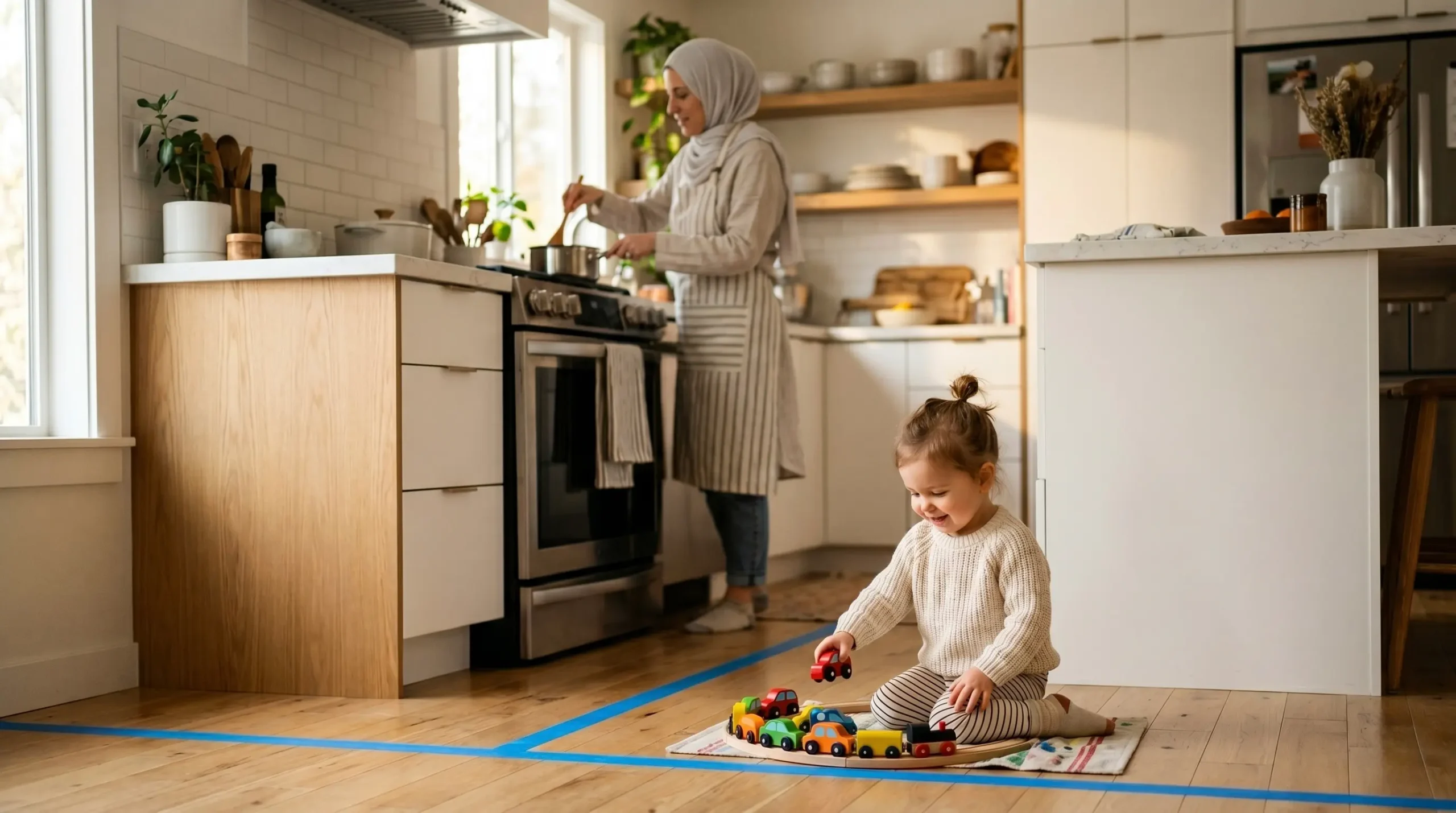
If you have a toddler running around your home, you already know that making dinner can often feel like an extreme sport. One minute you are chopping onions, and the next, tiny hands are reaching for the glowing oven door like it is the most fascinating thing in the world. We have all been there, gently (or sometimes frantically) guiding them back, repeating “Hot! Danger!” for the hundredth time.
It is exhausting, isn’t it? Grab your coffee, take a deep breath, and let’s sit down to talk about a highly effective strategy that has been making the rounds in parenting communities and saving the sanity of busy caregivers everywhere: the “Tape Line” rule.
This is not just another random internet trend; it is a practical method rooted in child psychology. By the end of this guide, you will have a clear blueprint on how to implement this rule, backed by real community experiences and essential safety standards.
What Exactly Is the Tape Line Rule?
At its core, the Tape Line rule is exactly what it sounds like. You place a highly visible line of tape—usually brightly colored painter’s tape—on the kitchen floor, maintaining a safe distance (usually two to three feet) away from the oven and stove area.
The rule you teach your toddler is simple: Do not cross the tape when the kitchen is busy.
Toddlers struggle with abstract concepts. When you say, “Stay away from the oven,” they do not possess the spatial awareness to know where “away” begins and ends. To a two-year-old, “away” might mean an inch from the hot door. By placing a physical, brightly colored strip of tape on the floor, you translate an invisible, abstract rule into a concrete visual boundary that their developing brains can easily understand.
Why It Works: The Psychology of Visual Boundaries
From a developmental perspective, toddlers are constantly testing boundaries—both metaphorical and physical. It is how they learn about the world and their place in it.
Child development experts often emphasize that children thrive on clear, consistent expectations. An invisible “danger zone” around the oven is confusing. The tape line removes the guesswork. It forms a visual cue that empowers the child to make the right choice. Instead of feeling restricted by a parent constantly nagging them to step back, they have a clear mission: stay behind the bright blue line.
Furthermore, toddlers love games and challenges. Walking right up to the line and stopping can feel like a successfully completed task to them. You are essentially building a structured environment where they can still be in the kitchen with you, observing and learning, but safely out of the hazard zone.
Real Experiences: Does It Actually Work?
If you browse through recent parenting forums and Reddit threads, the feedback on the Tape Line rule is incredibly insightful. It is not a flawless system—because toddlers are inherently unpredictable—but for many families, it is a massive game-changer.
One mother on a popular parenting subreddit recently shared, “I put down a strip of red painter’s tape about three feet from the stove. The first few days, my son tested it. He would put his toe right on the edge. But every time he crossed it, I firmly placed him back behind it and said, ‘The line keeps us safe.’ Now, a month later, he brings his toy cars to the edge of the line and plays there while I cook. It has significantly lowered my stress.”
However, community experiences also highlight the need for consistency. Another parent noted, “My daughter figured out she could peel the tape off the floor. We had to switch to a heavy-duty brightly colored rug that served the same purpose. It is all about the visual stop-sign.”
The general consensus? The tape line works best when parents actively enforce it during the first few weeks. It is a tool to help you teach the boundary, not a substitute for your supervision.
Step-by-Step: How to Establish the Tape Line in Your Kitchen
If you are ready to construct this safety boundary in your own home, here is the most effective way to do it:
1. Choose the Right Tape: Opt for painter’s tape. It comes in bright colors (blue or green work wonderfully) so it stands out against your flooring. Most importantly, painter’s tape will not leave a sticky residue or damage your hardwood or tile floors when it is time to remove or replace it.
2. Measure the Distance: Experts generally recommend a minimum of three feet (about one meter) of clearance from the oven and stove. This ensures that even if something splatters, or if a child leans forward over the line, they are still out of the immediate danger zone.
3. Involve Your Toddler in the Process: Make the introduction of the line a positive event. Show them the tape. Let them help you smooth it down onto the floor. Explain its purpose using simple, firm language: “This is our safety line. We stand behind it so the hot stove does not hurt us.”
4. Practice During “Cold” Times: Do not wait until you are juggling boiling water and a hot pan to enforce the rule. Practice when the oven is off. Stand in the cooking area and ask your toddler to show you where they are supposed to stand. Praise them enthusiastically when they stop at the line.
5. Enforce with Consistency: The first time they cross it while you are cooking, stop what you are doing (if safe to do so), gently pick them up, place them behind the line, and repeat the rule. You might have to do this ten times in one evening. Consistency is the foundation of their learning.
Safety First: Redundancy is Key
While the tape line is a wonderful tool for establishing spatial awareness, any discussion about kitchen safety must emphasize redundancy. We never want to rely on a single method when it comes to the well-being of our little ones.
Here are the essential, up-to-date safety practices that should accompany your visual boundaries:
- Turn Pot Handles Inward: This is a classic but vital rule. A toddler might respect the tape line but could quickly reach out if a handle is tempting them from the edge of the counter. Always synthesize your cooking habits to keep handles pointing toward the back of the stove.
- Use the Back Burners: Whenever possible, do your primary cooking on the back burners to maximize the distance between the heat source and the edge of the appliance.
- Invest in Appliance Locks: For a determined toddler, the oven door handle is basically a jungle gym. Install an oven door lock to prevent them from pulling the hot door open. The same goes for lower cabinets containing heavy pots or cleaning supplies.
- Never Leave Them Unattended: The tape line is a behavioral guide, not a physical barrier. Never leave a toddler alone in the kitchen when the oven or stove is on, even for a few seconds.
Building a “Yes Space” Alternative
Sometimes, toddlers cross boundaries simply because they want to feel involved. They see you doing something important, and they want to participate! Instead of only telling them where not to go, provide them with a safe “Yes Space.”
Many parents find success by giving their toddler access to one specific, safe lower cabinet or drawer located far away from the oven. Fill it with lightweight plastic bowls, wooden spoons, and safe silicone utensils. When you are cooking, encourage them to “cook” alongside you from behind their tape line or in their designated safe zone.
Alternatively, if your kitchen layout allows it, a learning tower (a sturdy, enclosed step stool) placed at a safe counter—well away from the stove and sharp objects—allows them to be at your height. You can give them some safe, soft foods to “chop” with a plastic toddler knife, keeping their hands busy and their minds engaged safely.
Final Thoughts
Navigating life with a toddler is an ever-changing landscape of finding what works. The Tape Line rule is an incredible, inexpensive, and practical method to construct a safer environment in the heart of your home. It teaches them about boundaries in a way their developing minds can process, and it gives you a much-needed visual aid to help enforce the rules.
Remember, parenting is about finding solutions that bring a little more peace to your daily routine. Try the tape line, be consistent, and do not get discouraged if it takes a few tries for the lesson to stick. You are doing a fantastic job, and your efforts to build a safe, loving home are what truly matter.
Stay safe, and happy cooking!