

The Brilliant Reason You Should Keep a Piece of Chalk in Your Silverware Drawer
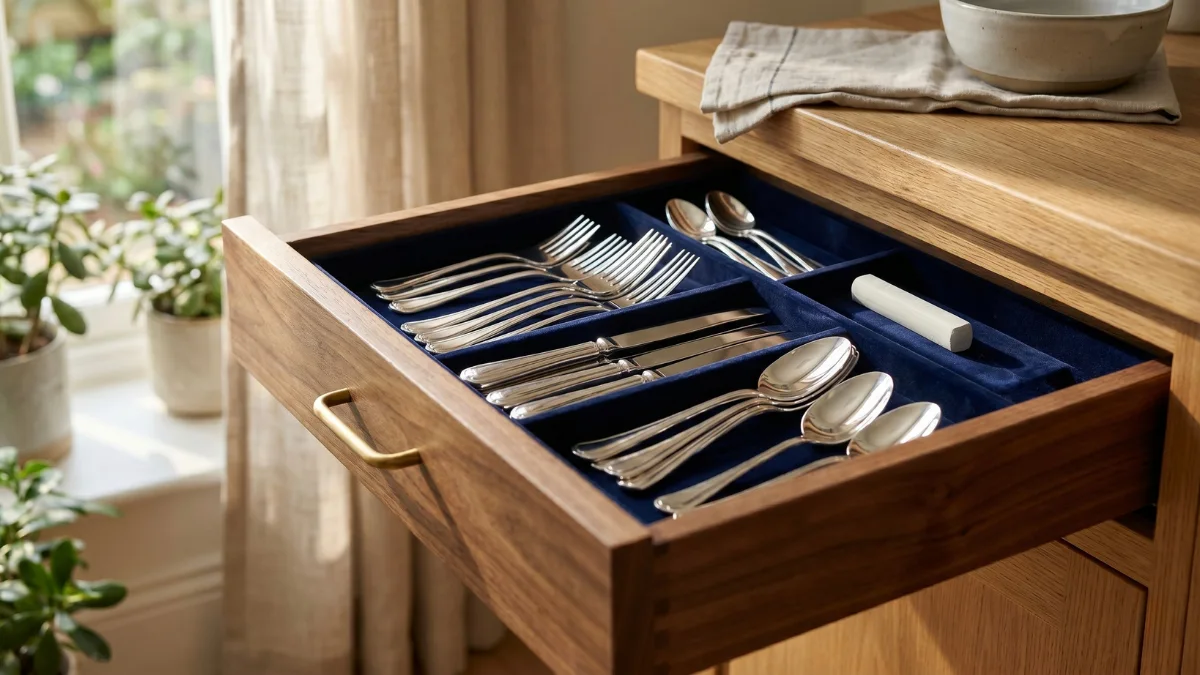
Let’s be honest for a moment. You are preparing for a lovely dinner party, you have your menu planned, your table linens pressed, and you reach into the dining room cabinet to retrieve your beautiful silver flatware. Instead of gleaming metal, you are greeted by dull, yellowish-brown, or even blackened utensils. Suddenly, you are spending your precious pre-dinner hours vigorously rubbing silver polish onto forks and knives.
If you are nodding your head right now while sipping your morning coffee, you are certainly not alone. Tarnished silver is one of those universal household frustrations. But what if the solution to keeping your silver pristine does not involve expensive chemical dips or hours of elbow grease? What if the answer is sitting in a child’s pencil case or a classroom blackboard tray right now?
Recently, there has been a massive resurgence in traditional, low-tox home maintenance tips across platforms like Reddit and various minimalist lifestyle communities. Among the most discussed and highly praised methods for preserving silverware is an incredibly simple, remarkably effective trick: placing a standard piece of white chalk inside your silverware drawer.
Today, we are going to explore exactly why this humble household item works so brilliantly, the science behind silver tarnish, and how you can implement this simple strategy to keep your flatware shining all year round.
Understanding the Enemy: Why Does Silver Tarnish?
To understand why chalk is so effective, we first need to understand why silver loses its shine in the first place.
Tarnish is not dirt; it is the result of a chemical reaction. When silver is exposed to the air, it reacts primarily with hydrogen sulfide (a sulfur compound) and moisture. This reaction forms a thin layer of silver sulfide on the surface of the metal. Initially, this layer appears as a slight golden or yellowish tint, but as the oxidation process continues, it deepens into that stubborn, dark gray or black coating we all despise.
Sulfur is surprisingly common in our daily environments. It is present in the air (especially in urban areas with higher pollution), in certain foods like eggs, onions, and mayonnaise, and even in some materials used to construct cabinets or display cases. When you combine these ambient sulfur gases with standard household humidity, you build the perfect environment for silver sulfide to develop.
The Science of Chalk: A Natural Desiccant
This is where our humble piece of chalk steps in to save the day.
Standard blackboard chalk is primarily composed of calcium carbonate. By its very nature, calcium carbonate is highly porous. This cellular structure allows chalk to act as a highly effective, natural desiccant—a substance that absorbs moisture from its surrounding environment.
When you place a piece of chalk into an enclosed space, such as your silverware drawer or a jewelry box, it immediately begins to absorb the ambient humidity in that small, confined area. By drastically reducing the moisture levels in the air, the chalk effectively slows down the chemical reaction that causes tarnish. Without sufficient moisture to act as a catalyst, the sulfur compounds in the air struggle to react with the silver.
Furthermore, calcium carbonate is alkaline, meaning it can help neutralize acidic gases in the air, including those pesky sulfur compounds. The chalk essentially acts as a sacrificial sponge, absorbing the harmful elements in the air so your precious silver does not have to.
Real Community Insights: Is It Actually Effective?
You might be wondering if this is just an old wives’ tale, but real-world experiences strongly support the science. If you browse through home organization and cleaning forums on Reddit, such as r/CleaningTips or r/Frugal, you will find countless users who have abandoned expensive anti-tarnish strips in favor of this simple method.
Many users report that after thoroughly polishing their silver and storing it with a few pieces of chalk, the flatware remains bright and ready to use even after six to eight months of sitting untouched. Homeowners living in highly humid climates—where silver can visibly tarnish in a matter of weeks—note that adding chalk to their storage cabinets has extended the life of their polish jobs significantly.
In an era where we are constantly encouraged to buy single-use, plastic-wrapped chemical solutions, the minimalist, zero-waste community has praised chalk as a sustainable, incredibly cheap, and safe alternative.
How to Properly Use Chalk for Silver Storage
Implementing this method is delightfully straightforward, but there are a few best practices to ensure you get the absolute best results.
1. Start with a Clean Slate
Chalk prevents tarnish; it does not reverse it. Before you implement this storage hack, you need to thoroughly clean and polish your silverware. Use a high-quality, gentle silver polish to remove all existing silver sulfide. Wash the pieces with mild dish soap, rinse them in warm water, and—most importantly—dry them completely with a soft, lint-free microfiber cloth. Any residual moisture left on the silver before storing will counteract the benefits of the chalk.
2. Choose the Right Chalk
Not all chalk is formulated equally. You want to use standard, dustless white blackboard chalk.
- Avoid colored chalk: The dyes used in colored chalk can sometimes transfer or introduce unnecessary chemical compounds to the enclosed environment.
- Avoid sidewalk chalk: This type is often formulated with different binders and is much denser, meaning it will not absorb moisture as effectively as standard blackboard chalk.
3. Positioning is Key
For a standard-sized silverware drawer, two to three pieces of chalk are usually sufficient. Place them strategically in the corners of the drawer or directly inside the compartments holding the silver.
4. The Cheesecloth Wrap (Optional but Recommended)
While dustless chalk is generally clean, over time, as you open and close the drawer, the chalk can shift and potentially leave a fine white dust on the dark felt lining of your silverware box. To prevent this, you can wrap the pieces of chalk in a small square of breathable cheesecloth or a thin, untreated cotton muslin bag. This allows the air and moisture to flow freely into the chalk while keeping your drawer perfectly clean.
5. Routine Maintenance and Replacement
Chalk is highly effective, but it does not have an infinite capacity. Once it has absorbed its maximum amount of moisture and impurities, it will stop working. As a general rule of thumb, you should replace the chalk in your silverware drawer every four to six months. A great way to remember is to swap out the chalk whenever you change the clocks for daylight saving time or at the change of major seasons.
Expanding the Use: Other Areas Chalk Can Protect
Once you see how well chalk works in your dining room, you will quickly realize its moisture-absorbing properties can be utilized all over the house.
- Jewelry Boxes: The exact same principle applies to sterling silver jewelry. Tucking a small piece of chalk into your jewelry box will keep your favorite necklaces and rings from turning black.
- Toolboxes: Rust is simply the oxidation of iron, a process similarly accelerated by moisture. Placing a few pieces of chalk in your toolbox will absorb humidity and help prevent your expensive wrenches, hammers, and screwdrivers from developing rust spots.
- Closets and Wardrobes: In damp climates, closets can develop a musty odor due to trapped humidity. Hanging a small, breathable bag filled with a few pieces of chalk can help synthesize a drier, fresher environment for your clothing.
Comparing Chalk to Other Anti-Tarnish Methods
While chalk is fantastic, it is always helpful to know how it stacks up against other popular methods.
Silica Gel Packets: Those little packets you find in new shoe boxes or vitamin bottles are also excellent desiccants. They work very similarly to chalk. However, chalk is often easier to source in bulk, cheaper, and completely biodegradable, making it a slightly more eco-friendly option.
Anti-Tarnish Strips: These commercial strips are specifically treated with compounds that absorb sulfur gases. They are highly effective, but they can be expensive to constantly replace and rely on synthetic materials. Chalk provides a more natural, traditional alternative that accomplishes the same goal through physical moisture control rather than specialized chemical treatments.
Activated Charcoal: Charcoal is brilliant at absorbing odors and moisture. However, activated charcoal can be incredibly messy. If it spills, it leaves a dark, staining dust that is notoriously difficult to clean out of the felt lining of a silverware drawer. Chalk remains the cleaner, safer option for delicate storage areas.
Final Thoughts for a Brighter Table
Taking care of fine household items shouldn’t require constant stress or endless hours of rigorous cleaning. By understanding the simple chemistry of your home environment, you can utilize everyday items to do the hard work for you.
The next time you set the table for a family gathering you can open that drawer with total confidence, knowing your silver will be just as bright and beautiful as the day you stored it away. It is a small, practically free adjustment to your home organization routine, but it yields incredibly satisfying results.
So, pick up a small box of white chalk the next time you are at the store. It is a tiny investment that will save you hours of polishing and keep your beautiful silver ready for whatever wonderful meals you plan to host next.