

The “Scrap Stock” Bag: Why Smart Cooks Keep Vegetable Peels
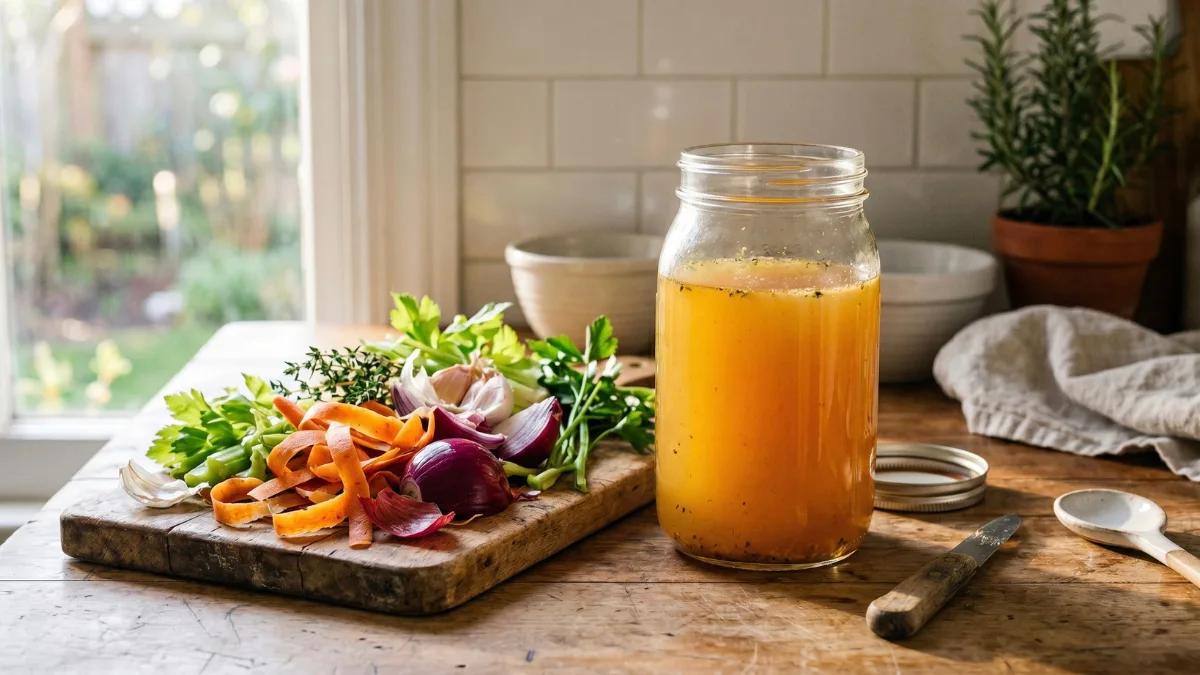
If you have ever felt a pang of guilt while tossing carrot peels, onion skins, and celery ends into the compost bin or trash, you are in the right place. The “scrap stock” bag is a simple, highly effective method for maximizing grocery value while producing rich, flavorful broths right at home.
With food prices and household budgets being a major focal point in recent years, maximizing every single ingredient is no longer just a niche sustainability trend; it is a fundamental pillar of smart home cooking. High-quality liquid broths from the grocery store can be expensive, and they often contain preservatives or high levels of sodium. By utilizing what you already have, you build a custom, deeply nourishing foundation for your meals while significantly reducing kitchen waste.
What Exactly is a Scrap Stock Bag?
The concept is wonderfully straightforward. Instead of throwing away the ends, peels, and trims of your daily vegetables, you collect them in a large, resealable freezer bag or an airtight container kept in your freezer. Over the course of a week or two, as you chop onions for a soup, peel carrots for a snack, or trim celery for a salad, the bag slowly fills up. Once the bag is packed tightly, you empty the contents into a large pot, add water, simmer, and strain.
The result is a golden, aromatic vegetable broth that serves as the perfect base for soups, stews, risottos, and grains. It requires almost zero extra effort during your daily cooking routine, yet the payoff is immense.
The Golden Rules of Scrap Selection
Not all vegetables are suited for the stock pot. Knowing what to include and what to avoid is the difference between a savory, comforting broth and a bitter, muddy liquid. Here is a practical guide to curating your freezer bag.
The “Yes” List: Building the Foundation
These ingredients form the classic mirepoix profile and should make up the bulk of your bag:
- Alliums: Onion skins, leek dark green tops, shallot peels, and garlic skins. Onion skins are particularly valuable as they impart a stunning, deep golden color to the broth.
- Root Vegetables: Carrot peels and ends, parsnip trims.
- Aromatics: Celery ends and leaves, parsley stems, thyme sprigs, and mushroom stems. Mushroom scraps are incredible for adding a deep umami flavor.
- Fleshy Vegetables: Tomato tops and slightly bruised tomatoes add a wonderful hint of acidity.
The “No” List: What to Avoid
Certain vegetables will ruin an otherwise perfect batch by introducing overwhelming bitterness, cloudy textures, or overpowering flavors:
- Cruciferous Vegetables: Broccoli stems, cauliflower leaves, cabbage, and Brussels sprouts. When boiled for extended periods, these release sulfurous compounds that make the liquid taste overly pungent and bitter.
- Starchy Vegetables: Potato skins and turnip peels. Starch breaks down and yields a cloudy, thick, and sometimes gummy texture rather than a clear liquid.
- Overpowering Flavors: Bell peppers, jalapeños, and asparagus ends. These have very distinct, dominant tastes that will easily overpower the subtle harmony of the other vegetables.
- Spoiled Produce: A scrap bag is not a disposal unit for rotten food. If a vegetable is moldy or genuinely rotting, it belongs in the compost, not the stock pot.
Insights from the Cooking Community
When looking at real community experiences on platforms like Reddit’s r/Cooking and various zero-waste forums, home cooks frequently share advanced tips for elevating the scrap method. A widely praised technique involves roasting the frozen scraps before boiling them. By tossing the frozen peels in a light coat of olive oil and roasting them at 400°F (200°C) for twenty minutes, you caramelize the natural sugars. This simple extra step produces a much deeper, richer, and more robust flavor profile compared to simply boiling raw scraps.
Another popular community tip is the inclusion of cheese rinds. Many users recommend keeping a separate small container for leftover Parmesan (halal-certified) or Pecorino rinds. Tossing a hard cheese rind into the simmering vegetable pot introduces a savory, salty depth that mimics traditional meat-based bouillons, proving that kitchen ingenuity goes a long way.
Step-by-Step: Brewing Your Liquid Gold
Once your freezer bag is full to the brim, it is time to turn those frozen remnants into a culinary masterpiece. The process is relaxing, making your home smell absolutely wonderful without requiring active attention.
- The Setup: Dump the frozen contents of your bag into a large stockpot or a Dutch oven. There is no need to thaw them first.
- The Liquid: Cover the vegetables with cold, filtered water. You want the water level to be just about an inch or two above the scraps. Using cold water rather than hot water helps to slowly extract the flavors as the temperature rises.
- The Enhancements: Toss in a few whole peppercorns, a couple of bay leaves, and perhaps a pinch of coarse sea salt. You can always adjust the seasoning later when you actually cook a meal with the broth, so keep the salt minimal at this stage.
- The Simmer: Bring the pot to a gentle boil, then immediately reduce the heat to low. Cover the pot partially with a lid. You want a slow, gentle simmer, not a rolling boil. A rolling boil can agitate the ingredients too much, resulting in a cloudy liquid.
- The Time: Let it simmer gently for about 45 minutes to an hour. Unlike bone broths, which can simmer for up to 24 hours, vegetable scraps give up their flavors relatively quickly. Boiling them for too long can actually extract bitter notes from the peels.
- The Strain: Remove the pot from the heat and let it cool slightly. Pour the contents through a fine-mesh sieve lined with cheesecloth or a clean kitchen towel into a large bowl. Press down gently on the cooked solids with a wooden spoon to extract every last drop of liquid, then discard the spent solids into your compost bin.
Smart Storage Solutions
Once you have brewed a fresh batch, proper storage ensures you always have flavor readily available. Fresh vegetable broth will stay good in the refrigerator for about four to five days in an airtight glass jar.
For longer storage, the freezer is your best friend. A highly practical approach is to pour the cooled liquid into silicone ice cube trays or muffin tins. Once frozen solid, pop the frozen blocks out and store them in a labeled freezer bag. This allows you to grab exactly the amount you need for future recipes—whether you need a single cube to deglaze a pan or several blocks to start a massive pot of soup.
Transforming Everyday Meals
The true brilliance of keeping a scrap bag reveals itself when you start cooking. Swapping out plain water for your homemade vegetable base elevates ordinary dishes into restaurant-quality meals.
- Grains and Legumes: Cooking rice, quinoa, lentils, or beans in this savory liquid instead of plain water forces the grains to absorb complex flavors from the inside out.
- Pan Sauces: After searing proteins or roasting vegetables, use a splash of your homemade broth to deglaze the hot pan, scraping up the browned bits to form a rich, glossy sauce.
- Risotto: A classic risotto demands a flavorful, continuous addition of warm liquid. Your customized vegetable base is perfect for this, adding nuanced depth to the creamy rice without overwhelming the dish.
- Soups and Stews: Naturally, this serves as the ultimate starting point for minestrone, pureed butternut squash soup, or a hearty, rustic lentil stew.
The Environmental Impact and Practical Value
Beyond the undeniable culinary benefits, the scrap bag habit aligns perfectly with modern sustainability goals. According to data from environmental organizations like the EPA, food waste is a massive contributor to greenhouse gas emissions in landfills. When organic matter decomposes trapped under other trash, it produces methane, a potent greenhouse gas. By extracting a second use from your vegetable trims before composting them, you actively participate in reducing this environmental burden right from your kitchen counter.
Furthermore, the economic efficiency cannot be overstated. A high-quality organic vegetable broth can cost several dollars per carton at the grocery store. Over a year, continuously purchasing these cartons adds up significantly. The scrap bag method provides a superior, fresher alternative entirely for free, utilizing items you already purchased and otherwise would have discarded.
Incorporating the scrap bag into your kitchen routine is a small adjustment that yields immense rewards. It honors the ingredients, respects your grocery budget, and elevates your daily cooking with rich, complex flavors. So, the next time you chop an onion or peel a carrot, remember that those scraps hold immense potential. Start your freezer bag today, and watch as your kitchen efficiency reaches new heights!