Recent shifts in interior styling indicate a significant revival of nostalgic, texture-driven dining spaces. According to recent lifestyle forum discussions and curation metrics, interest in heritage-inspired tablescapes has experienced an impressive surge, with thousands of design enthusiasts actively sharing images of heirloom-style linens. As modern living spaces continue to distance themselves from sterile, flat minimalism, homeowners are looking for tactile depth that communicates warmth and history. The dining room, once reserved for hurried meals, is transforming back into a curated gathering space where long conversations unfold over layers of beautifully woven history.
However, achieving that picture-perfect, nostalgic ambiance can feel surprisingly difficult. Why do some vintage-inspired dining rooms effortlessly convey an aura of sophisticated, high-end comfort, while others lean toward looking cluttered or unintentionally dated? The secret does not reside in finding an actual century-old relic buried in an attic, nor does it require mastering intricate textile loops yourself. Instead, the distinction lies in understanding how distinct lace architectures interact with modern tableware, and knowing exactly how to guide a skilled artisan to construct a tailored piece that anchors your room perfectly.
1. The Heirloom Medallion: Reconstructing Victorian Grandeur
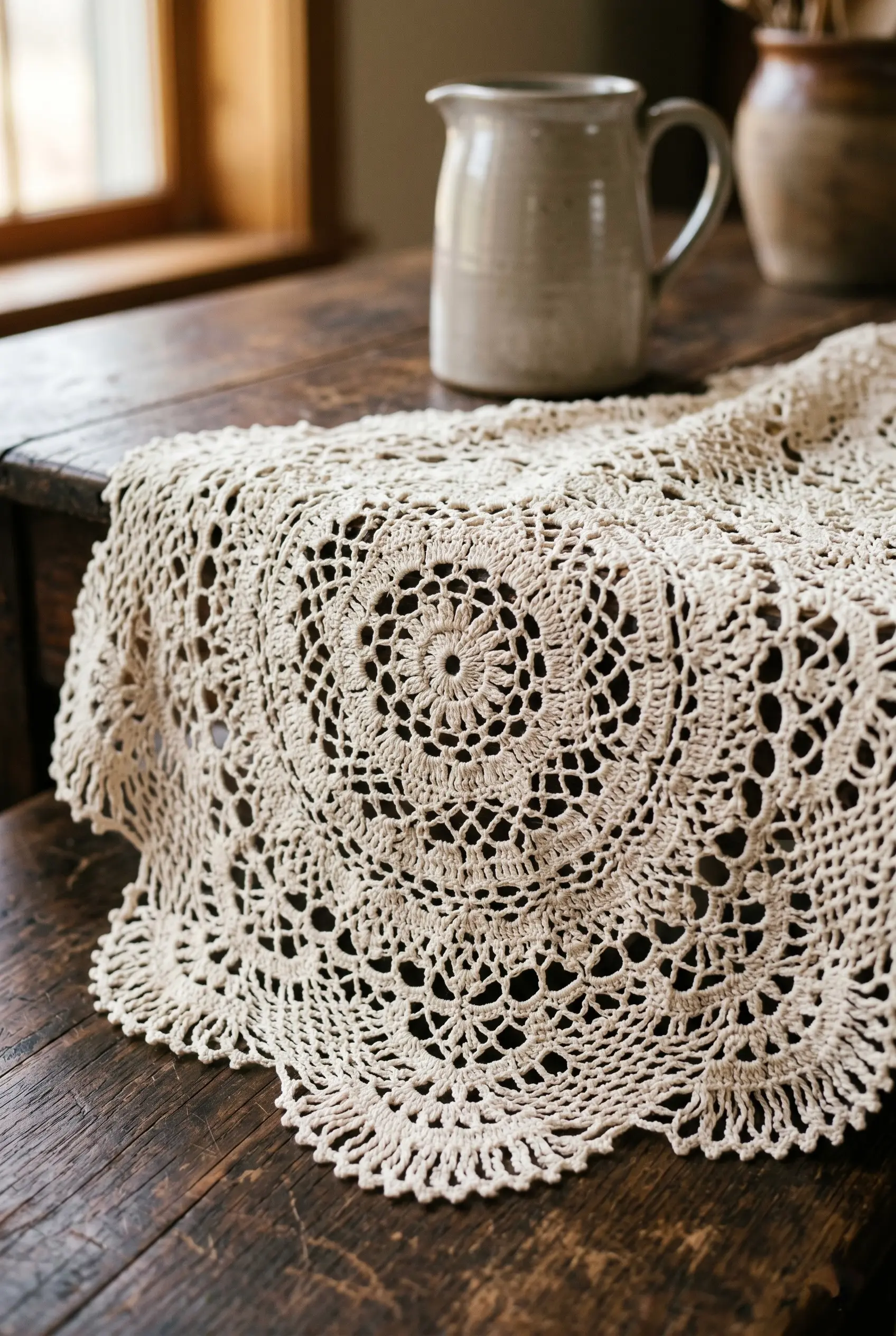
The medallion layout represents the pinnacle of classical symmetry. Built from repeating circular or octagonal motifs joined precisely at their outer edges, this style produces an exquisite fabric of alternating dense work and delicate open voids. When draped over a dark timber surface, the contrast highlights the geometric precision of the handiwork, making the table itself feel like a structural masterpiece. This particular design carries a heavy, grounding presence that anchors large dining rooms beautifully, working exceptionally well on both expansive rectangular tables and intimate round settings.
Matching this structure with contemporary dining elements is highly recommended to maintain a balanced aesthetic. To keep the look modern and fresh, pair the medallion motif with minimalist, solid-colored dinnerware. Think matte ceramic plates in soft charcoal or muted cream, which prevent the tabletop from looking overly busy. Avoid heavily patterned china here; let the structural lace handle the visual storytelling while your dinnerware provides a calm, elegant resting place for the eyes.
2. The Delicate Filet Lace: Geometric Nostalgia for Modern Spaces
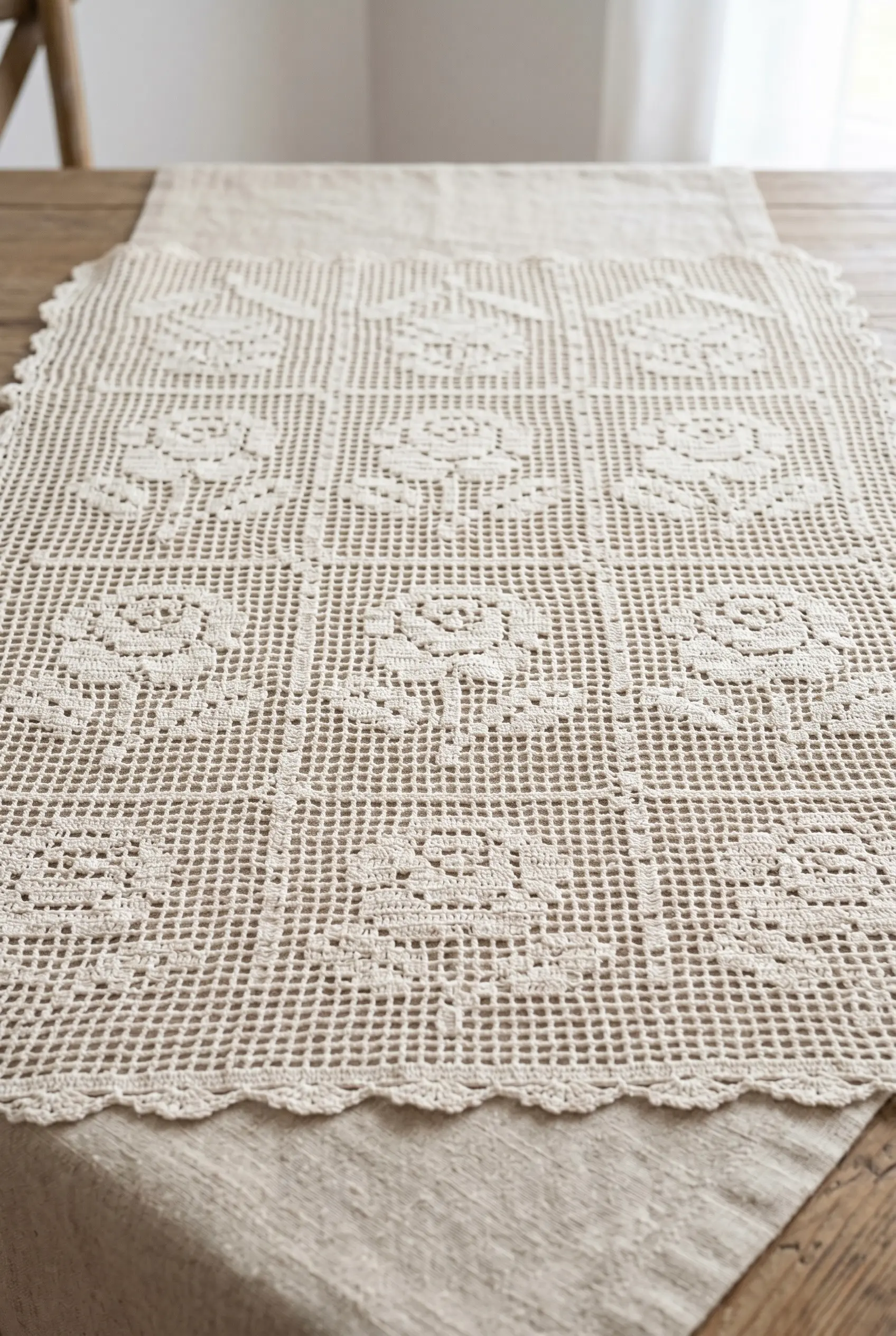
Filet lacework uses a clever grid system composed of open meshes and solid blocks to render striking graphic pictures, often featuring romantic botanical trails or structured silhouettes. Because its core construction is essentially an elegant grid, filet lace bridges the gap between old-world romanticism and clean, mid-century modern lines better than almost any other style. It feels organized, architectural, and deliberate, making it an excellent gateway choice for those who love vintage details but wish to maintain a streamlined, uncluttered household aesthetic.
On lifestyle boards, an incredibly popular layout method involves layering a filet lace runner or full cloth over a contrasting solid underlay. For instance, placing a crisp ivory filet grid over a rich tobacco-brown or sage-green linen base exposes the hidden floral or geometric silhouettes hidden within the mesh. This approach allows you to update the color palette of your dining room dynamically with the seasons while keeping the exact same stunning lace masterpiece as your signature core element.
3. The Pineapple Motif Cluster: Bold Textures for Festive Tablescapes
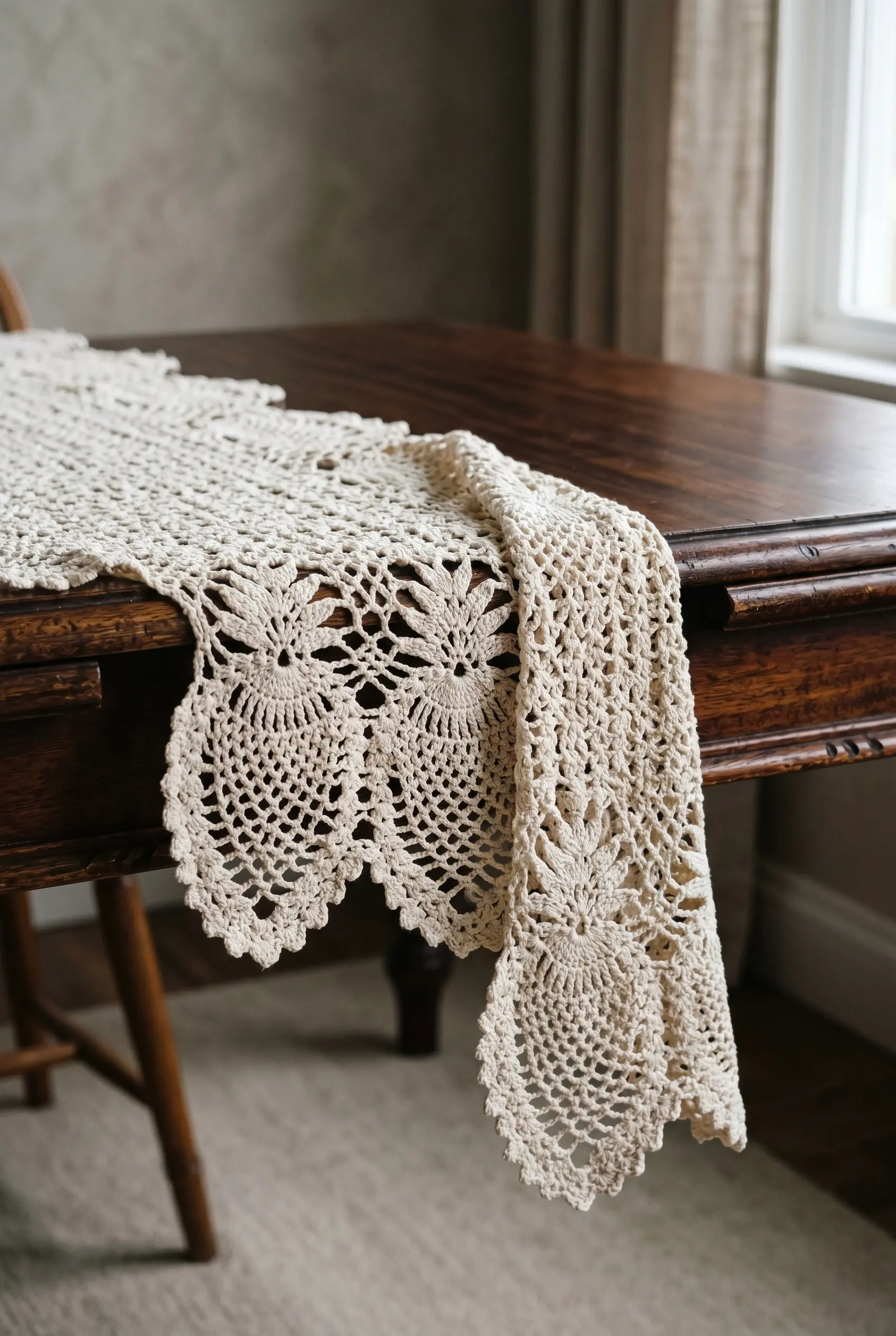
The iconic pineapple pattern is one of the most celebrated traditions in decorative fiber arts, widely recognized as a symbol of hospitality and warm welcome. Characterized by tear-drop shapes filled with airy mesh and bordered by cascading scalloped waves, this design delivers immense textural depth. The pineapple layout naturally draws the eye downward, making it a spectacular choice when you want a dramatic, sweeping drape that cascades elegantly over the corners of your dining table, pooling slightly like a formal gown.
Because the texture is inherently rich and opulent, this style functions beautifully as the foundation for festive gatherings, banquets, or formal dinner celebrations. To style this without veering into old-fashioned territory, pull back on additional centerpiece clutter. A single, heavy glass vase filled with structural green branches or white blossoms paired with slender, tapered wax candles will maximize the dramatic impact of the lace border. The interplay between the deep scallops and the flickering candlelight develops an atmosphere of quiet, timeless luxury.
4. The Cottagecore Daisy Square: Casual Elegance for Sunlit Breakfasts
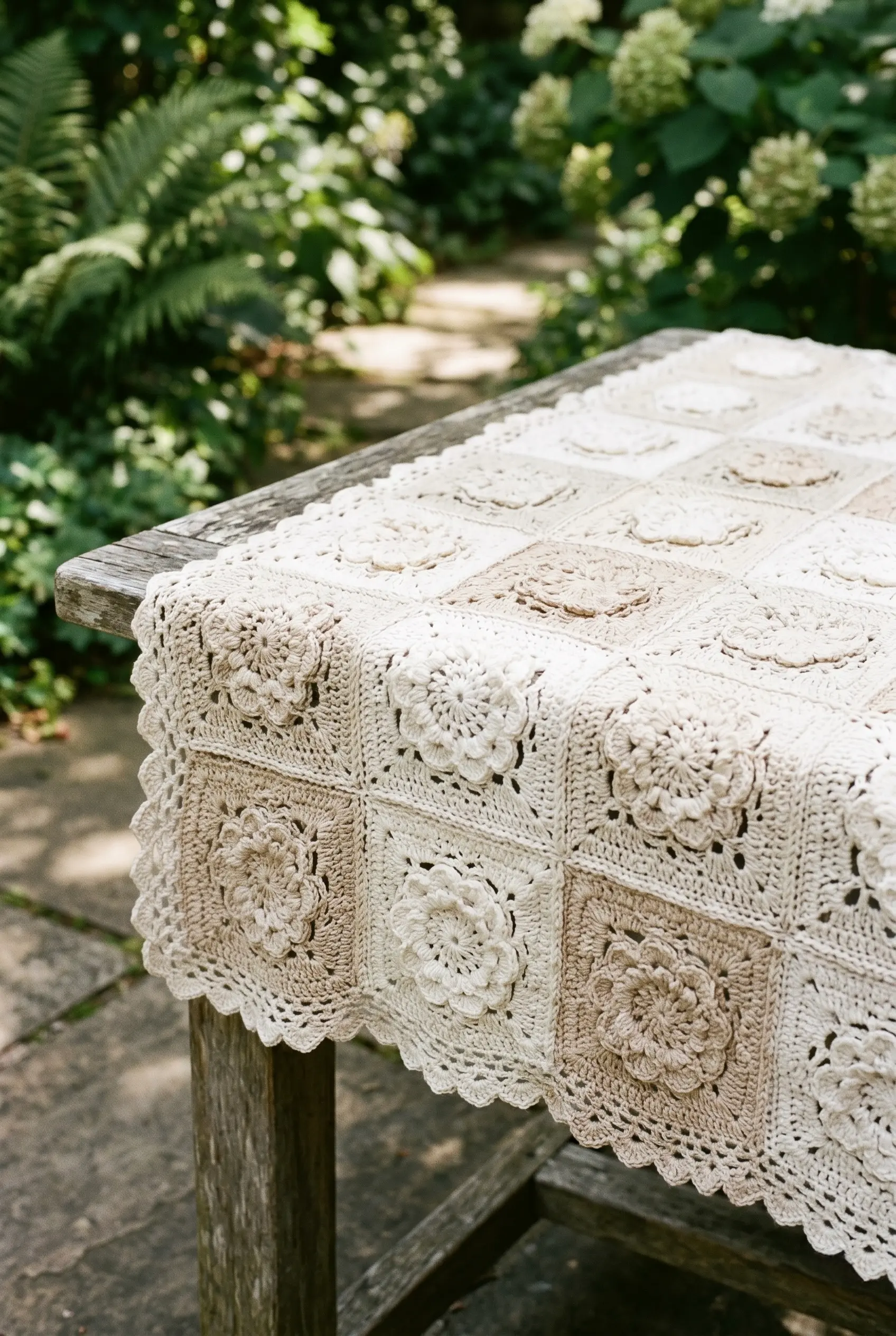
If your design sensibilities lean toward the cozy, sun-drenched charm of cottagecore aesthetics, a patchwork layout composed of individual floral squares is unmatched. Featuring raised daisy centers and delicate leaf borders, these modular squares come together to form an incredibly inviting, relaxed fabric. Unlike the formal grandeur of large medallions, the patchwork square feels casual, approachable, and intimately connected to daily living. It evokes imagery of slow weekend breakfasts, warm tea, and fresh bread straight from the oven.
This design fits beautifully into sunrooms, farmhouse kitchens, or covered outdoor patios. When styling a casual patchwork piece, lean into natural, organic elements. Stoneware pitchers, speckled ceramic mugs, wooden serving boards, and loose wildflowers work in harmony with the organic nature of the cotton squares. It is an incredibly forgiving style that embraces small imperfections in table surfaces, turning an ordinary morning meal into an artistic, photogenic daily experience.
5. The Brussels Lace Revival: Intricate Floral Trails for Formal Receptions
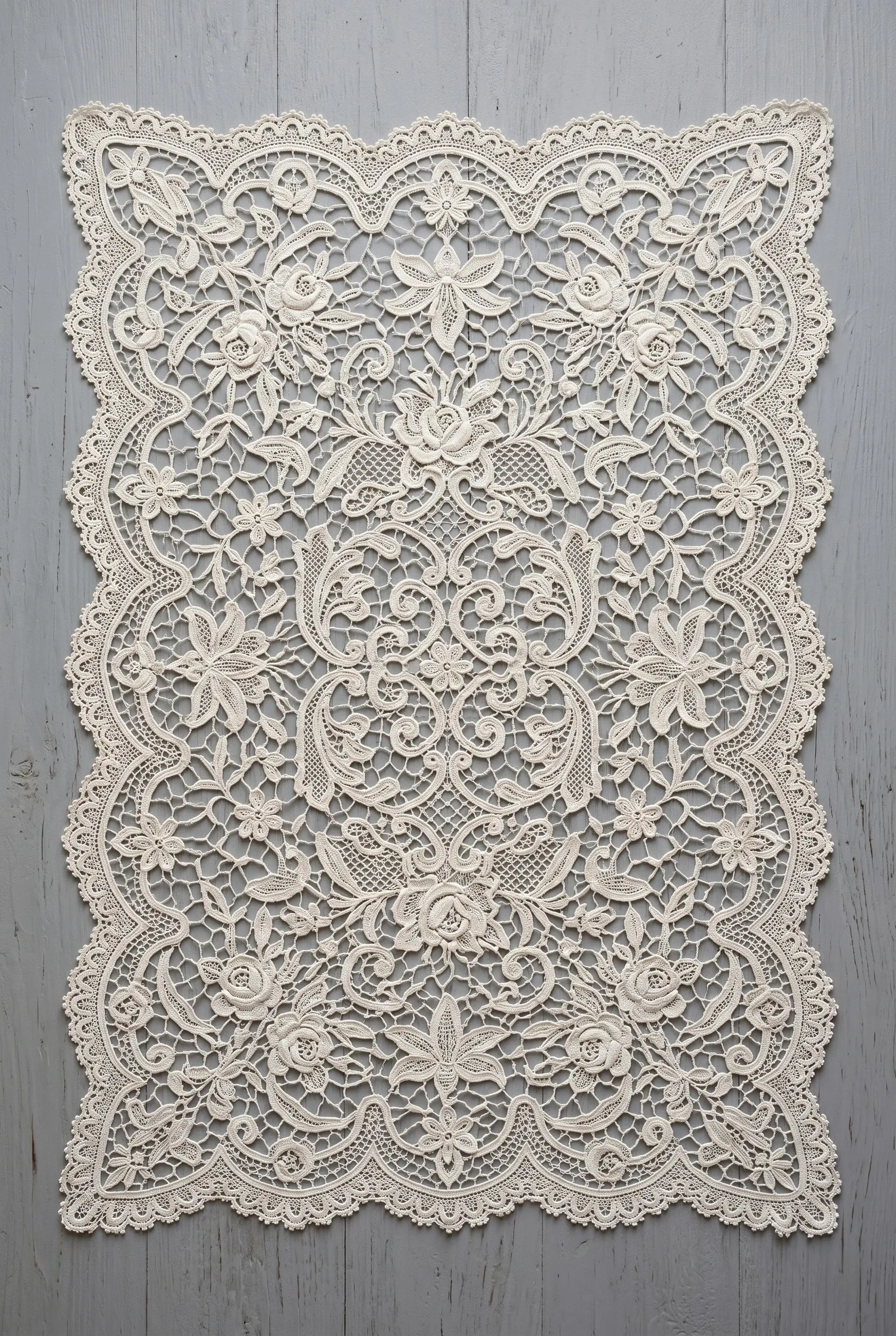
For those who wish to transform their dining space into a venue of high elegance, look no further than designs inspired by historical Brussels lace. This sophisticated style features asymmetric, flowing floral vine patterns linked by gossamer-thin bars, establishing a breathtaking, ethereal fabric that resembles frozen morning frost. It represents the highest echelon of decorative textile design, transforming any standard table surface into a museum-worthy exhibition of craftsmanship.
Due to its intricate nature, a Brussels-inspired cloth requires a refined curation strategy. It looks best when spread over a dark, sleek table surface with no underlay, allowing the delicate floral trails to stand out vividly. Keep table settings minimal and sharp—think polished silver cutlery, thin crystal glassware, and plain white porcelain. This strict contrast ensures that the modern elements balance out the historical richness of the lace, preventing the room from feeling suffocating or museum-like.
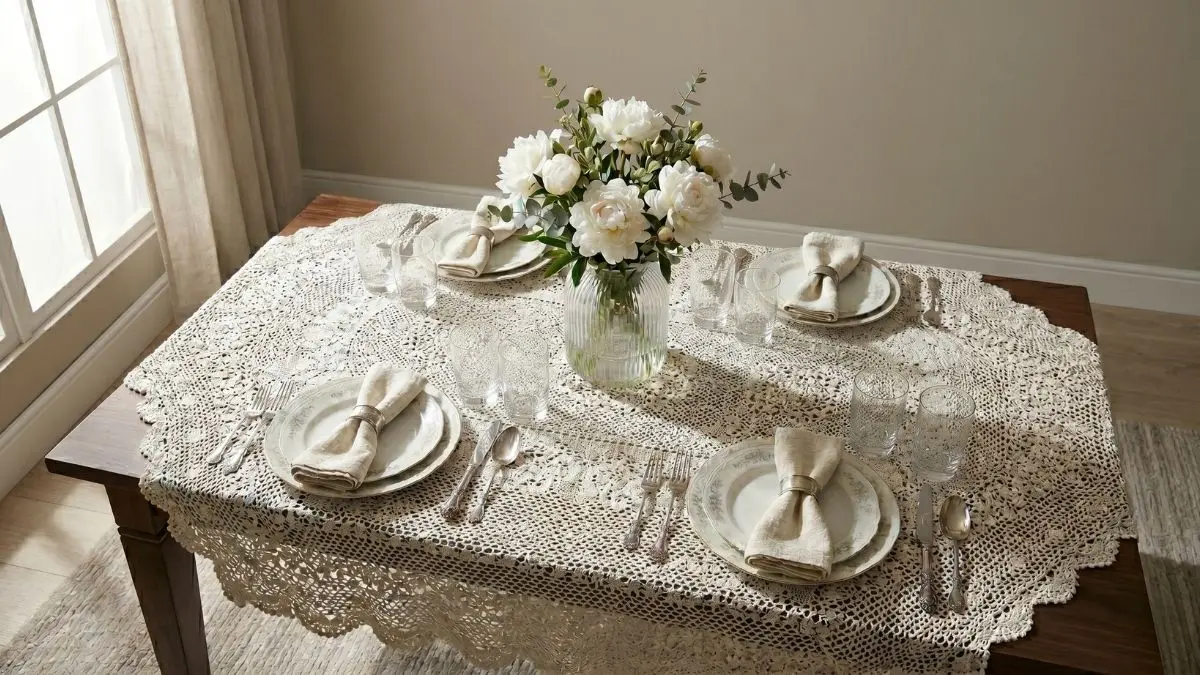
The Secret of the Cover: Unveiling the Featured Image Accent
Our featured image at the top of this guide showcases a spectacular hybrid approach that perfectly demonstrates the balance of modern lifestyle curation. If you study the cover piece closely, you will notice it synthesizes elements from both the classic medallion layout and delicate mesh borders. The central area features dense, structured motifs that provide a solid foundation for vases and platters, while the outer perimeter transitions into flowing, airy lace that drapes softly over the table edges, catching the light beautifully. To synthesize this exact premium look, ask an artisan to develop a custom piece that features solid motif work on the flat surface of your table size, terminating in a 12-inch scalloped border that mimics the drape of vintage European manor linens.