A pencil case is a demanding test of handmade design. It is opened repeatedly, pushed into a crowded bag, and expected to keep sharp points away from notebooks and loose yarn loops. That is why the return of crochet accessories becomes more interesting when it reaches practical desk pieces.
Pinterest’s 2026 “Laced Up” forecast says crochet is moving beyond familiar bags and clothing into smaller accessories such as phone cases. Etsy’s spring and summer report places crochet and stitched texture inside a broader “Soft Stitch Era”, noting a 36% increase in crochet clothing sales and renewed interest in objects that show the maker’s touch.
No trend report singles out pencil cases. The timing comes from an honest intersection: soft handmade accessories are rising while Etsy also reports an analog revival around journals and tactile stationery. A crochet case sits between those movements—provided it works as well as it photographs.
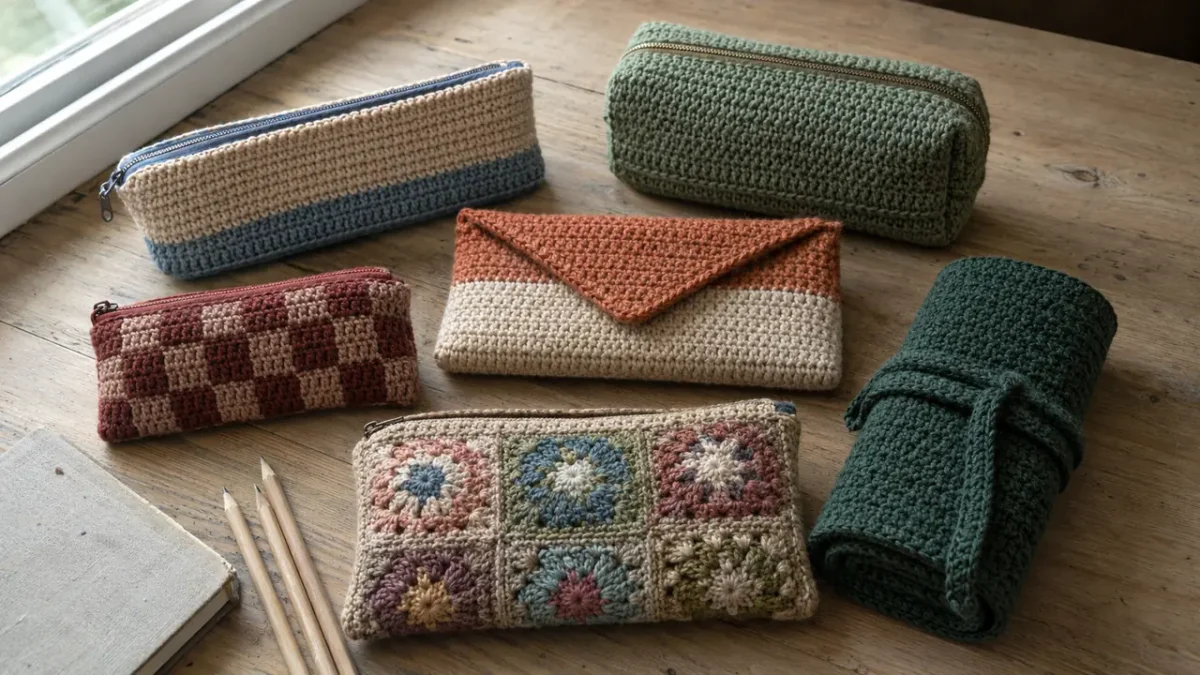
These six styles are concept directions to discuss with a skilled artisan, not exact patterns. Each includes a practical brief for the supplies it is meant to hold.
What to Decide Before Choosing a Style
Begin with the longest item inside. Standard pencils and most pens need roughly 8.5 to 9 inches of interior length; markers, small scissors, or a compact ruler may require more.
Next, decide on lining. Tightly woven cotton keeps pencil points from working between stitches, hides carried yarn on colorwork, and gives a zipper a stable edge.
Ask the artisan to match yarn thickness to the structure. The Craft Yarn Council’s standard yarn weight system separates thickness from fiber content; a light or medium yarn worked firmly usually gives a case more control than a bulky, loose strand.
1. The Dense Ribbed Everyday Zip Case
This dependable choice is slim, soft, and structured enough for a daily bag. Horizontal ridges give a solid color depth without loose decoration that could catch on other items.
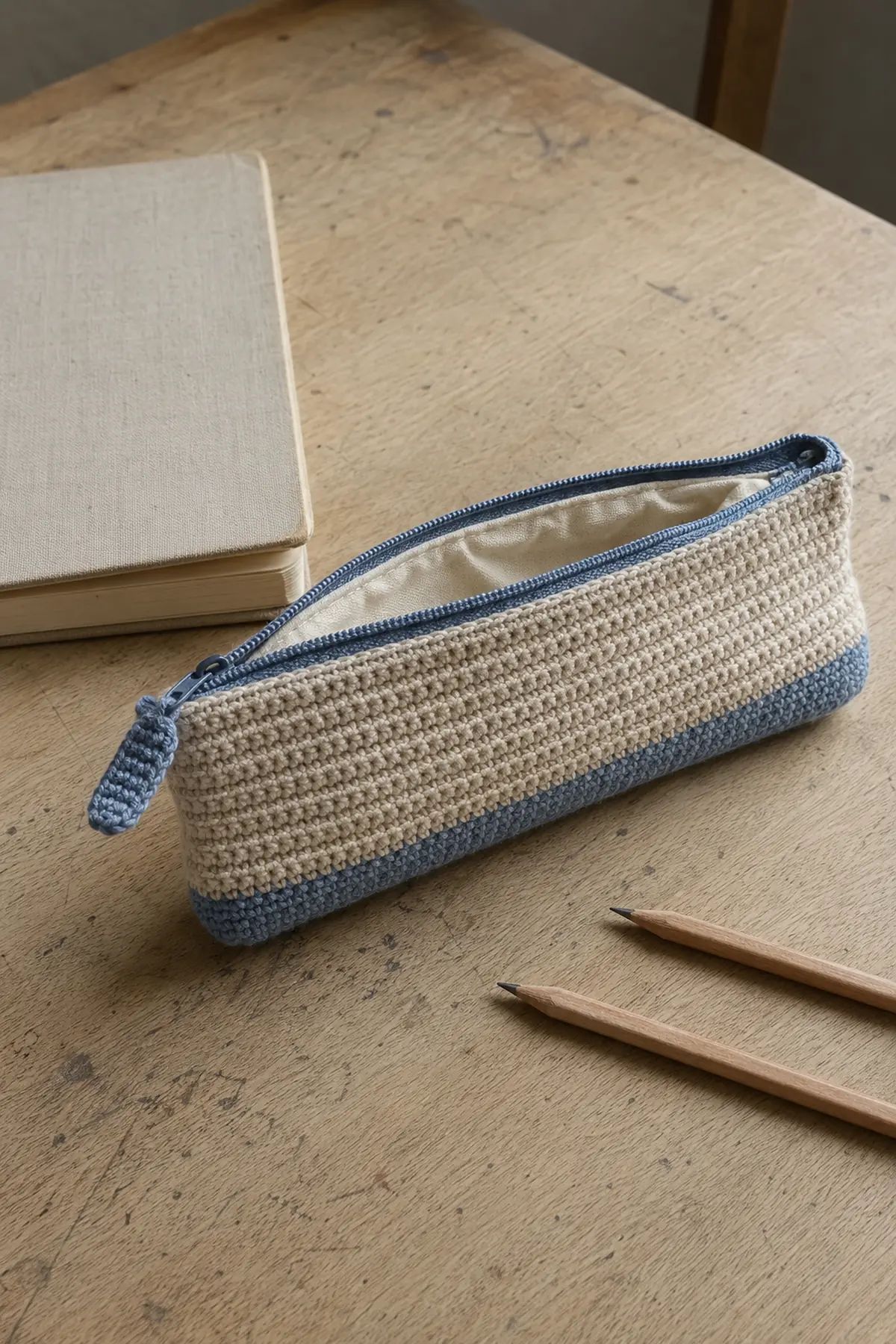
The zipper should open nearly the full length, while a fabric lining protects the stitches from pen clips and sharpened pencils. Oat with dusty blue keeps the look calm.
Artisan brief: Ask for a case about 9 by 3.5 inches, dense ribbed texture, full cotton lining, reinforced zipper ends, and one small crochet pull tab.
2. The Boxy Flat-Base Case
A flat pouch suits a few pens; a fuller kit needs a base. This boxy version stands open on a desk, making erasers and short tools easier to find.
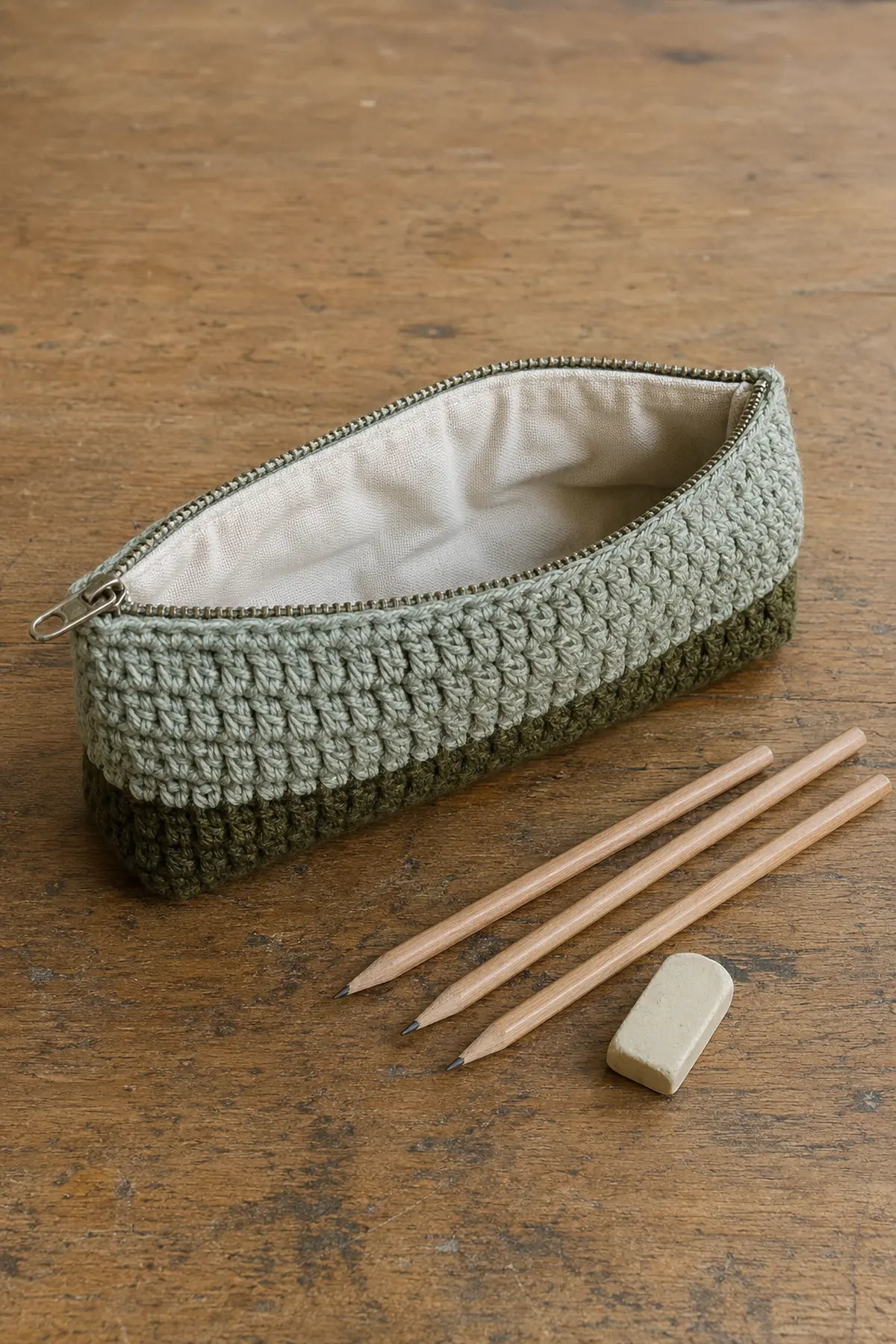
The base and end panels need firm seams, and the lining should follow the box shape rather than hang loosely. A darker base also hides visible handling.
Artisan brief: Request an interior near 9 by 3 by 2.5 inches, a reinforced rectangular base, a wide zipper opening, and lining fitted into all four lower corners.
3. The Slim Color-Block Envelope Case
This soft envelope suits a restrained set: two pens, two pencils, an eraser, and a small sharpener. It slips into a notebook sleeve more easily than a boxy pouch.
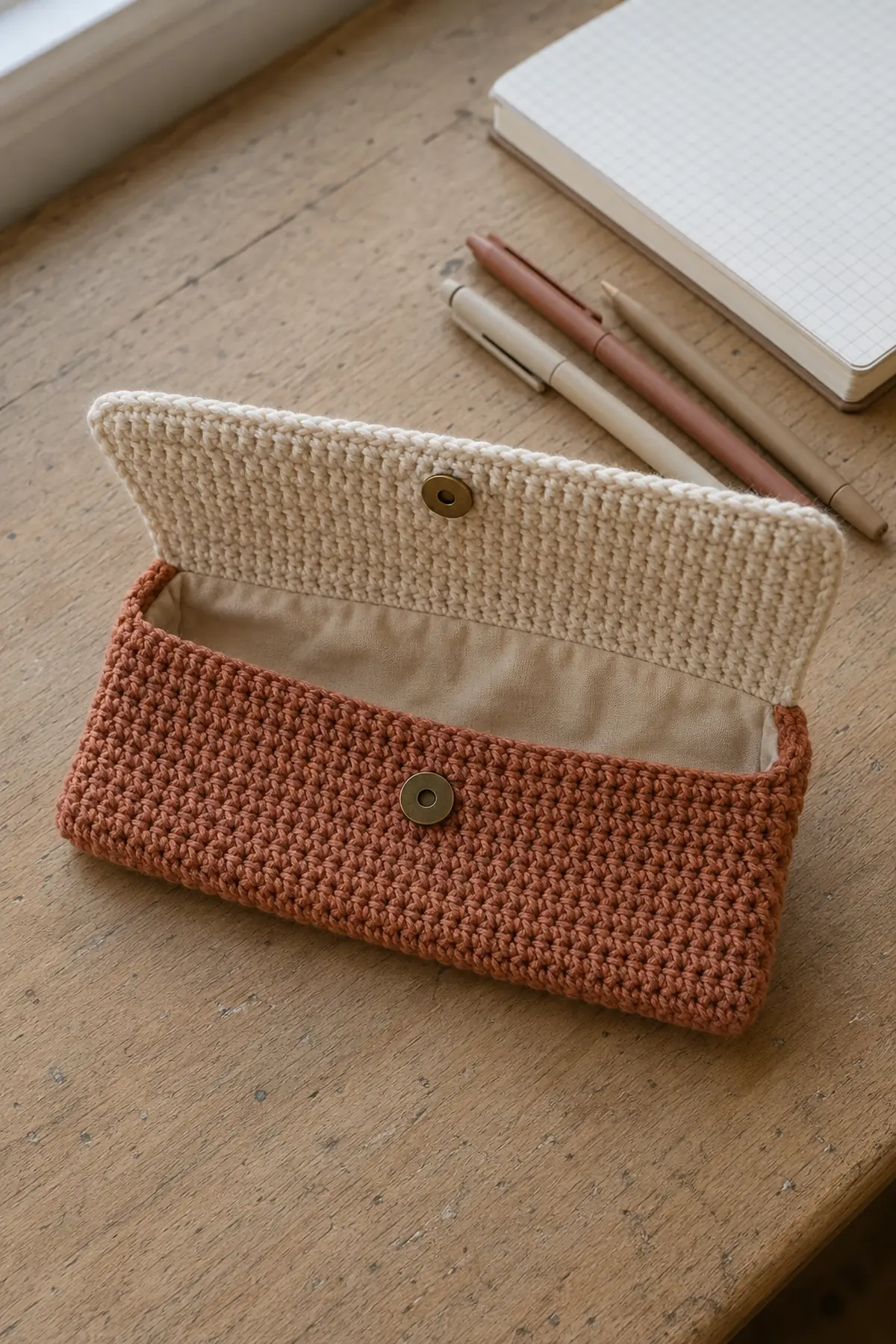
A concealed snap keeps the front uncluttered. Because it does not seal the whole top edge, the sides should rise above the contents and the lining should fold cleanly inward.
Artisan brief: Ask for a slim 9 by 4-inch envelope, two-color body, deep overlapping flap, concealed snap, and no tassels or hanging embellishments.
4. The Small-Scale Checkerboard Pouch
Checkerboard crochet feels bold without becoming childish when the squares stay small and the palette is limited. Deep berry with dusty rose gives clear definition.
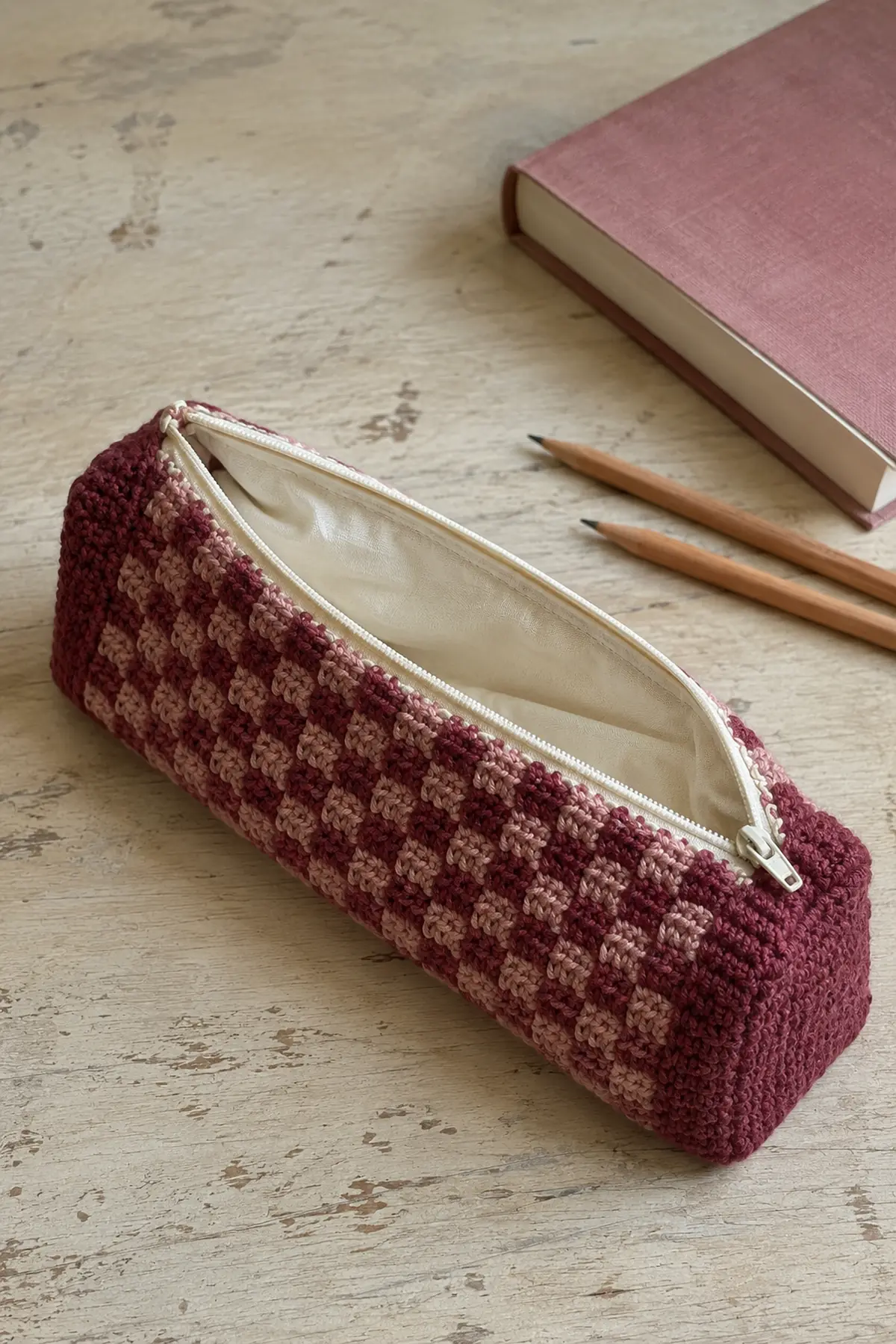
Tapestry colorwork carries yarn across the back, so this style needs an opaque lining. It prevents clips and points from catching the hidden strands.
Artisan brief: Request small-scale two-color checks, a straight zipper, solid-color end panels, dense edges, and an opaque lining that fully covers the carried yarn.
5. The Refined Granny-Square Case
Small granny squares keep patchwork controlled at pencil-case scale. Six compact motifs can form the front while a solid back prevents the design from looking busy.
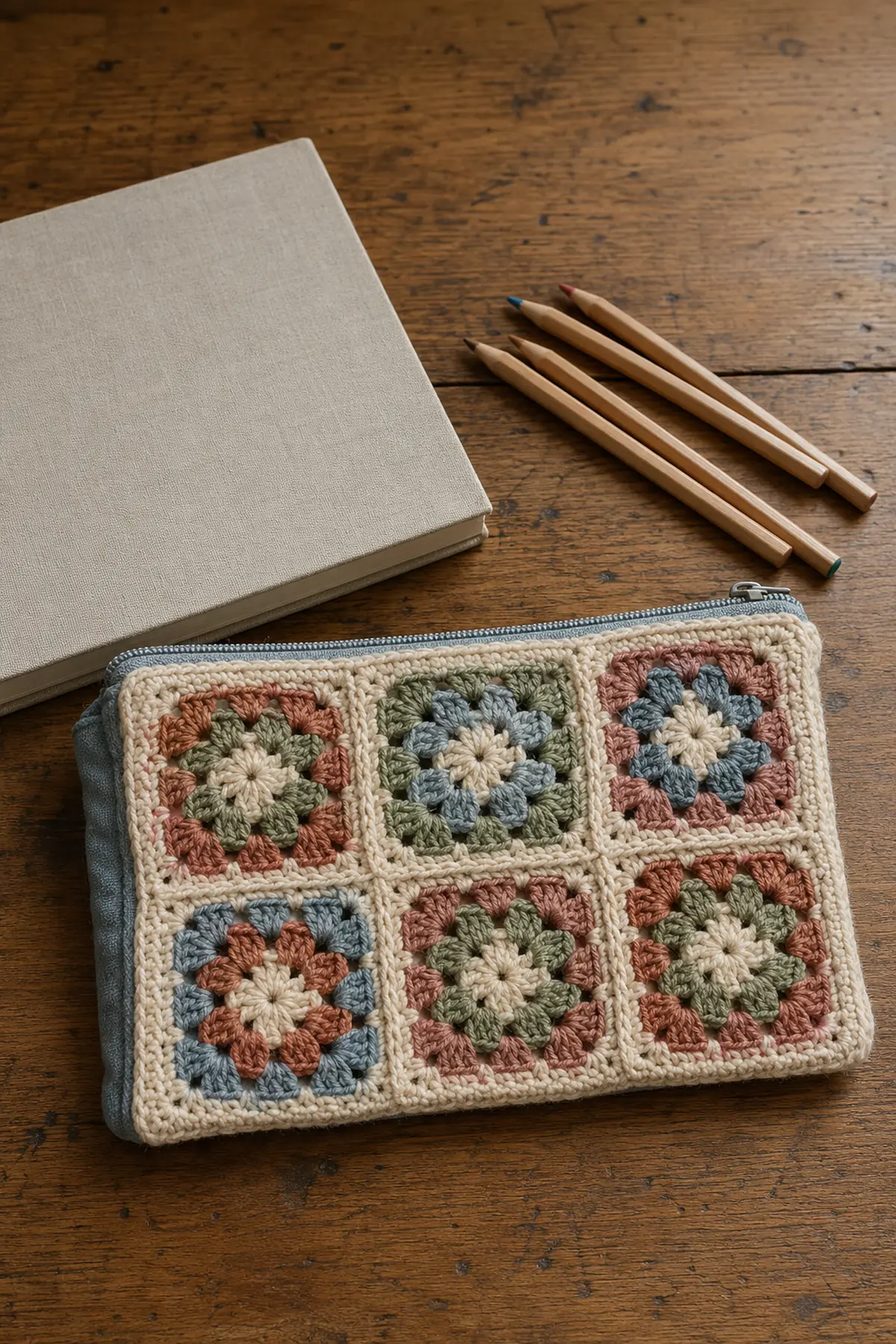
Repeat one center color and limit the palette to two or three shades. A flat join, firm perimeter row, and lining help the motifs behave like one dependable case.
Artisan brief: Ask for compact matching squares, a solid back, flat joins, a firm top edge, full lining, and a zipper color that repeats one shade from the motifs.
6. The Fold-Over Pencil Roll
For colored pencils or drawing pens, a roll can outperform a pouch. Individual channels keep shades visible, while a fold-over guard stops pencils sliding out when carried upright.
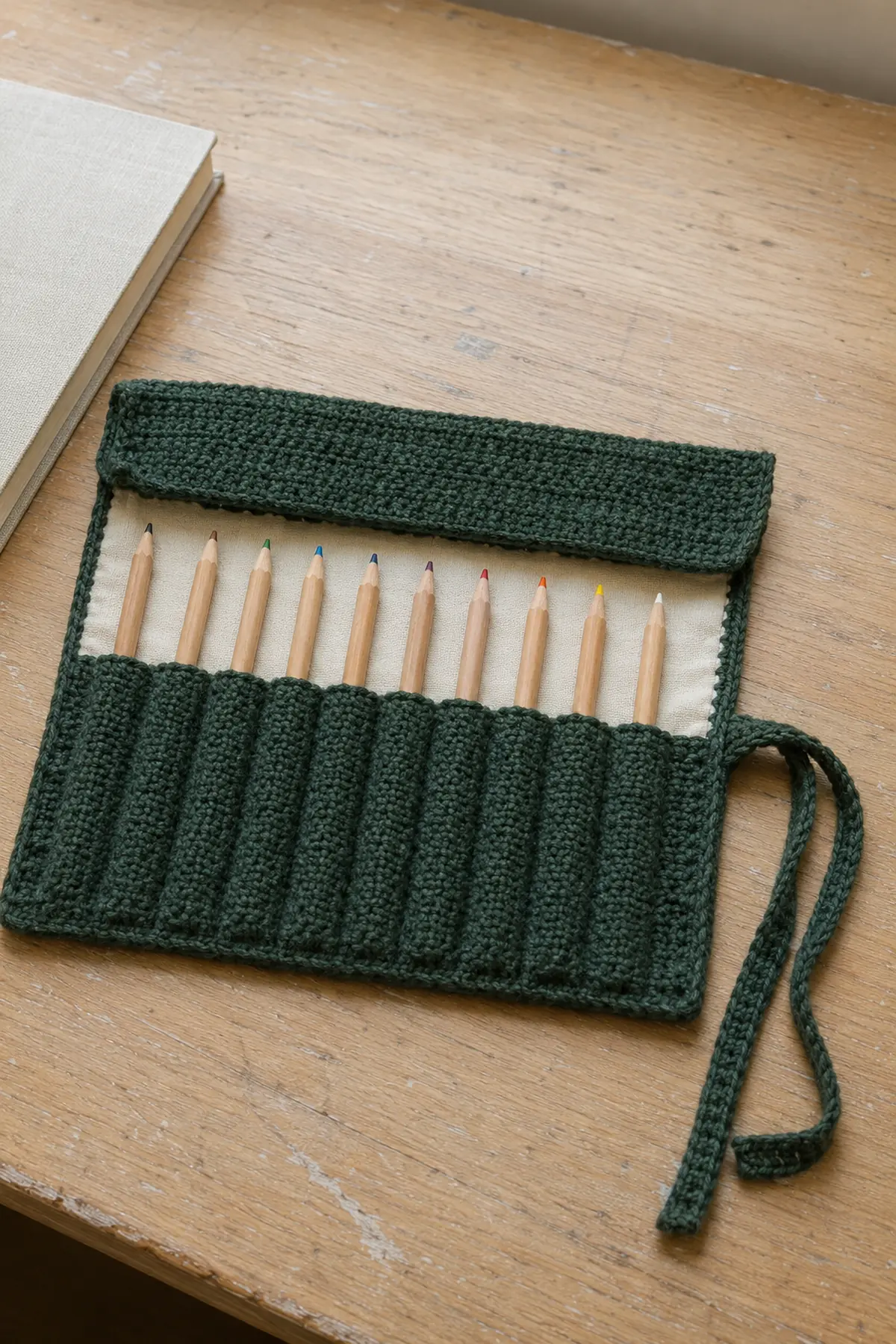
The outer panel should be dense; inner channels can be fabric or firm crochet. A broad tie wraps around the roll without a bulky button.
Artisan brief: Request eight to ten fitted channels, an upper safety flap, a soft lining behind the tools, a broad wrap tie, and enough width to roll without bending the pencils.
The Women’s Alphabet Function-First Test
Load the finished piece and test five things: the closure works without forcing; the lining stays smooth; points do not reach the shell; the empty case recovers its shape; and nothing falls out when the closed case is gently turned upside down.
Keep or photograph the yarn label. The Craft Yarn Council recommends following its washing and drying instructions and passing care information along with a handmade gift. Similar dense-fabric logic appears in our crochet laptop sleeve guide.
A Better Way to Brief an Artisan
Do not begin with color alone. Send one reference, list what the case must hold, give the interior measurement, name the closure, and say whether lining is essential. Then ask which washable yarn and stitch density suit the brief.
The reader then receives a useful object rather than a decorative shell, while the artisan has room to apply sound judgment instead of copying an image stitch for stitch.
About These Designs
Women’s Alphabet does not sell, produce, or distribute the items shown here. The visuals are editorial concept images for inspiration only—not product listings, purchase offers, or exact crochet patterns. If a style suits your needs, save the reference and discuss a similar, independently made piece with a skilled local artisan, including the dimensions, materials, lining, and closure you prefer.