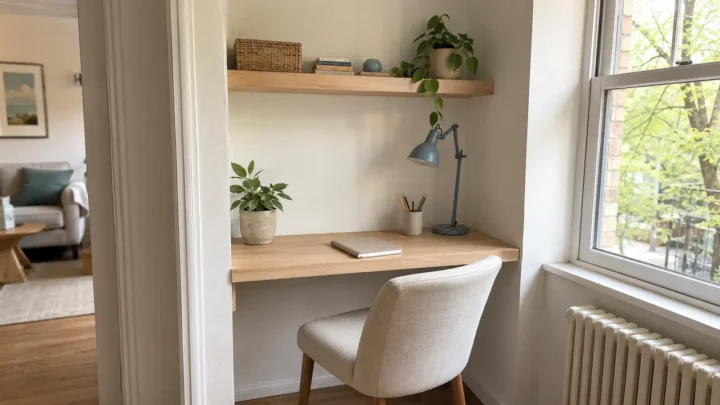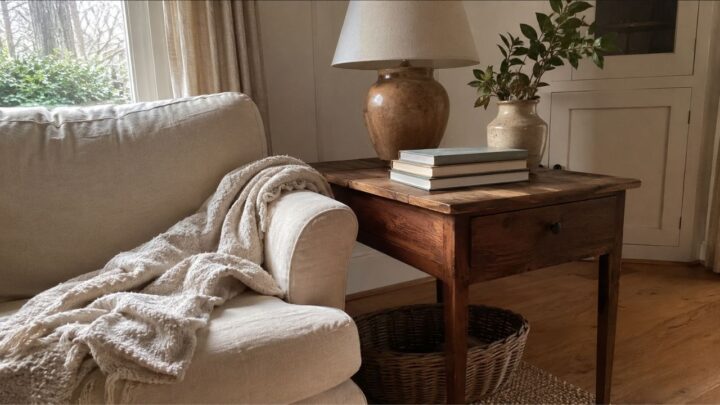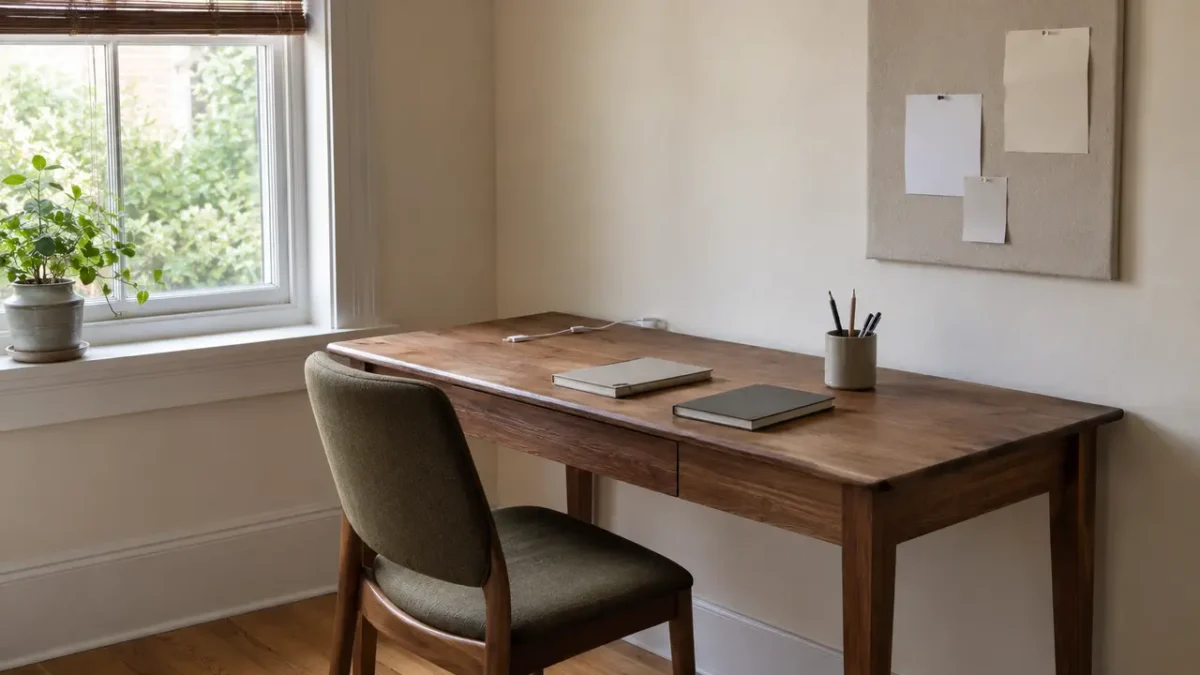
An all-white desk can look wonderfully clean in a photo and still feel strangely sharp when it is time to sit down and concentrate.
The surface catches the window light. Every cable becomes obvious. One open notebook can make the whole setup look untidy. What appeared “calm” on a mood board may feel exposed in daily use.
That is part of the reason warm wood is returning to study spaces in 2026. Houzz’s current design forecast says warm and medium woods—including walnut, cherry, elm, and deeper oak finishes—are moving back into interiors. Its analysis of searches from early 2026 also found rising interest in tactile texture, earthy color, and “calming” rooms.
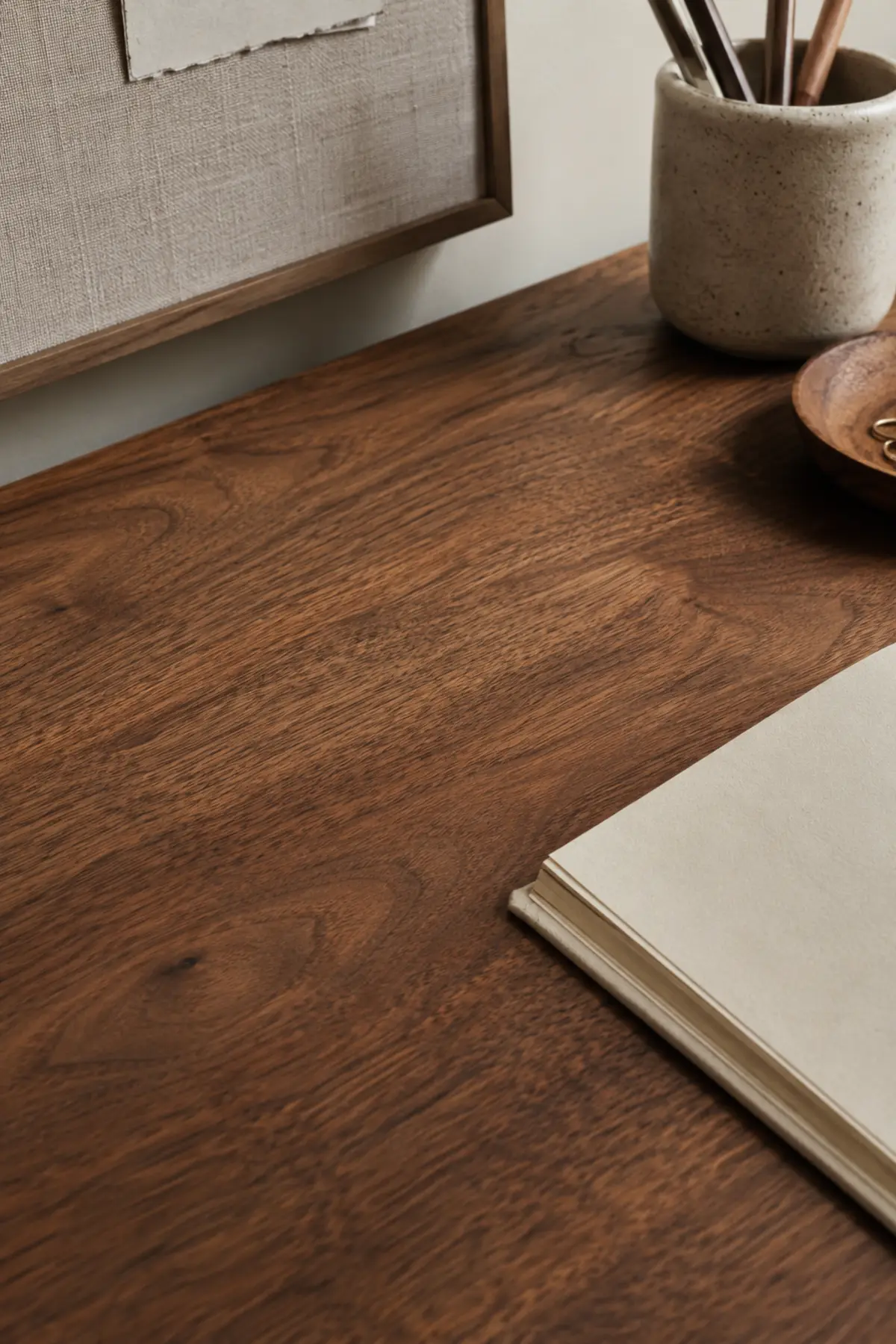
But this is not a claim that wood has some special power of its own, or that every white desk should be replaced. The better explanation is more practical: visible grain, a matte surface, lower glare, and balanced contrast can make a work area feel less clinical and easier to settle into.
The 2026 Shift Is From Blank to Grounded
Houzz’s 2026 home design forecast identifies warm and medium wood tones as a strong return. A separate analysis of Houzz searches from early 2026 found “chocolate brown” up 153% and “cream” up 44% compared with a year earlier. The 1stDibs 2026 Designer Trends Survey likewise found that 33% of surveyed designers chose chocolate brown as a leading color, almost double its 2022 share.
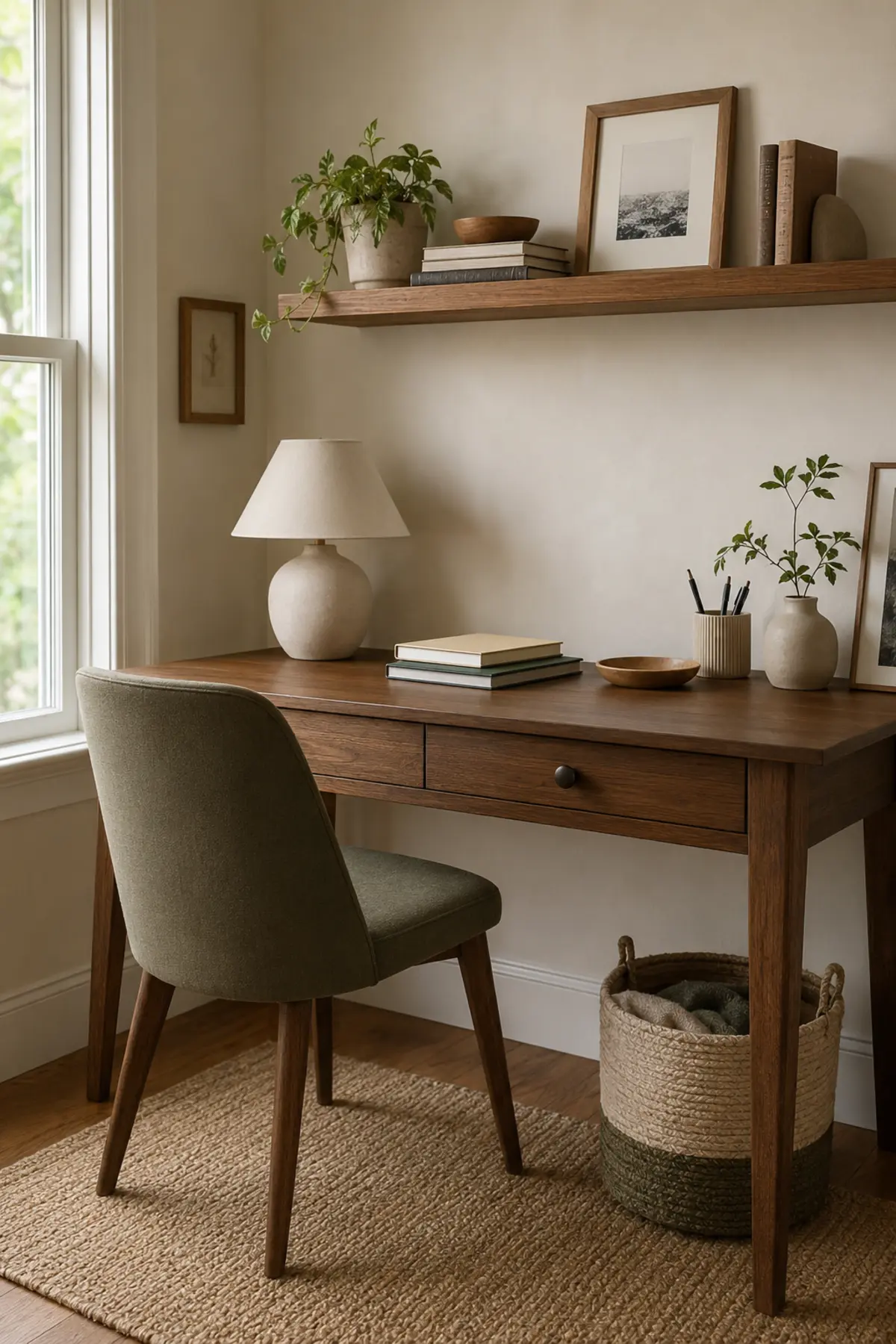
A study corner does not need to become dark. The useful lesson is that blank whiteness is no longer the only route to order. Wood can supply depth without adding another decorative object.
Why an All-White Desk Can Feel Less Restful
White itself is not the problem. A matte white desk in a softly colored room can work beautifully.
The difficulty begins when a bright desktop, pale wall, glossy organizers, and strong daylight all reflect light in the same small field of view. The Canadian Centre for Occupational Health and Safety recommends matte work surfaces where possible to help reduce glare and lists a lower suggested reflectance range for office furniture than for ceilings.
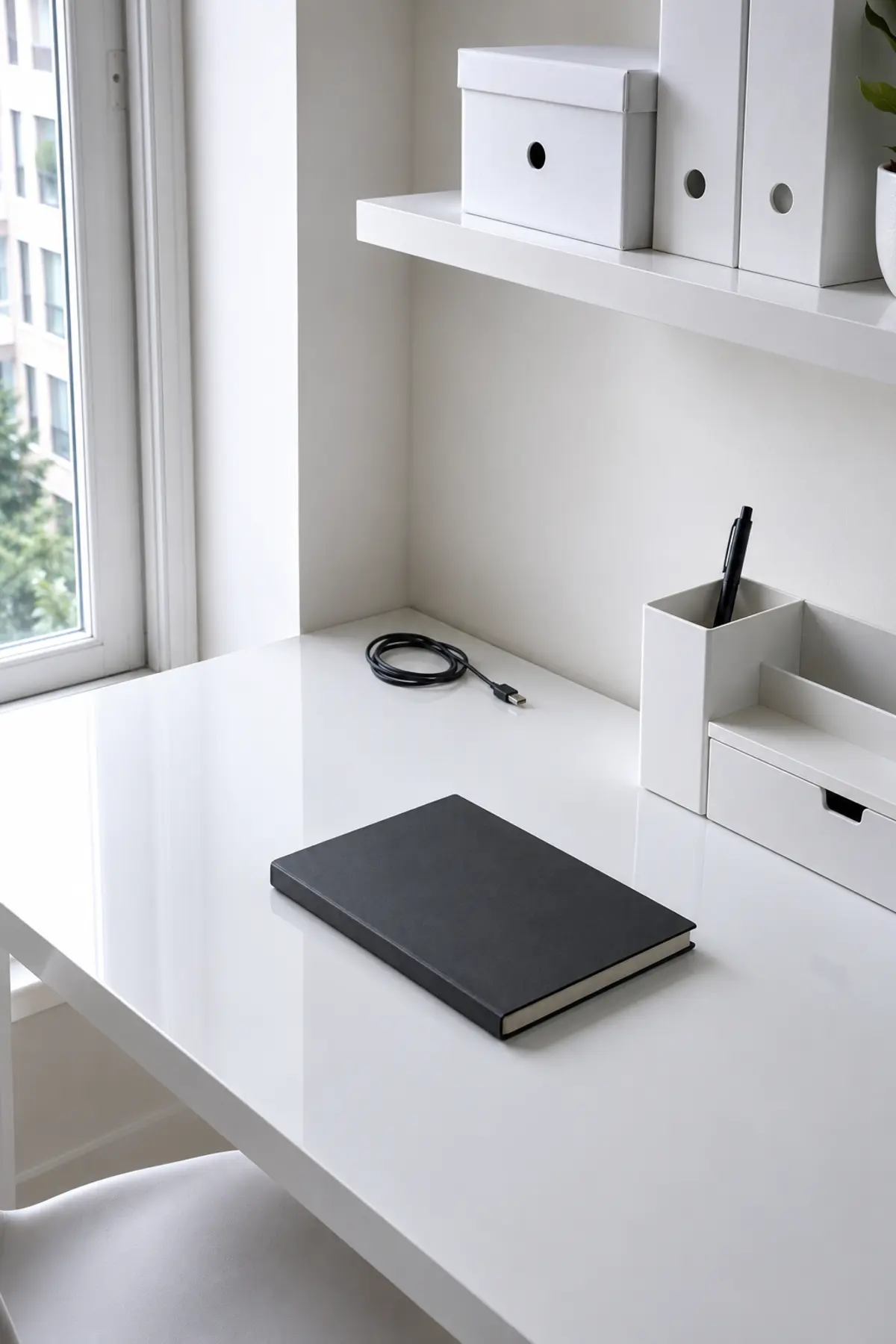
It means finish, position, and contrast matter. A glossy white surface beside a window may produce bright patches, while matte medium-toned wood breaks up reflected light and gives the eye a clearer anchor.
White also makes every dark cord, pencil, and shadow stand out. Wood grain disguises small variations without hiding real clutter. The desk can look gently used rather than instantly disturbed.
What the Research Actually Says About Wood
In a randomized crossover study of 61 people, participants completed computer tasks and rested in a wooden office room and a control room. Anxiety reported at the end was lower in the wooden room, while attention performance was similar and most other relaxation measures showed only slight differences.
A newer review of 33 office-design studies found that evidence for physiological stress reduction remains inconsistent. That caution matters. Warm wood may support a calmer impression, but it is not a treatment and cannot compensate for poor lighting, an uncomfortable chair, noise, or an overloaded schedule.
The modest conclusion: wood can support a study environment that feels natural, balanced, and pleasant to use.
Use the Women’s Alphabet Grain–Glare–Grounding Test
Before buying anything, test the desk you already have in three ways:
- Grain: Is there one visible natural texture near the work surface? A wooden desktop is enough; the shelf, floor, and storage do not all need to match it.
- Glare: Sit in the normal position during the brightest part of the day. If the desktop shows a hard white reflection or the screen becomes difficult to see, turn the desk, soften direct daylight, or add a large matte desk pad.
- Grounding: Does the corner have a medium or deep visual anchor? Warm wood, muted olive, ink blue, clay, or a woven natural tone can stop the eye from bouncing between equally pale surfaces.
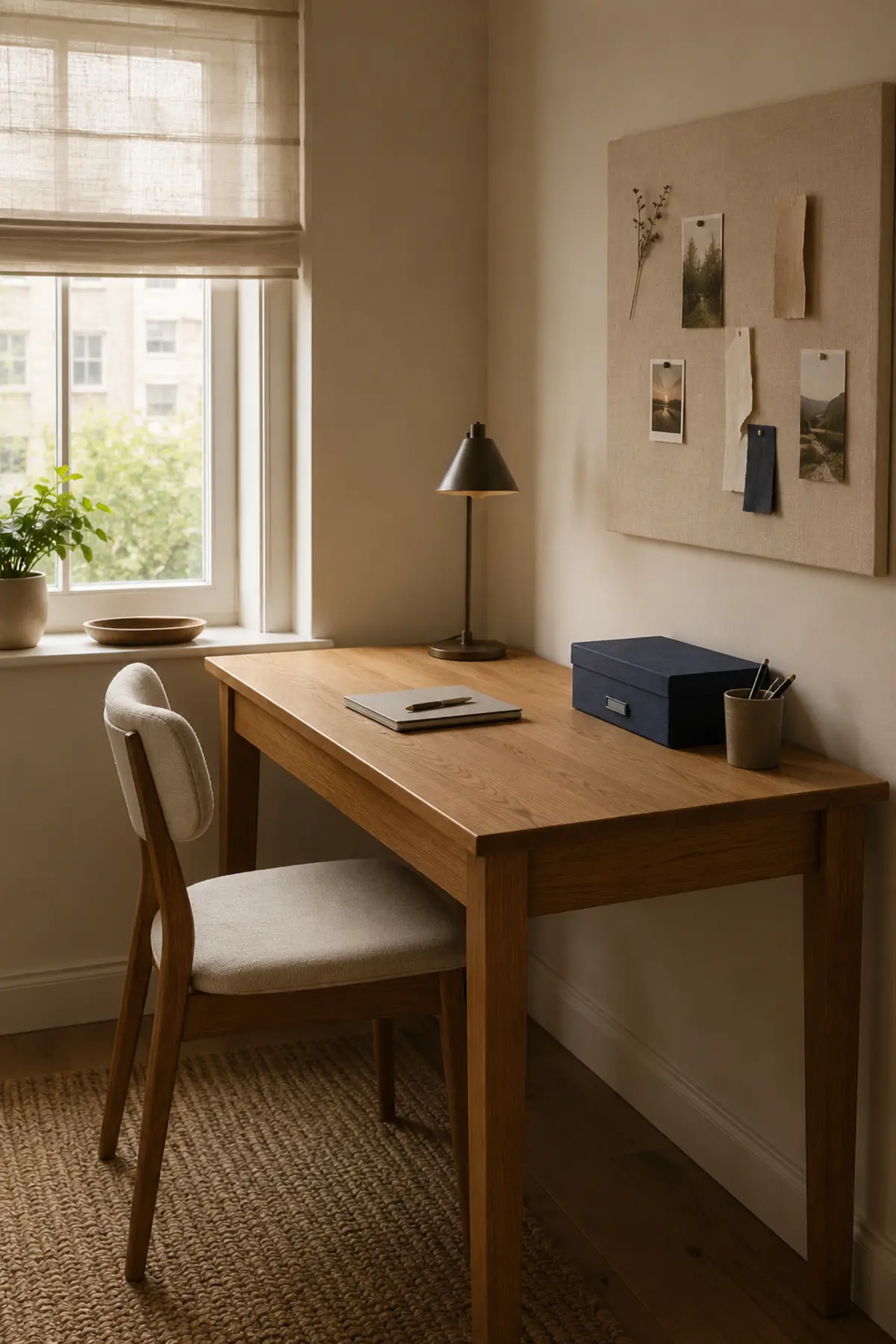
This test separates a calm study space from a merely pale one. It also fits the practical planning in our guide to tiny study corners for small homes: the best nook must work when someone is actually sitting, reaching, reading, and resetting the surface.
Try the 70–20–10 Warm-Desk Formula
For a balanced corner, use 70% quiet background, 20% warm wood, and 10% deeper anchor. This is a styling guide, not a scientific formula.
A cream wall and pale rug can form the background. The desk and one slim shelf can supply the warm wood. A muted green chair, dark pencil cup, or deep blue storage box can provide the final anchor.
The wood need not be expensive or perfectly matched. A sound secondhand desk may be more useful than replacing furniture for a trend. If mixing finishes, repeat the main undertone once: honey oak with warm ivory, walnut with cream, or cherry with muted olive.
If You Already Own a White Desk, Keep It
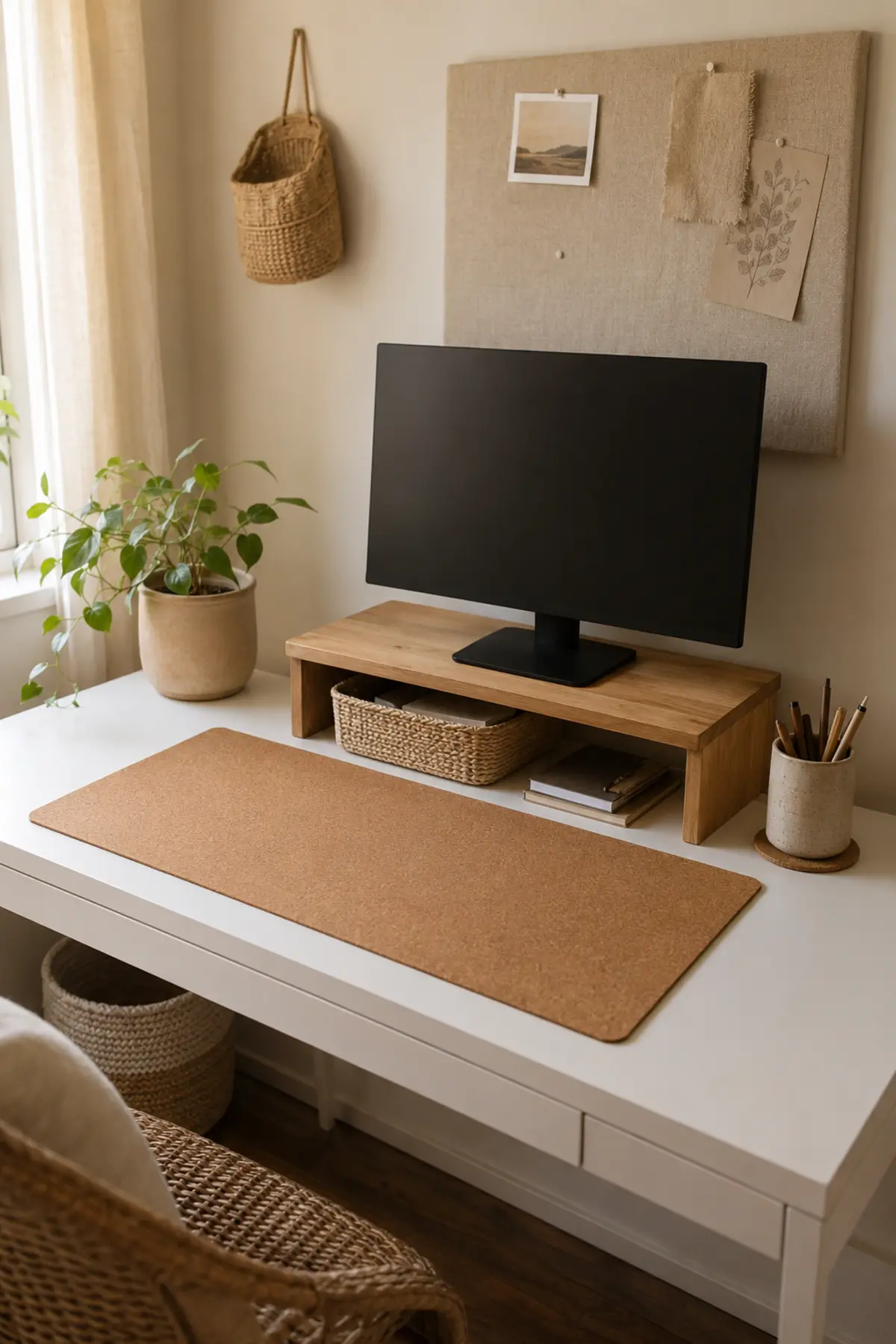
A functioning desk should not become waste because the trend cycle changed. Warmth can be added in layers:
- Place a wide matte cork or natural-toned desk pad across the busiest part of the surface.
- Add one wooden monitor riser, book stand, or shallow shelf rather than several small ornaments.
- Use a linen pinboard, woven cotton basket, or unglazed ceramic pencil cup for texture.
- Pair soft ambient light with focused task lighting, positioning the lamp so it does not reflect into the screen.
- Keep the center working zone clear. Texture softens a desk; it does not excuse clutter.
At Women’s Alphabet, calm is not treated as another product to buy. A study space earns its place when it supports beneficial learning, responsible work, and an orderly family routine. The most successful warm-wood desk is not the one with the most accessories. It is the one that makes it easier to begin, concentrate, put things away, and return tomorrow.