The most saveable workspace of summer 2026 may be the one that barely looks like an office.
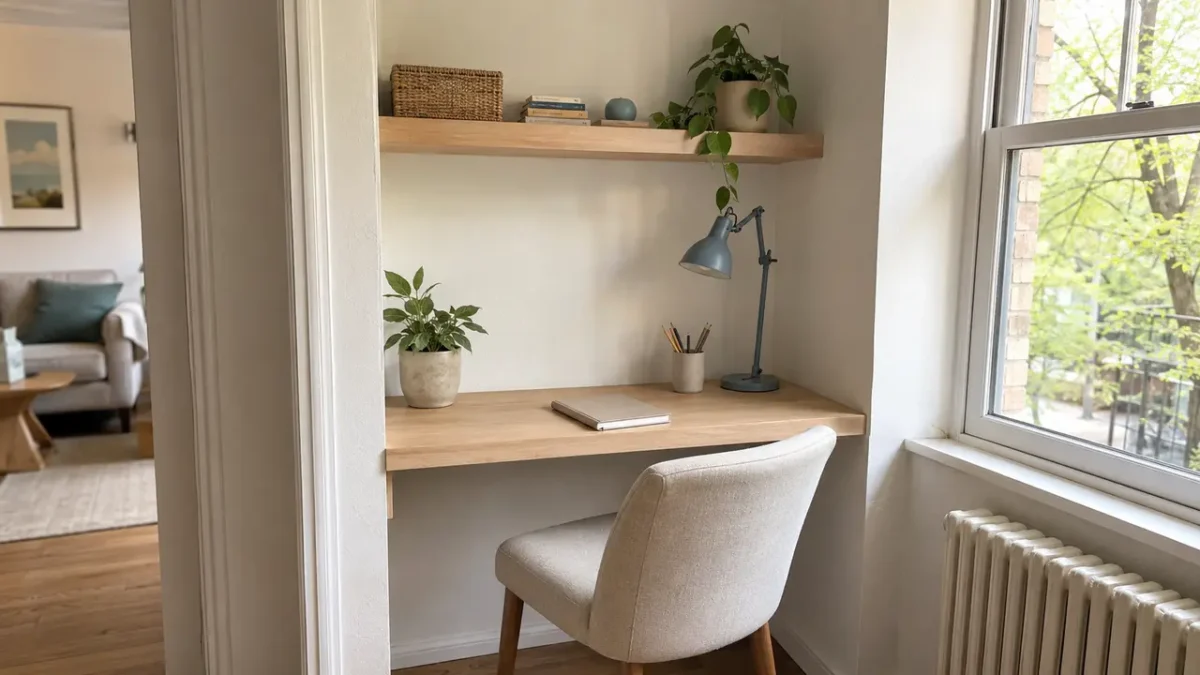
It may be a narrow shelf under a window, a desk fitted into an old closet, or a quiet corner that finally has a purpose. The desk nook gives one overlooked stretch of wall a clear job without taking an entire room.
The timing is useful. Pinterest says back-to-school planning begins as early as June, and nearly 30% of the summer outbound clicks in its cited campaign data are home-related. Its Spring 2026 trend report also recorded a 245% rise for “reading nook ideas” and a 455% rise for “comfy reading chair small spaces.”
Those figures describe reading corners rather than desks, but they point to the same appetite: small, personal zones that fit real homes. A study nook is a practical next step as families begin thinking about autumn routines.
Use the Sit, Reach, Reset Test First
A pretty corner can fail by Monday morning if the chair cannot move or the notebook has nowhere to go. The Women’s Alphabet test keeps the planning simple:
- Sit: Pull out the chair and sit naturally. Leave clear knee space and enough room to stand without bumping nearby furniture.
- Reach: Keep the lamp, daily notebook, pencils, and charging point close. Move everything else upward or into closed storage.
- Reset: The surface should return to calm in about 90 seconds. One drawer, basket, or wall pocket is often enough.
For longer computer sessions, appearance should not outrank comfort. The OSHA workstation checklist recommends supported feet, leg clearance, relaxed shoulders, and a screen position that does not force the head to tilt.
1. Turn a Shallow Closet Into a Study Nook
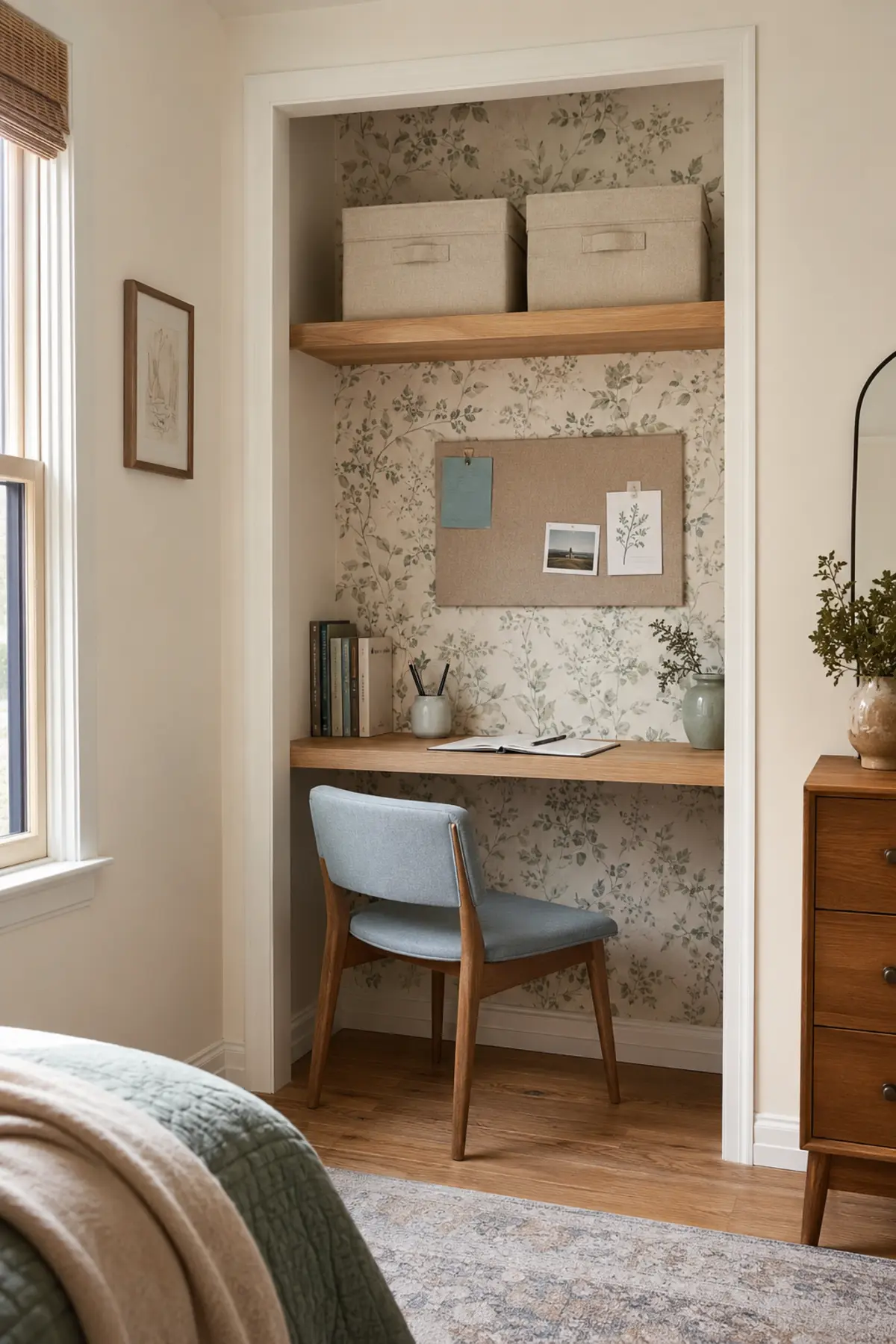
A closet that stores little more than mismatched boxes may have enough depth for a slim desktop. Remove the rail, fit a work surface across the opening, and use the upper shelf for closed storage. Wallpaper or a painted back panel gives the nook a visual boundary; a compact chair lets it tuck away.
2. Let a Window Wall Do the Heavy Lifting
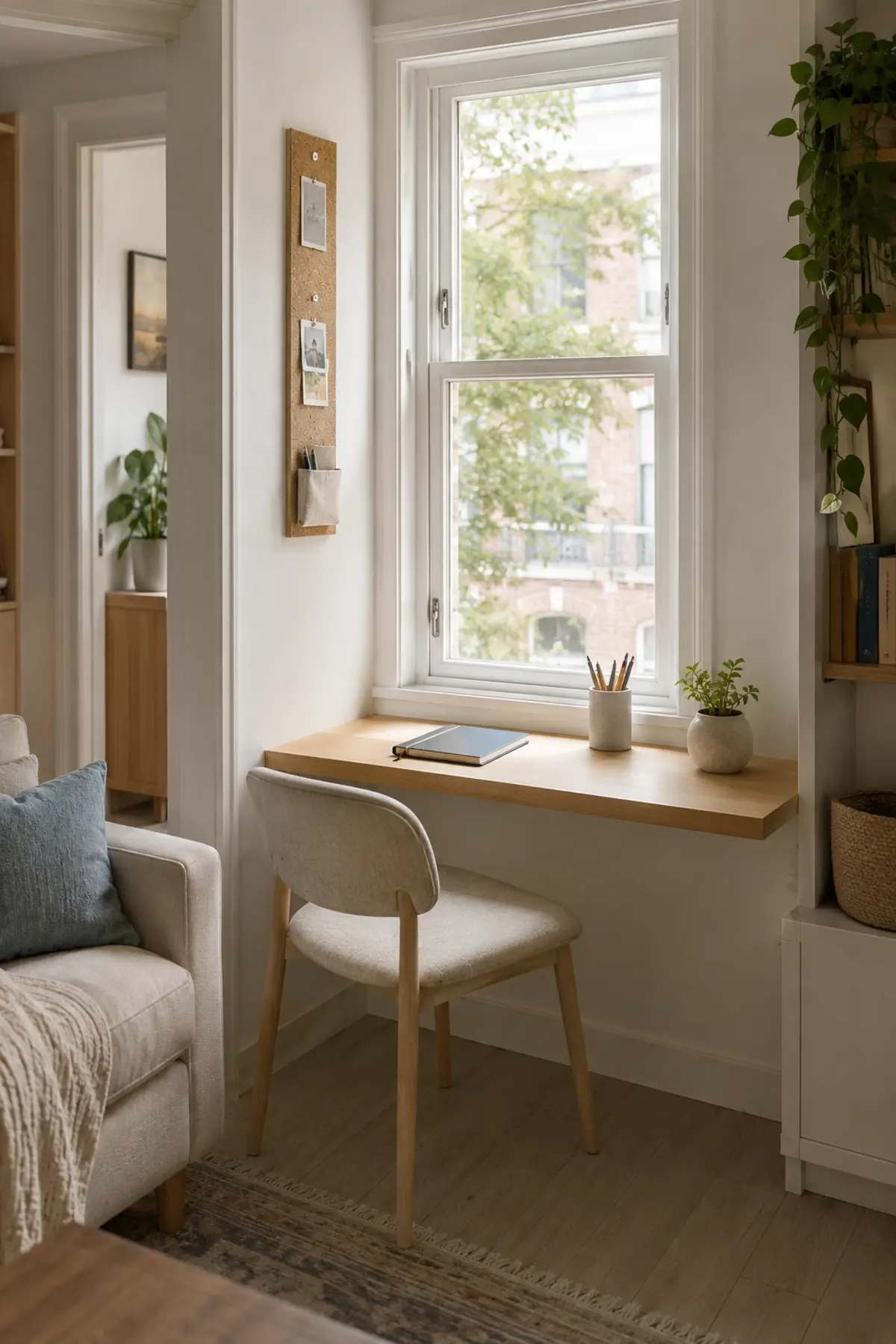
A wall beneath a window can hold a floating desk without adding a bulky furniture outline. It works especially well at the edge of a living room. Check that the window still opens and direct sun does not cause screen glare; use a slim side rail for pencils and notes.
3. Paint the Corner, Not the Whole Room
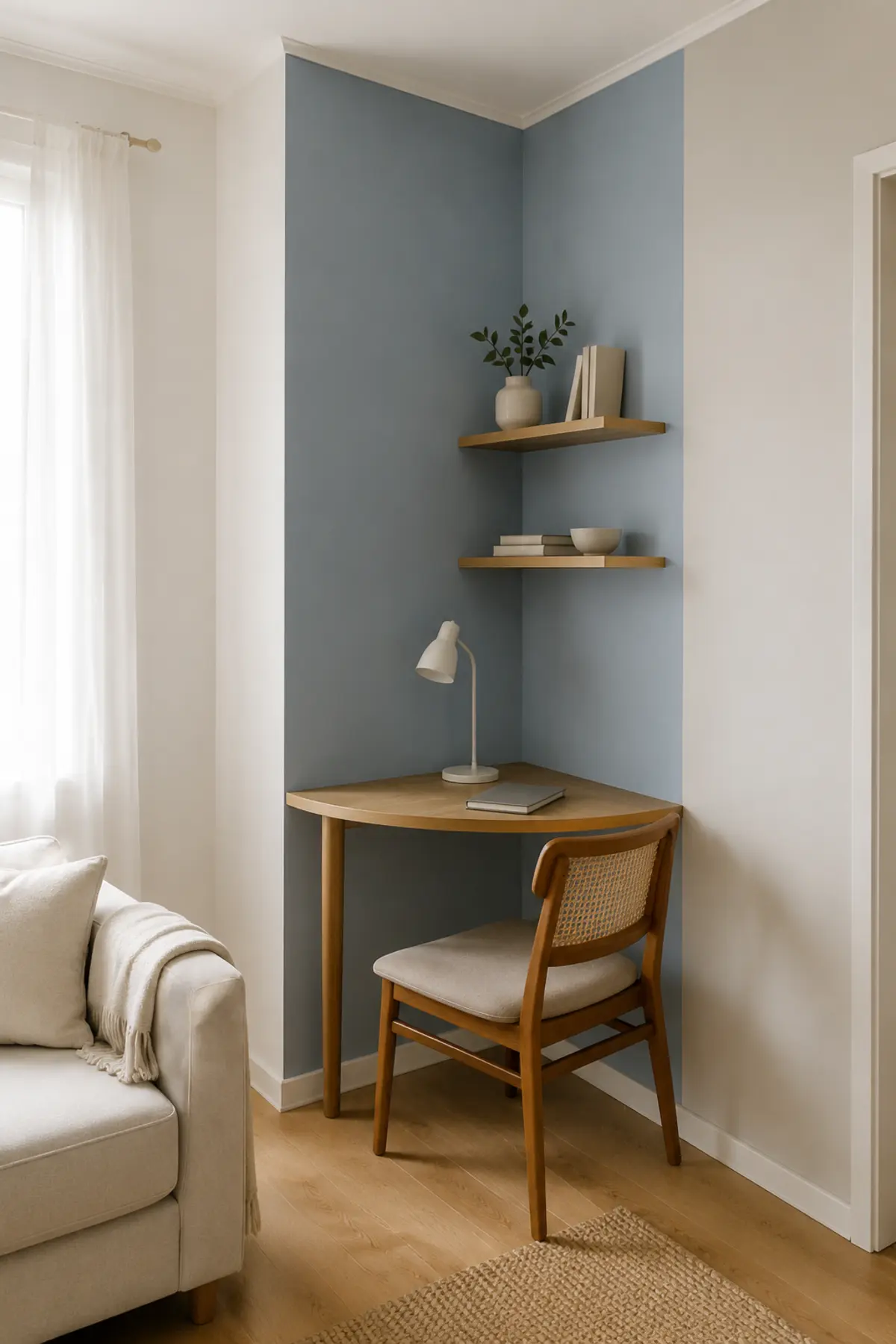
A compact desk can look stranded against a large blank wall. A block of muted paint makes the corner read as an intentional zone without adding furniture. Try dusty blue, sage, warm clay, or soft ochre, then repeat the colour once in a notebook, cushion, or storage box.
4. Use a Fold-Down Desk in a Narrow Hallway
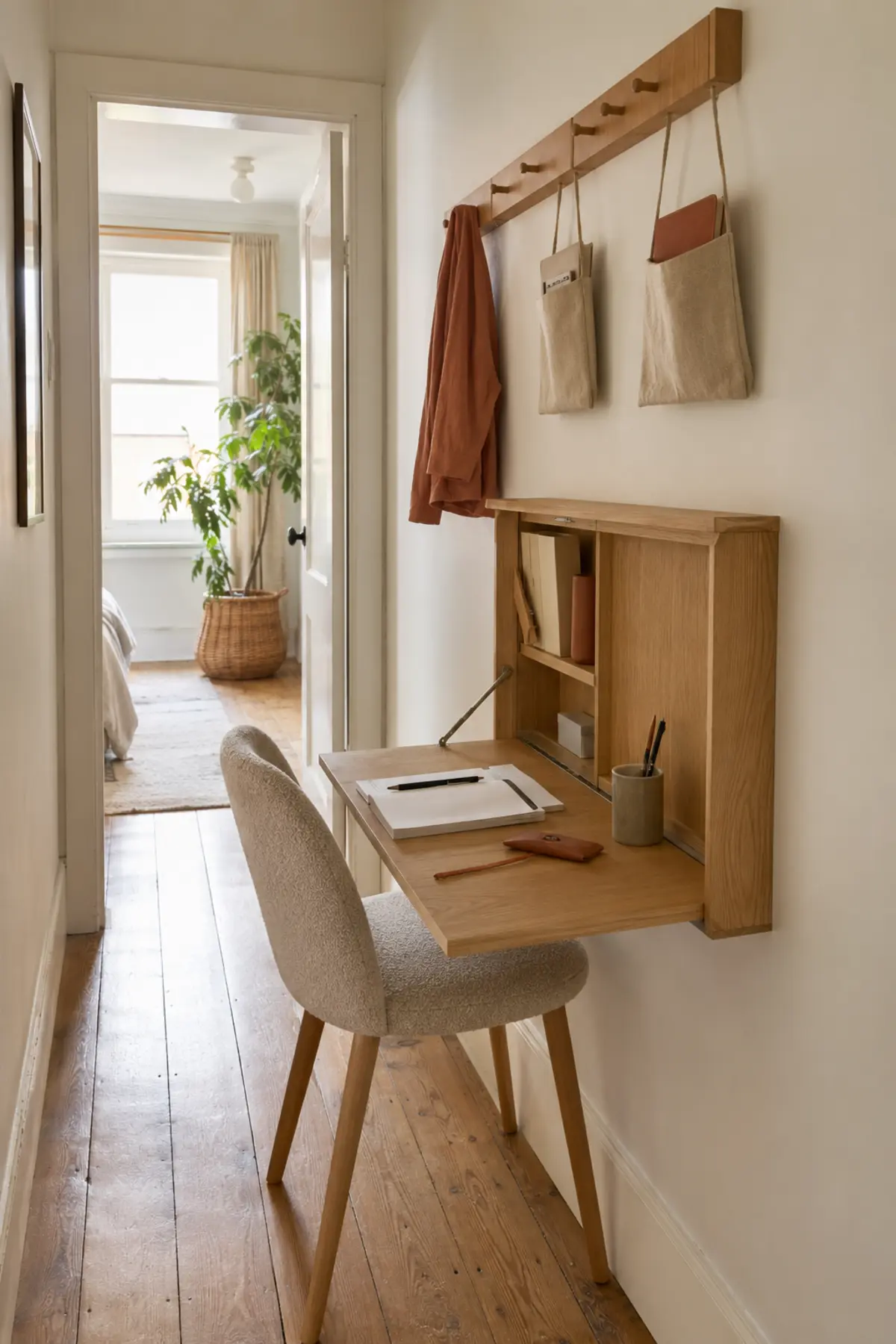
A fold-down desk suits a passage only when circulation remains comfortable.
Tape the open desk and pulled-out chair footprint on the floor, then walk past it several times. Shallow internal pockets let the essentials close inside while the hallway remains a route through the home.
5. Follow the Line Under the Stairs
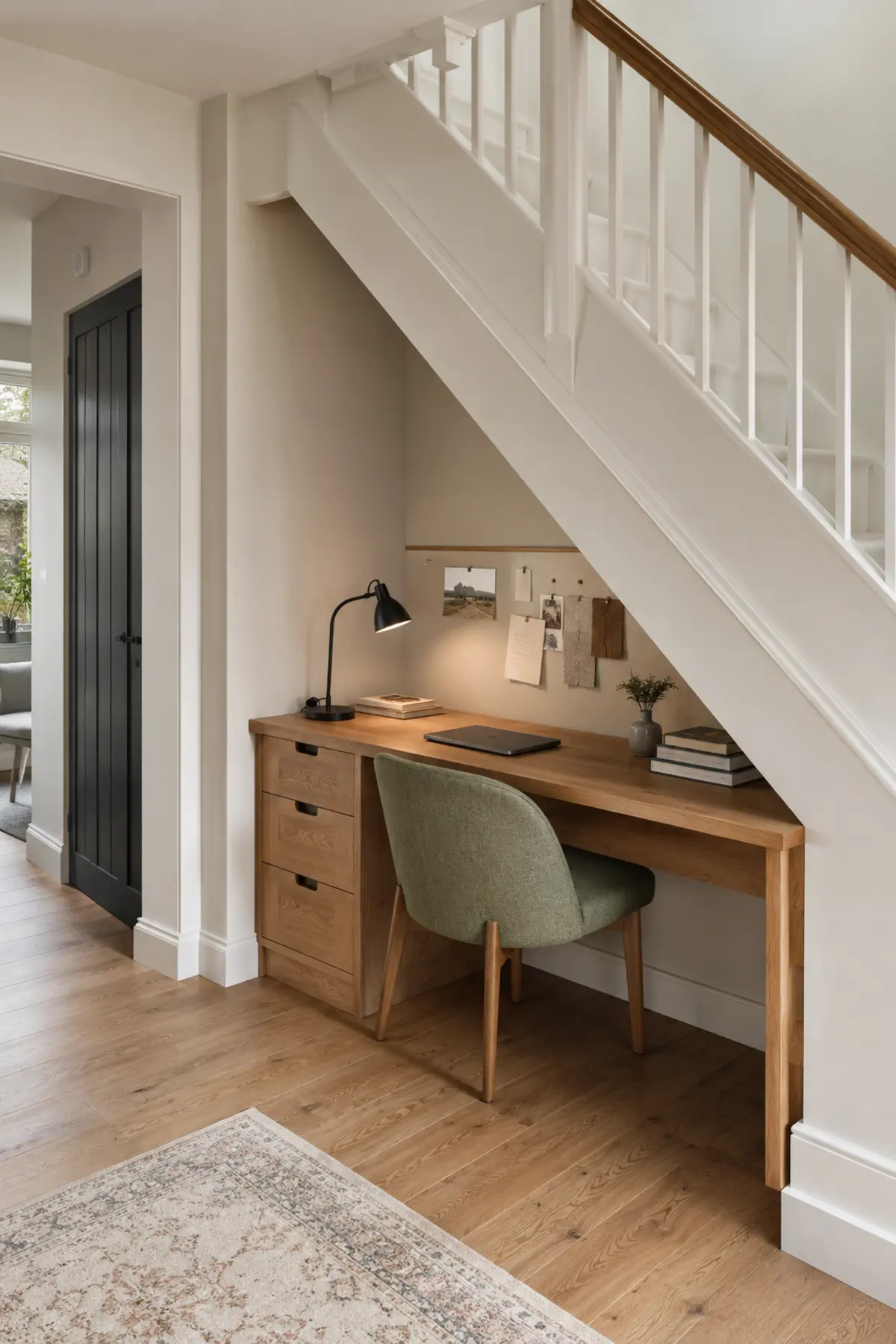
The taller end of an under-stairs recess can hold a surprisingly generous desk. Place the chair where headroom is highest, and let low drawers occupy the descending side. A rail can follow the stair angle; add focused task lighting if daylight is limited.
6. Borrow the End of a Wardrobe
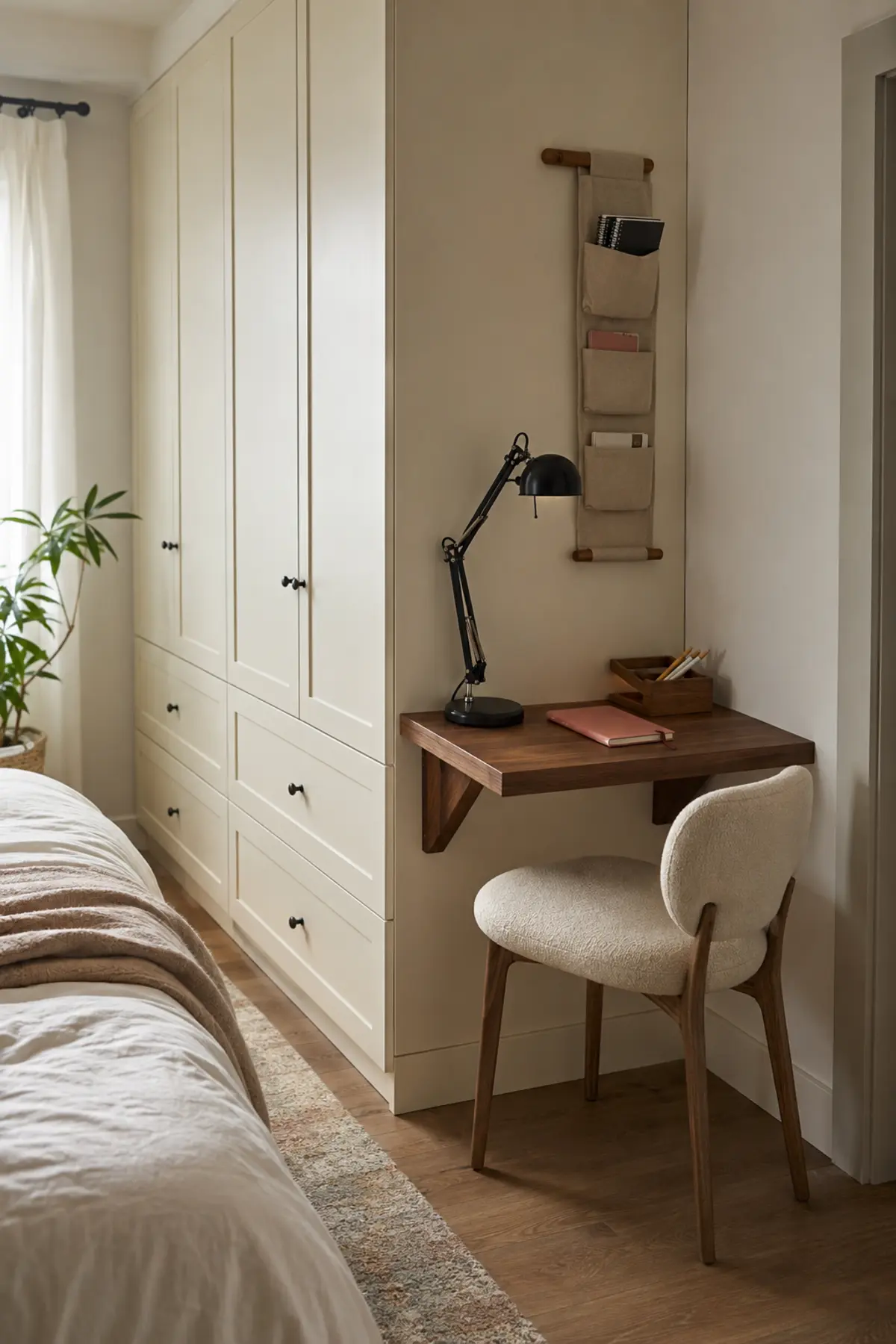
The narrow wall beside a full-height wardrobe is often ignored. A floating desktop can use that strip without adding another heavy piece to a small bedroom. Match its depth to the real task: a laptop needs less room than books, papers, and a separate keyboard. Closed wall pockets keep it quiet near the bed.
7. Build One Shared Study Wall
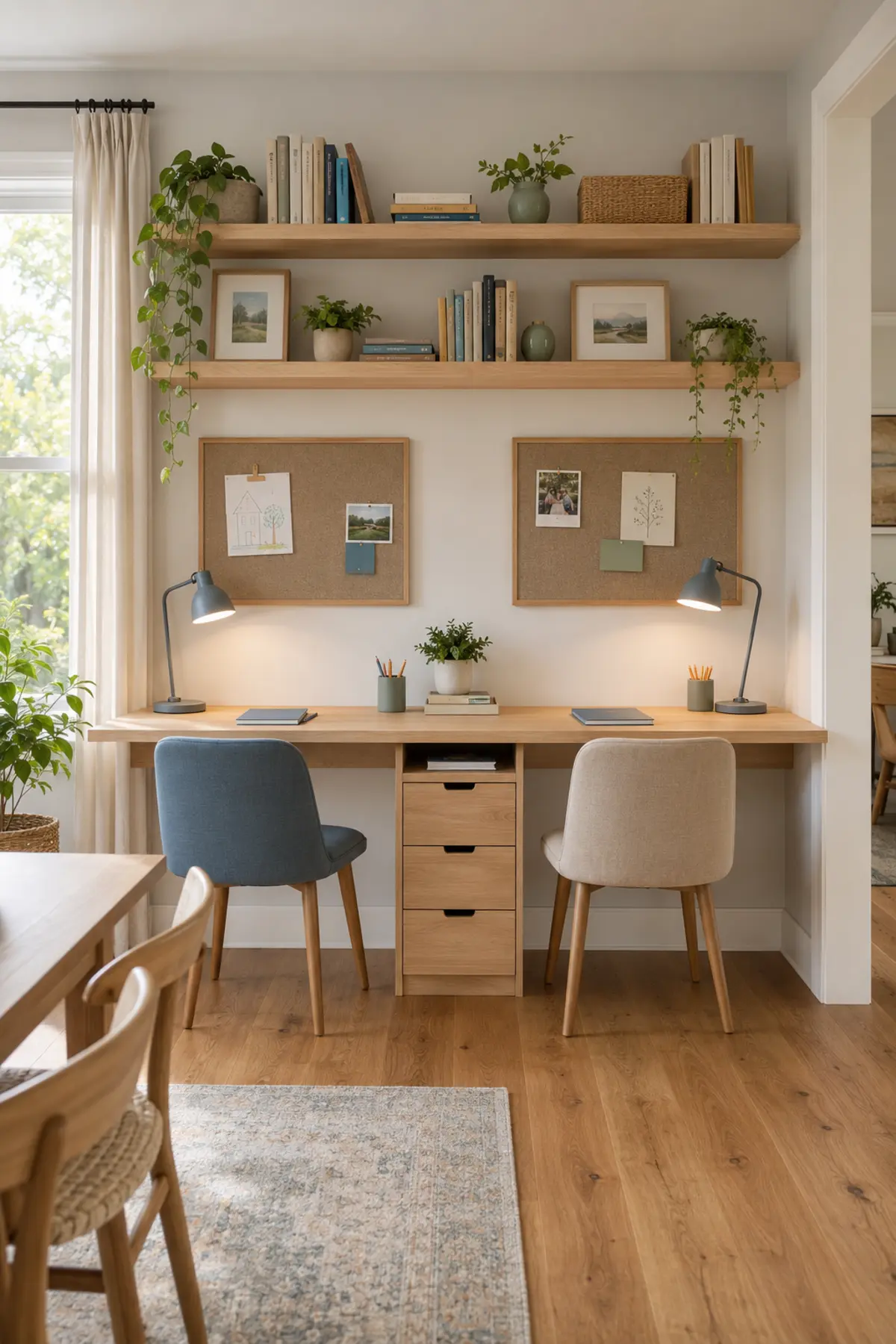
Two separate desks can consume a small dining or family room. One continuous wall-mounted surface uses less visual space. A middle drawer unit provides storage and a boundary, while individual pinboards and lamps give each seat a clear section without making the wall feel like a classroom.
The Detail That Keeps a Tiny Desk From Looking Temporary
Give the nook one material or colour that already exists nearby. Match the desk wood to a shelf, repeat the room’s dusty blue, or use the same woven texture found in a basket. That small connection makes the corner feel settled rather than squeezed in.
Then leave part of the desktop empty. The same “soft order” that makes lived-in rooms feel polished works here too: a few useful objects, one personal detail, and visible breathing space.
A tiny study corner succeeds when it earns its footprint every day. It does not need to imitate a full office. It only needs a comfortable seat, a clear task surface, reachable essentials, and a reset that is easy enough to repeat.
Editorial Styling Note
Women’s Alphabet does not sell the desks, furniture, storage pieces, or room designs shown in this article. The visuals and layouts are shared as editorial inspiration and concept styling ideas only. They should not be treated as product listings, purchase offers, construction plans, or exact DIY instructions. Check measurements, wall structure, fixings, electrical access, and household safety requirements before installing any wall-mounted furniture.