A reading corner often fails for a small reason: the books live somewhere else. The seat may be comfortable and the light may be good, but the next story is stacked on the floor or buried spine-first on a crowded shelf.
Late July is a useful time to fix that gap before school routines return. A crochet book pocket can keep a small rotation visible and reachable without turning the corner into another hard-storage project.
The American Academy of Pediatrics recommends a cozy family reading zone and keeping books within reach. Soft pockets can support that idea, but only when they are sized for real books, lined against stretching and attached to something that can safely carry the load.
The timing also fits the wider return to visible handwork. Etsy’s Spring and Summer 2026 trend report places crochet and stitched texture inside its “Soft Stitch Era.” It does not identify book pockets as a measured trend; this is a Women’s Alphabet application of that broader movement to a practical reading problem.
These six ideas are concept directions to discuss with a skilled artisan, not exact patterns. In Muslim homes, they can hold ordinary storybooks, school reading, journals and other beneficial titles. Copies of the Qur’an should be kept in a clean, elevated, respectful place rather than in a low everyday pocket, and parents should review children’s reading material for age and benefit.
Give the Artisan a Book, Not Just a Photo
Before choosing color or stitch, measure the widest, tallest and heaviest book the pocket will regularly hold. Then decide the maximum number of books per pocket and whether the unit will sit at child height, adult-chair height or beside a family bench.
Ask for a firm fabric backing, a washable lining, reinforced upper corners and a dense stitch that recovers after use. The Craft Yarn Council’s yarn weight system is useful when discussing thickness, but weight category alone does not prove that a finished pocket will resist stretching. The artisan must match yarn, hook, lining, seams and mounting method to the books.
1. The Low Three-Pocket Wall Panel
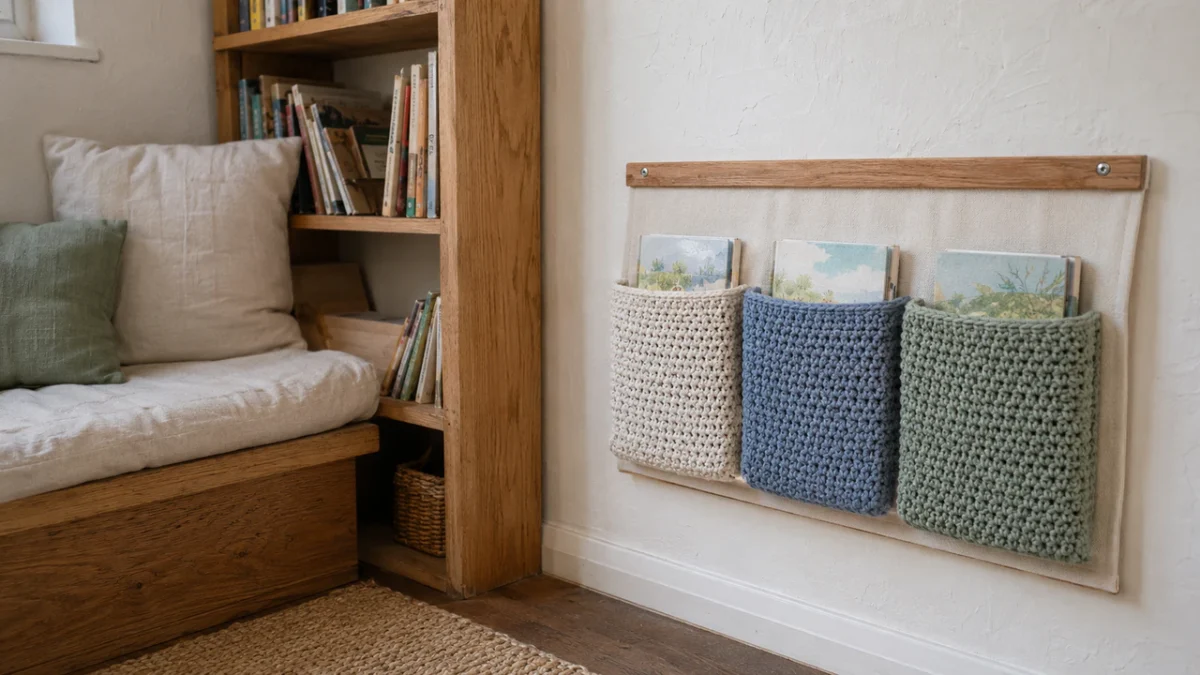
This is the clearest choice for a family reading corner: three equal pockets across one stable, canvas-backed panel. A continuous top rail spreads the load, while the low horizontal shape keeps several covers visible at once.
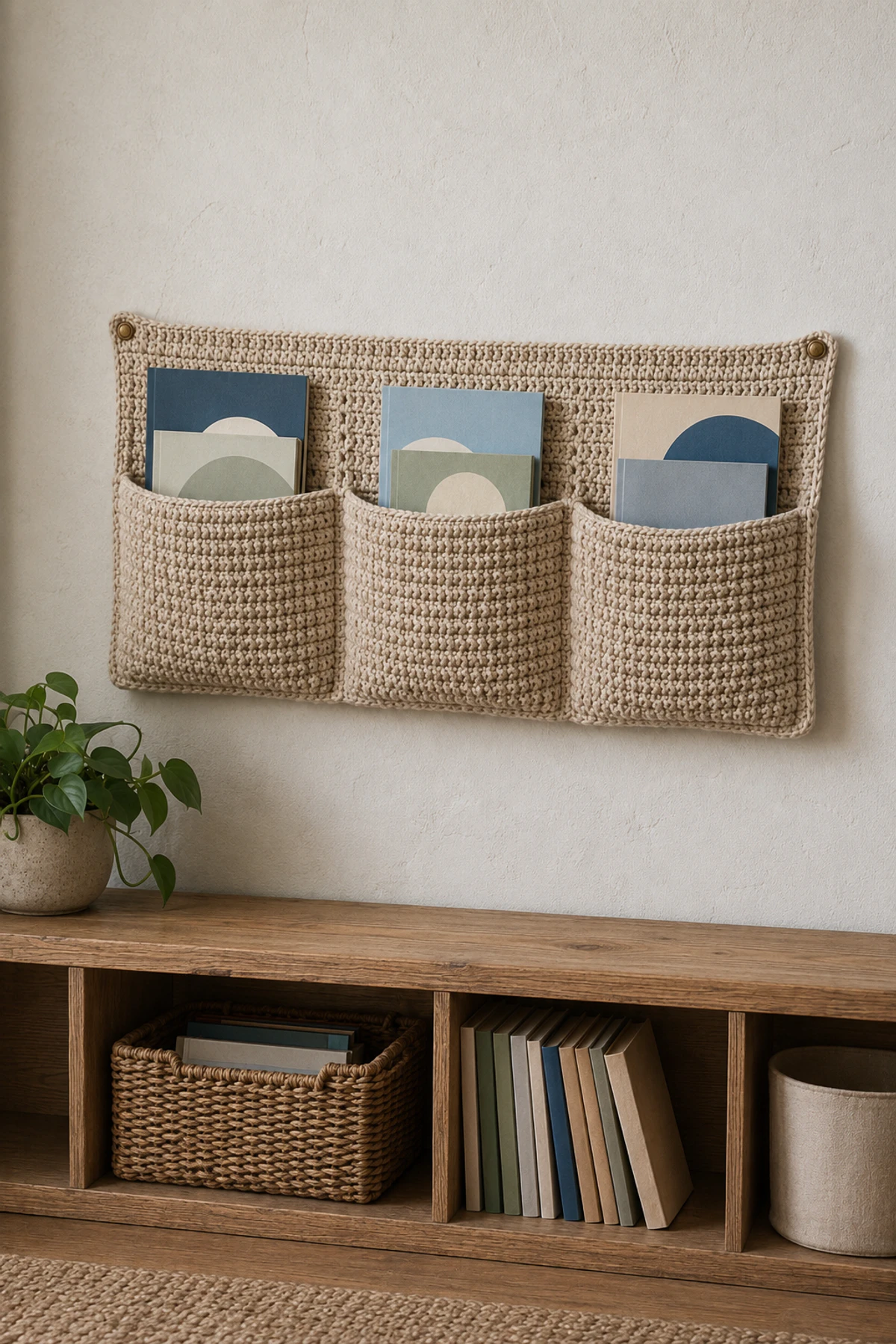
Use each pocket for two or three thin picture books rather than one heavy stack. Leave roughly the upper third of every cover visible so a child can recognize and return the book without digging.
Artisan brief: Request three lined pockets with small side gussets, a reinforced straight opening, a full-width backing, a continuous wooden mounting rail and enough clearance for the widest picture book in the rotation.
2. The Graduated Vertical Panel
A narrow wall can work harder with three pockets arranged from shallow to deep. The upper pocket suits small paperbacks, the middle pocket can take regular storybooks and the lower section can hold one larger but still lightweight book.
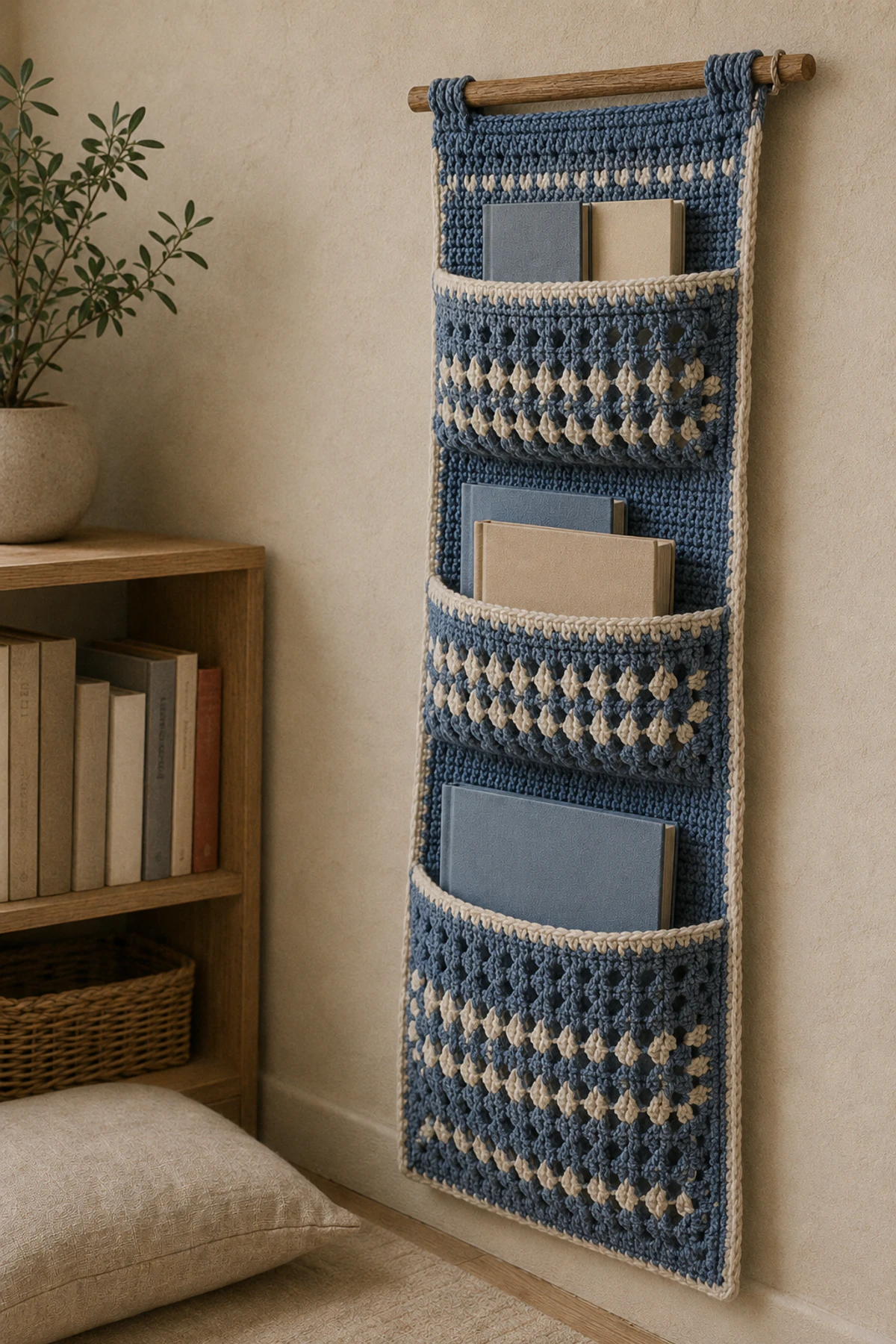
The important detail is not the decorative motif; it is the change in depth. If every pocket is equally deep, smaller books disappear and larger covers fold forward. Ask the artisan to mark each finished pocket against the actual book sizes before final assembly.
Artisan brief: Specify a rigid top rail, a lined backing that stays flat, three deliberately different pocket depths and no long loops or decorative cords within a young child’s reach.
3. The Bench-End Saddle Pocket
A saddle-style pocket can use the solid end of a built-in or genuinely stable reading bench. It keeps a current paperback, magazine or reading log beside the seat without taking floor space.
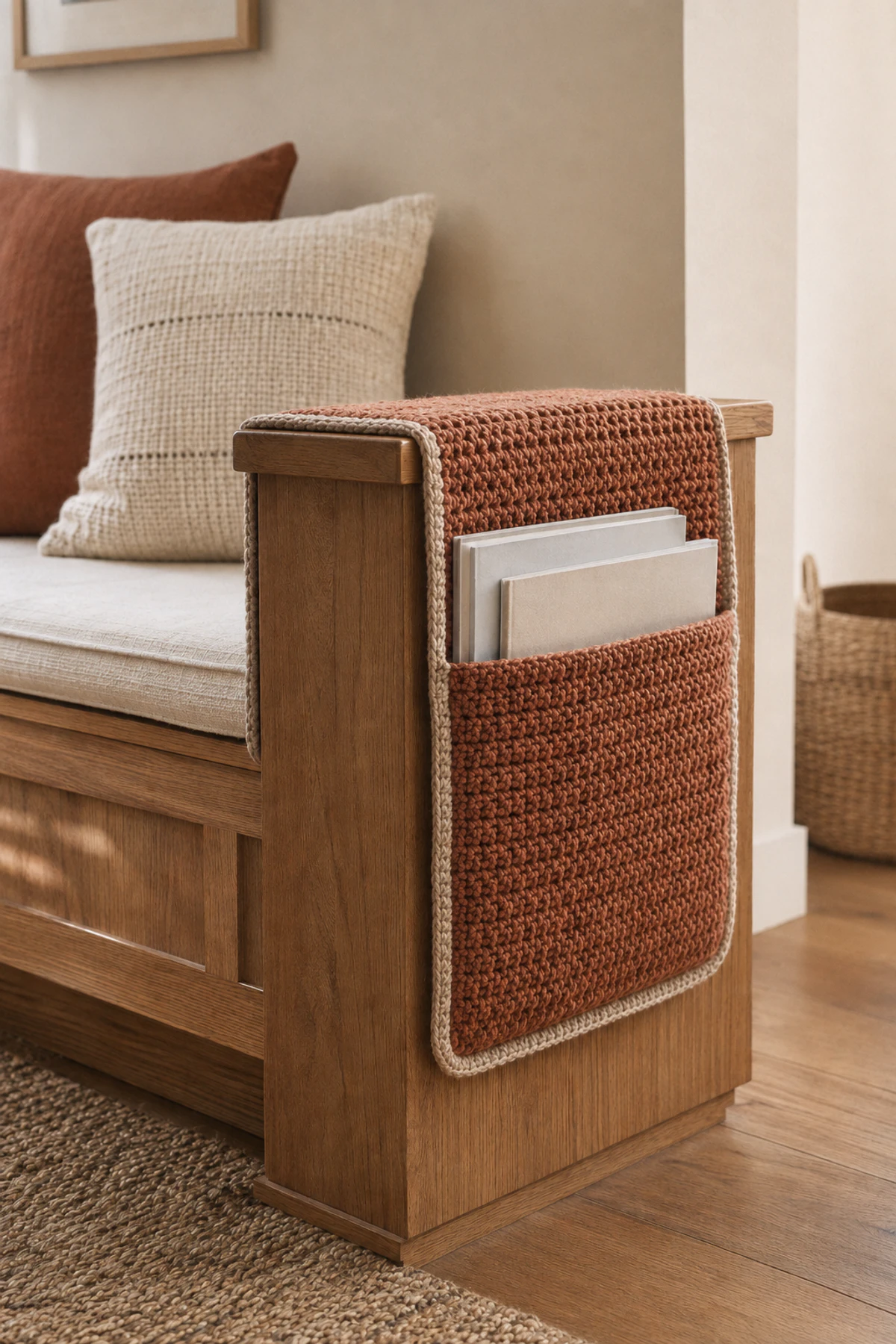
Do not drape the same design over a loose dining chair or a lightweight armchair. The organizer must not slide onto the seat, pull the furniture sideways or invite climbing. A broad non-slip inner layer and a close fit around a solid bench end are more useful than decorative ties.
Artisan brief: Send the exact bench-end width and depth, limit the pocket to slim reading material, request a washable lining and keep the outer edge free of tassels, buttons and long straps.
4. The Four-Square Granny Pocket Grid
Granny squares become practical storage when each motif is treated as a pocket front rather than a loose decoration. Four compact pockets on one linen-backed panel can hold a small weekly rotation while bringing controlled color into a quiet corner.
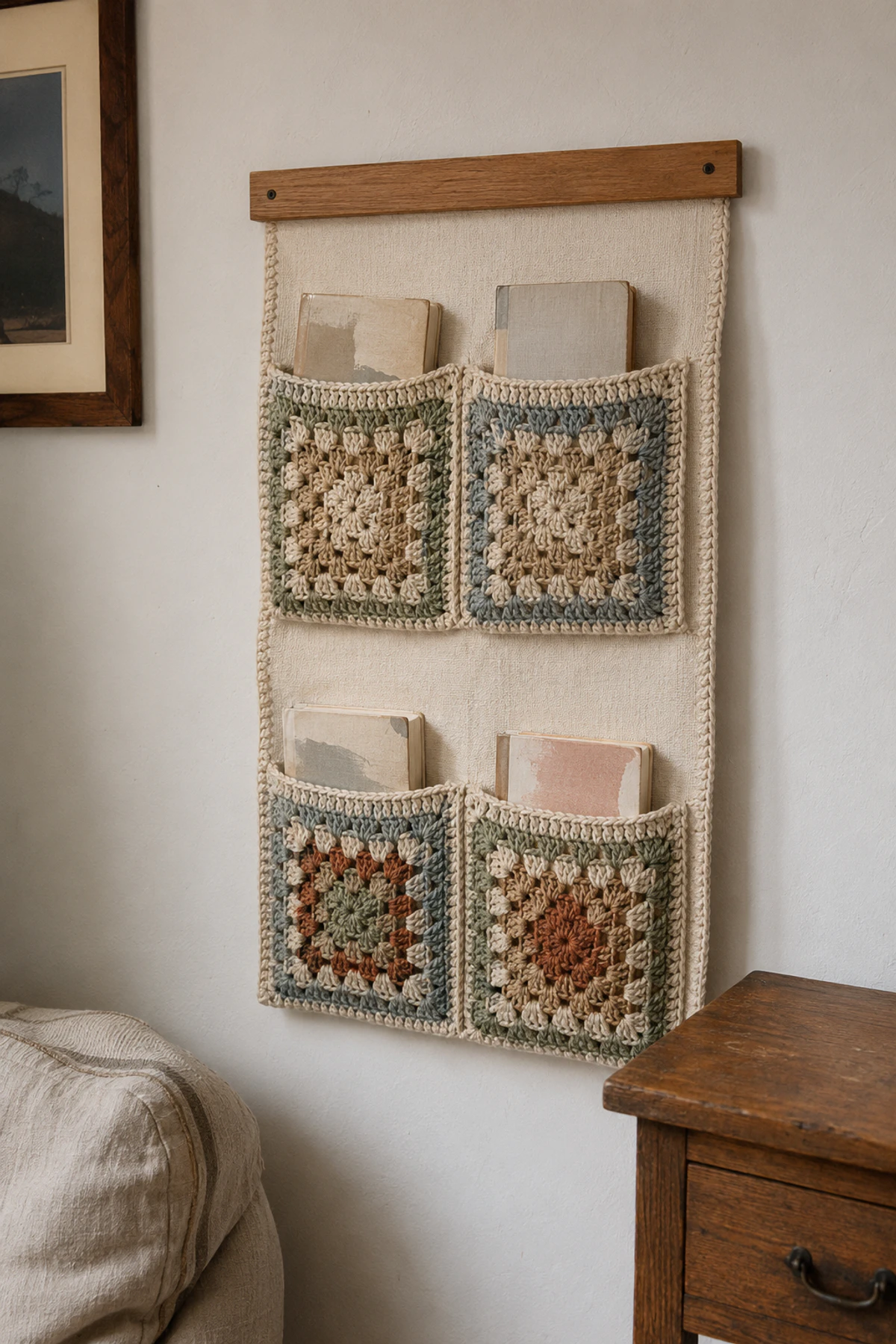
Flat joins, solid outer rounds and a stable backing matter more than a complicated motif. Keep the palette to three or four muted shades and repeat one border color so the grid reads as one useful object.
Artisan brief: Ask for four matching pocket openings, flat seams, dense lower corners, cotton lining behind every motif and a full-width rail rather than four unrelated hanging loops.
5. The Under-Shelf Pocket Pair
Two shallow pockets beneath a firmly fixed picture ledge can turn overlooked wall space into a small front-facing display. This works best for two current reads in each pocket, not for a complete home library.
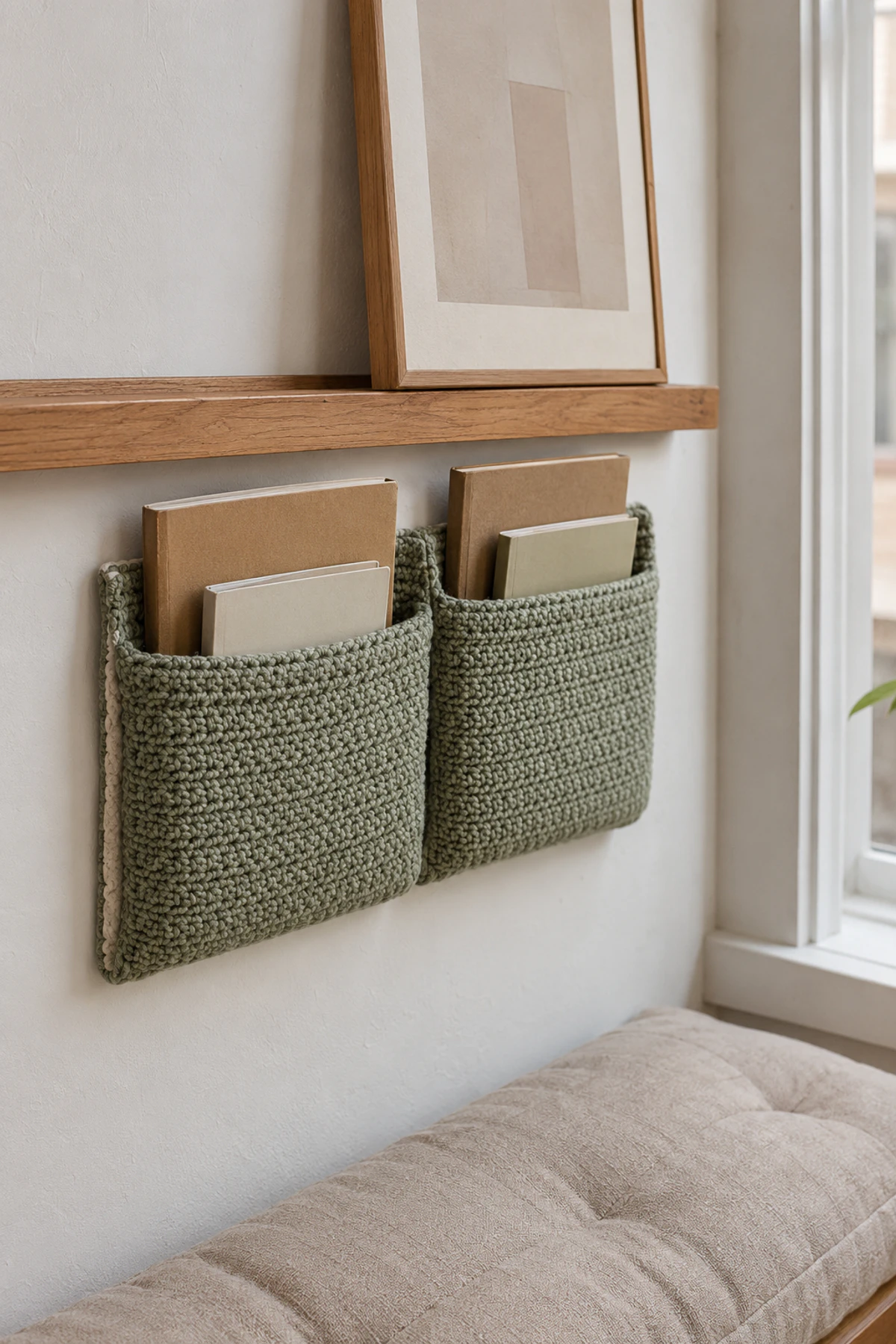
The pockets should be attached to the wall or to their own tested rail, not simply hung from a decorative shelf. Keeping the openings shallow lets the cover remain visible and reduces the leverage placed on the hardware.
Artisan brief: Request two separate lined pockets, reinforced side seams, a hidden rigid support and installation hardware chosen for the wall type. Keep the unit clear of radiators, damp corners and window-blind cords.
6. The Two-Reader Pocket Pair
Two separate color-block pockets can give siblings, a parent and child or two regular readers one small space each. The visual cue removes the need for name labels, while the gap between units keeps returns simple.
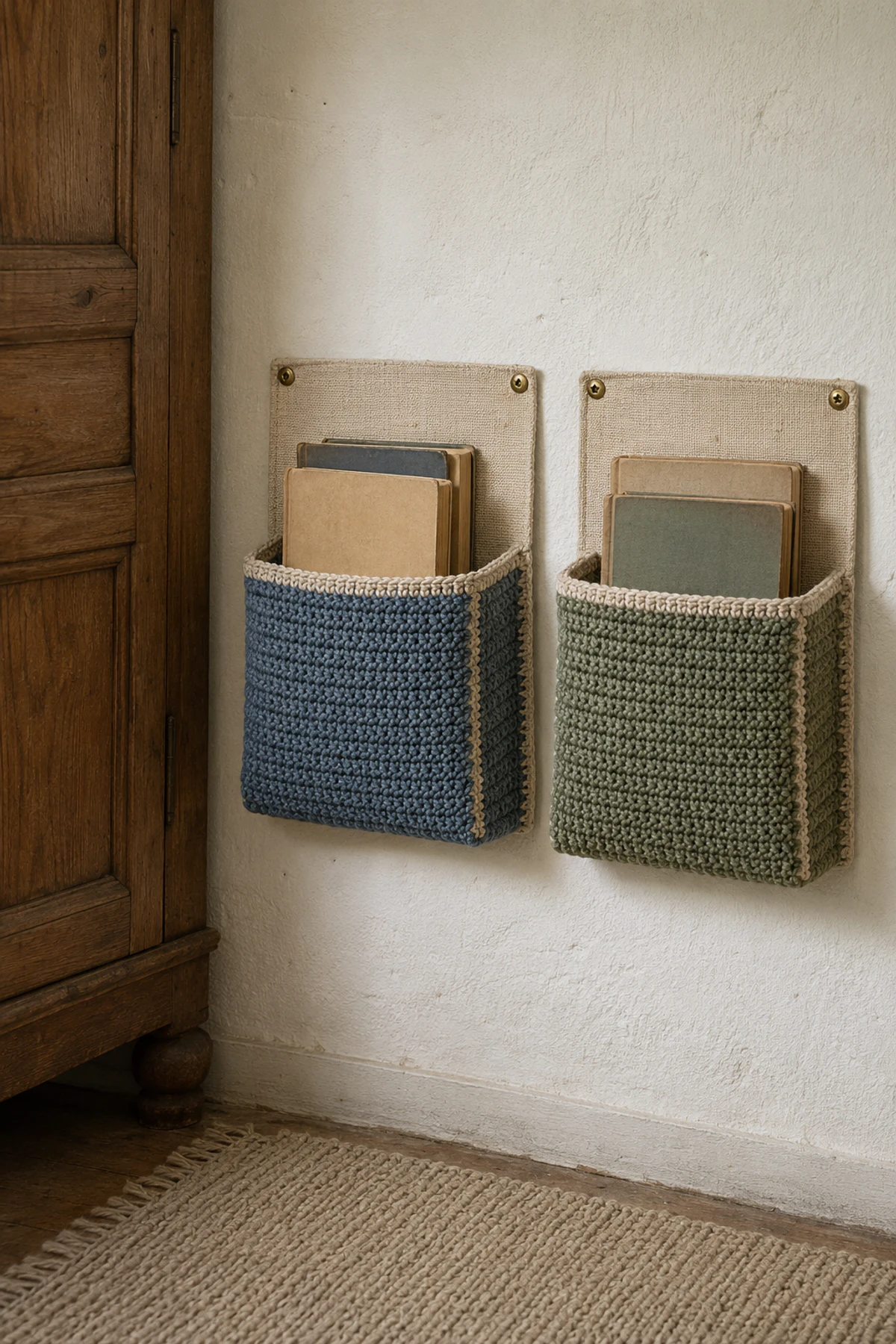
Match both pockets in size and construction even if the colors differ. This is storage for a short reading rotation, not a measure of who owns more books. A three-book capacity per person is usually more orderly than filling every available inch.
Artisan brief: Ask for two identical lined pockets, visible reinforced openings, modest gussets, secure upper and lower anchors and one calm border color that connects the pair.
Run the Women’s Alphabet One-Book Load Test
Before installing a complete set, ask the artisan to test one finished pocket with the heaviest book that will normally go inside. Leave it loaded for 24 hours, then inspect the backing, opening, seams and mounting points.
- The book should slide in and out without scraping or forcing the opening.
- The backing should remain flat against its support.
- The pocket bottom should stay level rather than forming a deep point.
- No upper corner should show stretched stitches or pulling thread.
- Enough of the cover should remain visible for the intended reader to recognize and reach it.
If one loaded pocket fails, adding more pockets will not solve the problem. Change the backing, seam, yarn, capacity or mounting method before the full piece is made.
Add Safety and Book Care to the Brief
The U.S. Consumer Product Safety Commission advises families to anchor bookcases, shelves and other furniture that children may climb or pull. Crochet storage does not make unstable furniture safe. Wall installation should use hardware suitable for the actual wall and long cords, loose beads, tassels or easily removed buttons should stay out of young children’s reading areas.
Soft pockets are also rotation storage, not archival storage. The Library of Congress recommends keeping books off the floor and maintaining a clean, dry storage area with air circulation. Do not pack damp books into yarn, place pockets in a splash zone or leave valuable volumes bent inside a tight opening.
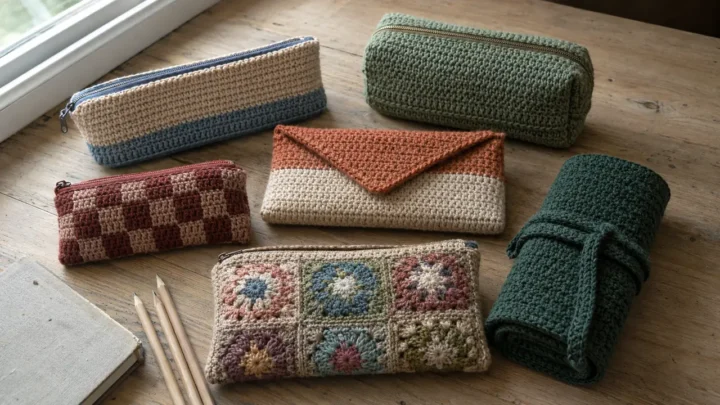
For the rest of the space, our reading nook guide for children covers seating, light and comfort. The function-first artisan brief used here also builds on the testing approach in our practical crochet pencil case ideas.
A Soft System That Serves the Reading Habit
The best crochet book pocket is not the one with the most elaborate stitch. It is the one that holds the agreed books, keeps covers visible, returns to shape and stays securely attached.
That is the Women’s Alphabet difference: begin with the reading habit, test the real load and let the artisan’s skill support the family routine. The aim is not a perfect corner for photographs. It is an orderly place that makes beneficial reading and shared family time easier.
About These Designs
Women’s Alphabet does not sell, produce or distribute the items shown here. The visuals are editorial concept images for inspiration only—not product listings, purchase offers or exact crochet patterns. If a style suits your space, save the reference and discuss a similar, independently made piece with a skilled local artisan, including the book measurements, capacity, materials, lining, mounting method and care instructions you need.