Back-to-school season is already moving early in 2026. By early July, 62% of U.S. back-to-school shoppers had started, according to the National Retail Federation’s July survey. New shoes and notebooks may be ready before the daily rhythm is.
The first routine to wobble is often the small one at the end of the school day. A child comes home hungry, dinner is not close, homework is waiting, and a simple snack quietly turns into a second cooking shift.
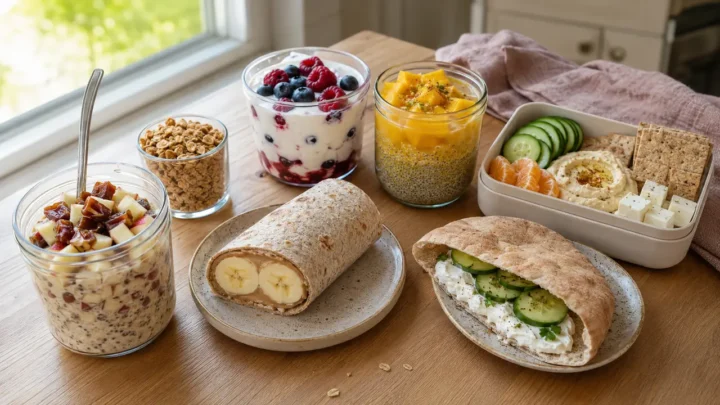
These seven after-school snacks solve that practical problem. Each has a clear protein source, a fiber-rich fruit, vegetable, bean or whole grain, and no more than one active step. None requires a blender, a pan full of dishes or a Sunday-style prep session.
The Women’s Alphabet One-Plate, One-Step Rule
The American Academy of Pediatrics suggests using snack time to offer fruits and vegetables alongside dairy, protein foods or whole grains. It also notes that every snack does not need to become a mini-meal. Balance is built across the day, not forced into one bowl.
That is the idea behind the One-Plate, One-Step Rule:
- Pick one protein anchor: plain Turkish yogurt, egg, beans, edamame, cottage cheese or seed butter.
- Add one fiber-rich partner: berries, pear, peach, mandarin, avocado, vegetables or a whole grain.
- Set a one-step ceiling: stir, toast or microwave—never all three on an ordinary school day.
The rule is not a nutrition scorecard. It is a household filter. If a snack needs several appliances, a long ingredient list and ten minutes of cleanup, it is unlikely to remain the weekday default.
If the trip home falls close to ‘Asr, decide the family order before the week becomes busy. Salah should not be pushed behind snacks, screens and homework as if it were a leftover task. A ready snack can wait on a known shelf while the family follows local prayer time and its established routine.
1. Turkish Yogurt, Raspberry and Oat Bowl
This is the two-minute option for a child who wants something cool and spoonable. The yogurt supplies the protein anchor, while raspberries and oats bring fiber without turning the bowl into a heavy meal.
For one serving: Spoon 1/2 cup plain Turkish yogurt into a small bowl. Add 1/2 cup raspberries, 2 tablespoons rolled oats and a light dusting of cinnamon.

One-step finish: Stir once at the table. If your child dislikes mixed textures, keep the oats on one side so the last spoonfuls still have some crunch.
Halal check: Choose plain yogurt without gelatin or doubtful flavoring additives. If the label is unclear, use a clearly halal-certified product.
2. Warm Black Bean and Corn Tortilla Fold
Black beans do two jobs at once: they provide plant protein and fiber. A whole-wheat tortilla and corn add more texture, while a little cheese helps the fold hold together.
For one serving: Mash 1/4 cup rinsed black beans lightly over half of one small whole-wheat tortilla. Add 2 tablespoons corn and 2 tablespoons grated cheese made with microbial or vegetable enzymes, or clearly marked halal-certified. Fold it closed.
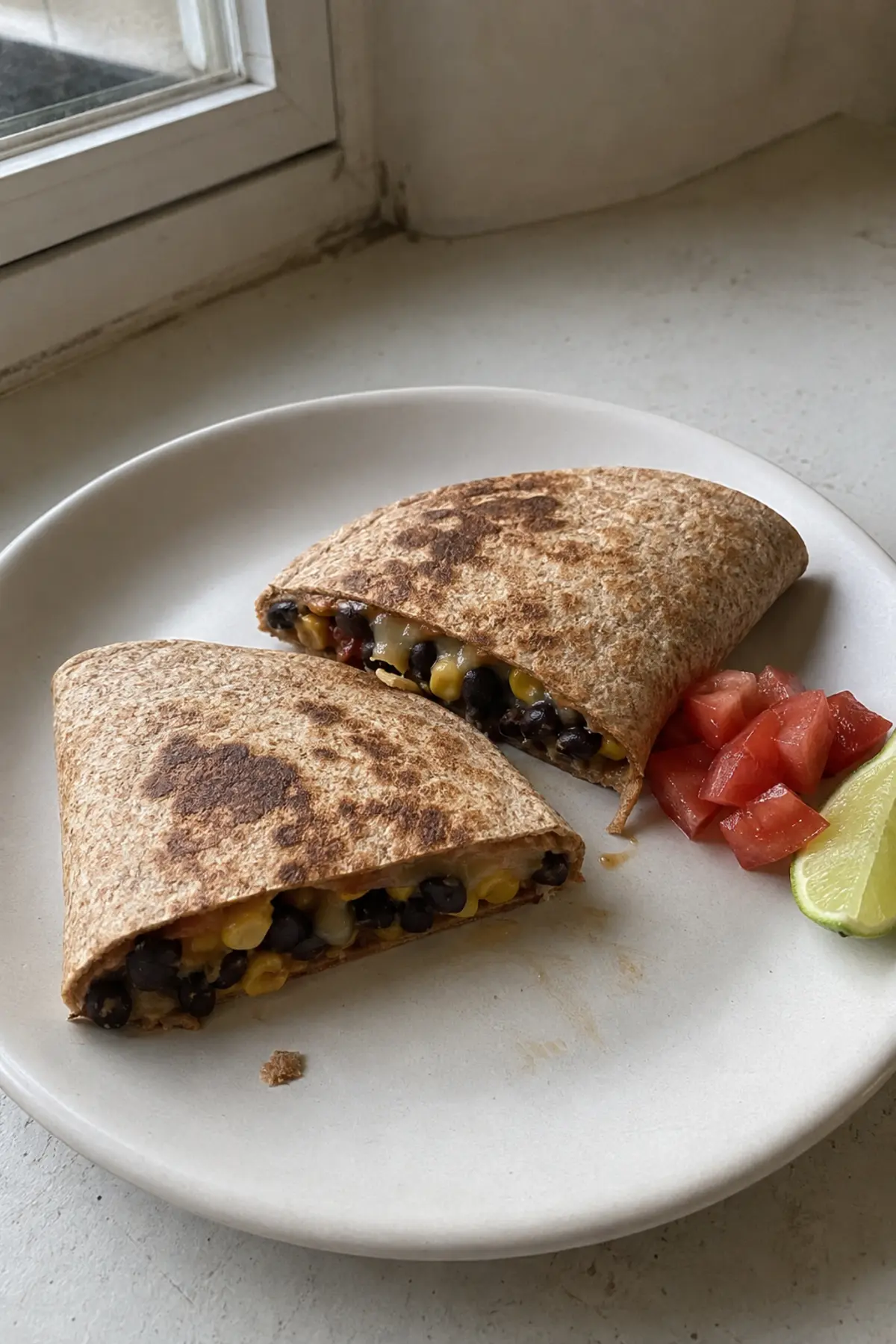
One-step finish: Microwave until the center is steaming and the cheese has melted, then let it cool to a safe eating temperature before cutting.
A few tomato pieces or cucumber slices can sit beside it, but the tortilla is complete without turning the plate into a full dinner.
3. Pear and Sunflower Butter Crispbread
This option is crisp, creamy and easy to scale. Sunflower seed butter is a useful nut-free alternative for some households, but it is still an allergen for some people and should never be treated as universally safe.
For one serving: Spread 1 tablespoon sunflower seed butter over two rye crispbreads or one slice of whole-grain toast. Top with thin slices from half a small pear and a pinch of cinnamon.

One-step finish: Slice the pear and assemble. For a younger child, cut the finished crispbread into manageable pieces and adapt the texture to the child’s chewing ability.
4. Edamame, Mandarin and Whole-Grain Snack Tray
Cooked shelled edamame is one of the quickest plant-protein anchors to keep in the freezer. Mandarin segments and whole-grain crackers turn it into a bright snack tray without any dip to mix or container to wash.
For one serving: Heat 1/2 cup frozen shelled edamame according to the package directions. Drain well, then add lemon juice and a tiny pinch of sumac if its ingredients suit your household. Serve with one peeled mandarin and five or six whole-grain crackers.

One-step finish: The microwave is the only active step. Cool the edamame before serving and adjust size and texture for the child’s age.
Soy, citrus and wheat do not suit every child. Use the family’s established allergy plan rather than making an unfamiliar substitution on a rushed afternoon.
5. Egg and Avocado Whole-Grain Toast
A refrigerated hard-boiled egg turns this from a cooking task into assembly. Egg supplies the protein anchor; avocado and whole-grain bread provide the fiber-rich half of the plate.
For one serving: Mash 1/4 ripe avocado over one slice of whole-grain toast. Roughly chop one fully hard-boiled egg over the top. Finish with a squeeze of lemon and a small pinch of black pepper.

One-step finish: Toast the bread; everything else is ready to add. Keep cooked eggs refrigerated and use clean utensils.
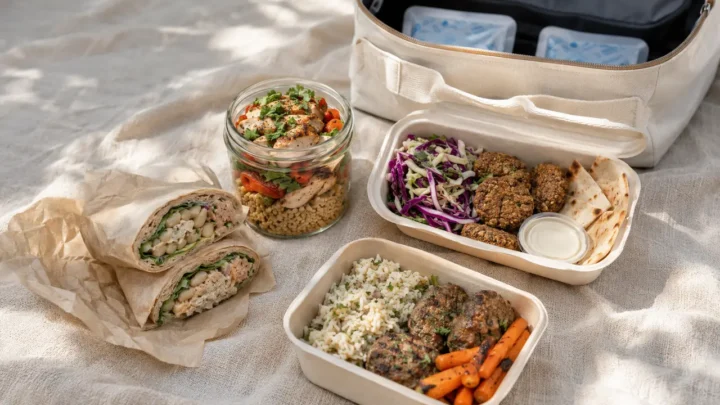
If the snack must travel to tutoring or sports instead of being eaten at home, follow the cold-pack approach in our cold lunchbox guide rather than leaving egg, yogurt or cheese at room temperature.
6. Cottage Cheese, Peach and Chia Cup
Late-summer peach makes plain cottage cheese feel less repetitive without needing syrup or a flavored dairy cup. Chia adds a little more fiber, but a small amount is enough.
For one serving: Add 1/2 cup cottage cheese to a bowl. Stir in 1 teaspoon chia seeds so they are moistened, then let the mixture stand for five minutes. Top with half a diced peach and a pinch of cinnamon.
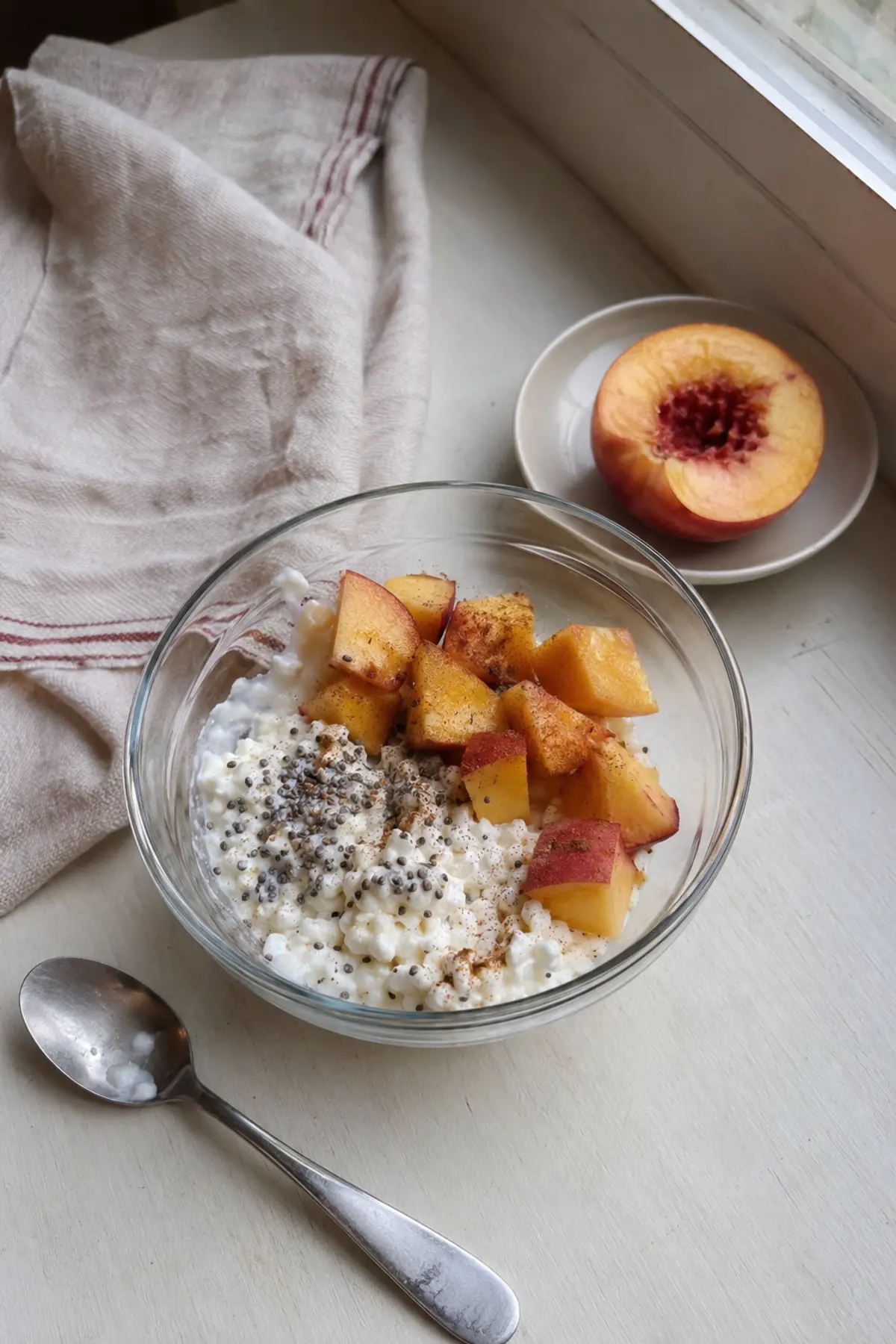
One-step finish: Stir and wait while the school bag is put away. Use a cottage cheese made with microbial or vegetable enzymes, or one that is clearly halal-certified.
For a child who needs a dairy-free option, use an established suitable alternative that fits the child’s needs rather than assuming every plant-based product has a similar protein content.
7. Lemony Chickpea and Cucumber Cup
This is the pantry option for the afternoon when the fruit bowl is empty. Chickpeas bring both protein and fiber; cucumber and lemon keep the cup fresh rather than heavy.
For one serving: Combine 1/2 cup rinsed and well-drained chickpeas with 1/3 cup roughly chopped cucumber, a little parsley, 1 teaspoon olive oil and a squeeze of lemon. Serve with four small whole-grain pita wedges.

One-step finish: Stir, scoop and eat. Lightly mash some chickpeas for a child who needs a softer texture, and supervise according to age and ability.
Rinse canned chickpeas to remove the packing liquid, then refrigerate the unused portion promptly in a clean covered container.
Make the Easy Choice Visible
The One-Plate, One-Step Rule works better when the ingredients can be seen. Keep one small refrigerator zone for two protein anchors and two washed produce choices. A bowl of boiled eggs, plain yogurt, rinsed beans or cooked edamame is more useful on a school afternoon than a complicated menu taped to the door.
Do not prepare all seven snacks at once. Choose three that fit the family’s budget, allergies and actual tastes. Repeat them until the routine feels ordinary, then rotate one option. Repetition is not failure; it is often what makes a useful system last.
Perishable foods should return to the refrigerator promptly. USDA guidance says to discard perishable food left at room temperature for more than two hours, or one hour when the temperature is above 90°F/32°C.
Protein and fiber do not need to arrive through a packaged “kids’ snack” or an elaborate recipe. One honest plate, one clear pairing and one easy step are enough for an ordinary school day.