Almost no one has two identical eyes. One eyelid usually sits a touch lower, one socket is a fraction wider, one crease folds at a slightly different height. Eyeliner makes this more visible, not less.
A perfectly even line on one eye and the exact same line on the other can end up reading as two different shapes once both are outlined.
The fix isn’t more precision. It’s a different order of operations, and a different idea of what “matching” actually means.
Why a Mirrored Line Makes Asymmetry More Obvious
Standing close to a mirror, dead-on, exaggerates small differences nobody notices at normal conversation distance. Faces aren’t perfectly symmetrical to begin with, eyes included — the gap is usually structural, not something that happened recently.
The actual goal is to match how the two eyes read from a normal distance, not to draw two physically identical lines. Most tutorials skip this and tell you to copy the same line shape from one eye onto the other.
That instruction only works if the eye socket underneath is shaped the same way on both sides. It usually isn’t, which is exactly why the copied line ends up looking less even, not more.
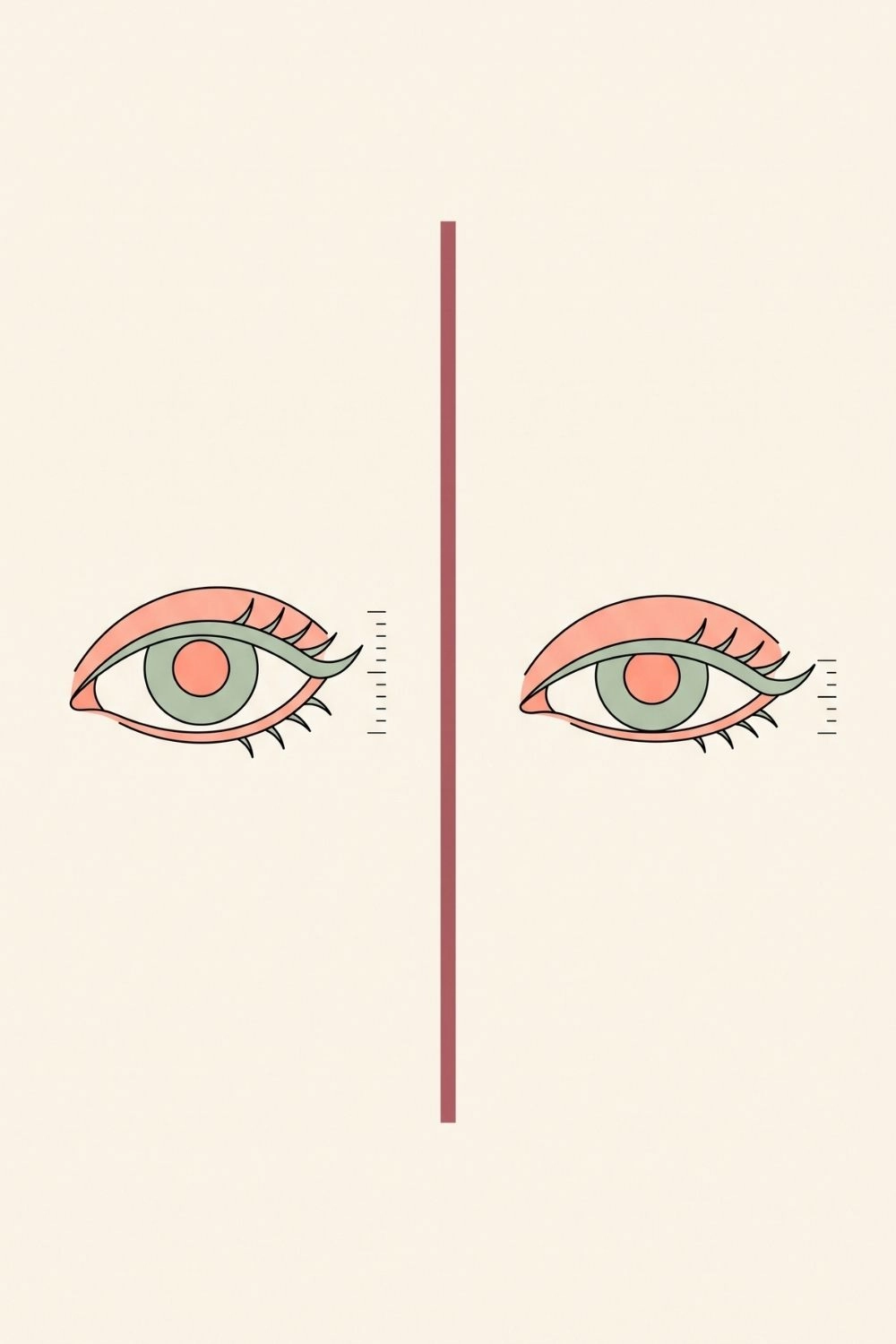
Start With the More Open Eye, Then Build the Other to Match It
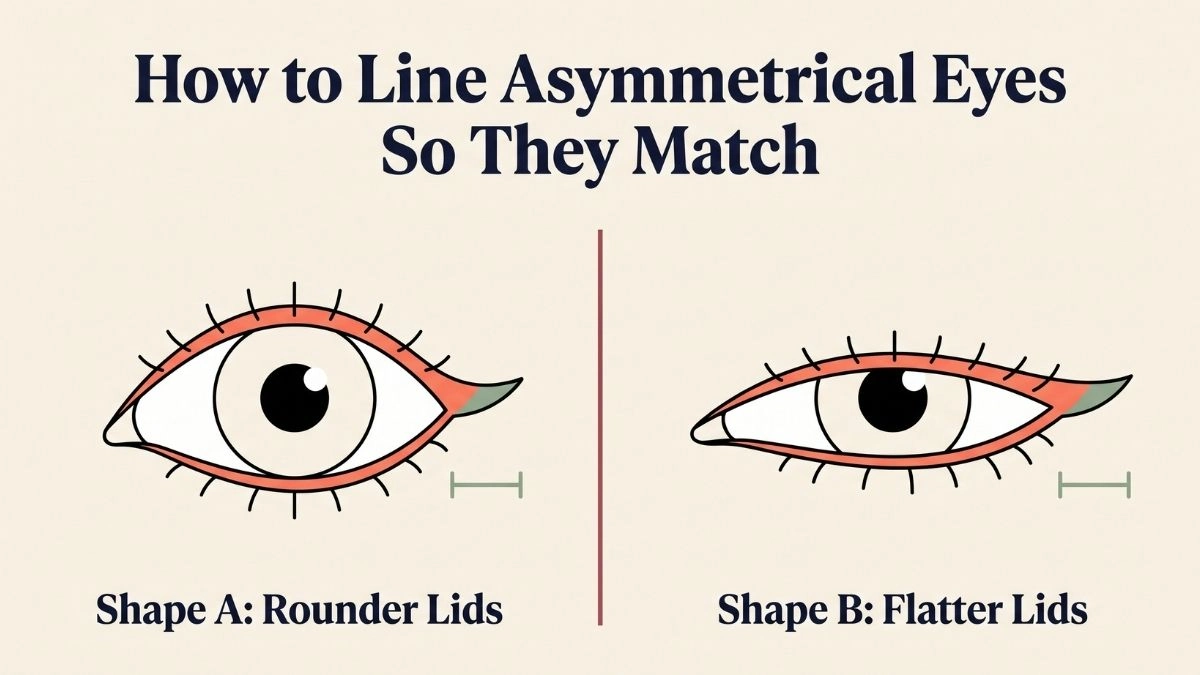
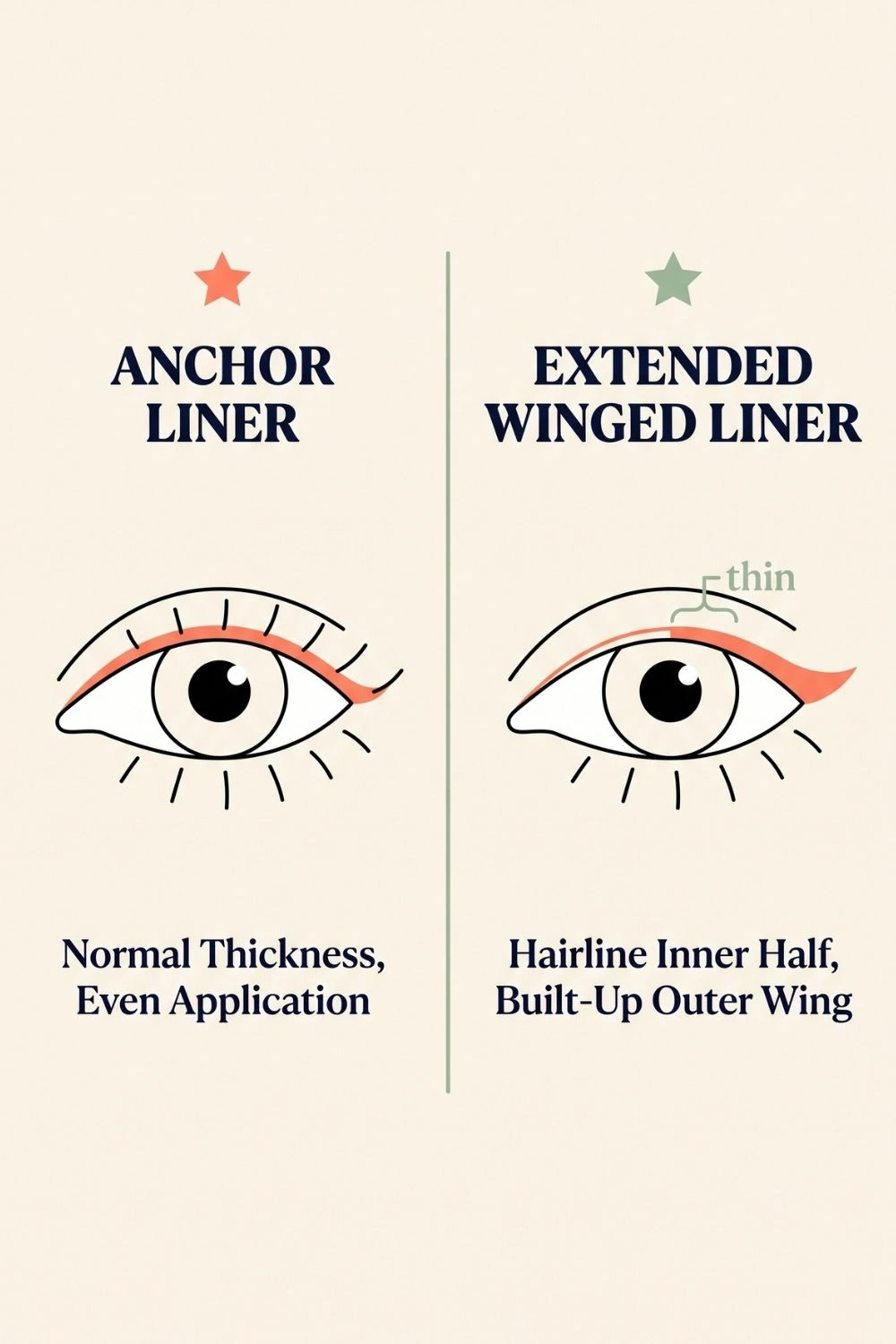
Line the eye with more visible lid space first, at your normal thickness. That finished line becomes your reference, not a measurement you try to replicate stroke for stroke.
On the second eye, adjust thickness and wing length rather than trying to duplicate the exact shape. If that eye shows less lid space, keep the inner half of the line thin so it doesn’t eat further into the part of the eye that’s already smaller.
Then extend the wing slightly further at the outer corner on that same eye. The added length restores the visual width the thin inner line gave up, and the two eyes settle into the same weight without ever being drawn identically.
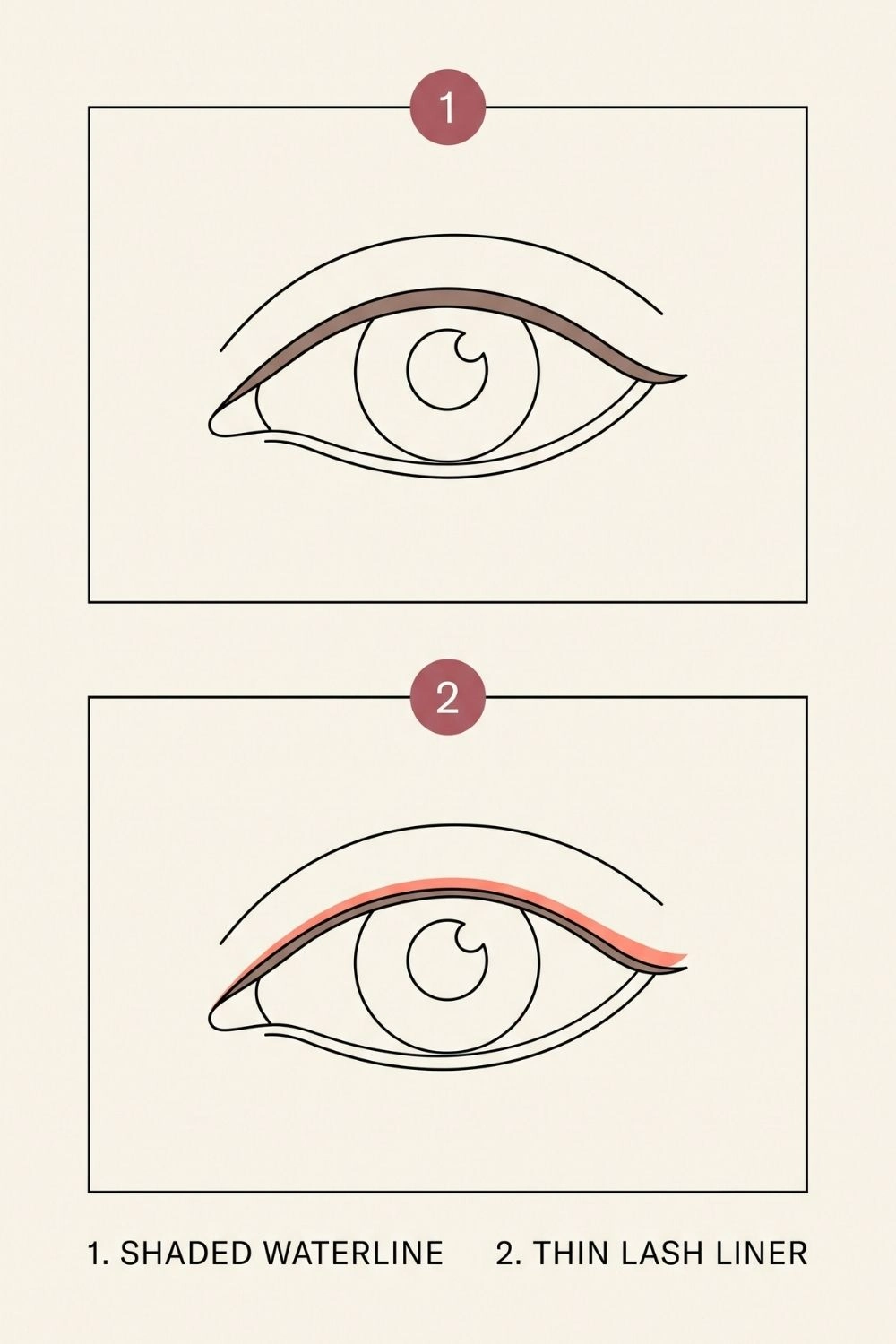
Tightline First, Then Adjust the Top Line
There’s an order-of-operations mistake that affects asymmetrical eyes more than even ones. Drawing the lash-line liner first and tightlining the upper waterline afterward fills in the gaps along the lash root, which makes the visible line look thicker than what was actually drawn.
That shift in thickness isn’t consistent between two eyes with different amounts of exposed waterline — exactly the kind of small, unpredictable difference that causes mismatched liner on naturally asymmetrical eyes.
Reversing the order fixes this. Tightline the upper waterline first, then draw the lash-line liner using the now-visible waterline edge as your guide. What you draw is what stays visible on both eyes, with nothing shifting the thickness afterward. Drew Barrymore demonstrated a version of this same waterline-first order on one of her own uneven eyes, using only the upper waterline to bring the more closed eye up to match the other.
Most tutorials treat tightlining as an optional last step. Moving it to the front isn’t a styling choice, it’s a structural fix for matching results — and it costs nothing extra in time once it becomes the default order.
The Two-Distance Check Before Calling It Done
Once both eyes are lined, step back to actual arm’s length before deciding if anything still needs adjusting. A handheld mirror held at the distance someone would normally stand from you works better than a vanity mirror for this.
Checking only up close pulls your attention toward micro differences that are invisible at normal distance, and pushes you toward over-correcting a gap nobody else would ever notice. Daylight and warm indoor light also change how visible a liner gap looks, so it’s worth repeating the check once under whichever light you’ll actually be seen in that day.
When the Asymmetry Isn’t About the Eyeliner
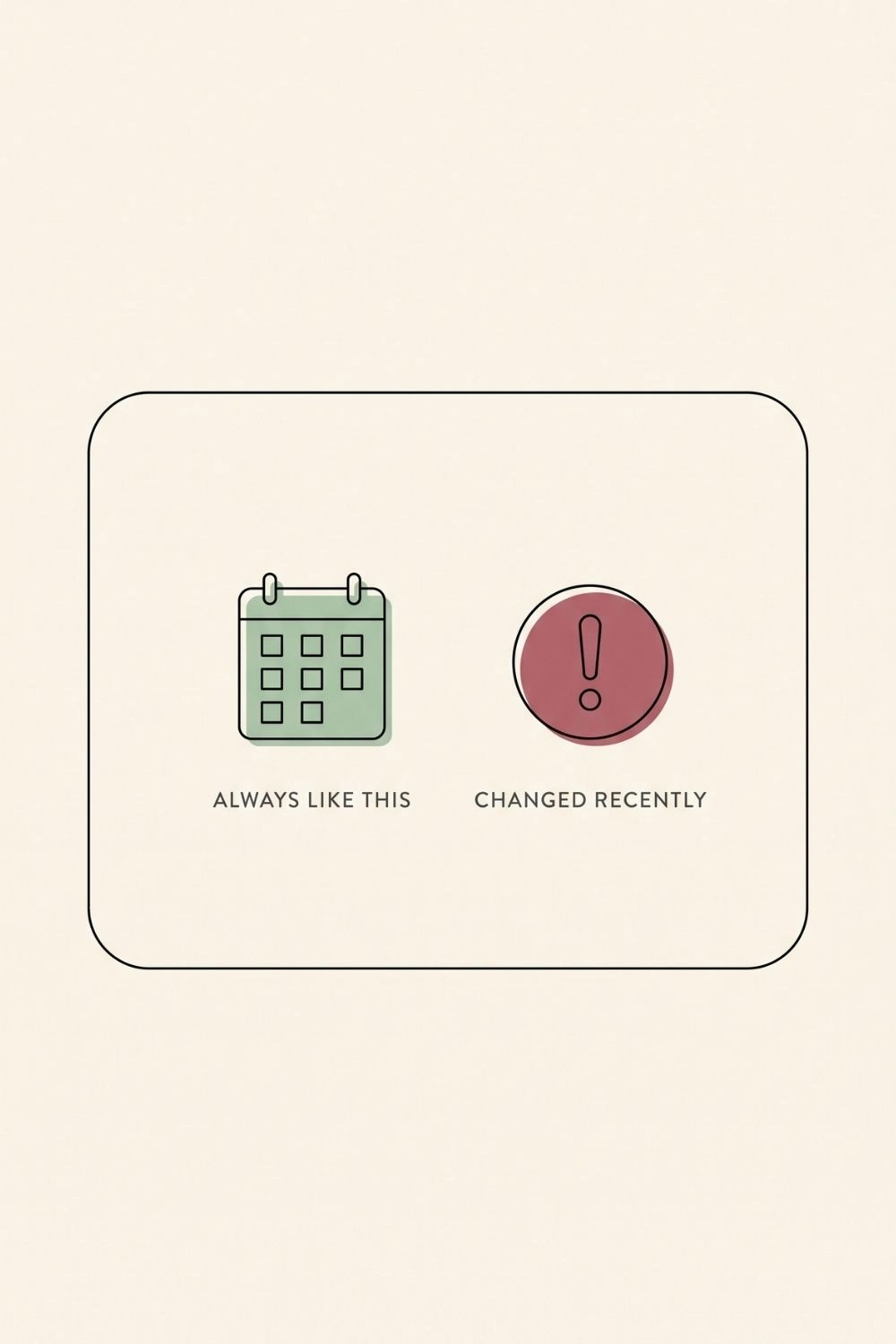
Most lid differences are just ordinary facial variation, present for as long as you can remember, and nothing to flag. The distinction worth paying attention to is whether the difference is new.
A lid that has started drooping more than it used to, especially alongside eye strain or any change in vision, falls outside what an eyeliner technique can address. That pattern is sometimes called ptosis, and it’s worth having checked rather than worked around with makeup.
For everyone else, the goal was never identical eyes. It was two lines that read as a matching pair, built the right way around, on eyes that were always going to be sisters rather than twins.