The shelf is already full.
There is a pothos on the windowsill, a snake plant beside the sofa, a small fern in the bathroom, and one more plant still sitting in its nursery pot because it looked too pretty to leave behind.
Still, the room does not look finished.
That is the quiet plant styling mistake many homes are making in 2026: buying more greenery when the real problem is not the number of plants. It is the edit.
Plants are no longer being treated as random extras in a room. Current home design trends are leaning toward green as a room-shaping colour, warm wood, earthy materials, and layered natural texture, according to Houzz’s 2026 home design trends.
That shift matters.
If green is becoming part of the room’s design language, houseplants need to look intentional too. Not crowded. Not random. Not like every cute plant came home and was placed wherever there was an empty spot.
Before buying another plant, do this 10-minute styling audit.
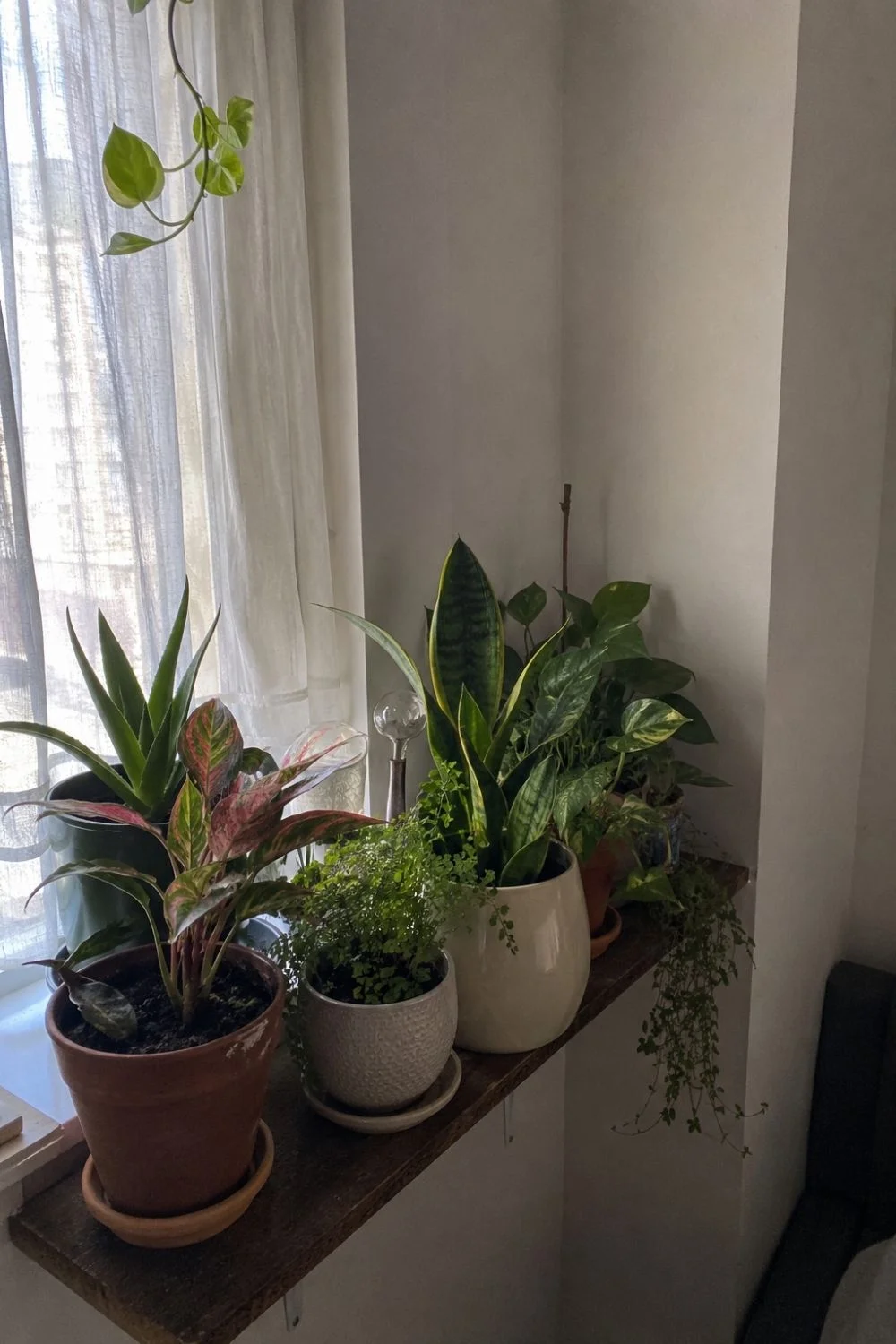
Step 1: Find the Plant That Should Lead the Corner
Most messy plant corners do not look messy because the plants are unhealthy.
They look messy because everything has the same visual weight.
Five small pots lined up on a shelf can feel busier than one tall plant, one medium plant, and one small trailing plant. The eye needs a starting point.
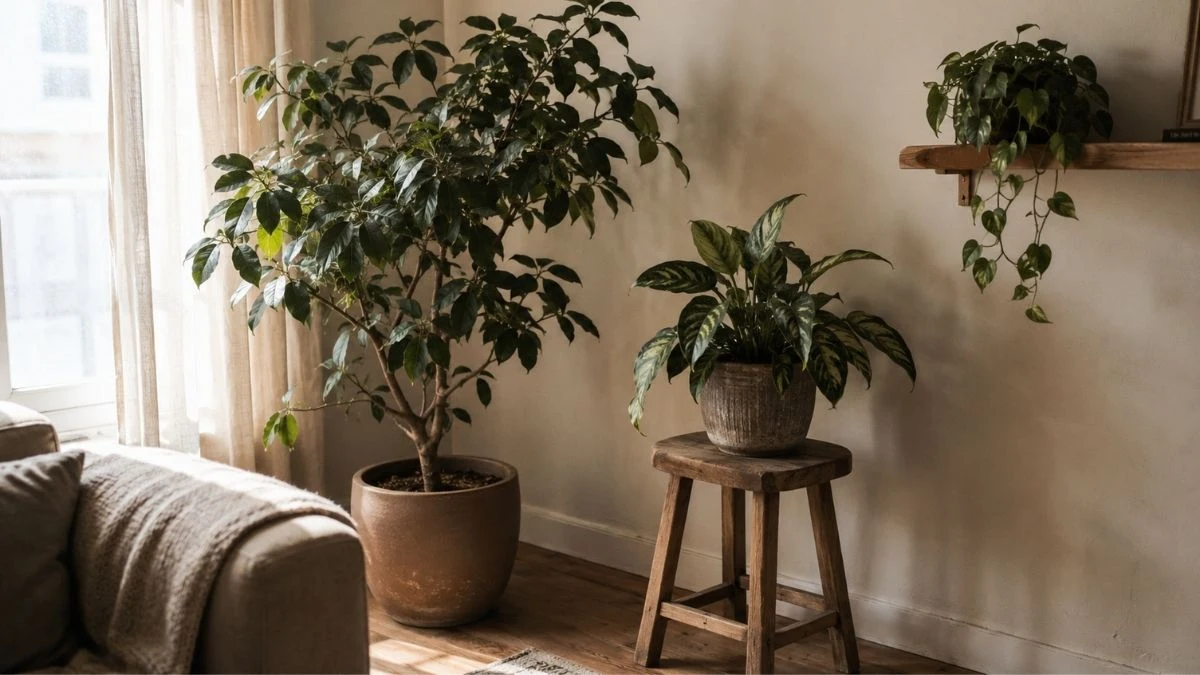
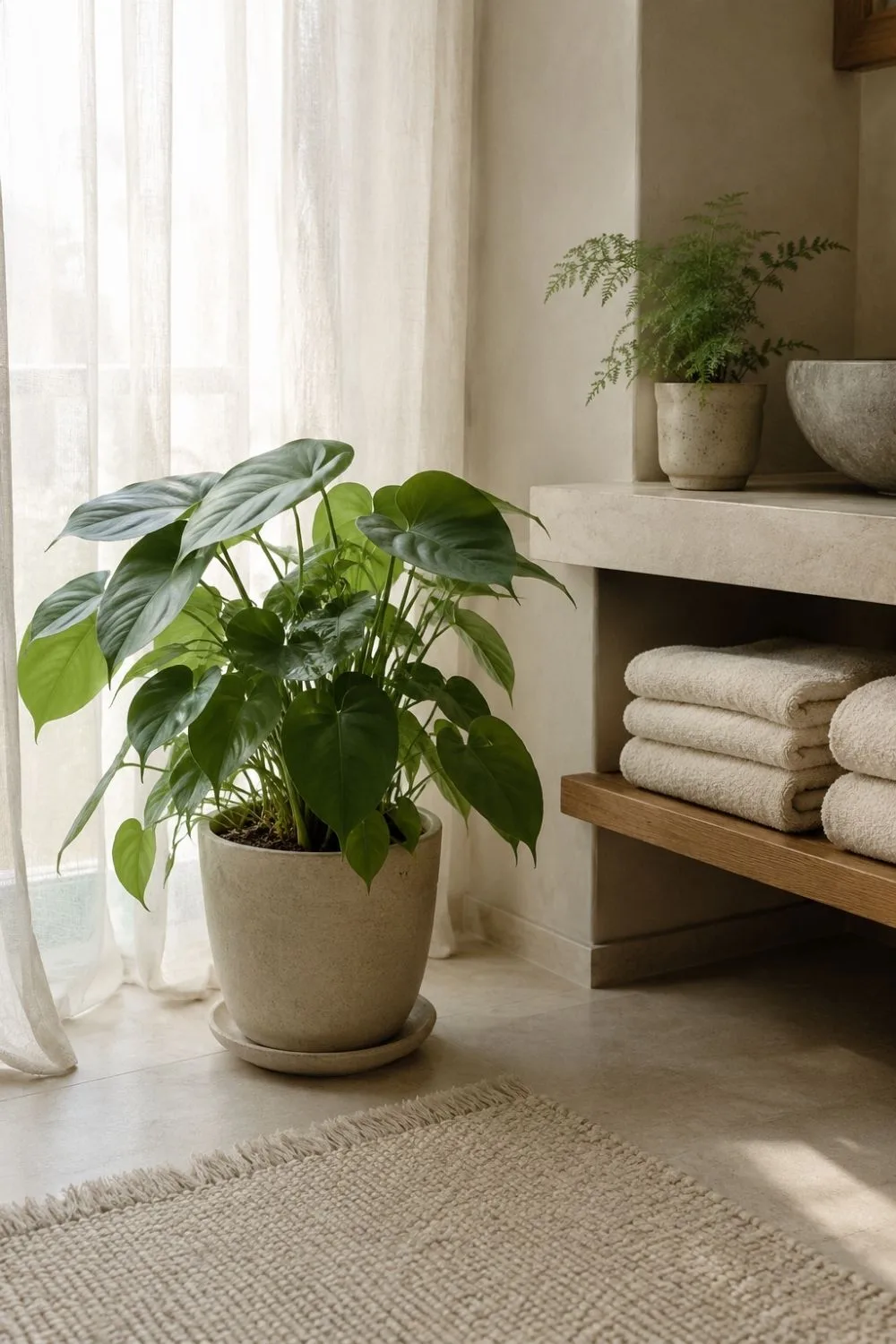
Choose one anchor plant for the area. It could be a snake plant, rubber plant, monstera, olive tree, ficus, or another plant that suits the room’s light.
The anchor does not need to be huge. It simply needs enough presence to hold the corner.
Place it first. Then arrange the smaller plants around it.
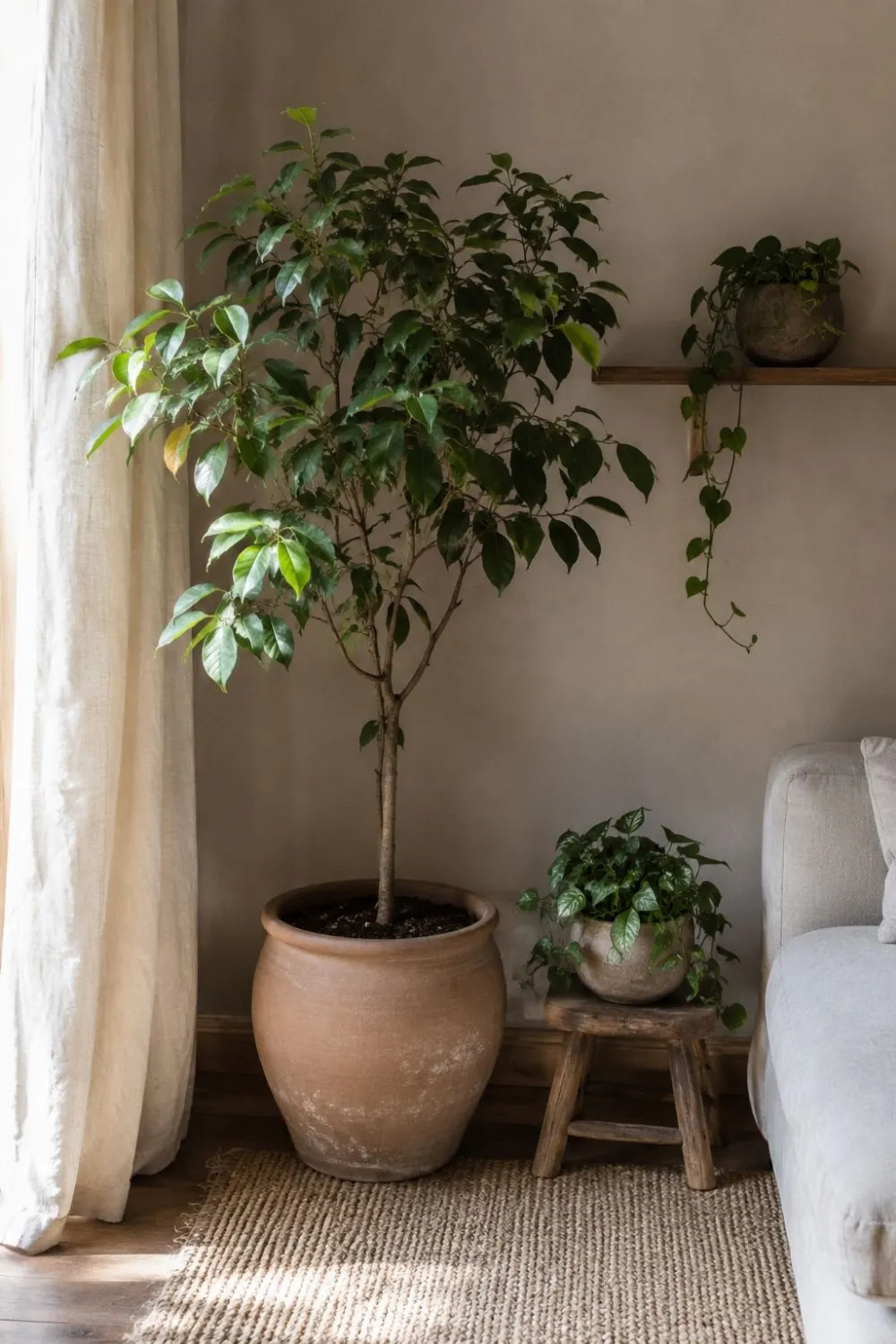
Step 2: Check the Height Line
Stand back and look at the display from across the room.
Are all the pots sitting at the same height?
If yes, that may be why the corner feels flat.
Try one plant on the floor, one on a stool or side table, and one on a shelf. This small change gives the eye a path to follow.
It also helps the plants feel styled rather than stored.
A plant stand, a low wooden stool, or a narrow side table can do more for the room than buying another small pot.
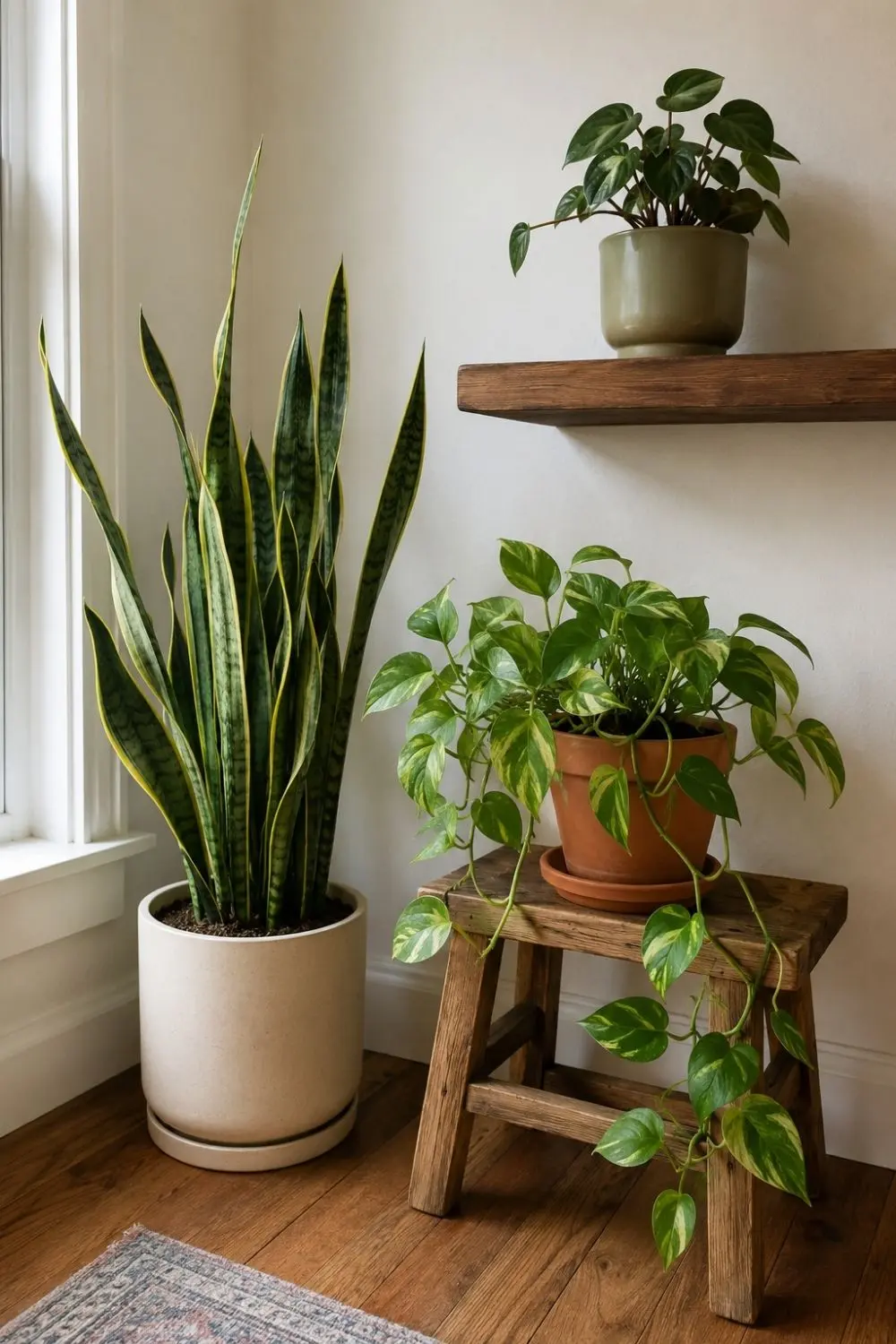
Step 3: Edit the Pot Palette
This is often the fastest fix.
Your plants may not need more leaves. They may need better containers.
In a June 2026 look at outdated houseplant habits, Livingetc pointed to thoughtless planter styling as one of the houseplant mistakes worth leaving behind. That does not mean every pot must match. It means the pots should feel related.
Choose two or three materials or colours and repeat them.
Try terracotta, cream ceramic, and warm wood. Or matte white, stone grey, and soft olive. Or sand-toned ceramic, woven texture, and aged clay.
When the pot palette is calm, the leaf shapes stand out.
When every pot is shouting for attention, even beautiful plants can look visually noisy.
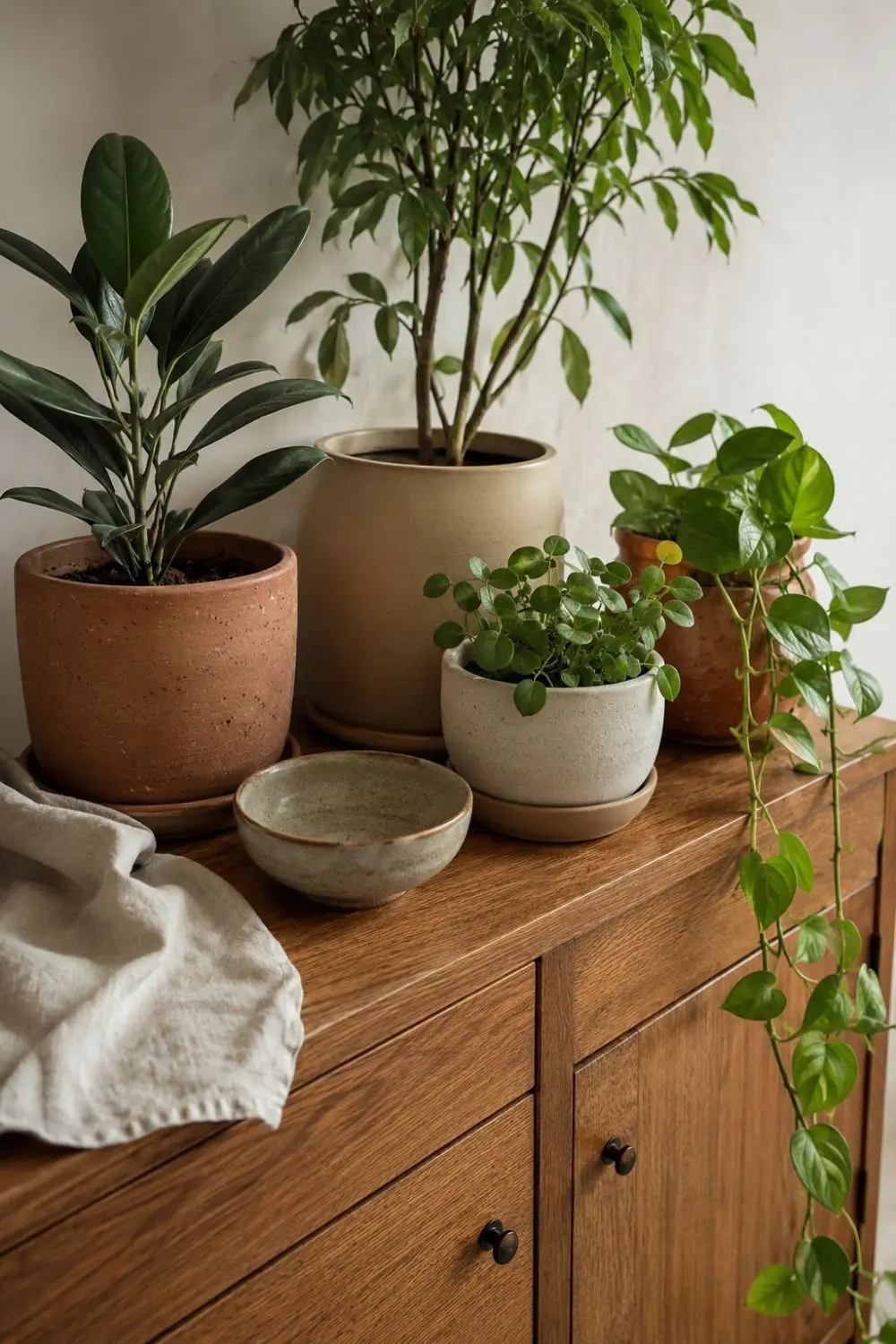
Step 4: Remove One Weak Link
This is the part most people skip.
Before adding anything new, remove one item that weakens the display.
It might be a plastic nursery pot. It might be a tiny plant that gets lost among larger leaves. It might be a decorative object that competes with the plant. It might be one extra pot on a shelf that already has enough going on.
Take it away for one day.
If the corner looks calmer without it, you have your answer.
A good plant corner is not built by filling every gap. It is built by leaving the right gaps alone.
Step 5: Style for the Plant’s Needs, Not Just the Photo
A plant corner only works if the plants can stay well there.
The RHS houseplant growing guide reminds readers that different houseplants need different light conditions, from full sun to bright indirect light or shade.
That should guide the styling.
A fern may look lovely on a dry living room shelf, but it may do better in a naturally lit bathroom with more humidity. A succulent may look neat in a dim bathroom, but it may prefer much brighter light. A tropical plant may look dramatic near a radiator, but heat and dry air can damage the leaves.
The RHS guide to helping a poorly houseplant also notes that dry air, direct heat, poor ventilation, too much water, and too much direct sun can all show up as plant problems.
So the question is not only, “Does this look good here?”
The better question is, “Can this plant stay well here?”
The 10-Minute Plant Styling Audit
Here is the quick version.
- Choose one anchor plant for the corner.
- Vary the height line with a floor plant, raised plant, or shelf plant.
- Repeat two or three pot colours or materials.
- Remove one weak or distracting item.
- Check light, heat, humidity, and watering access.
If the corner looks better after those five steps, you did not need another plant.
You needed an edit.
What Makes This Look More Expensive?
Expensive-looking plant styling is usually quiet.
The pots do not fight each other. The plants have space. The tallest piece has a purpose. The shelf is not packed from edge to edge. The greenery feels connected to the rest of the room.
That is why a simple plant corner can look better than a large collection.
It has rhythm.
It has breathing room.
It has a clear palette.
And it respects the plant’s care needs instead of treating the plant like a prop.
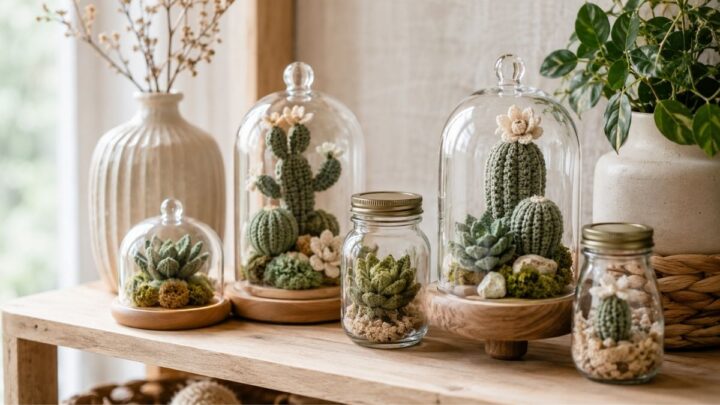
If you love the green look but do not want more watering, you can also add small handmade-style accents, such as a no-water crochet herb garden for the kitchen counter or decorative inspiration from miniature crochet terrariums.
Use them as soft accents, not extra clutter.
The Real Fix
The room may not need more greenery.
It may not need another trip to the garden centre.
It may not need one more tiny pot on the shelf.
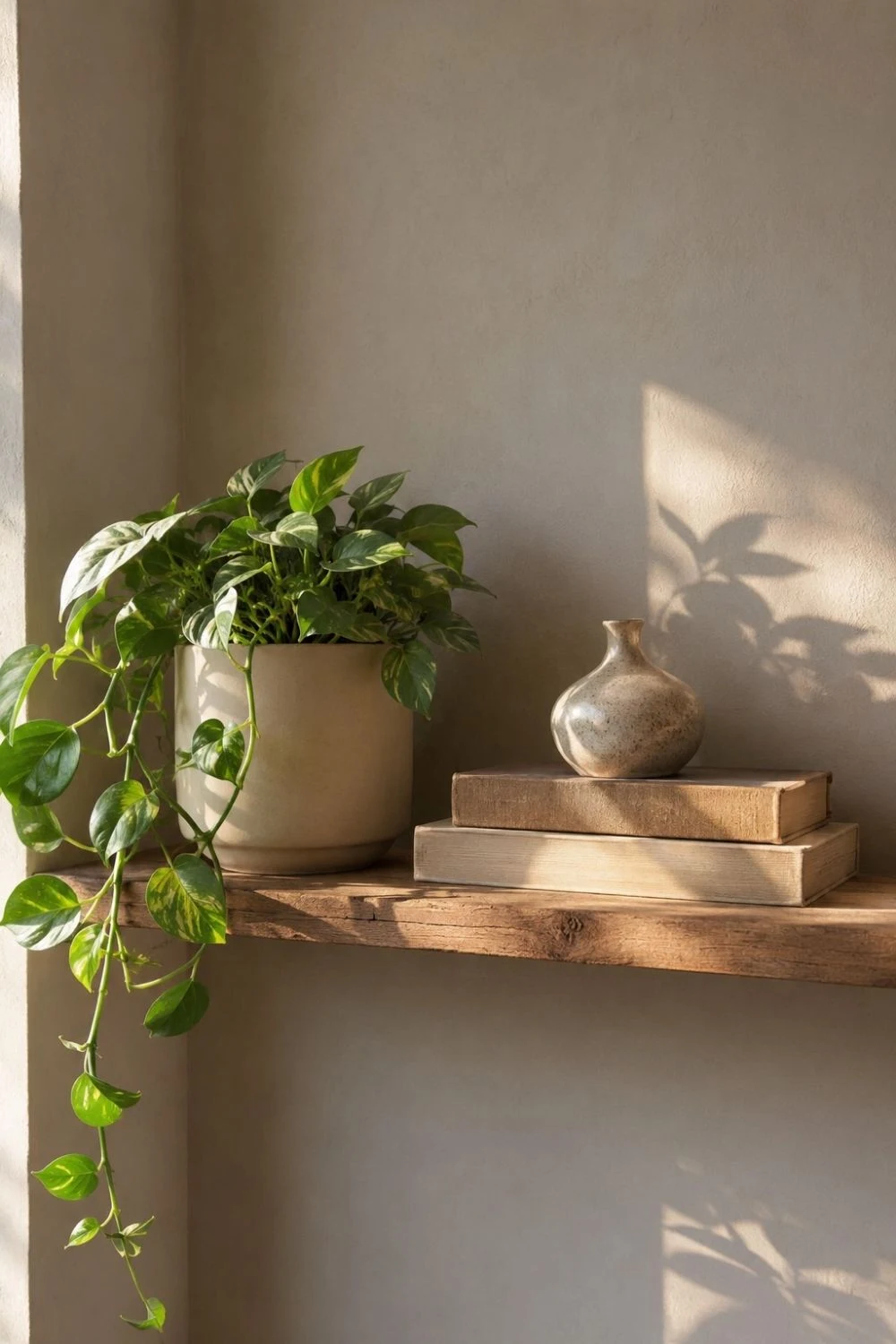
It may simply need the plants you already own to look like they belong together.
That is the styling shift worth making first.
About These Styling Ideas
Women’s Alphabet does not sell the plants, pots, or decorative pieces shown in this article. The visuals and styling notes are inspiration-only editorial ideas. They should not be treated as product listings, purchase offers, exact plant-care instructions, or exact DIY/pattern directions. Always check the needs of each plant before changing its placement.