

The “Lid-On” Cooking Hack: How a Simple Kitchen Habit Slashes Energy Bills
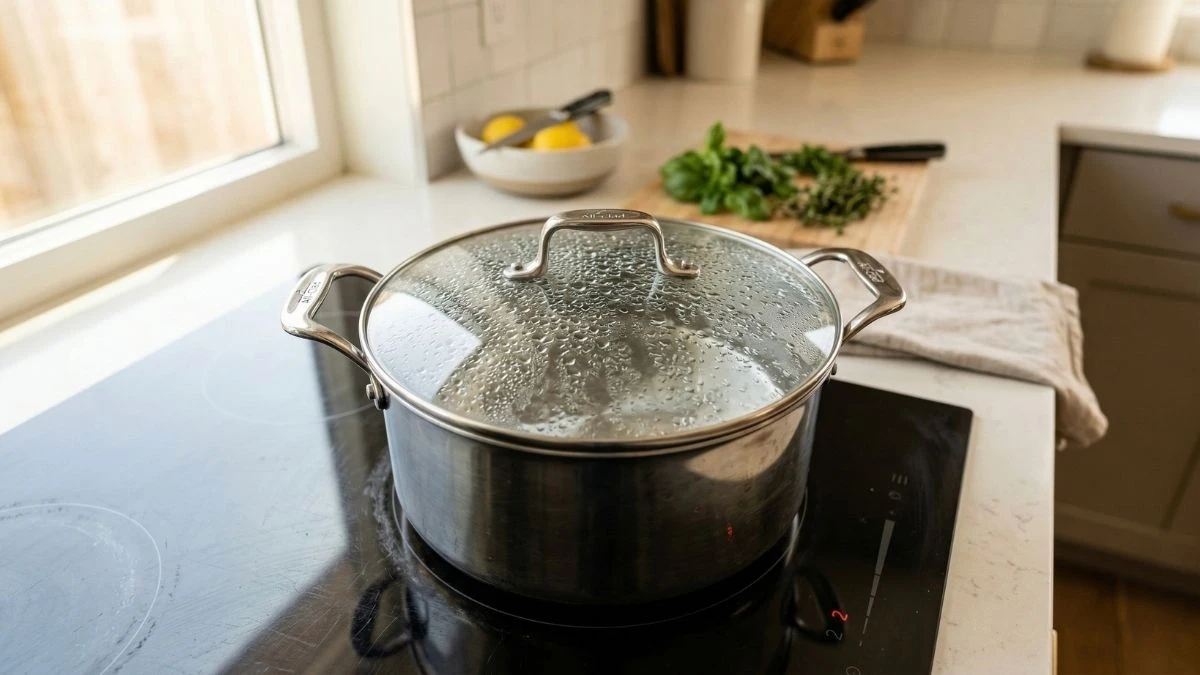
We’ve all stood in the kitchen, exhausted after a long day, willing a pot of pasta water to just boil already. But what if the secret to getting dinner on the table faster—while simultaneously lowering your monthly utility bills—comes down to a single piece of metal or glass you probably already own?
In widely shared home economic discussions, the “lid-on” rule has become the ultimate life hack. But this isn’t just an old wives’ tale; it is backed by serious thermodynamics.
According to comprehensive energy research, optimizing our daily cooking habits can trigger a massive ripple effect. In fact, consistently using a pot lid is the easiest way to trap heat, speed up cooking, and keep your hard-earned money from literally evaporating into thin air.
Here is the collective insight on why this micro-habit is a total game-changer for your household.
The Science of the “Thermal Blanket”
When we heat an open pot of water, we are essentially fighting against physics. As the water gets hot, the most energetic molecules escape as steam. This constant energy loss causes what scientists call “evaporative cooling.”
By simply placing a lid on your pot, you stop that energy from escaping. The steam hits the cooler lid, condenses, and drips back down, forming a closed energy loop. You are essentially building a cozy, high-pressure thermal blanket around your food.
Because the heat is distributed evenly from all sides (not just the bottom), your food cooks much faster.
The 15% vs. 66% Savings Paradox
If you look into energy research, you might see conflicting numbers. Some experts claim a 15% saving, while others promise a massive up to 66% energy savings. So, which is it?
Actually, both are true! The 15% number refers to the holistic kitchen efficiency you’ll see on your overall monthly energy bill.
The 66% figure, however, comes from a brilliant behavioral strategy called “simmering.” Once a covered pot reaches a boil, the insulation is so good that you can turn your stove’s burner down to a fraction of its power (from high to low) and the water will stay boiling. The real savings happen when the lid allows you to turn that dial down!
Community Experience: What the Experts and Amateurs Say
You don’t just have to take the word of energy agencies. Across multiple user-reported experiences in ultralight backpacker communities—where hikers meticulously calculate every gram of fuel they carry—the consensus is clear.
Independent tests shared within these groups show that using a lid cuts boiling time by about 25%. In the wild, that means preserving precious fuel. In your kitchen, it translates directly to lower gas and electricity bills.
The Pan Size Rule
These communities also highlight another crucial consensus: matching your pot size to your burner is just as important as the lid.
If you put a 6-inch pan on an 8-inch burner, up to 40% of the heat simply bypasses the pot and warms the air in your kitchen. Always pair a flat-bottomed, properly sized pot with the right burner for maximum efficiency.
The Secret Summer Bonus: Saving Your AC
Here is an insight frequently discussed in online cooking communities that most of us completely miss: cooking with an open pot makes your home cooling systems work overtime.
When you boil water without a lid, you are pumping intense heat and pure humidity directly into your kitchen. In the middle of summer, this turns your home into an absolute sauna.
Your air conditioning system then has to use a massive amount of compressor power not just to cool the air, but to remove all that excess moisture. Keeping the lid on keeps the humidity in the pot, giving your AC a much-needed break.
When to Break the Rule (Because Flavor Matters)
While we love saving energy, the ultimate goal in the kitchen is delicious food. Chemical reactions require different environments, so you shouldn’t use a lid 100% of the time.
Here is a quick cheat sheet based on culinary science:
- Boiling (Pasta, Soups): LID ON. You want fast heat and zero evaporation.
- Slow Braising: LID ON. Tough cuts of meat need long, moist, low-temperature cooking to become tender. A lid prevents them from drying out.
- Searing Meat: LID OFF. To get a beautiful, flavorful crust, you need dry, high heat. A lid will trap steam and ruin the texture.
- Reducing Sauces: LID OFF. The entire goal here is to let water evaporate so the flavor thickens and intensifies.
- Deep Frying: LID OFF. This is a strict safety rule! If condensation builds up on a lid and drips into hot oil, it can cause a dangerous reaction.
Small Habits, Massive Impact
It is easy to think that a single pot of water won’t make a dent in your finances. But the true power of this habit lies in the multiplier effect.
According to 2026 energy projections, if just half of the households in the United States committed to these simple principles—using a lid, turning down the heat once boiling, and matching burner sizes—it could collectively save billions of dollars annually, significantly easing the burden on the national power grid.
So, the next time you step up to the stove, remember: that simple lid is the hardest working, money-saving tool in your kitchen arsenal. Throw it on, turn the heat down, and enjoy your beautifully efficient meal!