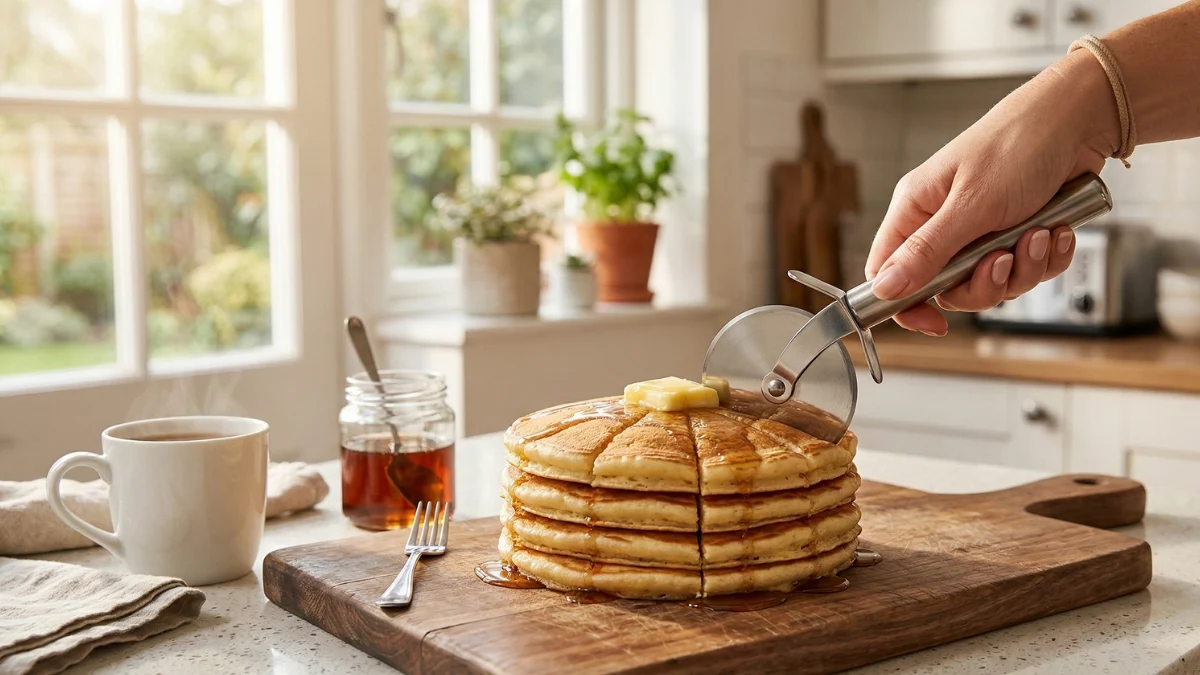
Imagine a typical weekend morning. The coffee is hot, the kitchen smells deliciously of alcohol-free vanilla and batter, and you have just pulled a golden, perfectly crisp batch of waffles from the iron. It is a beautiful scene, but the clock is ticking. If you are serving a family—especially younger children—you know exactly what happens next. You stand at the counter with a standard butter knife and a fork, meticulously sawing through stacks of hot food, trying to make perfectly sized, bite-friendly pieces. Meanwhile, the breakfast is getting cold, the syrup is waiting, and the morning peace is quickly transforming into a rush.
But what if you could dramatically reduce that preparation time, turning a tedious five-minute chore into a highly satisfying ten-second task?
Enter the pizza wheel hack. By simply swapping out your traditional cutlery for a rolling pizza slicer, your morning routine becomes incredibly efficient. It is a clever, highly practical trick that has taken online culinary communities and parenting forums by storm. Let us dive deep into exactly why this method is so effective, what the latest discussions are saying about it, and how you can utilize this simple tool to streamline your kitchen workflow.
Why the Traditional Knife and Fork Fall Short
To understand why the rolling slicer is so superior, we have to look at the mechanics of cutting soft foods. When you use a standard butter knife, or even a sharper chef’s knife, you rely on a back-and-forth sawing motion.
When you apply this sawing action to something soft and fluffy—like a buttermilk pancake—you inevitably exert lateral pressure. This pressure drags the delicate interior, often causing the pancake to tear rather than slice cleanly. Furthermore, if you are cutting a thick Belgian waffle, a dull knife requires you to press down so hard that you end up squishing the airy pockets that are specifically designed to hold syrup and melted butter. You are left with a dense, mangled square rather than a light, fluffy bite.
The Mechanics of the Rolling Blade Advantage
A pizza slicer solves the lateral pressure problem entirely. Its primary design purpose is to slice through thick, chewy dough and melted cheese without dragging the delicate toppings across the surface.
When you apply a rolling blade to a stack of pancakes, you apply direct downward and forward pressure simultaneously. The sharp, circular edge rolls seamlessly over the surface, parting the fluffy interior with zero resistance. You can glide through an entire stack of three or four pancakes in an instant. By rolling back and forth in a simple horizontal and vertical grid pattern, you produce dozens of perfectly uniform, precisely cut squares ready for serving.
Additionally, the handle of a quality rolling slicer is ergonomically designed to give you excellent leverage. You use the natural weight of your hand to press down, making the entire process virtually effortless.
The Great Debate: The Reddit Verdict and Current Trends
To truly gauge the effectiveness of any household trick, one must look at real community experiences. If you browse highly active online platforms today, particularly parenting communities like Reddit’s r/daddit or general advice boards like r/LifeProTips, you will find extensive, passionate threads dedicated entirely to this breakfast strategy.
The general consensus is overwhelming: parents view the rolling slicer as an absolute essential for feeding toddlers and young children quickly. Users frequently highlight that achieving the perfect “syrup-to-surface ratio” is much easier when the food is pre-cut into a neat grid, allowing the syrup to coat every single edge evenly.
However, keeping up with the most recent community discussions reveals a fascinating development of this trick. While the rolling blade remains a top-tier choice, a vocal faction of home cooks and parents have introduced a competing method: kitchen shears, or specialized food scissors.
The current debate highlights that while a rolling blade is unparalleled for cleanly bisecting a flat stack of items on a cutting board, kitchen scissors offer a different type of convenience. Enthusiasts of the “scissor method” argue that you can snip waffles, noodles, and grapes directly over the child’s plate, completely eliminating the need to wash a cutting board later.
The ultimate takeaway from these contemporary discussions? A rolling slicer is your best friend for bulk-cutting stacks of flat breakfast foods flawlessly, while kitchen shears are excellent for quick, on-the-plate snips of oddly shaped items. Equipping your kitchen with both strategies guarantees you are prepared for any mealtime challenge.
Step-by-Step Execution for Flawless Portions
To get the absolute best results from this method, follow these precise steps:
- The Stacking Strategy: Do not waste time rolling over a single layer. The true efficiency of this hack shines when you work in bulk. Stack three to four average-sized pancakes. This provides enough resistance for a clean cut without overwhelming the tool.
- The Butter Phase: Apply your butter between the hot layers before you do any slicing. The residual heat will melt the butter perfectly, and slicing afterward ensures the rich flavor is distributed into every newly formed crevice.
- The Cutting Board Imperative: This is the most crucial rule for maintaining your equipment. Never use your metal wheel directly on a ceramic, porcelain, or glass plate. The hard surface will instantly dull your edge, and you risk leaving permanent, dark metal scratches on your expensive dinnerware. Always transfer the stack to a wooden or heavy-duty plastic cutting board first.
- The Grid Technique: Hold the stack steady with your non-dominant hand. Roll the wheel straight down the middle, then make parallel lines about an inch apart. Rotate the cutting board ninety degrees and repeat the process. You will instantly produce a beautiful grid of bite-sized pieces.
- The Final Transfer: Slide a wide spatula underneath the grid and scoop the cleanly cut squares back onto the serving plate. Add your syrup, and serve immediately while piping hot.
Beyond Breakfast: Maximizing Your Rolling Slicer
Once you realize the potential of this tool, you will start seeing opportunities to use it for nearly every meal. Why relegate a highly effective instrument to a single Italian dish?
- Quesadillas: A traditional knife will often squeeze hot, melted cheese and fillings right out of the sides of a tortilla. The rolling blade slices through the crisp exterior swiftly, leaving the delicious interior perfectly intact.
- Crustless Sandwiches: If you have a child who refuses to eat sandwich crusts, a quick roll around the perimeter removes the edges in seconds, leaving a neat square that you can easily divide into smaller triangles.
- Fresh Herbs: While professional chefs might insist on a razor-sharp chef’s knife, many pragmatic home cooks find that running a slicer back and forth over a bunch of parsley or cilantro is an incredibly fast way to chop them. Just ensure your blade is exceedingly sharp so it cuts the leaves cleanly rather than bruising them.
- Toast “Soldiers”: Quickly portioning buttered toast into long strips for dipping into soft-boiled eggs takes mere seconds with a rolling wheel.
Selecting the Ultimate Kitchen Wheel
Not all slicers are manufactured to the same standard, and the success of your morning routine depends heavily on the quality of your equipment. When evaluating your kitchen tools, keep these factors in mind:
- Wheel Size: A larger wheel—typically around 3.5 to 4 inches in diameter—is generally superior. It provides more clearance for thicker stacks of Belgian waffles and prevents fluffy dough from getting caught in the central axle mechanism.
- Blade Material: High-carbon stainless steel is non-negotiable. It resists rust, maintains a sharp edge far longer than cheaper metals, and is completely food-safe.
- Cleaning Mechanism: The most common complaint about rolling slicers is the difficulty of cleaning the hinge area where the blade attaches to the handle. If batter, cheese, or syrup dries in that crevice, it becomes highly unsanitary. Look for premium models where the blade easily detaches for thorough washing, or choose designs with an open structure that allows hot soapy water to flow freely through the mechanism.
Tool Maintenance: Keep It Sharp
A dull blade is not only frustrating to use, but it also defeats the entire purpose of this efficiency hack. If your slicer starts tearing the pancakes rather than parting them cleanly, it is time for some maintenance.
Many people do not realize that you can, and absolutely should, sharpen a stainless steel rolling slicer. You can use a standard pull-through knife sharpener for this task. Simply hold the wheel extremely steady with a thick kitchen towel to prevent it from spinning, and carefully pull the exposed edge through the fine sharpening slot a few times. Rotate the wheel and repeat until the entire circumference is honed. Regular maintenance ensures that your tool continues to glide effortlessly for years to come.
The Psychology of a Streamlined Morning
Why do small, seemingly insignificant kitchen tricks like this resonate so deeply with so many people? It ultimately comes down to reducing daily friction. Mornings are frequently high-stress environments where every single minute matters. When you completely eliminate a frustrating, slow task—like meticulously sawing through a dense breakfast while a hungry family waits—you significantly lower the overall stress level of the household.
It is not just about the food itself; it is about reclaiming your time, preserving your mental energy, and starting the day feeling capable and prepared. By simply rethinking the purpose of an everyday object, we streamline our workflow. It proves that sometimes the most brilliant solutions do not require purchasing expensive new gadgets, but rather looking at what we already own from a highly practical, problem-solving perspective.
So tomorrow morning, leave the knife in the drawer, reach for the rolling slicer, and enjoy your coffee while it is actually still hot.